
💡 Key Takeaways
- For a first Incheon sightseeing trip, Chinatown + Sinpo is my best all-round pick. You can walk to the Old Port sights, eat extremely well, and experience a part of the city that actually feels distinct from Seoul.
- For an early flight or late arrival, stay at Unseo Station or right by the airport terminals. Do not choose Songdo or central Incheon just because the map makes them look “close to the airport.”
- For value and transport flexibility, Bupyeong is the practical winner. It is an interchange between Seoul Subway Line 1 and Incheon Subway Line 1, with a huge concentration of food, shopping and cheaper hotels.
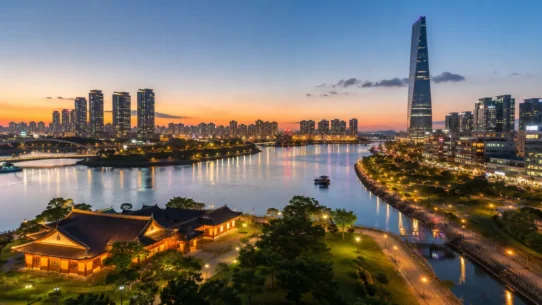
- For modern comfort, parks and better upscale hotels, choose Songdo. The trade-off is simple: it is calm and polished, but it can feel empty at night and it is not the most efficient base for the old city or Seoul.
- Do not pick a hotel by the word “Incheon” alone. The airport, Songdo, Bupyeong, Chinatown and Wolmido are spread across a very large city; the wrong base can add multiple transfers to every day.
If you are trying to decide where to stay in Incheon for your first visit, the difficult part is not finding a hotel. It is understanding what the hotel location will do to your trip. Incheon International Airport sits on Yeongjong Island; Songdo is a modern business district in the south; Chinatown and Sinpo occupy the historic port area; Bupyeong is an inland transport and nightlife hub; and Wolmido is a waterfront leisure district with no subway station of its own.
That geography creates a classic first-timer mistake: booking a highly rated hotel at a good price, then discovering that the attractions you actually want are an hour away with two transfers and a suitcase. A cheap room stops feeling cheap when you are paying for taxis, leaving early, and dragging luggage through large stations.
This guide therefore treats accommodation as a transport decision first and a hotel decision second. I have compared station access, last-mile walking, airport practicality, evening atmosphere, typical 2026 room-price patterns and recurring traveler feedback. The goal is not to declare one “best” neighborhood for everyone. It is to help you eliminate the wrong ones quickly.
Price note: the nightly bands below are practical budgeting ranges based on recent 2026 listings and traveler reports, not fixed quotes. Weekend demand, conventions, holidays, room type and cancellation terms can move prices substantially.
The 1-Min Cheat Sheet
- Chinatown + Sinpo / Open Port — Best overall for first-time Incheon sightseeing. Choose it for walkable food, history and character. Avoid it if you have a pre-dawn flight or hate slopes with luggage. Typical planning band: about US$40–90 for local hotels and guesthouses, with better rooms costing more.
- Songdo Central Park — Best for couples, families, business travelers and modern comfort. Choose it for green space, skyline views and higher-quality hotel stock. Avoid it if most of your itinerary is Seoul, Chinatown or late-night street life. Typical planning band: about US$60–170, with premium hotels going higher.
- Bupyeong — Best value and best transport compromise. Choose it for Line 1 access toward Seoul, Incheon Subway Line 1 toward Songdo, abundant food and cheaper rooms. Avoid it if you want a scenic “vacation neighborhood.” Typical planning band: about US$35–90.
- Guwol-dong / Arts Center — Best for local nightlife and restaurants. Choose it if you want busy evenings without staying in a tourist zone. Avoid it if direct airport access is your priority. Typical planning band: about US$35–100.
- Wolmido — Best for a seaside night and retro amusement atmosphere. Choose it for sunset, waterfront walks and a fun overnight stop. Avoid it for rail convenience or a tight airport schedule. Typical planning band: about US$50–120, with sea-view rooms and weekends often higher.
- Unseo Station / Airport Area — Best for early flights, late arrivals and layovers. Choose it for direct Airport Railroad all-stop train access to the terminals and a useful cluster of restaurants and hotels. Avoid it as your base for a multi-day Incheon sightseeing trip. Typical planning band: about US$50–120 around Unseo, while terminal-adjacent luxury hotels can easily exceed US$150–250.
Top Survival Tips
- Search from the station exit, not from the neighborhood name. A hotel advertised as “near Songdo Central Park” can still leave you with an awkward 15-minute walk across wide blocks. In Bupyeong, the underground complex is enormous enough that using the wrong exit can add a surprising amount of walking. With luggage, a genuine five-minute walk from the correct exit is worth paying for.
- Do not treat Incheon Airport as Incheon city center. The airport is geographically part of Incheon, but it is separated from many urban districts by water and long transport links. “Hotel in Incheon” does not mean “hotel near ICN.” This matters most on your final night.
- If your flight is very early, remove the first-train gamble. Airport Railroad schedules can change and the first useful train may not match your check-in deadline or terminal. Stay at Unseo or a terminal-adjacent hotel and plan a taxi or confirmed hotel shuttle if your departure is pre-dawn.
- Check your terminal before choosing an airport hotel. Incheon Airport has Terminal 1 and Terminal 2. A hotel can be “airport adjacent” but still require a shuttle or taxi to the correct terminal. Also read the rules carefully for airside transit hotels; they are not interchangeable with normal landside hotels for every itinerary.
- Do not stay in Songdo just because the hotels look newer. They often are newer, and that is exactly why Songdo is appealing. But if your priorities are Chinatown, Sinpo Market, Wolmido and Seoul, the daily transport cost is time rather than money. Pick Songdo when you actually want Songdo.
- In nightlife districts, read the map one block beyond the station. Bupyeong and Guwol-dong are excellent for evening food and bars, but a room directly above or beside an entertainment street can mean late-night voices, traffic and signage. Light sleepers should choose a hotel on a side street, not necessarily the absolute closest building to the action.
- For Chinatown and the Open Port area, check elevation as well as distance. The district is compact enough to walk, but some streets are sloped. A “700-meter walk” with a suitcase can feel very different from 700 flat meters. Staying closer to Incheon Station or Sinpo Station reduces the pain.
- If most of your trip is actually Seoul, sleep in Seoul. Incheon can be a rewarding destination, but using it as a cheap substitute for Seoul often backfires. A smarter plan is to spend your Seoul nights in Seoul and add one Incheon sightseeing night or one airport night when it genuinely helps the itinerary.
- Use Korean mapping apps for the last mile. Naver Map and KakaoMap are generally more useful than relying on a hotel’s marketing description for local exits, bus stops and walking routes. Before booking, trace the route with luggage in mind: station exit, road crossings, slope and the final 300–500 meters.
The Full Experience
📍 Chinatown + Sinpo / Open Port: Best Overall for First-Time Incheon Sightseeing
Best for: first visits, food lovers, short city breaks, photographers, travelers without a car | Vibe: historic, colorful, food-focused, compact | Night: calm after dinner rather than party-heavy | Transport: Incheon Station / Sinpo Station
If your goal is to feel that you have actually visited Incheon rather than simply slept near its airport, this is the area I would choose first. Chinatown, the Open Port district, Sinpo International Market and the streets around Incheon Station form one of the city’s most walkable clusters of recognizable sights, local food and older urban texture.
The practical advantage is concentration. You can arrive, drop your bag, eat jjajangmyeon, explore the historic streets, walk toward Jayu Park, browse the Open Port architecture and continue to Sinpo without spending the day underground. For a one- or two-night Incheon stop, that is valuable.
Transport reality: Incheon Station is the western terminus of Seoul Subway Line 1 and also connects with the Suin-Bundang Line. Sinpo has its own station nearby. That makes the old port easy to reach from other parts of the metropolitan network, but it is not a direct airport neighborhood. Traveling to ICN generally involves transfers or a taxi/bus combination, so I would not make this my final-night base before a very early flight.
Hotel-price reality: this area has more modest local hotels, guesthouses and business-style properties than glossy international luxury hotels. A practical first search is roughly US$40–90 per night, but location and weekend demand matter. Do not automatically choose the cheapest listing uphill from the station if you have large luggage.
✅ What Other Travelers Say
Travelers consistently like this part of Incheon for food, distinctive streets and the ability to combine several sights on foot. Recent visitor discussions also describe the district as visually interesting and especially worthwhile for trying local-style Chinese-Korean dishes. The common positive theme is not luxury; it is character.
⚠️ The Catch (Things to Keep in Mind)
Chinatown is compact and can feel touristy during the busiest daytime periods. It also becomes much quieter after restaurants and attractions wind down, so do not choose it for serious nightlife. The bigger practical issue is terrain: parts of the Open Port and Jayu Park area climb uphill. With a suitcase, I would rather be a few minutes closer to Incheon Station or Sinpo Station than save a small amount on a room farther up the slope.
Who should stay here: first-time visitors spending one or two days exploring Incheon itself, food-focused travelers, couples who prefer walkable sightseeing, and anyone who wants an atmospheric alternative to Songdo.
Who should not: travelers catching a pre-dawn flight, visitors who want a resort pool and large modern rooms, or people who expect late-night bar streets outside the hotel.
📍 Songdo Central Park: Best for Modern Comfort, Couples and Families
Best for: couples, families, business trips, upscale stays, park lovers | Vibe: modern, planned, spacious, photogenic | Night: polished but comparatively quiet | Transport: Incheon Subway Line 1
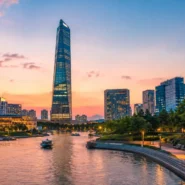
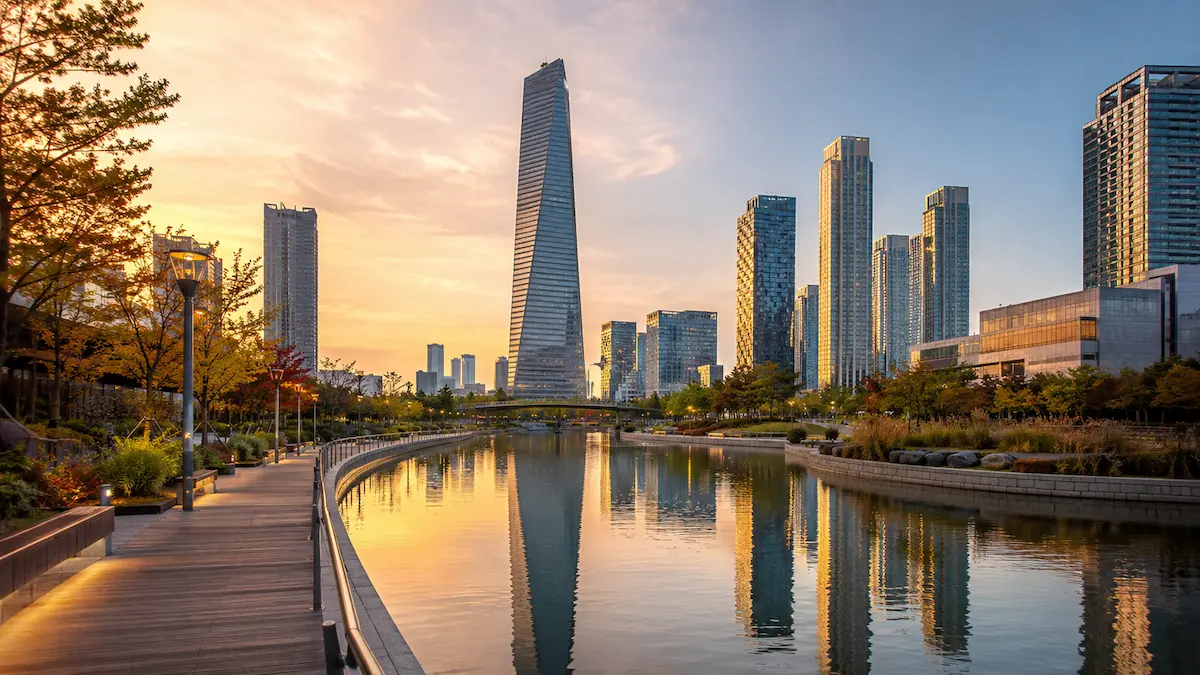
Songdo is the easiest area in this guide to love in photos. Central Park, tall glass towers, wide promenades and modern hotels create a clean, comfortable stay that can feel almost resort-like compared with the denser districts farther north. If you want a nicer room, skyline views, green space and an evening walk without street chaos, Songdo is a strong choice.
I especially like it for couples who want a calm base, families who value wider sidewalks and parks, and business travelers attending events around Songdo Convensia. Hotel stock is one of the area’s advantages: you will find more full-service and upscale options here than around the old port.
Where exactly to book: staying around Central Park Station is convenient for the park and many landmark hotels. Incheon National University Station can work for other business and dining clusters, while the Technopark area is useful for Triple Street and Hyundai Premium Outlet. These are not interchangeable if you plan to walk most of the time, so choose the station that matches your actual itinerary.
Transport reality: Songdo sits on Incheon Subway Line 1. Reaching Bupyeong is straightforward on that line, where you can transfer toward Seoul. Getting to the airport or historic Incheon is possible, but it is not a single effortless ride in most cases. In practical trip planning, airport-to-Songdo travel often approaches an hour once waiting and transfers are included, depending on terminal and route.
Hotel-price reality: plan roughly US$60–170 for many standard searches, with premium properties and high-demand dates going beyond that. Songdo can sometimes offer surprisingly good value for four- and five-star comfort, but conventions can push rates up fast.
✅ What Other Travelers Say
Traveler opinion on Songdo is genuinely divided, and that is useful. Fans love the calm, cleanliness, modern architecture, Central Park views and lack of crowds. Some residents and visitors specifically enjoy the peace, photography and spaciousness compared with Seoul.
⚠️ The Catch (Things to Keep in Mind)
The criticism is equally consistent: some travelers find Songdo too quiet, too spread out and even “lifeless” outside the busiest pockets. Wide blocks that look short on a map can turn into longer walks than expected. If your mental image of Korea is neon alleys, late-night street food and dense neighborhood energy, Songdo may feel emotionally flat even when the hotel is excellent.
Who should stay here: couples, families, business travelers, architecture lovers, runners and walkers, and anyone who values hotel quality over old-city atmosphere.
Who should not: nightlife-first travelers, people planning daily trips into central Seoul, or first-timers whose Incheon wish list is mainly Chinatown, Sinpo and Wolmido.
📍 Bupyeong: Best Value and Best Transport Compromise
Best for: budget-minded travelers, repeat Korea visitors, shopping, nightlife, mixed Seoul/Incheon plans | Vibe: busy, local, commercial, energetic | Night: lively around the station | Transport: Seoul Subway Line 1 + Incheon Subway Line 1
Bupyeong is not the prettiest answer to “where should I stay in Incheon?”, but it may be the smartest one for travelers who care about transport and price. Bupyeong Station is an interchange between Seoul Subway Line 1 and Incheon Subway Line 1. That gives you a direct rail line toward Seoul and a direct Incheon subway route toward Songdo without needing to build your entire trip around taxis.
The station area is also intensely practical. The enormous underground shopping complex, street-level shops, restaurants, cafés and evening bars mean you can come back late and still have food choices. If you arrive on a rainy day, the underground network can be a blessing.
The value angle: Bupyeong often has cheaper rooms than Songdo and the airport-resort zone. Recent listings show budget and business hotels dipping below US$50, while a broad planning range of roughly US$35–90 captures many realistic options. Just understand what you are buying: a lot of the inventory is local business-hotel or motel style rather than destination-hotel luxury.
Transport reality: Bupyeong is excellent within the urban network, but do not misread that as “near the airport.” For ICN, a common public-transport approach involves taking Incheon Line 1 north to Gyeyang and changing to the Airport Railroad. It is manageable, but with heavy luggage the transfer is still a transfer.
✅ What Other Travelers Say
People who like Bupyeong usually talk about three things: food, shopping and convenience. Traveler and resident discussions often describe it as much more energetic than Songdo, especially in the evening. Budget travelers also appreciate that they can stay near useful transport without paying airport-hotel or premium Songdo prices.
⚠️ The Catch (Things to Keep in Mind)
The underground mall is huge enough to confuse first-time visitors, especially when you are trying to find the correct exit with luggage. The area around the station is also busy and visually chaotic rather than relaxing. On weekend nights, expect more people, traffic and street noise. If sleep matters, pick a hotel a few minutes off the main entertainment streets instead of directly facing them.
Who should stay here: value seekers, solo travelers, younger couples, shoppers, travelers mixing Seoul and Incheon, and people who prefer local city energy over postcard scenery.
Who should not: honeymooners seeking a romantic waterfront, travelers who want quiet evenings, or anyone who judges a neighborhood mainly by how attractive it looks from the hotel window.
📍 Guwol-dong / Arts Center: Best for Local Nightlife and Food
Best for: restaurants, bars, local nightlife, longer stays, travelers avoiding tourist zones | Vibe: youthful, local, commercial | Night: one of the livelier choices in this guide | Transport: Arts Center / Incheon Bus Terminal on Incheon Subway Line 1
Guwol-dong is the choice I would give a traveler who says, “I do not need to wake up next to a famous attraction; I want somewhere alive after 8 p.m.” The Rodeo Street area has restaurants, cafés, bars, shopping and department-store infrastructure, with Arts Center and Incheon Bus Terminal stations providing useful access on Incheon Subway Line 1.
This is a more local-feeling base than Chinatown and a less polished one than Songdo. That balance is exactly the appeal. You are staying in an area where people actually go out after work, rather than in a neighborhood built primarily around sightseeing or airport logistics.
Hotel-price reality: Guwol-dong and wider Namdong-gu have plenty of local hotels and business-style properties. Budget around US$35–100 for many searches, depending on room quality and weekend demand. As in Bupyeong, star ratings do not always tell the whole story; guest-room photos, recent cleanliness reviews and exact building location matter more.
Transport reality: Incheon Line 1 makes Bupyeong and Songdo relatively understandable from here, but there is no direct Airport Railroad service and no direct Seoul Subway Line 1 platform at your doorstep. If your trip requires daily airport runs or daily central-Seoul commutes, this is not the efficient choice.
✅ What Other Travelers Say
The appeal travelers and locals mention is the evening energy: you can eat, shop and continue into bars without making nightlife a separate expedition. Compared with Songdo, it feels denser and more spontaneous; compared with Chinatown, it stays active later.
⚠️ The Catch (Things to Keep in Mind)
This is not a tourist sightseeing district in the conventional sense. First-time foreign visitors may find fewer obvious English-language visitor cues, and the busiest nightlife lanes can be noisy. If you want a calm room, look one or two blocks away from the central Rodeo Street action. And if you are leaving on an early ICN flight, move to Unseo for the final night rather than forcing a complicated dawn transfer.
Who should stay here: food-focused travelers, nightlife seekers, repeat Korea visitors, younger travelers and anyone who wants a more everyday urban Incheon experience.
Who should not: airport layover travelers, people seeking historic atmosphere, or visitors who want to walk out of the hotel directly into Incheon’s main tourist sights.
📍 Wolmido: Best for a Seaside Night, Sunset and Retro Fun
Best for: couples, families, photographers, one-night coastal stays | Vibe: seaside, retro, playful, slightly kitschy | Night: bright and lively on popular evenings | Transport: bus or taxi from Incheon Station
Wolmido is the area to choose because you want to stay in Wolmido, not because it is the easiest transport hub. The waterfront promenade, amusement rides, Ferris wheel, seafood restaurants and sunset views give it a very different mood from both Songdo’s sleek modernity and Chinatown’s old-port streets.
I like it as a deliberate one-night add-on. Spend the afternoon in Chinatown and the Open Port area, move toward Wolmido for sunset, eat by the water, ride the Ferris wheel or simply walk the promenade, then sleep nearby instead of returning across the city.
Transport reality: Wolmido does not have its own subway station. Current official Incheon tourism information lists local bus access, including bus 45 from the Incheon Station side, but with luggage I would usually price a taxi as well. The last mile is the whole issue here: on a map Wolmido looks close to Incheon Station, yet it is not a “walk off the train and check in” neighborhood.
Hotel-price reality: recent 2026 Booking.com listings around Wolmido have shown rooms around the US$90–100 range at some waterfront properties, while the wider planning band is roughly US$50–120. Sea views, Saturdays and good-weather weekends can command a premium.
✅ What Other Travelers Say
Recent travelers often describe Wolmido as retro, carnival-like and fun rather than sophisticated. The seaside view and amusement atmosphere are the strongest positives. People who enjoy nostalgic entertainment tend to “get” Wolmido immediately.
⚠️ The Catch (Things to Keep in Mind)
Some visitors find it dated or noisy, and that is a fair criticism. Amusement music, crowds and weekend traffic are part of the package. It is also easy to underestimate the airport transfer because both Wolmido and ICN are “in Incheon.” In real travel time, they are not neighboring districts. Do not book Wolmido for a short overnight airport connection.
Who should stay here: couples wanting a sunset night, families with children, photographers, amusement fans and travelers building a relaxed Incheon-only itinerary.
Who should not: tight layovers, rail-first travelers, serious nightlife seekers, or anyone who wants a silent waterfront hotel on a busy Saturday.
📍 Unseo Station / Incheon Airport Area: Best for Early Flights, Late Arrivals and Layovers
Best for: early departures, late arrivals, one-night layovers, families with luggage, nervous flyers | Vibe: practical, airport-oriented, convenient | Night: functional restaurant district rather than nightlife destination | Transport: AREX Airport Railroad all-stop train
Unseo is the area where I stop trying to make the trip “interesting” and focus on making it easy. That is exactly why it works. Unseo Station is on the Airport Railroad all-stop service, only a short ride from the airport terminals, and the blocks around the station contain hotels, convenience stores, restaurants and everyday services.
For most travelers, this is a better-value final night than paying for a full luxury airport resort. You can have dinner outside the airport, sleep in a normal hotel, and reduce the morning journey to a simple train, taxi or hotel shuttle.
One crucial detail: the Airport Railroad express service does not stop at Unseo. You need the all-stop train. That distinction matters if you are reading a generic “AREX” timetable and assuming every train serves your station.
Hotel-price reality: a realistic first search around Unseo is roughly US$50–120 for budget and mid-range airport hotels, though last-minute deals can fall below that. Traveler reviews frequently praise the area for restaurants, station access and value. If you move closer to Terminal 1 resort hotels such as Paradise City or Grand Hyatt, or choose a premium terminal-oriented property, rates can rise well above US$150–250.
Very early flight rule: if your airline check-in opens before useful rail service, do not build the morning around hope. Confirm a hotel shuttle schedule in writing or plan a taxi. For an extremely short connection, a terminal-area or eligible airside transit hotel may be worth the premium, but read the access rules before paying.
✅ What Other Travelers Say
Recent traveler feedback around Unseo is remarkably consistent: people like the short airport journey, the cluster of eateries, nearby shopping and the ability to get a comfortable room for less than many terminal-adjacent hotels. It is especially popular as the “last night in Korea” solution.
⚠️ The Catch (Things to Keep in Mind)
Unseo is not where I would send a first-time visitor for three nights of sightseeing. Its main attraction is logistical ease. If you stay here while spending each day in Songdo, Chinatown or Seoul, you will repeatedly pay back the time you saved on airport day. Also remember that hotel “airport shuttle” schedules vary; never assume a free 24-hour shuttle unless the property explicitly confirms it.
Who should stay here: anyone with an early flight, late landing, large suitcases, children, a one-night stopover or a strong preference for removing departure-day stress.
Who should not: travelers wanting a scenic neighborhood, serious nightlife, or a central base for exploring Incheon over several days.
How I Would Choose Based on Your Actual Trip
If you have only one night in Incheon and want to sightsee: stay in Chinatown/Sinpo. You can start exploring almost immediately and avoid wasting the limited visit on cross-city transport.
If you have only one night because of a flight: stay in Unseo or directly by the appropriate airport terminal. This is not the night to chase a better neighborhood atmosphere.
If you have two or three nights and want a comfortable city break: choose Songdo if you prefer modern hotels and calm evenings; choose Chinatown/Sinpo if you prefer food, history and walkability.
If you are splitting your time between Incheon and Seoul on a budget: Bupyeong is the compromise I would check first. It does not make Seoul “close,” but it reduces the number of awkward transfers and gives you plenty to do around the hotel.
If nightlife and local restaurants matter more than sightseeing: Guwol-dong is stronger than Songdo and more local-feeling than the old-port tourist zone.
If your dream Incheon evening is sunset, sea air and a Ferris wheel: book Wolmido for that experience, then accept the bus/taxi last mile as part of the plan.
Key FAQs
What is the best area to stay in Incheon for first-time visitors?
For travelers visiting Incheon as a destination, Chinatown + Sinpo is the best overall first-time base because several major sights, markets and food streets are concentrated within a relatively small area. If comfort matters more than historic atmosphere, Songdo is the better upscale choice. If the visit is mainly about catching a flight, ignore both and stay in Unseo or near your airport terminal.
Should I stay in Incheon or Seoul for my first trip to South Korea?
Stay in Seoul if most of your sightseeing list is in Seoul. Using Incheon as a cheaper “Seoul hotel” usually costs too much time in daily commuting. A better first-trip structure is to base yourself in Seoul, then add one night in Chinatown/Sinpo or Songdo if you genuinely want to explore Incheon, plus an optional Unseo/airport night before an early departure.
Where should I stay in Incheon for an early morning flight from Incheon Airport?
Unseo Station is the best balance of convenience and price for many travelers because it sits on the Airport Railroad all-stop line and has a large cluster of hotels and restaurants. For very early departures, choose a property with a confirmed shuttle or use a taxi. If minimizing every minute matters more than price, consider a terminal-adjacent hotel or an eligible airside transit hotel, making sure its access conditions match your itinerary and terminal.
Final Verdict and Your Next Step
For most first-time visitors who actually want to explore Incheon, I would book Chinatown + Sinpo first. It saves sightseeing time and gives you the strongest sense of place. I would choose Songdo instead for a more comfortable, modern stay; Bupyeong for value and transport flexibility; Guwol-dong for local nightlife; Wolmido for one fun seaside night; and Unseo whenever the airport schedule is the real priority.
The biggest mistake is waiting until the last minute and then choosing whichever cheap room remains somewhere inside the enormous “Incheon” search radius. Good station-adjacent rooms, family rooms, sea-view rooms and flexible-cancellation rates are the first inventory I would expect to become less attractive on busy weekends, holidays and event dates. Book a cancellable option early, then recheck the rate as your trip gets closer.
Check current Incheon hotel availability:
Compare Incheon hotels on Booking.com
Compare Incheon hotels on Agoda
Plan activities after you have chosen your base:
Browse Incheon activities on Klook
Browse Incheon activities on KKday
One last rule before you pay: open the hotel on a map and trace your first arrival and final departure with luggage. If either route makes you think, “that looks annoying,” believe the map. In Incheon, the most expensive room is often the cheap one that steals an hour from you every day.