

💡 Key Takeaways
- Do not automatically buy the AREX Express. It is excellent for Seoul Station, but the cheaper All-Stop train is usually smarter for Hongdae, Gongdeok, Gimpo Airport and several transfer points.
- Incheon Airport and Incheon city are not the same travel zone. Songdo, Chinatown, Bupyeong and Incheon City Hall can require surprisingly indirect rail routes, so a bus or taxi may save more time than a “fast” train.
- For most short-term visitors, a normal T-money card beats an unlimited pass. Incheon travel often falls outside Seoul-only pass coverage, and a pass is poor value if you are taking airport buses, taxis or only a few rides per day.
If this is your first trip, the biggest challenge with an Incheon transportation guide is that “Incheon” can mean three very different things: Incheon International Airport on Yeongjong Island, the huge metropolitan city of Incheon, or the gateway into Seoul. A route that looks obvious on a map can become a long transfer with escalators, underground corridors and a suitcase dragging behind you. The goal of this guide is not to list every line and bus number. It is to help you choose the option that causes the least pain for your actual destination, luggage and arrival time.
The short version: rail is usually the cheapest and most predictable; airport limousine buses are underrated when they stop near your hotel; local buses are excellent once you know exactly where you are going; and taxis become much better value when there are two to four people sharing the fare. The expensive mistake is choosing by ticket price alone and ignoring the final 500 metres from the station to your accommodation.
The 1-Min Cheat Sheet
- AREX Express: Best when your destination is Seoul Station or you want a reserved seat and luggage rack. It runs non-stop between Incheon Airport and Seoul Station. Current published fare is around KRW 9,500 one way, with roughly 43 minutes from Terminal 1 and 51 minutes from Terminal 2 to Seoul Station.
- AREX All-Stop + subway: Best-value choice for Hongdae, Gongdeok, Gimpo Airport and many rail connections. It is slower but more frequent and works with a normal transportation card. Expect approximately KRW 4,150 from Terminal 1 or KRW 4,750 from Terminal 2 to Seoul Station.
- Incheon Subway: Best for moving around the city once you are already inland, including areas connected by Incheon Lines 1 and 2. The basic adult transportation-card fare is KRW 1,550 before distance add-ons.
- Airport limousine / city bus: Best when a bus stop is genuinely close to your hotel or when rail would require awkward transfers. Seoul-bound airport limousine fares are commonly around KRW 17,000, while ordinary Incheon city buses cost far less.
- Taxi / Kakao T / private transfer: Best for late arrivals, families, heavy luggage, Songdo hotels not conveniently linked by rail, or groups splitting the cost. Always compare the estimated ride cost with the cost and effort of several individual rail or bus tickets.
Top Survival Tips
- Check your terminal before you book anything. Terminal 1 and Terminal 2 are not next door. Your airline terminal affects train time, bus boarding point and private-transfer pickup. Do not casually travel to the other terminal because a blog screenshot showed the wrong platform.
- “AREX” does not mean one train. The Express and All-Stop services use different ticketing and have different stopping patterns. If you are staying in Hongdae, paying more for the Express often creates an unnecessary backtrack from Seoul Station.
- Judge the entire door-to-door journey, not the main train segment. A 43-minute airport train can still become a 90-minute hotel transfer after a long station interchange, a second subway ride and a 12-minute walk with luggage.
- Do not assume an unlimited Seoul pass covers Incheon. Seoul’s Climate Card has specific service boundaries. As of August 2026, the official guidance allows some limited AREX use within its rules, but it is not a simple “ride anywhere from Incheon Airport” pass. If your trip includes Incheon city, airport buses, taxis or travel outside the covered network, T-money is usually less restrictive.
- Tap out on buses. Incheon’s integrated fare system relies on transportation-card taps when boarding and alighting. Forgetting to tap off can interfere with transfer discounts or fare calculation.
- Keep a small cash buffer. Korea is highly card-friendly, but transportation-card top-up methods can still vary by machine, card type and station. I would not land with exactly zero Korean won and assume every recharge point will accept a foreign card.
- Use Naver Map or KakaoMap for the final route check. The practical question is not “Which station?” but “Which exit?” A station can have many exits, and the wrong one can add stairs, road crossings and a long walk with luggage.
- Airport buses are only convenient when the stop is convenient. A direct bus sounds perfect until you learn the stop is across a six-lane road from your hotel. Search the exact stop and walk in a Korean map app before buying.
- Do not schedule the last possible train to the airport. Immigration, baggage drop and terminal walking time are variable. Build a buffer rather than trying to “win” 20 extra minutes in the city.
- For groups, calculate per person. A KRW 60,000–90,000 airport taxi or transfer can sound expensive, but divided among four people it can be competitive with four airport-bus tickets and much easier with luggage.
Which Transport Card or Pass Is Actually Worth Buying?
For most first-time visitors: buy a standard T-money card and keep it simple. Incheon’s official guidance confirms that rechargeable transportation cards can be used across buses and subways, with integrated transfer pricing in the capital region. T-money is also useful beyond Incheon, which makes it a safer default for travelers continuing to Seoul, Busan or other Korean cities.
A single-journey subway card works, but it adds friction every time you travel and requires a refundable deposit process. Unless you are literally taking one metro ride, it is usually not worth the hassle.
What about the Climate Card? It can be good value for a Seoul-heavy itinerary with many daily rides, but it should not be purchased simply because the words “unlimited transportation” sound attractive. The service area has rules and exclusions, and airport use is not the same as normal boarding everywhere on the AREX. If you are sleeping in Incheon, visiting Songdo, taking airport buses or using taxis, calculate your likely rides first.
What about tourist prepaid cards such as WOWPASS or other dual-purpose cards? They can be convenient if you want one product for payments plus a transportation balance, but the transport function does not magically make fares cheaper. Buy one for the payment features if they suit you, not because you expect a special Incheon transit discount.
My rule: if you cannot explain how the pass saves you money on your actual day-by-day itinerary, do not buy it.
The Full Experience
🚆 AREX Airport Railroad: Best for Airport-to-Seoul Travel Without Traffic
Features: Traffic-proof · Best for Seoul Station · All-Stop serves Hongdae · Express has reserved seats
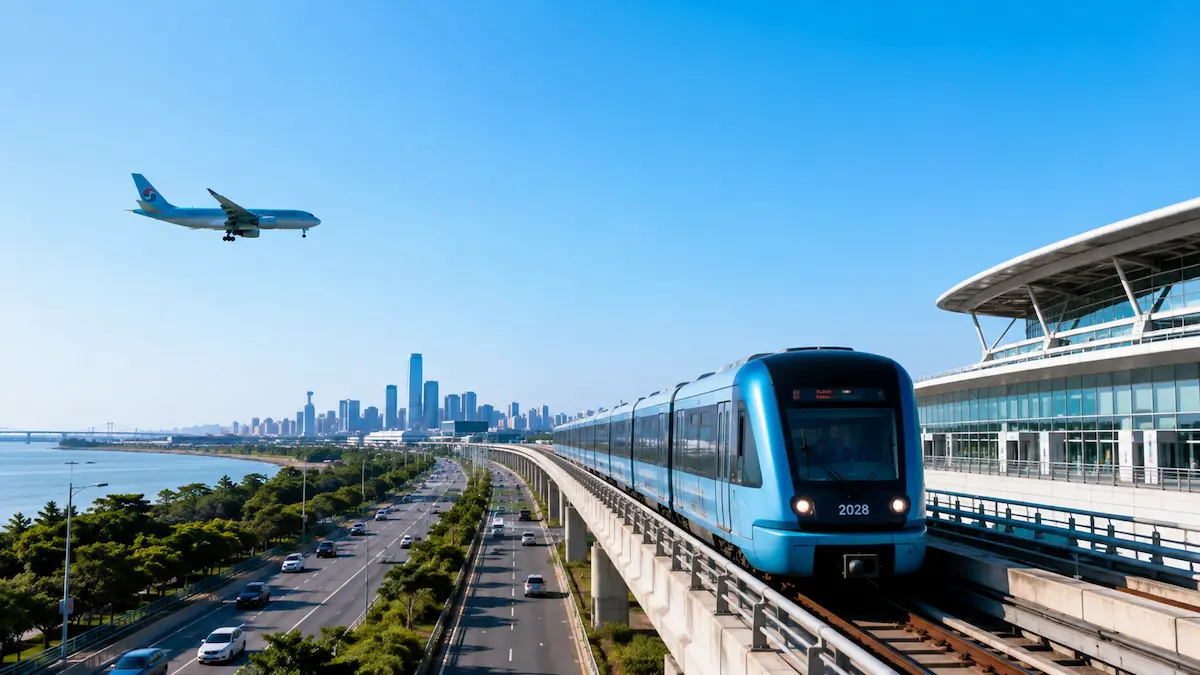
AREX is the first option most visitors see after leaving the arrivals hall, and it is genuinely one of the best airport rail links in Asia. The important detail is choosing the correct service.
Take the Express if you want a reserved seat, dedicated luggage space and a non-stop ride to Seoul Station. This is especially sensible if you are connecting to KTX, staying around Seoul Station, or simply do not want to stand after a long flight.
Take the All-Stop train if your hotel is near Hongik University (Hongdae), Gongdeok, Digital Media City, Gimpo Airport or another intermediate stop. It costs much less, runs frequently, and accepts a transportation card. The downside is that it behaves more like a commuter train: no guaranteed seat, less luggage space and potentially uncomfortable crowding during rush hour.
One trap I see repeatedly is travelers taking the Express to Seoul Station because “Express must be better,” then transferring back toward Hongdae. That is paying extra to travel past your destination.
✅ What Other Travelers Say
Recent traveler discussions are remarkably consistent: people like the reliability and clear airport signage, but many first-timers are confused by the two AREX products. Travelers also report that the All-Stop can feel very crowded during commuting hours and that the Express is most valuable when its departure time lines up well with your arrival.
⚠️ The Catch (Things to Keep in Mind)
- The Express saves less real-world time if you wait 25–35 minutes for departure while an All-Stop train leaves immediately.
- Express tickets and transportation-card taps are not the same thing. Do not walk to the wrong gate with the wrong payment method.
- If you arrive at Terminal 2, your trip is longer than from Terminal 1. Build that into hotel-arrival estimates.
- For a family with large luggage and a hotel far from a station, an airport bus or shared taxi can still be easier even if the train is faster on paper.
Best practical decision: Hongdae or Gongdeok = usually All-Stop. Seoul Station/KTX = usually Express. Myeongdong = compare Express + one transfer against a direct airport bus to a stop near your hotel.
Check the latest AREX schedule and fare information.
🚇 Incheon Subway: Best for Songdo, City Hall, Bupyeong and Cross-City Connections
Features: Low cost · Frequent service · English signage · Good after you reach inland Incheon
Incheon has its own metro lines integrated with the wider Seoul metropolitan rail network. Once you are in central Incheon, the subway is usually the cleanest and most predictable way to move between major districts.
However, do not assume the airport is directly connected to every major Incheon neighborhood by a simple subway ride. A classic example is Incheon City Hall: the official city route from the airport uses AREX to Geomam and then transfers to Incheon Subway Line 2. It works, but the published journey is around 1 hour 20 minutes. A bus can take a similar amount of time with less station walking, while a taxi can be much quicker depending on traffic.
That is why I think of the Incheon subway as the best city network, not always the best airport transfer.
If you are exploring Songdo, Central Park, Bupyeong, Incheon City Hall or connecting toward the old downtown area, the rail network becomes far more useful once you are already on the mainland. Use a Korean navigation app to see whether the recommended route sends you on a strange geographical detour.
✅ What Other Travelers Say
Travelers generally find the metropolitan subway easy to understand because line numbers, colors and English station names are clear. The complaints are rarely about the trains themselves; they are about long transfers, huge stations, rush-hour crowds and walking the wrong direction after exiting.
⚠️ The Catch (Things to Keep in Mind)
- Some transfer stations involve much more walking than the map suggests. With luggage, a five-minute “transfer” can feel much longer.
- Express or limited-stop services exist on parts of the wider rail network. Check that your train actually stops at your destination.
- Station exits matter. Save the exit number for your hotel or attraction before the train goes underground.
- Single-journey tickets are available, but a transportation card is much more convenient for repeated rides and bus transfers.
Best practical decision: use the subway aggressively for sightseeing days, but do not force it into an airport-to-hotel route when a direct bus or taxi eliminates two transfers.
Check Incheon’s official subway information.
🚌 Airport Limousine Buses: Best for Heavy Luggage and Hotels Near a Direct Stop
Features: Large luggage storage · No subway stairs · Direct hotel-area stops · Traffic dependent
The airport limousine bus is the option I recommend most often to travelers who hate dragging suitcases through stations. It is not always fastest, but it can be the easiest door-to-neighborhood journey.
For many Seoul routes, the fare is around KRW 17,000. You store large luggage underneath, sit in a proper coach seat and get off near major hotels or districts. If your accommodation is three minutes from a limousine stop, this can beat an AREX journey that ends with another subway transfer and a staircase.
There is one important 2026 change to know: Airport Limousine Co. states that passengers boarding its Seoul-bound services from Incheon Airport Terminal 2 must purchase a ticket before boarding, effective from March 5, 2026. Do not assume you can simply walk up and tap a card at T2 for every airport limousine service.
✅ What Other Travelers Say
Travelers with large suitcases often prefer the limousine bus after trying the train once. The most common positive comment is not about speed; it is about avoiding Seoul Station transfers and stairs. Riders also appreciate multilingual stop announcements and luggage storage.
⚠️ The Catch (Things to Keep in Mind)
- Traffic can destroy the timetable. A bus that is perfect at 10:00 can be frustrating during a major rush period.
- Your “direct” stop may still be 600–900 metres from the hotel. Check the walking route, not just the stop name.
- Different airport-bus operators have different routes, ticketing rules and boarding points.
- Do not confuse an airport limousine bus with ordinary city buses or intercity coaches. They may leave from different areas of the terminal.
Best practical decision: choose the limousine when it drops you close to your hotel and you value luggage comfort more than saving KRW 10,000.
Check current Airport Limousine routes and ticketing rules.
🚍 Incheon City Buses: Best for Cheap Local Links the Subway Does Not Serve Well
Features: Very cheap · Good local coverage · T-money friendly · Best with live navigation
Incheon’s local bus network is far more useful than many first-time tourists expect. It fills the gaps between rail stations, airport areas, neighborhoods and attractions that would otherwise require a taxi.
For example, Incheon City’s official airport-to-City-Hall guidance lists bus 303 as a direct option to Kuwol Middle School, followed by a short walk, with a published fare of KRW 2,600 and journey time around 1 hour 20 minutes. That is not dramatically faster than the subway, but it avoids a rail transfer and can be easier if you are comfortable watching your stop on a navigation app.
Regular Incheon bus fares vary by bus type. Standard trunk buses are much cheaper than airport limousine coaches, and transportation-card fares are generally lower than cash fares. More importantly, the card enables integrated transfer pricing when you move between buses and rail.
✅ What Other Travelers Say
Travelers who use Korean buses successfully tend to love the value and coverage. The learning curve is the issue: route variants, stop names and knowing when to press the stop button can feel more stressful than the subway on day one.
⚠️ The Catch (Things to Keep in Mind)
- Always confirm the bus number and direction before boarding. The same stop can serve many routes.
- Tap your transportation card when boarding and again when getting off.
- Large suitcases can be awkward on ordinary city buses. A cheap fare is not a bargain if you are blocking an aisle with two 28-inch cases.
- Bus travel times are vulnerable to traffic, especially on cross-city routes.
Best practical decision: use city buses for sightseeing and simple one-seat local journeys; avoid them as your first post-flight adventure if you have multiple large bags and no idea where your stop is.
Check official Incheon bus fares and route categories.
🚕 Taxis, Kakao T and Private Transfers: Best for Late Arrivals, Families and Awkward Hotel Locations
Features: Door-to-door · Best with luggage · Good for 3–4 people · Watch surcharges
Taxis are the option budget travelers often dismiss too quickly. Incheon is geographically huge, and there are situations where paying more for a car saves an hour, two transfers and a miserable walk.
Incheon’s current standard mid-sized taxi basic fare is KRW 4,800 for the first 1.6 km. Late-night surcharges apply between 22:00 and 04:00, with the highest standard-taxi surcharge in the 23:00–02:00 window. Inter-city surcharges can also apply when a taxi travels outside its home area. Airport-to-Seoul journeys cost much more than a normal city ride, so check the app or official taxi desk before committing.
For app booking, Kakao T is the domestic default, while k.ride is designed specifically for international visitors. Kakao T can be cheaper when you can access the regular taxi category, but app registration and foreign-card behavior can change. I strongly recommend setting up at least one taxi app before you fly rather than discovering an account-verification problem at 01:00 outside the terminal.
✅ What Other Travelers Say
Travelers like having the destination entered in the app because it removes the language problem and creates a ride record. Recent discussions also show that foreign-user registration can still be inconsistent for some phone numbers, which is why having k.ride or Uber Taxi as a backup is sensible.
⚠️ The Catch (Things to Keep in Mind)
- Late-night, inter-city and premium-vehicle surcharges can make a ride much more expensive than the first estimate you saw.
- At the airport, use the official taxi queue or a confirmed app/private-transfer booking. Ignore random people offering “taxi” rides inside the terminal.
- For a very early flight, pre-booking can be worth the premium because missing a flight costs far more than the transfer.
- If your app ride is canceled or marked complete while you are still in the vehicle, pay attention and keep the trip details. A digital ride record is useful if you need to dispute a problem.
Best practical decision: solo daytime traveler to Seoul = usually rail. Couple with two big suitcases = compare bus and taxi. Family of four to Songdo or a hotel far from a station = taxi/private transfer often wins on effort per person.
Check Incheon’s official taxi fare rules.
Practical Routes: What I Would Choose
- Incheon Airport → Hongdae: AREX All-Stop. It goes directly to Hongik University Station, so the Express usually adds cost and a backtrack.
- Incheon Airport → Seoul Station / KTX: AREX Express if the timing works; All-Stop if the Express wait is long or seats are sold out.
- Incheon Airport → Myeongdong: Compare a limousine bus stopping near your hotel against AREX Express + subway/taxi from Seoul Station. With heavy luggage, the bus often feels easier.
- Incheon Airport → Incheon City Hall: The official rail route is AREX to Geomam + Incheon Line 2; bus 303 is another low-cost option. With several suitcases, a taxi can be worth the time saved.
- Incheon Airport → Songdo: Do not assume rail is the obvious choice. Songdo is south of the airport, while the rail network can send you on a long inland detour. Check the current airport bus serving your hotel area or compare a taxi/private transfer.
- Songdo → Seoul: Check both metro and metropolitan express-bus options. Depending on your exact start point, a direct bus toward central Seoul can beat multiple rail transfers.
- Incheon sightseeing day: Use T-money, combine subway for the long legs and city buses for the last mile, and take a taxi only when the time saved is meaningful.
Airport Arrival Strategy: What to Do After Customs
- Confirm your terminal. Do not follow a saved screenshot from another traveler until you verify whether you are at T1 or T2.
- Open Naver Map or KakaoMap and enter the exact hotel. Compare door-to-door time, number of transfers and final walking distance.
- Decide how much luggage pain you will tolerate. One backpack and a carry-on is very different from two large suitcases plus a stroller.
- If taking AREX, choose Express vs All-Stop intentionally. Look at your destination, not just the words “Express Train.”
- If taking a bus, identify the operator, ticket point and stop number. Do not wait outside first and then discover you needed to buy the ticket inside.
- If taking a taxi, use an official queue or confirmed app booking. Keep your destination saved in Korean as well as English.
Key FAQs
What is the best transportation from Incheon Airport to Seoul for first-time visitors?
The best option depends on your hotel. Use AREX Express for Seoul Station, AREX All-Stop for Hongdae or Gongdeok, an airport limousine bus when it stops close to your hotel, and a taxi/private transfer when you arrive late or have heavy luggage. There is no single “best” option for every traveler.
Is T-money or the Seoul Climate Card better for an Incheon trip?
For most visitors mixing Incheon and Seoul, T-money is the safer choice because it works broadly across buses and subways and does not lock you into a specific service area. The Climate Card can save money on a Seoul-heavy itinerary with many rides, but its coverage rules mean it should not be treated as an unlimited Incheon Airport and Incheon city pass.
How do I get from Incheon Airport to Songdo with luggage?
Check a current airport bus serving your Songdo hotel or compare a taxi/private transfer. Rail is possible, but the network geometry can create a long detour and multiple transfers. With two or more travelers and large suitcases, a direct vehicle often provides better value than the cheapest rail route.
Final Verdict and Your Next Step
The best Incheon transport plan is not the one with the fanciest pass or the fastest train on paper. It is the one that minimizes transfers, luggage dragging, wrong exits and uncertainty for your specific hotel.
If you want the simplest rule set: use T-money for normal buses and subways, choose AREX All-Stop for Hongdae and intermediate stations, choose AREX Express for Seoul Station when the departure time suits you, use an airport limousine bus when the stop is close to your accommodation, and pay for a taxi or private transfer when your arrival time or luggage makes public transport unnecessarily painful.
For busy travel dates, early flights or late-night arrivals, I would rather reserve the critical airport leg in advance than arrive tired and start comparing five options at the terminal. Pre-booking is especially useful for reserved-seat AREX trips and private transfers, but do not pre-book a product just because it is discounted—make sure it fits your actual route first.
Book or compare before you fly:
- Klook: AREX Incheon Airport Express Train ticket — useful if Seoul Station is genuinely your best arrival point.
- Klook: Incheon Airport private and shared transfers — compare this for late arrivals, families and heavy luggage.
- KKday: Incheon Airport transfers, AREX and airport bus options — useful for comparing multiple transfer types on one page.
- Agoda: Incheon hotels and airport-area stays — useful if a late arrival makes an airport or Unseo overnight stay more sensible than forcing a midnight transfer.
One final warning: transport schedules, fares and app payment rules in Korea do change. Recheck your airport terminal, last train, bus stop and ticket rules shortly before departure. A two-minute check the night before can save an hour of dragging luggage in the wrong direction.