
💡 Key Takeaways
- Keep the Campo and civic sights together, give the Duomo hill a separate day, then use a slower southern loop rather than adding a distant Tuscan town.
- The Torre del Mangia is a same-day ticket decision, not an online skip-the-line booking. Rain or limited capacity can remove it from the plan.
- Current closures matter: the main Pinacoteca Nazionale is closed for works; Santa Maria della Scala is closed on Tuesdays under its winter timetable.
- Three days work best as an unhurried city stay. If you want a countryside excursion too, add time or deliberately remove a museum day.
A good 3-day Siena itinerary should leave you with enough energy to enjoy the evening, not simply prove that every hill can be climbed. The common planning mistake is to treat the Campo, the cathedral complex, multiple viewpoints and a countryside trip as interchangeable items on a small map. Their locations are close, but their entry rules, stairs and opening days do not line up that neatly.
This route uses three geographic themes: the Campo and northwestern edge, the cathedral hill, and the upper southern streets. It assumes three usable sightseeing days and accommodation in or near the historic center. The times and walking distances are planning allowances, not promises of a queue-free visit. Swap the order around closures before buying tickets.
The 1-Min Cheat Sheet
- Piazza del Campo, Museo Civico and optional Torre del Mangia: Best for first-time orientation and civic art. Allow 2–3 hours with the museum, longer if waiting for a tower slot. The square is free; civic museum and tower are paid separately or in eligible combinations. Walk from the Gramsci side or your central hotel. Tower-inclusive tickets are sold on the day, subject to capacity. Go early; the catch is roughly 400 tower steps and weather-related closure.
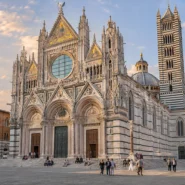
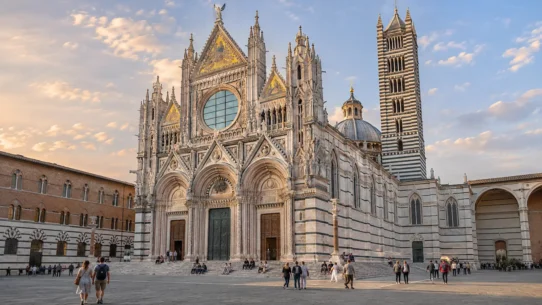
- Siena Cathedral complex: Best for art, architecture and a major interior. Allow 2–3 hours for a selective complex visit, more if you choose every included site. Buy the ticket that covers your desired sites and verify the dated opening calendar. Walk up to Piazza Duomo; book ahead when your dates are fixed. A weekday opening-time visit is a useful starting point; the catch is that a pass does not remove every capacity queue or include every roof experience.
- Santa Maria della Scala: Best for a slower museum visit and a useful indoor option. Allow 90 minutes–2 hours. Entry is paid, with municipal combinations sometimes available. It is directly opposite the cathedral. Advance purchase is an option, not a guarantee of universal priority. Place it after lunch on the Duomo day; the current winter Tuesday closure is the main scheduling trap.
- Palazzo Chigi Piccolomini alla Postierla and the upper San Pietro streets: Best for a smaller-scale art stop and a less crowded final day. Allow 45–60 minutes inside plus a neighborhood walk. The currently listed standard ticket is €4, paid by card. Walk from Via di Città to Via del Capitano 1. Check the exact opening day before committing; the catch is limited hours and a separate identity from the closed main Pinacoteca.
- San Domenico and the Fortezza side: Best for an open-air break and a change of perspective. Allow 60–90 minutes for a selective church-and-view walk. Ordinary church entry and a general exterior walk do not require a museum pass; events can change access. Reach the upper side on foot from the Campo. Late afternoon works well when daylight allows; avoid adding the steep Fontebranda descent simply because it appears close on the map.
Tourist Traps to Avoid & Itinerary Hacks
- Buying a tower “reservation” without reading the product. The municipal ticket page says tickets including Torre del Mangia cannot be reserved and are sold on the day. A walking tour or museum voucher is not automatically a guaranteed tower slot.
- Assuming all Siena museum passes are the same. The cathedral complex and municipal museums use different ticket systems. List the sites you actually want, check validity periods and redemption instructions, then compare the total. Do not purchase overlapping packages because both use the word “pass.”
- Using the Pinacoteca as a fixed indoor backup. The official main-gallery closure notice is still in place. The smaller Chigi Piccolomini alla Postierla is an alternative, not the entire national collection moved under a new name.
- Stacking three substantial interiors on the same afternoon. Siena rewards looking slowly. A cathedral complex, a major museum and a tower climb can exhaust your attention as effectively as your legs. Give one a generous slot and make the others optional.
- Turning a free square into an expensive compulsory meal. A drink on the Campo can be a deliberate experience. For a full meal, compare menus, cover charges and what is included before sitting down. The view does not tell you the final bill.
- Treating Palio week as an ordinary city-break week. The traditional race dates are 2 July and 16 August, with related activity around them. Check the municipality’s Palio information and current visitor notices. Routes, availability and the atmosphere around the Campo can change.
The Perfect 3-Day Itinerary at a Glance
Day 1: The Campo, Civic Siena and the Northwestern Edge
- Start around 09:00: Walk to the Campo, spend 30–45 minutes orienting yourself and identify the civic ticket office. If the tower is a priority, ask about that day’s availability first rather than arriving late with a full afternoon already booked.
- Late morning: Allow 60–90 minutes for the Museo Civico. If you secure a tower slot, follow the ticket office’s required order and timing. The climb is a separate physical decision; you can have a worthwhile day without it.
- Lunch and rest: Stay in the Campo–Banchi di Sopra area. Choose a menu before sitting and allow an actual seated break. Do not use the lunch hour to rush to the opposite edge of town.
- Afternoon: Walk toward San Domenico for 30–45 minutes, then continue toward the Fortezza side if you want open space and views. Allow another 30–45 minutes rather than committing to an exhaustive circuit. Return through the northern core for dinner.
- Effort and transport: About 3–5 km of city walking depending on your hotel, plus any tower steps. Walking is usually the sensible link between these stops; a taxi can help with the hotel leg if mobility or heavy bags make it worthwhile.
- Easy deletion and bad-weather alternative: Drop the tower or Fortezza first. In persistent rain, keep the civic museum and take a longer lunch. Do not replace a closed or unsafe tower with another exposed viewpoint.
Day 2: One Hill, Two Major Interiors
- Start at the cathedral’s published opening time: On ordinary winter weekdays this is currently 10:30, while Sunday and special-date rules differ. Have breakfast beforehand and arrive with a clear decision about which part of the complex you want to see.
- Morning: Give the Duomo complex 2–3 hours, with the cathedral and Piccolomini Library as a focused core. Add the museum, crypt or panorama only if they match your interest and energy. If you have a timed roof experience, make its instructions the anchor for the visit.
- Lunch: Stay around Via di Città or the upper cathedral side. A 60-minute rest here is more useful than walking back to a northern hotel solely because your schedule forgot to include a break.
- Afternoon: Cross the square to Santa Maria della Scala for 90 minutes–2 hours. If you are already museum-saturated, shorten the visit or move it within the ticket’s permitted validity rather than hurrying through both buildings.
- Effort and efficiency: Roughly 2–4 km including hotel legs, with interior standing and possible stairs adding effort. The two main stops face one another, so this is the day to minimize cross-city movement. Dinner can remain in the upper center or Campo area.
- Closure and rain plan: Under the timetable introduced 2 November 2026, Santa Maria della Scala is closed Tuesday. Swap this entire day with Day 3 if needed. Rain favors the interiors, but still allow time for wet-street movement and any ticket redemption.
Day 3: Postierla, the Southern Streets and a Flexible Finish
- Start around 09:30–10:00: Use the actual Chigi Piccolomini alla Postierla calendar to decide whether its 45–60-minute interior visit comes first. Thursday–Saturday currently offer the broadest ordinary hours; other days can have a shorter window.
- Route: Continue along the upper Via San Pietro streets, then choose one modest southern walk. You can turn back toward the Campo after a café break or continue toward the Porta Romana side if you actively want the extra distance. Treat that longer descent and return as a choice, not a hidden requirement.
- Lunch and afternoon: Eat in the upper southern or Campo area and leave time for the piece of the cathedral complex you deliberately deferred, shopping or a final leisurely circuit. This is useful spare capacity, not an invitation to add a distant town.
- Effort and transport: Around 2–4 km for the short version or 4–6 km with the longer southern loop. Keep enough energy for your departure route. If leaving that afternoon, have the hotel hold your bags and collect them before heading to the station or bus stop.
- Easy deletion and weather backup: Drop Porta Romana when wet, tired or short of daylight. If Chigi is closed, use a previously skipped open interior or a shorter café-and-street day. The closed Pinacoteca is not a dependable substitute.
- Why this order works: The flexible final day absorbs a missed museum, slow weather or a relaxed departure without forcing you to cross Siena several times to rescue a crowded timetable.
Save Your Legs! The Most Efficient Route
The route groups the Campo with the northwestern edge, keeps the cathedral and Santa Maria della Scala on their shared square, and leaves the southern lanes for a separate slower day. It avoids the exhausting habit of returning to the railway station between central sights. Use the official city map to check your hotel legs: the attraction-to-attraction distances are only part of your daily walking.
Do not add a Fontebranda descent and an immediate climb just to draw a complete loop. Likewise, the cathedral panorama and Torre del Mangia are two different stair-heavy experiences; one may be enough. Cobbles, narrow lanes and gradients make a large suitcase or stroller more awkward than a kilometer count suggests. Ask each attraction about the accessible route you need, rather than assuming that an escalator elsewhere in town solves access to the building.
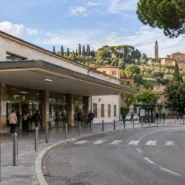
For accommodation, Campo and the upper Duomo streets make room breaks easy. Gramsci–La Lizza can simplify a bus-led arrival; Camollia can suit the northern station approach. The official arrival guide places the railway station outside the historic core. The mechanized connection helps with elevation but still leaves an onward walk. A taxi is worth considering for the luggage leg even if you walk between central attractions.
Arrange bag storage with your accommodation before arrival or departure. Do not assume a station locker exists, has space, or accepts your case merely because another city offers one. Drivers should use a confirmed parking plan and the property’s authorized ZTL instructions; a central hotel reservation alone does not permit unrestricted driving through Siena.
Ticket Tips & Skip-the-Line Hacks
Buy ahead when the purchase solves a real constraint. The cathedral complex offers official online ticketing and several visit options; the roof or Gate of Heaven experience has its own conditions. The floor is not fully visible year-round. The published 2026 uncovered-floor period has been extended to 15 November; that extension should not be treated as a promise for another year. Use the official dated calendar for your visit.
If comparing a third-party package, read the current Klook Opa Si Pass inclusions and redemption instructions. The product currently lists cathedral-complex sites and excludes Santa Maria della Scala and the Gate of Heaven roof tour. A July 2026 purchaser reported redeeming a voucher for a physical ticket; a September 2026 reviewer described a wait at the viewpoint. Those individual reports are a useful warning against assuming that an online purchase means direct phone scanning at every door or no internal queue.
For municipal sites, check the official civic ticket page before choosing a combination. A tower-inclusive ticket is a same-day, capacity-limited purchase, and combinations have conditions about visit order and validity. Online museum purchase can be useful, but do not label the entire day “skip the line.” The Campo and ordinary street walks are free; an advance ticket is unnecessary for walking through a square.
Affiliate disclosure: our Klook link contains an affiliate ID and may earn us a commission. Compare it with the official seller and the specific sites you want; paying for an unused bundle is not a saving.
Tried & Tested: An Honest Route Review
These are researched planning assessments based on current published access rules and the linked independent material. They do not claim a recent personal visit or a representative survey of travelers. Each video is distinct from the others in this article and from videos already used on this site.
📍 Stop 1: Piazza del Campo and the Civic Sights
Features: Civic art · Optional tower · First-day orientation
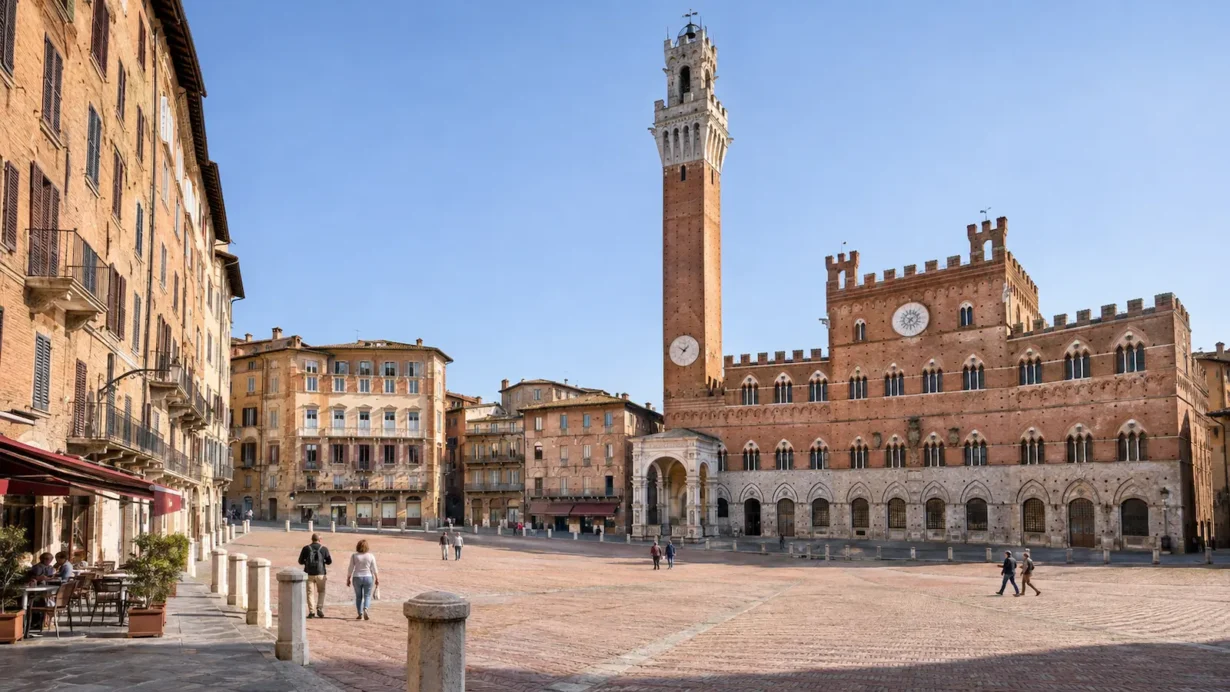
Use the square as an orientation space before turning it into a ticket schedule. Pick out the exit toward your next stop and decide whether you want an art interior, a tower climb or simply an unhurried hour in the open square. The civic museum is a strong indoor choice; the tower is a physical optional extra, not a test every visitor needs to pass.
✅ What Other Travelers Say
The linked independent Campo-and-streets walk provides a traveler’s visual context for the area. It cannot establish the waiting time for your chosen day. Your decision about the tower should follow the municipal capacity and weather rules, not the pace of a filmed walk.
⚠️ The Catch (Things to Keep in Mind)
The municipal tower page describes around 400 steps, no lift and closure in poor weather. Build your day around a fallback you actually like. If the climb disappears, keep the museum and use the saved time for lunch rather than chasing another elevated viewpoint.
📍 Stop 2: Siena Cathedral and Its Separate Visit Options
Features: Major interior · Multi-site choices · Watch the floor calendar
The cathedral complex deserves a clear priority list. If your interest is the cathedral and library, start there; if you are deeply interested in the collection or views, allow more time for the additional sites. A pass is permission to enter included places, not an obligation to rush through every one.
✅ What Other Travelers Say
The current Klook page contains individual travelers praising the complex and its viewpoint, alongside practical reports about voucher redemption and a viewpoint wait. Those reports describe particular visits rather than a reliable queue forecast. The linked walking film gives separate architectural context.
⚠️ The Catch (Things to Keep in Mind)
The famous floor is protected outside announced viewing periods, and religious services can change access. Roof experiences and the Facciatone panorama are not interchangeable. Verify the exact product, clothing requirements and any climbing restrictions before paying.
📍 Stop 3: Santa Maria della Scala
Features: Former hospital · Museum depth · Strong rainy-day choice
The temptation is to treat this as the museum you squeeze in because it faces the cathedral. It works better as a deliberate second half-day: allow time to sit, reset your attention and then choose the parts of the complex you most want to understand. Its value comes from the hospital’s spaces and stories, not from ticking another grand façade.
✅ What Other Travelers Say
The Frick Collection’s Travels with a Curator video is a specialist published perspective on Santa Maria della Scala, not a visitor satisfaction survey. It can help you decide whether the subject interests you before committing a large part of the afternoon.
⚠️ The Catch (Things to Keep in Mind)
Use the winter-hours notice effective 2 November 2026: Tuesday closure matters. Some weekday hours are shorter than weekend hours. A rainy Tuesday is therefore not a reason to assume this particular indoor backup is available.
📍 Stop 4: Palazzo Chigi Piccolomini alla Postierla
Features: Smaller art stop · Check opening day · Not the closed main gallery
This is the compact alternative that keeps the final day realistic while the main Pinacoteca is closed. Give it a focused visit and then enjoy the surrounding streets. Be precise with the name when planning: Siena has several palaces with Chigi or Piccolomini in their names, and they are not interchangeable attractions.
✅ What Other Travelers Say
Italia7’s published report introduces treasures at this specific palace. It is useful independent context for the site, rather than a claim about how long every visitor will spend or what temporary display will be present on your date.
⚠️ The Catch (Things to Keep in Mind)
The official visit page lists €4 standard admission and card-only payment, with day-dependent hours. It also describes accessibility limitations. Check those details directly before choosing it as a must-do, and keep the southern street walk as the easy substitute.
📍 Stop 5: San Domenico and the Fortezza-Side Walk
Features: Church pause · Open air · Avoid an unnecessary valley loop
This pairing breaks up the concentration of museums and gives Day 1 a softer finish. Visit the church respectfully, pause for the views and continue toward the more open Fortezza side only if you want the extra walk. In winter, move this outdoor section earlier rather than using a summer sunset schedule.
✅ What Other Travelers Say
Visit Siena’s published San Domenico–Fontebranda film provides local destination context. It is not evidence that the route between those two levels is effortless. A visually appealing descent still has to be regained if your hotel and dinner sit on the upper side.
⚠️ The Catch (Things to Keep in Mind)
Do not assume church access follows museum hours or that every exterior remains accessible during events. If your legs are tired, enjoy the upper viewpoint and turn back. Removing the descent is more effective than trying to save a few minutes elsewhere while keeping every climb.
Key FAQs
Is three days in Siena too long for a first visit?
Three days suits travelers who want major interiors, relaxed evenings and time to recover between hills. A highlights-only visitor can see less in less time; that does not make every extra hour a reason to add another distant town. This plan deliberately leaves space for slower looking and weather.
Can I visit Siena Cathedral and climb Torre del Mangia on the same day?
It can be possible, but the tower’s same-day capacity and the cathedral’s calendar make it an awkward fixed combination. Separating the Campo and Duomo days reduces the risk that one queue or missed slot disrupts both. Travelers who dislike stairs should choose their viewpoint rather than doing both by default.
Do I need a car for this 3-day Siena itinerary?
No. The core route links historic-center sights on foot, with an optional taxi for difficult hotel or luggage legs. A car introduces parking and ZTL decisions without making the narrow central walking route easier. Plan a countryside trip separately if that is a main reason for your visit.
Final Verdict and Your Next Step
Choose a single major focus each day: civic Siena, the cathedral hill, then the southern streets and a flexible finish. Confirm closures before fixing the order, keep the tower optional and protect the lunch break. That is how three days become a comfortable stay rather than a repeated climb between appointment times.
Next, place your hotel on the route and check the dated cathedral calendar. If the included sites fit your interests, compare the current Opa Si Pass package with the official ticket options. Read the voucher instructions and reserve only the experiences that actually need a commitment. Leave the rest of Siena enough room to surprise you.