
💡 Key Takeaways
- Use Siena as a slow base: three focused city days, a lighter northwestern day and one modest Monteriggioni outing. Five days do not need five packed checklists.
- Keep the Duomo and Santa Maria della Scala on one hill, and check their different calendars before fixing the order.
- Do not promise an open Pinacoteca, a prebooked Torre del Mangia slot or a complete walk around Monteriggioni’s walls. Current access rules say otherwise.
- Leave bags at your accommodation for day trips. A bus stop below a hill village is not the same as a drop-off inside its gate.
This Siena 5-day itinerary is for first-time visitors who want to stay overnight, enjoy the city after the day-trip rush and make one manageable excursion without changing hotels. It is deliberately slower than a “five Tuscan towns in five days” plan. Siena’s small map can hide the effort of hills, interior standing, ticket queues and getting from a regional transport stop to the place you actually came to see.
If you prefer only headline sights and have little interest in museums or unhurried evenings, five days may be more than you need in Siena itself. Choose a base that fits your arrival route and use this plan selectively. The walking amounts below are editorial allowances for a central stay, not measured accessibility routes. Reorder complete days around opening times instead of forcing a closed museum into the timetable.
The 1-Min Cheat Sheet
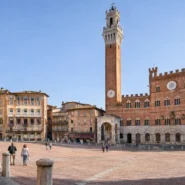
- Piazza del Campo and the civic sights: Best for first-trip orientation, civic art and an optional tower climb. Allow 2–3 hours with a museum visit. The square is free; museum and tower tickets are separate decisions. Walk from the northern bus-arrival side or your central hotel; tower capacity is handled on the day.
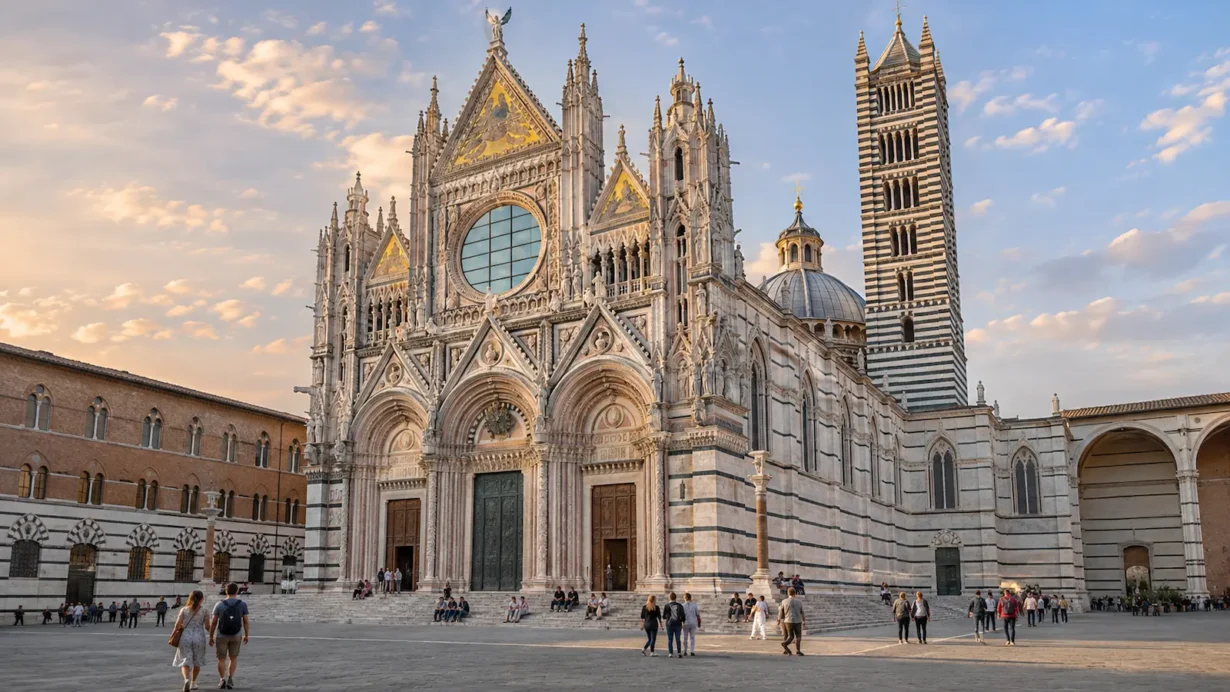
- Siena Cathedral complex: Best for art and architecture. Allow 2–3 hours for a selective visit, longer for additional sites. Compare the exact pass or experience and its dated calendar; walk to Piazza Duomo. Advance online purchase can be useful when your plans are fixed, but does not abolish every queue.
- Santa Maria della Scala: Best for travelers who want a substantial former-hospital museum rather than another quick façade stop. Allow 90 minutes–2 hours. Paid entry; it faces the cathedral. Its winter Tuesday closure must be allowed for.
- Palazzo Chigi Piccolomini alla Postierla: Best for a compact art visit while the main Pinacoteca is closed. Allow 45–60 minutes, subject to the day’s opening. Current standard admission is €4 with card-only payment; Via del Capitano 1 is within the upper old-town walking area.
- San Domenico: Best for a respectful church visit and a northern viewpoint pause. Allow 30–45 minutes, longer if the subject interests you. Ordinary church entry is free, subject to worship and local access arrangements. Walk from the upper center; the lower Fontebranda detour adds a climb.
- Fortezza and La Lizza side: Best for an open-air break after museum days. Allow 45–60 minutes for a modest exterior walk. General outdoor wandering does not need the cathedral pass; events can change access. It fits the same day as San Domenico.
- Pantaneto and the Porta Romana approach: Best for travelers who enjoy ordinary streets and a slower southern loop. Allow 60–90 minutes with pauses. The lanes and exterior gate are free. Walk outward from the Campo; remember the return and do not add a garden interior without checking it is open.
- Monteriggioni: Best for one small hill-village outing rather than a multi-town race. Allow a half-day including transport and around 2–3 hours in the village. Public streets are free; museum and wall access are separate. Check the actual AT bus journey and return stop, or arrange a taxi. The final climb and partial wall access are the catches.
The Most Practical 5-Day Itinerary
Day 1: Civic Siena and a Gentle First Evening
- Suggested start: 09:00 if you have a full day. Spend 30–45 minutes around the Campo before joining a ticket queue. If the tower matters, ask about that day’s available slots first. Allow 60–90 minutes for the Museo Civico and additional time for a tower visit if you choose it.
- Transport and pacing: Walk between the core sights. Plan roughly 2–4 km including hotel legs, with the tower’s steps adding a different kind of effort. If arriving after lunch, store bags first and make this a square-and-street afternoon; move the museum into later spare time.
- Lunch and optional deletion: Stay around the Campo or Banchi di Sopra, sit down and compare menus before ordering. The tower is the first item to remove if capacity, weather or energy makes it awkward.
- Rain and evening: Keep the civic museum as the indoor focus and shorten the exposed square time. For the evening, stay in the central lanes you have just learned rather than heading to a distant neighborhood. This first-day grouping prevents a long luggage transfer from being followed by a second full-city crossing.
Day 2: The Cathedral Hill Without a Cross-City Detour
- Suggested start: the cathedral’s actual opening time. Allow 2–3 hours for a focused complex visit. Put any timed roof experience first in your planning, then fit the cathedral, library and other selected sites around it. Do not assume Sunday follows an ordinary weekday morning.
- Lunch and rest: Stay on the upper Via di Città or cathedral side and allow about an hour. The purpose of the break is to restore your attention before a second interior, not to fill the interval with another hill.
- Afternoon: Cross Piazza Duomo to Santa Maria della Scala for 90 minutes–2 hours. If two major interiors are enough, finish there. If you have energy, use a short upper-center walk rather than traveling to the station or adding a countryside stop.
- Effort, optional deletion and rain plan: Roughly 2–4 km including hotel legs, plus interior standing and any selected climbs. Skip an extra cathedral-complex viewpoint before cutting the rest break. The interiors suit rain, but Santa Maria della Scala is closed Tuesday under its current winter calendar: move this whole day if necessary.
- Evening and efficiency: The upper center or Campo makes a sensible dinner area. The two principal visits face one another, so this is the day when a geographically tight plan saves the most effort.
Day 3: Postierla, Pantaneto and a Southern Walk
- Suggested start: 09:30–10:00, adjusted to opening. Allow 45–60 minutes at Palazzo Chigi Piccolomini alla Postierla if it is open and the access suits you. Its timetable is the reason to give the smaller site a flexible slot rather than trying to insert it between two appointments the previous day.
- Route and durations: Return through Via di Città toward the Campo, then follow the Pantaneto side outward toward Porta Romana. Allow 60–90 minutes for that street-and-gate section with pauses. The internal Ponte di Romana arch and the outer Porta Romana are different features; do not use one map pin for both.
- Lunch: Eat before the longer outward section or return to the upper center for lunch. Avoid reaching the city edge hungry and assuming a particular café will be open. Give the climb back the same respect as the attractive descent.
- Effort and optional deletion: Around 3–5 km for a central hotel, less if you turn back earlier. Porta Romana is an easy deletion: the day remains worthwhile as a smaller art visit and a short neighborhood walk.
- Rain and evening: Shorten the southern loop in wet weather. Use a previously deferred open interior rather than the closed Pinacoteca. Return to the Campo-side lanes for the evening. This keeps the day on the southern side and avoids combining it with a northern transport errand.
Day 4: San Domenico, the Fortezza Side and Spare Capacity
- Suggested start: around 10:00, after checking church access. Allow 30–45 minutes at San Domenico and some time for the upper views. Continue toward the Fortezza and La Lizza side for a 45–60-minute outdoor circuit. Do not automatically descend to Fontebranda and climb back up.
- Transport and lunch: Walk the upper-side links and choose a lunch break around the northern core or Gramsci side. With a central stay, roughly 2–4 km is a useful allowance. The route is easier to enjoy without the pressure of another timed interior.
- Afternoon choice: Keep this as genuine spare capacity: complete a museum you deferred within the ticket’s validity, shop for something you actually want or rest at the hotel. A five-day stay should allow a pleasant ordinary afternoon, not require a new attraction every hour.
- Optional deletion and rain: Drop the Fortezza circuit when the weather is unpleasant. If you move a cathedral visit here, check that the pass start date and conditions still fit. Do not buy a multi-site ticket on the assumption that it covers any arbitrary five-day period.
- Evening and efficiency: Choose dinner on the northern spine or near the hotel. This pairs two nearby upper-side stops and leaves the next morning’s excursion preparation simple.
Day 5: Monteriggioni as One Small Outing
- Suggested start: around 09:00, governed by the actual timetable. Check both outward and return journeys before leaving Siena. Monteriggioni’s official arrival guide lists AT 130 and 131 as principal routes near the castle but warns that not every run stops there. Use the journey planner for your date, including any Sunday or holiday change.
- Arrival and visit: The listed Colonna and Scuole stops are about 500 meters from the castle, with an uphill final approach. Allow time for this rather than treating the bus arrival as arrival inside the gate. Spend around 2–3 hours on the village, a break and any confirmed museum or wall visit.
- Lunch and transport choices: Eat in the village only after checking service and price, or return to Siena for a later lunch. A pre-arranged taxi can be sensible for a group or someone who cannot manage the final approach; agree the pickup and return plan rather than assuming a car will be waiting.
- Optional deletion and rain: The wall section is optional, and current access is partial. In persistent rain or on a day with an impractical return timetable, keep the outing in Siena. A train station with “Monteriggioni” in its name is not a drop-off at the castle: the tourism office places Castellina Scalo roughly 3 km away.
- Evening and efficiency: Return with daylight and connection buffers rather than adding San Gimignano or another town. Leave bags at your Siena accommodation, enjoy a final central dinner and keep this as one simple excursion from the same base.
Tourist Traps to Avoid & Itinerary Hacks
- Confusing five days with five full sightseeing lists. This itinerary deliberately uses spare capacity. If your interests do not fill the slower city time, shorten the Siena stay or replace a day consciously; do not purchase activities merely to justify the number of nights.
- Booking an impossible set of museums from an old opening-hours list. The main Pinacoteca is currently closed, Santa Maria della Scala has a Tuesday winter closure, and smaller sites can have limited days. Check the official pages before reserving the order.
- Using one ticket’s validity to justify bad geography. Municipal combinations and cathedral passes are different products. A cheaper combination can still be poor value if it forces an unpleasant stack of visits or includes places you do not want.
- Buying a generic “skip-the-line” promise for the tower. The civic seller explicitly says tower-inclusive tickets are not reservable. Read what the product actually grants, not just the photograph of a tower beside its title.
- Turning Monteriggioni into a three-town challenge. The last half-kilometer, waits and return stop matter. More towns on a map do not create more usable time, especially in winter or with reduced holiday services.
- Paying for an unspecified view. Both viewpoints and hotel rooms can involve steps, queues or limited access. Choose the view you will enjoy and can reach, then confirm the exact inclusion. You do not need every available panorama.
- Forgetting how the trip ends. An afternoon train or bus departure needs time to collect bags and reach the actual stop. Keep the final day lighter if departure replaces the last evening; do not schedule a rural return connection immediately before a long-distance booking.
Save Your Legs! The Most Efficient Route
Siena is small enough to tempt you into daily zigzags. This plan uses the Campo as a central orientation point, the Duomo hill for the biggest interior cluster, the southern streets for a slower outward walk, and the northwestern edge for open-air time. Only Monteriggioni requires an out-of-city transport decision. The geographic order is a planning framework; the current museum calendar takes priority over the printed day number.
The railway station is below the historic center, not a sensible daily reset point. If you are based centrally, go directly from one nearby sight to the next. Use the station escalator connection or a bus when it matches your arrival, and a taxi when it saves a difficult luggage leg. None of those choices makes a central sightseeing route step-free. The official city map is useful for checking which side of each slope your hotel and next stop occupy.
The Campo, Duomo and Postierla area can be connected on foot, but the tower, the Facciatone and roof experiences add concentrated stair effort. Choose deliberately. The Fontebranda valley, southern gate approaches and paved lanes can add gradients or awkward surfaces for strollers and rolling cases. Travelers needing an accessible visit should contact the individual site and accommodation for a route suited to them.
Keep one accommodation base for the full stay. Campo or the upper Duomo side favors repeated room breaks; Gramsci–La Lizza favors bus logistics; Camollia can suit a northern approach. Arrange hotel luggage storage for the excursion and confirm the departure collection time. Drivers should park according to the property’s instructions and current ZTL rules, rather than using a rental car between central stops.
Ticket Tips & Skip-the-Line Hacks
Start with the sites you want, then buy the product that covers them. The official cathedral visit page publishes the dated access calendar and online ticket route. Cathedral-complex tickets do not automatically cover Santa Maria della Scala or the municipal tower. Gate of Heaven roof visits require the appropriate separate option; do not mistake them for an ordinary viewpoint inclusion.
The official visitor FAQ lists OPA SI PASS validity as three consecutive days, with each site visited once. That can help spread a visit, but it does not make it a five-day pass. Cathedral-floor visibility is seasonal; the announced 2026 extension runs through 15 November. Beyond that, check the new calendar rather than carrying over the old dates.
For a third-party option, check the live Klook Opa Si Pass package and its voucher instructions. The package page currently describes a three-day product and excludes Santa Maria della Scala and Gate of Heaven. Past purchasers have reported exchanging a voucher for a physical ticket. Do not promise a direct phone-QR entrance everywhere just because confirmation is electronic.
The municipal civic ticket page is the authority for tower-inclusive sales, order and capacity. Buying museum entry online can be helpful; it does not reserve the tower. For Monteriggioni, the official attraction page currently describes partial south-wall access, and its displayed dated hours should not be treated as a winter guarantee. Confirm the operating day before paying. The village streets, city gates and ordinary square walks do not need advance admission.
Affiliate disclosure: the Klook link contains our affiliate ID and may earn a commission. Compare the current inclusions, price and cancellation rules with the official option before choosing.
Tried & Tested: An Honest Route Review
The following judgments combine published access information, route planning and distinct independent sources. They are editorial planning assessments, not a claim of a recent personal visit. Video dates and formats vary; an older film can explain a place without proving that every part remains open today.
📍 Stop 1: The Campo and Civic Siena
Features: Orientation · Civic art · Optional tower
This is the useful first-day anchor because it helps you learn the city before you commit to a string of entrances. Look at the square, choose a few details and leave time to sit. Add the civic museum when its art interests you; the tower is an extra decision based on capacity, weather and how you feel about a long stair climb.
✅ What Other Travelers Say
Walking Hunter’s published walking tour places the Campo within the surrounding old town. It offers traveler-produced visual context, not a waiting-time forecast. A filmed route can help with orientation but should not determine how much physical effort is comfortable for you.
⚠️ The Catch (Things to Keep in Mind)
A tower slot cannot be assumed or rescued by buying an unrelated online package. Keep the civic museum and square as a complete plan if the climb is unavailable. A simple first evening is more useful than rescuing every optional item.
📍 Stop 2: The Cathedral Complex
Features: Cathedral and library · Collection choices · Distinct roof options
Make a short priority list before entering. Siena’s cathedral complex is not a single room, and the viewpoints can introduce their own waits and steps. Give the cathedral and library a generous start, then choose additional sites according to your interest instead of treating the ticket as a race to complete every inclusion.
✅ What Other Travelers Say
Travels with Matteo & Micha’s video discusses the cathedral and the different monuments around it. Its broad overview is useful for deciding what appeals. It is not the current ticket contract, so compare the exact product with the official calendar before reproducing that full filmed visit.
⚠️ The Catch (Things to Keep in Mind)
Floor exposure, services, seasonal hours and roof bookings can change the experience. If a roof visit matters most, organize the day around its confirmed time. If stairs do not suit you, prioritize the interiors rather than adding a viewpoint because a pass mentions one.
📍 Stop 3: Santa Maria della Scala
Features: Hospital history · Major indoor stop · Calendar matters
This former-hospital museum works because it is both geographically convenient and different in character from the cathedral. Give it its own attention after a proper break. If you already know two substantial interiors in one day will be too much, split the visits within the ticket conditions or shorten one; the five-day stay gives you room to do that.
✅ What Other Travelers Say
Rocky’s Italy provides a published introduction to Santa Maria della Scala. Use it as a second perspective on the site’s subject and atmosphere, rather than evidence that every room or exhibition will match the film when you arrive.
⚠️ The Catch (Things to Keep in Mind)
The museum’s 2 November 2026 notice introduces winter Tuesday closure and different weekday/weekend hours. That is exactly why a generic “rainy-day museum” recommendation can fail unless it names a day that the museum actually opens.
📍 Stop 4: Chigi Piccolomini alla Postierla
Features: Compact art visit · Separate palace · Limited opening windows
The main Pinacoteca closure changes the sensible route. Chigi Piccolomini alla Postierla can provide a smaller art visit, but it should be described on its own merits. Do not expect the entire Pinacoteca collection, confuse it with Chigi Saracini, or buy a ticket merely because several palaces share similar names.
✅ What Other Travelers Say
Radio Erre Europa’s Italian-language Arte all’orecchio feature discusses this specific palace. It is an audio-led art perspective, not a room-by-room walking inspection or an accessibility demonstration. The format is made explicit so you can decide whether it helps your planning.
⚠️ The Catch (Things to Keep in Mind)
The official visit listing gives day-dependent hours, €4 standard admission and card-only payment, as well as accessibility limitations. Confirm the day before making it the anchor for a southern walk. A closed door should lead to a shorter pleasant route, not another frantic cross-city substitution.
📍 Stop 5: San Domenico
Features: Respectful church visit · Upper views · Optional lower detour
Give the church a calm visit rather than making it a photo stop between transport appointments. The upper position also makes it a useful place to pause before continuing toward the Fortezza side. Leave any Fontebranda descent optional so the afternoon does not acquire an extra climb by accident.
✅ What Other Travelers Say
The linked 2025 St Catherine and San Domenico video offers a published cultural perspective on the church. It is useful context for interested visitors, not a guarantee that worship, access or photography arrangements will match the recording on your day.
⚠️ The Catch (Things to Keep in Mind)
Treat a functioning church differently from a museum with a fixed timed admission. Dress and behave appropriately, respect services and keep an alternative upper-side walk in mind. If the route is tiring, shorten it before you descend into a valley.
📍 Stop 6: Fortezza and the La Lizza Side
Features: Open air · City context · A lighter day
The point of this stop is to change pace after the interiors. Choose a modest circuit, enjoy the broader setting and allow yourself to sit. It does not need to become a full perimeter walk followed by another viewpoint simply because the afternoon is free.
✅ What Other Travelers Say
Fabio Balocchi’s film includes drone footage of the Fortezza. It can help explain the overall form and setting, but aerial footage is not an on-foot access guide. It does not establish that every part visible from above is freely reachable during an event.
⚠️ The Catch (Things to Keep in Mind)
Weather and events can make an exposed outdoor stop a poor choice. Keep it flexible, and do not describe a light day as wasted time. The spare space is what allows the rest of the five-day itinerary to absorb closures or a slower morning.
📍 Stop 7: Pantaneto and the Porta Romana Approach
Features: Southern streets · Free exterior sights · Remember the return
This outward walk is for travelers who enjoy streets as much as ticketed attractions. Start with the Pantaneto side from the Campo and choose a comfortable turn-back point. The outer gate is a destination, not a compulsory finish: you can enjoy the route without descending farther than you want to climb back.
✅ What Other Travelers Say
Place2B Siena’s film explains the Ponte di Romana arch on Via di Pantaneto. That is an intermediate feature of this southern approach, not the outer Porta Romana itself. The distinction matters: the video supplies local context rather than pretending to show the entire suggested walk.
⚠️ The Catch (Things to Keep in Mind)
Do not turn a simple exterior route into a promise that every nearby garden or museum is open. In wet weather, reduced daylight or tired legs, cut the outward section and keep your energy for a comfortable evening and the next morning’s transport.
📍 Stop 8: Monteriggioni
Features: One small village · Bus or arranged taxi · Partial wall access
This is the one out-of-city stop because it can remain a modest outing. Enjoy the village at ground level, make a wall or museum visit only if it is open and appealing, and return without stacking another town onto the day. You have chosen a Siena base to reduce moving, so let that choice do its job.
✅ What Other Travelers Say
The published walking tour gives a traveler’s view of Monteriggioni. Like any older film, it should be separated from today’s operating status: the tourism office’s 2026 notice describes a partial reopening of the south wall, not unrestricted access to every section.
⚠️ The Catch (Things to Keep in Mind)
Verify the bus’s actual stop and return time. The tourism office warns that not every run of the principal routes stops near the castle. The final uphill walk remains part of the outing; if that does not suit you, arrange suitable transport or keep the day in Siena rather than improvising at the roadside.
Key FAQs
Is Siena a good base for five days without a car?
It can be, if you want slow city time and carefully chosen excursions. This plan uses one public-transport village outing and keeps the rest in Siena. If your real priority is visiting several scattered rural wineries or hill towns, compare an organized excursion or a different transport plan instead of assuming every rural stop has a convenient bus.
Can I use one sightseeing pass for all five days in Siena?
No single product should be assumed to cover this whole route. Cathedral and municipal museum products have different inclusions and validity periods, and the ordinary streets and church visits do not need them. Read the actual dates and entry rules before buying a combination.
Should I visit Monteriggioni and San Gimignano on the same day from Siena?
Only if you deliberately replace the relaxed half-day plan with a more transport-heavy day and verify every connection. For a first visit, one village leaves time to enjoy it and return with a buffer. A map showing the towns on the same side of Siena does not prove that the stops and timetables line up.
Final Verdict and Your Next Step
Five days in Siena work when you use the extra time to slow down. Keep the Campo, cathedral hill, southern streets and northwestern edge in separate manageable groups, then add one modest Monteriggioni outing if the timetable and weather fit. Protect the space that lets a late start or closure remain a small adjustment.
Your next step is to place these days on your actual calendar: check the museum closures, verify the excursion’s return journey and decide which cathedral sites interest you. Then compare the current Opa Si Pass package and voucher instructions with the official ticket options. Buy the access you want and keep the rest of the city flexible.