

💡 Key Takeaways
- Give the Campo and cathedral area priority, then choose one additional neighborhood rather than treating every church, tower and museum as compulsory.
- Plan around hills and actual opening days. Santa Maria della Scala is closed Tuesdays on its current winter schedule, and the Pinacoteca Nazionale is closed for renovation.
- Stay at least one night if you want a less compressed visit. Confirm the hotel entrance and arrival route before booking; central does not automatically mean easy with a suitcase.
This Siena travel guide for first-time visitors is for the moment when a beautiful list of medieval sights becomes an unrealistic day. You arrive below the old town, discover that the cathedral ticket has several versions, and realize the “quick” detour drops down a hill you must climb again. Siena rewards a smaller, better-connected plan more than an attempt to visit everything before the last train.
Start with two anchors: Piazza del Campo and the Duomo area. Add one side of the city according to your interests and stamina, leave time to eat, and make the return journey work before committing to a final museum. The neighborhoods below are practical walking areas, not claims that each has an official tourist boundary. Journey times are planning allowances; your pace, queues and stops decide the day.
The 1-Min Cheat Sheet
- One day: arrive with a settled station or coach transfer, see the Campo, choose the cathedral visit that interests you, and add either San Domenico or a neighborhood walk. Pick one demanding climb rather than collecting every viewpoint.
- Two days: give the civic and cathedral sights separate blocks of time, then add Santa Maria della Scala on an open day. Keep a northern or southern walk for a slower afternoon and enjoy Siena after day visitors leave.
- Where to stay: the Campo and Duomo suit landmark convenience; the northern Camollia corridor can suit station access and a walk into town; outer accommodation needs its own evening transport and parking calculation.
- Arrival: the railway station is below the center, while some coaches use the northern central bus area. A free rising route, urban bus or licensed taxi solves different final approaches. Check the actual arrival stop rather than assuming “Siena” means the Campo.
- Spending: choose the paid interiors you want, then compare tickets and inclusions. An attraction pass does not automatically include every tower, rooftop, museum or transport ride.
Top Survival Tips
- Check the date before building the route: museum closures, winter hours, religious services and events can change the sensible order. Recheck official pages shortly before travel rather than using a summer timetable for November.
- Do not book a generic cathedral promise: confirm whether the product includes the cathedral, the library, museum sites, the Facciatone and the separate Gate of Heaven rooftop visit. The marble floor is uncovered only during announced periods.
- Decide your tower priority early: the Torre del Mangia has limited capacity and tickets including it are sold on the day through the official local outlets. A third-party “Siena pass” name does not imply a reserved tower climb.
- Ask about the whole hotel entrance: the street approach, vehicle drop-off, steps and lift matter. A property described as central may still require a sloping walk with bags or stairs inside.
- Read menus as carefully as attraction tickets: check the displayed price, any cover charge and what an aperitivo includes before ordering. The Campo setting can be worth paying for; decide whether you want the view or a meal selected for the food.
- Respect the city’s daily life: church services, contrada traditions and residential lanes are not staged just for visitors. Keep noise down, follow photography rules and avoid blocking a narrow street for a photograph.
The Full Experience
📍 Piazza del Campo and the Civic Heart: Best for Your First Orientation
Essential landmark • Civic art • Tower tickets need a plan
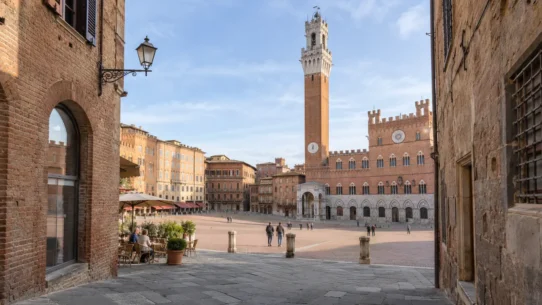
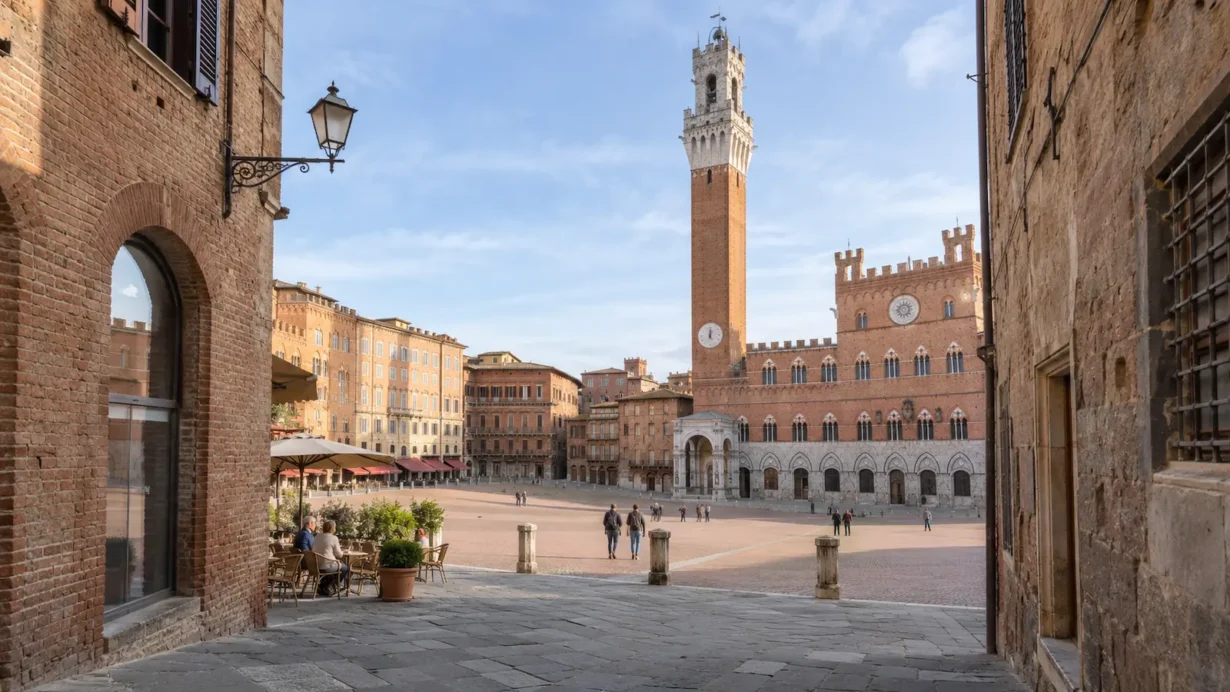
Begin at the Campo before you rush toward the next attraction. The sloping square, Palazzo Pubblico and surrounding streets give you a reference point for the rest of the visit. Walk the perimeter, find where your route entered, and look at the lanes leaving on different levels. This brief orientation pays off when you return later without following the phone at every turn.
Choose between lingering in the square, visiting the Museo Civico and climbing the Torre del Mangia according to your interests. The civic museum suits travelers who want art and political history rather than another panoramic photograph. The tower suits people comfortable with a demanding enclosed stair climb; it is not an accessible substitute for a viewpoint reached on a gentler walk.
The official civic museum visit page says tickets including the tower cannot be reserved and are sold only on the day at Palazzo Pubblico or Dear Guests. Winter tower hours are shorter, with the last listed entry at 15:15. Capacity and weather can stop a climb, so check availability early if it is a priority. The municipal tower page describes roughly 400 steps and no lift. Do not leave this decision until the last minutes before your return train.
A square-side drink can be an enjoyable, deliberate splurge. It becomes poor value only when you mistake a scenic seat for a guarantee of your preferred meal or price. Look at the menu before sitting down, and give yourself time to choose food elsewhere if eating matters more than the view. There is no need to turn one famous piazza into the setting for every purchase.
✅ What Other Travelers Say: Rick Steves’ short presentation helps explain why the square works as a civic meeting place. It is useful context for a first stop, rather than evidence that you need to buy a climb or sit at a particular café. Let the square be part of the visit, not simply a backdrop you leave after one photograph.
⚠️ The Catch (Things to Keep in Mind): Palio-related preparations and other events can transform access and the square’s atmosphere. The official Palio dates are July 2 and August 16, but the surrounding days also matter. Consult the municipality’s Palio visitor guidance and event notices if your trip overlaps; an ordinary sightseeing schedule may not work.
📍 Piazza Duomo and Santa Maria della Scala: Best for Art-Focused Visitors
Several ticket choices • Seasonal floor viewing • Give the area time
Treat the cathedral area as a substantial block of the day rather than a quick stop between lunch and a bus. The striped interior, Piccolomini Library and surrounding museum sites reward selective attention. If you love art, allow more time here and reduce the number of distant churches. If interiors are a lower priority, choose a smaller ticket and protect the rest of your day instead of buying a package out of fear of missing something.
Opera Duomo’s official visit page lists the complex’s passes and seasonal arrangements. The Opa Si Pass has a three-consecutive-day validity, which is useful on an overnight visit. Check whether the precise product includes the Gate of Heaven roof route: the ordinary complex package and the roof-inclusive option are different choices. Seasonal floor access is another detail to check for your date, not a feature to assume from a photograph.
Across the piazza, Santa Maria della Scala offers a different kind of visit in the former hospital complex. It is a strong candidate when you have a second day, poor outdoor weather or a particular interest in Siena beyond the cathedral. Its schedule introduced on 2 November 2026 closes the museum on Tuesdays, with shorter weekday winter hours and later weekend/public-holiday opening. Put it on a compatible day rather than arriving at a locked door.
Avoid an outdated plan that adds the Pinacoteca Nazionale as if it were operating normally. Its official visitor page currently lists a renovation closure for PNRR-funded works. Check that notice again before a future visit. A closed museum is a reason to reallocate time, not to fill the gap with another rushed hill crossing.
✅ What Other Travelers Say: The linked cathedral presentation gives a focused introduction to the interior and library. It can help you decide whether this is the visit to spend your time on. Older footage cannot establish today’s floor display, religious access or ticket package, so those details come from Opera Duomo.
⚠️ The Catch (Things to Keep in Mind): A combined ticket can tempt you into treating every included site as an obligation. Multiple queues, stairs and attention-heavy interiors are tiring. Choose your essential rooms and viewpoint first, then use spare time for the rest. Santa Maria della Scala and the Torre del Mangia are not automatically included in the cathedral pass.
📍 San Domenico and Fontebranda: Best for a Second Perspective on Siena
Religious heritage • Lower lanes • Plan the uphill return
San Domenico makes a useful counterweight to the dense streets around the Campo. Combine the basilica with the area associated with Saint Catherine, then decide whether to descend toward Fontebranda. This is a good additional walking area for someone who wants religious history and a change of perspective rather than another long museum session.
Use the official city map to understand the levels before committing to the lower lanes. A short line between the basilica and a fountain can include a meaningful descent. The better order depends on where you finish: if you need to return to a hotel near the Duomo, include the climb in your energy budget; if you are heading toward a suitable parking connection, a different loop may make more sense.
For a first day, this area works best after you have handled your main timed or ticketed commitment. You can then adjust the length of the walk without losing an admission. Keep church clothing and behavior appropriate, step aside for worshippers, and follow the photography policy in the building rather than assuming a video gives permission to film.
This is also a place to be selective with viewpoints. You do not need a paid tower, a cathedral panoramic climb and every outdoor vantage point in one day. If stairs or heights are unappealing, a carefully chosen outdoor walk can still make the city’s hills and roofscape part of the trip. Ask locally about the most suitable route if accessibility is a concern.
✅ What Other Travelers Say: The linked basilica recording offers a visual introduction to San Domenico, while its description highlights the need to respect photography rules. Treat it as orientation to the place, not a current opening-hours notice or an invitation to photograph everything you see.
⚠️ The Catch (Things to Keep in Mind): Fontebranda is not a level extension of the main shopping spine. The return can be the tiring part. If you have a stroller, mobility limitation or a fixed departure, settle the accessible route and time available before going downhill.
📍 Camollia, the Northern Spine and Fortezza: Best for a Gentler Start or Finish
Station-side approach • Flexible walking • Outdoor breathing space
The northern approach links Porta Camollia, Via Camollia and Via dei Montanini toward the central streets. It can make a practical base for someone arriving by rail who prefers a longer city walk to a complicated luggage transfer. Check the exact property: being somewhere in northern Siena does not mean it is directly beside the free rising route.
The station–Antiporto mechanized route is officially listed as open 24 hours and brings you near, rather than through, Porta Camollia. It removes much of the initial rise but still leaves street walking. For arrival with large cases, ask the host whether this route is sensible for that building or whether a taxi to a permitted drop-off is worth the cost.
For a break from concentrated sightseeing, consider the Lizza and Fortezza Medicea area. The official tourism page describes green space and elevated views. Use it as an optional outdoor interval when the weather and your feet cooperate, not another compulsory stop between museums. An open-air pause can be more valuable than buying a third interior when attention is fading.
On departure day, reverse the logic: a northern walk can work if your bags are already stored through an arrangement you have confirmed and you know how long the station approach takes. Do not leave luggage logistics to a casual assumption that every station or café stores cases. Ask your hotel about checkout and collection before planning a final stroll.
✅ What Other Travelers Say: The linked traveler’s route is especially useful because its description identifies Porta Camollia on the station-to-Duomo walk. It was filmed on a Palio date, so use it for route context and landmarks rather than as a model of a normal quiet arrival or a guaranteed journey time.
⚠️ The Catch (Things to Keep in Mind): The northern area is practical without being equally convenient for every landmark. A stay near Camollia can mean a longer return after dinner around the Campo. Compare the actual walking route, noise, reception hours and entrance steps before choosing purely for a station connection.
📍 Pantaneto, Via Roma and the Eastern Lanes: Best for an Unhurried Neighborhood Walk
Beyond the landmark circuit • Residential streets • Flexible duration
After the two principal sightseeing areas, the streets around Via di Pantaneto and Via Roma offer a different use of your time: walking without an admission checklist. Choose a small loop from the Campo side, follow the lanes that interest you and return before you become tired. This suits travelers who enjoy street details, neighborhood cafés and the feeling of a working town around the visitor sights.
Use the official map to decide how far south or east to continue. Porta Romana is an optional extension, not something to add because it looks only a little farther down the screen. A walk that feels easy while descending can become slow on the return, especially after a long cathedral visit. If you have only one day, a shorter loop here is more realistic than adding another distant attraction.
For food, let the displayed menu, opening hours and your appetite choose the stop. A lane away from the Campo is not automatically cheaper or better, just as a restaurant near a landmark is not automatically a trap. Look for a meal that fits the time available; sitting down late when you have a fixed last bus is a planning problem no restaurant recommendation can solve.
If you stay in this part of the city, ask about the arrival approach from the station and the nearest permitted vehicle stop. It may suit a relaxed overnight visit while being less convenient for a fast rail arrival with bags. The value of a neighborhood stay comes from the whole visit, not only the room price or a photograph of a charming lane.
✅ What Other Travelers Say: The linked film gives a traveler’s extended look at the eastern streets instead of concentrating only on the two headline piazzas. It can help you judge whether this kind of wandering appeals to you. Treat historical restaurant, market and business references as background rather than a current recommendation.
⚠️ The Catch (Things to Keep in Mind): There is no reward for walking every lane. Stop when the neighborhood has added something to your day, and leave energy for the return and dinner. Late in a short visit, another downhill extension can cost more than it contributes.
Key FAQs
Is one day enough for a first visit to Siena? One well-planned day can cover the Campo, a chosen cathedral visit and one additional walking area. It becomes rushed if you also add every museum and viewpoint. One or two nights give more room for civic art, Santa Maria della Scala on an open day, slower meals and an evening without a last-service deadline.
Where should first-time visitors stay in Siena without a car? Consider the Campo or Duomo area for landmark convenience, or the northern Camollia corridor when its station approach and longer central walk suit you. Check the actual entrance, steps and late arrival arrangements. An outer property can work well only if its transport and evening return fit your plans.
Which Siena attractions should I book or check before arriving? Compare cathedral ticket inclusions and any timed roof access, check Santa Maria della Scala’s current opening day and recheck the Pinacoteca closure notice. Tickets including the Torre del Mangia are sold on the day through official local outlets rather than reserved online. Check availability early if that climb is a priority.
Final Verdict and Your Next Step
For a first visit, build the day around the Campo and the cathedral area, then choose a side of Siena that fits your interests and stamina. Art lovers can give more time to interiors; families and slower walkers can shorten the paid program and use an outdoor break; photographers can choose one viewpoint instead of several demanding climbs. With only a day, protect time for the arrival, lunch and return as carefully as the headline sights.
Book the accommodation only after confirming its practical entrance, then check the official cathedral options against your intended visit. If you prefer Klook, compare the Siena Cathedral Complex Opa Si Pass product, checking the current inclusions, redemption instructions and cancellation conditions. The listed package excludes Santa Maria della Scala and the Gate of Heaven rooftop tour; it is not a city transport pass.
Affiliate disclosure: The Klook link is an affiliate link. If you book through it, this website may earn a commission at no extra cost to you.
Reserve the option that matches your interests rather than the largest-sounding bundle, and recheck official opening notices before departure. A clear arrival route, two strong priorities and space to enjoy the streets make a better introduction to Siena than a day spent trying to recover an overfilled schedule.