
💡 Key Takeaways
- Do not choose transport by headline travel time alone. The AREX Express takes just 43 minutes from Terminal 1 to Seoul Station, but a long station transfer, another subway ride or a 15-minute luggage drag can wipe out that advantage.
- For Hongdae, the cheaper All-Stop train is often smarter than the Express. It goes directly to Hongik University Station, while the Express overshoots to Seoul Station and forces you to backtrack.
- Late arrival does not automatically mean an expensive taxi. Seoul has several late-night airport bus routes, but they are infrequent and may still leave you needing a short taxi ride to your hotel.
Figuring out how to get from Incheon Airport to Seoul city center looks easy until you are standing in the arrivals hall with two suitcases, a tired travel companion and five different transport options on your phone. The fastest train may not take you closest to your hotel. The cheapest train may mean standing with luggage in commuter traffic. A limousine bus can save your legs but lose time in Seoul traffic. A taxi is wonderfully simple, yet late-night surcharges and unofficial touts are real things to watch for.
This guide focuses on the journey that actually matters: from the airport terminal to your accommodation door. Seoul does not have one single “city center,” so the right answer changes depending on whether you are staying near Seoul Station, Myeongdong, Hongdae, Gwanghwamun, Dongdaemun, Gangnam, COEX or Jamsil.
Last fact-checked: August 2026. Current fares and operating details below were cross-checked against AREX, Incheon International Airport and Airport Limousine. Transport prices and timetables can change, so travelers arriving very late should still check the operator timetable on the day of travel.
The 1-Min Cheat Sheet
- AREX Express — best for Seoul Station and predictable timing: ₩13,000 adult fare, reserved seat, no traffic, about 43 minutes from Terminal 1 or 51 minutes from Terminal 2 to Seoul Station. Excellent if your hotel is near Seoul Station or your next connection is easy. Less convincing if you must cross Seoul Station with heavy luggage and transfer again.
- AREX All-Stop Train — best value and often best for Hongdae: ₩4,750 from Terminal 1 or ₩5,350 from Terminal 2 to Seoul Station; around 59 or 66 minutes respectively. It stops at Hongik University, so Hongdae travelers can avoid the unnecessary trip to Seoul Station. The trade-off is commuter-style seating, no seat reservation and possible crowding.
- Airport Limousine Bus — best for heavy luggage and hotels near a bus stop: many central Airport Limousine routes cost ₩17,000 for adults. The big win is fewer stairs and less suitcase hauling. The big risk is road traffic, and some routes make several downtown stops before yours.
- Taxi or private transfer — best for late arrivals, families and groups: door-to-door convenience is hard to beat when three or four people are splitting the cost. As a useful official benchmark, Seoul’s International Taxi service lists standard-car flat fares of roughly ₩70,000–₩95,000 depending on the Seoul zone. Ordinary metered taxis vary with distance, traffic and time of day.
- Late-night airport bus — the budget rescue after normal services thin out: routes such as N6000, N6002, N6701 and N6703 serve different parts of Seoul for roughly ₩17,000–₩18,000 per adult. They are much cheaper than a solo taxi, but schedules are sparse and the final stop may not be close to your hotel.
Top Survival Tips
- Choose by your hotel location, not by the words “Seoul city center.” A direct bus to a stop 200 metres from your hotel can be better than a faster train that leaves you with another subway transfer.
- Count the last kilometre. Open your hotel location before buying a ticket and check how far it is from Seoul Station, Hongik University Station or the nearest airport-bus stop. With a 20-kilogram suitcase, a “10-minute walk” can feel much longer.
- Do not confuse AREX Express with the All-Stop train. Both use the airport railway corridor, but the Express is reserved-seat and nonstop to Seoul Station; the All-Stop train behaves like a metro service and stops at intermediate stations.
- Hongdae travelers should think twice before buying the Express. The All-Stop train reaches Hongik University directly. Paying more to ride past Hongdae to Seoul Station and then doubling back is one of the easiest first-day mistakes to avoid.
- Terminal 1 and Terminal 2 are not interchangeable. Confirm your arrival terminal before saving a bus bay, train departure or pickup instruction. Following a guide written for the wrong terminal can cost valuable time.
- If you use an Airport Limousine bus from Terminal 2, buy the ticket before boarding. Since March 5, 2026, Airport Limousine requires passengers on its Terminal 2 Seoul-bound routes to obtain a ticket first at the B1 counter or ticket machine.
- Watch the baggage rules on airport buses. Airport Limousine’s published allowance generally covers up to two pieces under 28 inches and under 20 kilograms each, or one larger piece; extra baggage can trigger an additional fee. Families with several large suitcases should calculate this before assuming the bus is automatically cheapest.
- Never follow a random person offering you a “taxi” inside the terminal. Incheon Airport itself warns about illegal solicitation and overcharging. Use the designated taxi rank or a pre-arranged pickup with clear driver details.
- Late-night taxis cost more. Seoul’s standard taxi night surcharge is 20% from 22:00–23:00, 40% from 23:00–02:00 and 20% from 02:00–04:00. That can materially change the group-vs-train calculation.
- Save your hotel name and address in Korean. It reduces confusion with taxi drivers and makes it easier to verify the correct bus stop, especially when several hotels have similar English names.
- Do not rely on old screenshots of airport fares. Some older Seoul transport pages and travel posts still show previous AREX prices. Check the current operator fare before budgeting.
The Full Experience
🚆 AREX Express: Best for Seoul Station, Predictable Timing and a Stress-Free Seat
Fastest rail option · Reserved seat · No road traffic · Best with light-to-medium luggage · Poor value if you must backtrack
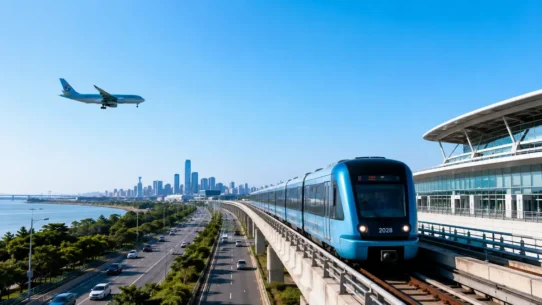
If your hotel is near Seoul Station, or if you simply value a guaranteed seat and a predictable journey after a long flight, the AREX Express is the cleanest public-transport answer. It runs nonstop between Incheon Airport and Seoul Station. The current adult fare is ₩13,000, and the published journey takes about 43 minutes from Terminal 1 or 51 minutes from Terminal 2.
The biggest advantage is not only speed. It is certainty. You are not sitting in motorway traffic wondering whether a 70-minute bus ride will become a 110-minute bus ride. You also get a reserved seat, which matters more than it sounds when you have just stepped off a long-haul flight.
At the airport, follow signs for Airport Railroad/AREX and make sure you are entering the Express Train area rather than the All-Stop gates. The train ticket and customer-service areas are on B1 at both airport terminals; Seoul Station’s Express facilities are on B2.
The important reality check: “43 minutes to Seoul” does not mean 43 minutes to Myeongdong, Insadong or Gangnam. Seoul Station is large. Depending on your exit and onward line, the transfer can involve corridors, lifts, escalators and more walking than a tired traveler expects. If your hotel requires another metro ride plus a street walk, compare that whole journey with a direct airport bus before paying extra for the Express.
For Myeongdong, the Express can still be a strong choice if you travel light: reach Seoul Station, then take Line 4 or a short taxi. With two big suitcases, however, a bus that drops near your hotel may be less exhausting even if its timetable looks slower on paper.
For Hongdae, the Express is usually the wrong instinct. It does not stop at Hongik University Station. Unless you have another reason to visit Seoul Station first, the All-Stop train is usually cheaper and more direct.
Current operating window: the official August 2026 timetable lists the first Express departure at about 05:16 from Terminal 2 and 05:24 from Terminal 1, with the last at about 22:40 from Terminal 2 and 22:48 from Terminal 1. Always re-check if your flight lands close to the final departure because immigration, baggage delivery and terminal walking time are unpredictable.
✅ What Other Travelers Say
Recent traveler discussions consistently praise the Express for being simple, calm and easy after a long flight, especially when Seoul Station is the real destination. Travelers also point out that popular departures can feel more constrained than the frequent All-Stop service because Express seats are assigned. The recurring theme is that the Express feels worth the premium when it removes uncertainty — not merely because it is faster on paper.
⚠️ The Catch (Things to Keep in Mind)
- Seoul Station may not be your destination. Add the time and effort of your onward transfer before calling the Express “fastest.”
- You can miss a tightly timed train after landing. Immigration and baggage times are not under your control, so avoid planning a connection with no buffer.
- It is poor value for Hongdae. The All-Stop train serves Hongik University directly.
- Very late arrivals need another plan. The Express finishes before midnight.
Official timetable and fare information: AREX Express information and AREX Express timetable.
🚇 AREX All-Stop Train: Best for Hongdae and Travelers Who Want the Lowest Rail Fare
Cheapest rail option · Direct to Hongdae · Frequent · T-money friendly · No reserved seat · Can get crowded
The AREX All-Stop Train is the option budget travelers often underestimate. It uses the same airport railway but stops at intermediate stations, including Hongik University, before reaching Seoul Station. The current fare to Seoul Station is ₩4,750 from Terminal 1 and ₩5,350 from Terminal 2. The operator lists roughly 59 minutes from Terminal 1 and 66 minutes from Terminal 2, although some services take a few minutes longer.
That difference versus the Express is smaller than many people expect once you factor in waiting time. If an All-Stop train is arriving soon while the next Express requires a longer wait, the real door-to-door gap can shrink considerably.
The biggest strategic advantage is Hongdae. Hongik University Station is on the All-Stop line, so you can ride directly from the airport without overshooting to Seoul Station. If your accommodation is around Hongdae, Yeonnam-dong or the airport-railway side of the neighborhood, this is often the best balance of price, simplicity and travel time.
You can use a compatible Korean transit card such as T-money, or buy a single-use ticket. Unlike the Express, there is no reserved seating. Think of it as an airport train that gradually turns into a commuter train as it approaches Seoul.
That is also its main weakness. At the airport you have a better chance of boarding before the train fills, but the carriage can become busy closer to the city. Large suitcases are manageable, yet you may have to stand, protect your luggage from blocking doors and navigate a crowded platform at your stop.
For Seoul Station, choose the All-Stop train if saving roughly ₩7,650–₩8,250 per person matters more than shaving off travel time and having a reserved seat. For a family of four, that difference is no longer pocket change.
✅ What Other Travelers Say
Travelers staying in Hongdae frequently describe the All-Stop train as the obvious choice because it is direct, inexpensive and frequent. Others like the freedom of not planning around a reserved Express departure. The main complaint is not the journey time; it is the commuter-style experience when the train gets busy and you are managing large bags.
⚠️ The Catch (Things to Keep in Mind)
- No guaranteed seat. If standing for an hour after a long flight sounds miserable, the fare saving may not be worth it.
- Crowding increases toward Seoul. Keep luggage compact and do not assume you can spread out around the doors.
- Cheapest does not always mean easiest. A budget rail fare followed by two metro transfers can be a false economy for travelers with mobility issues or several suitcases.
- Check the destination display. Late services can have different terminating stations; verify the train you board will take you where you expect.
Official fare and train information: AREX All-Stop information and AREX fare policy.
🚌 Airport Limousine Bus: Best for Myeongdong, Downtown Hotels and Heavy Luggage
Minimal luggage hauling · Multiple hotel-area stops · Usually ₩17,000 · Traffic-sensitive · Excellent when the stop is close to your hotel
The word “limousine” sounds luxurious, but Seoul’s Airport Limousine buses are really comfortable airport coaches with under-floor luggage storage and routes designed around major hotel and business districts. For travelers with large bags, this can be the most humane way to enter Seoul.
Many central Seoul Airport Limousine routes currently charge ₩17,000 per adult. You place your main suitcase in the luggage hold, sit down and avoid hauling it through major railway stations. If the bus stops within a few minutes of your hotel, that convenience can beat the AREX even when the road journey is longer.
Myeongdong and nearby downtown: routes 6001 and 6015 are especially useful to investigate. Route 6001 serves areas including Seoul Station, Namdaemun, Myeongdong Station and Chungmuro. Route 6015 serves Gongdeok, Namdaemun, central Myeongdong/Euljiro, Chungmuro and Myeongdong Station.
Hongdae, Gwanghwamun and Dongdaemun: route 6002 serves Hapjeong, the Hongik University area, Sinchon, Gwanghwamun, Jongno and Dongdaemun before continuing farther east. If your hotel is next to one of its stops and you have bulky luggage, it can be more comfortable than the All-Stop train even though rail is usually more predictable.
Gangnam, COEX and Jamsil: the broader airport-bus network is often more attractive than going all the way to Seoul Station and then crossing the city again. Always verify the current stop closest to your hotel, because route patterns and operating hours can change.
The hidden variable is traffic. A bus that looks perfect at 11:00 can be frustrating during a heavy evening commute. Seoul’s roads are not equally bad every day, but unlike the train, a bus cannot guarantee its city-arrival time. If you have a dinner reservation, performance ticket or same-day appointment you absolutely cannot miss, rail usually gives you a better timing buffer.
There is also a small but important 2026 Terminal 2 rule change: since March 5, passengers boarding Airport Limousine’s Seoul-bound routes from Terminal 2 must buy a ticket before boarding at the B1 ticket counter or vending machine. Do not walk straight to the bus expecting to pay the driver.
Baggage is not unlimited. Airport Limousine’s published rules generally allow two pieces under 28 inches and under 20 kilograms each, or one piece larger than 28 inches. Extra luggage can cost an additional ₩8,000 per item. A family traveling with several checked bags, cabin bags and a stroller should confirm the allowance rather than assuming the coach will take everything for one fare.
✅ What Other Travelers Say
Travelers with big suitcases often say the airport bus wins because they can avoid station stairs, long corridors and repeated transfers. The most common frustration is traffic: riders report that the downtown portion can feel slow when their hotel is one of the later stops on a loop. In practice, satisfaction depends heavily on whether your hotel is near an early, convenient stop.
⚠️ The Catch (Things to Keep in Mind)
- Traffic is the price of convenience. Build a larger time buffer during peak periods and on busy arrival days.
- “Near the hotel” needs checking. A bus stop across a major road or uphill from your accommodation may still be awkward with luggage.
- There may be a luggage surcharge. Count every large item before comparing the bus with a taxi for a family or group.
- Do not assume you can reserve every Airport Limousine seat online. The operator states that its own airport-to-Seoul ticketing is handled at the airport rather than through a general online booking system.
- At Terminal 2, buy before boarding. This is easy to miss if you are following an older blog post.
Official route information: Airport Limousine routes and notices.
🚕 Taxi or Private Transfer: Best for Late Arrivals, Families, Groups and Door-to-Door Ease
Door to door · 24/7 availability · Best with several travelers · Zero transfers · Higher cost · Watch night fees and unofficial touts
A taxi is not the budget winner for one traveler, but it becomes much more reasonable when the alternative is buying three or four separate airport tickets, making a transfer and then paying for a short local taxi anyway.
For a transparent price benchmark, Seoul’s official International Taxi service publishes standard-car flat fares of approximately ₩70,000 to ₩95,000 from Incheon Airport to Seoul depending on the destination zone. Its deluxe/large-vehicle rates are higher. Ordinary Seoul taxis use metered fares, so the final amount depends on destination, road conditions and time of day.
Groups should calculate cost per vehicle, not cost per person. Four travelers paying ₩17,000 each for a limousine bus already spend ₩68,000 before any final taxi from the bus stop. If all four fit legally and comfortably in the correct vehicle with their luggage, a taxi or pre-booked transfer may be competitive while removing every transfer.
The same logic applies to parents with children, travelers with mobility limitations, anyone carrying sports gear and people landing after the last convenient train. You are paying for fewer failure points: no ticket machine, no station navigation, no missed stop and no luggage drag at the end.
For ordinary taxis, use only the designated taxi stands. Incheon Airport specifically warns travelers about illegal solicitations and overcharging by vehicles posing as legitimate taxi services. Do not negotiate with someone who approaches you in the arrivals hall.
Night pricing deserves attention. For Seoul standard taxis, the published surcharge is 20% from 22:00–23:00, 40% from 23:00–02:00 and 20% from 02:00–04:00. The airport-to-Seoul trip does not carry Seoul’s intercity boundary surcharge, but late-night pricing can still make a noticeable difference.
A pre-booked private transfer is worth considering when you want a named pickup process, a vehicle sized for your group or clearer pricing before you fly. Read the package conditions carefully: vehicle class, suitcase capacity, waiting-time allowance, flight-delay policy, child-seat fees and night surcharges vary by provider and package. The cheapest listing is not necessarily the cheapest once those extras are added.
✅ What Other Travelers Say
Travelers most often justify taxis and private transfers for convenience rather than speed alone. Groups with multiple large bags repeatedly point out that the price difference shrinks once several public-transport fares and a final hotel transfer are added together. Solo travelers, by contrast, generally see taxis as a premium purchase unless they arrive very late or have an awkward hotel location.
⚠️ The Catch (Things to Keep in Mind)
- Traffic still applies. Paying more does not create a private motorway into Seoul.
- Vehicle capacity matters. Four adults plus four full-size suitcases may require a larger vehicle even if four passenger seats technically exist.
- Late-night pricing can jump. Ordinary Seoul taxis have a 40% surcharge during the deepest late-night period from 23:00 to 02:00.
- Private-transfer fine print varies. Check waiting time, luggage limits, additional stops and out-of-zone fees before paying.
- Avoid unofficial offers. Use the official rank or a booking with identifiable pickup instructions.
Official taxi information: Incheon Airport taxi guide and International Taxi official site.
🌙 Late-Night Airport Bus: Best When Your Flight Lands After the Regular Train Window
Cheaper than a solo taxi · Runs through the night · Sparse timetable · Route-specific · May still require a short taxi to your hotel
One of the most useful things to know before a late flight is that missing the AREX Express does not automatically force you into a ₩70,000-plus ride. Incheon Airport lists several overnight bus services linking the airport with major Seoul districts.
Current examples include N6000 toward Gangnam Express Bus Terminal, N6002 toward Cheongnyangni via areas including Hongdae and central Seoul, N6701 toward Dongdaemun Design Plaza via Mapo, Seoul Station and Euljiro, and N6703 toward the Gangnam/Jamsil side via areas including COEX. Adult fares are generally around ₩17,000–₩18,000 depending on the route.
This is the option travelers often discover too late. It can save a solo traveler a substantial amount of money, but it requires more planning than daytime transport. Overnight services are not frequent, and the nearest stop may still be several kilometres from your hotel. If you need a local taxi after getting off the bus, have your hotel address ready in Korean.
✅ What Other Travelers Say
Late-arriving travelers value the night buses because they provide a middle ground between waiting for morning rail service and paying for a full airport taxi. The main complaint is schedule anxiety: if immigration takes longer than expected and you miss one departure, the wait for the next bus can be significant.
⚠️ The Catch (Things to Keep in Mind)
- The network is useful, not frequent. Check your terminal’s exact departure time before landing if possible.
- Your final stop may not be walkable with luggage. Budget for a short local taxi if needed.
- Do not choose a route only because its destination name looks familiar. Check the actual stop list and which side of Seoul it serves.
- If your flight is heavily delayed, a pre-booked transfer with a clear delay policy may still be safer.
Official overnight-bus information: Incheon Airport Terminal 1 late-night buses and Terminal 2 late-night buses.
Which Option Is Best for Your Seoul Area?
- Seoul Station: take the AREX Express if you want the simplest and most predictable ride. Take the All-Stop train if budget matters more than reserved seating.
- Hongdae / Yeonnam-dong: start with the AREX All-Stop train to Hongik University. Choose bus 6002 instead if your hotel is much closer to its stop and you have large luggage.
- Myeongdong / Namdaemun / Chungmuro: compare Airport Limousine 6001 or 6015 with AREX Express plus Line 4 or a short taxi. With heavy luggage, the bus often wins on effort; with a tight schedule and light luggage, rail usually wins on predictability.
- Gwanghwamun / Jongno / Dongdaemun: bus 6002 can be very convenient for a hotel near its route. Rail is safer when traffic risk matters. After midnight, check N6002 or N6701 before defaulting to a full airport taxi.
- Gangnam / COEX / Jamsil: a direct airport bus, N6703 late at night, or a taxi/private transfer is usually more logical than traveling north-west to Seoul Station and then crossing the city again.
- Family or group of 3–4 with several suitcases: price a private vehicle before buying separate rail or bus tickets. Once public-transport fares, baggage hassle and a final taxi are included, the difference can be surprisingly small.
Key FAQs
What is the cheapest way to get from Incheon Airport to Seoul city center?
For most travelers, the AREX All-Stop train is the cheapest straightforward rail option. Current fares to Seoul Station are ₩4,750 from Terminal 1 and ₩5,350 from Terminal 2. It is especially good value for Hongdae because it stops at Hongik University directly. If your hotel requires several onward transfers, however, calculate the full trip rather than choosing purely by the airport fare.
What is the best way to get from Incheon Airport to Seoul after midnight?
Check the late-night airport bus network first. Routes including N6000, N6002, N6701 and N6703 cover different parts of Seoul and generally cost around ₩17,000–₩18,000 for an adult. If the next bus is a long wait, your hotel is far from its route, or you are traveling as a group with large luggage, a taxi or pre-booked private transfer may be the better door-to-door choice.
Is the AREX Express or airport limousine bus better from Incheon Airport to Myeongdong?
With light luggage and a strong preference for predictable timing, AREX Express to Seoul Station followed by Line 4 or a short taxi is usually faster to control. With large suitcases or a hotel close to a 6001/6015 stop, the airport bus often feels easier because it removes the station transfer. During rush hour, the train has the advantage because road traffic cannot delay it.
Final Verdict and Your Next Step
There is no single “best” way from Incheon Airport to Seoul. The best option is the one that minimizes your total door-to-door friction, not the one with the most impressive headline travel time.
If you are staying near Seoul Station, choose the AREX Express. For Hongdae, the AREX All-Stop train is usually the smarter route. For Myeongdong, Namdaemun or Chungmuro, compare 6001/6015 against AREX based on luggage and traffic tolerance. For Gangnam, COEX or Jamsil, a direct bus or door-to-door vehicle usually makes more geographical sense than crossing the city from Seoul Station. If you land after the normal rail window, check the night bus before assuming you need a full-price taxi.
Before you fly, save three things on your phone: your hotel name in Korean, the exact nearest airport-bus or rail exit, and a backup late-night plan. That five minutes of preparation can save far more time than obsessing over whether one train is theoretically seven minutes faster.
Want to lock in the rail option before arrival? These are live booking pages checked during this guide’s August 2026 update:
Prefer door-to-door transport? Compare the vehicle capacity, waiting-time policy, night fees and luggage allowance before paying — not just the headline price:
- Compare Klook private transfers from Incheon Airport
- Compare KKday Incheon Airport private transfers
For a daytime solo trip, public transport will usually give you the best value. For a group, a late arrival or a suitcase-heavy trip, pre-booking the right transfer can be money well spent because it removes the most tiring part of arrival day. Whichever option you choose, book or save your first-choice route before departure and keep one backup ready in case your flight, immigration queue or Seoul traffic does not cooperate.