
💡 Key Takeaways
- Stay in the downtown historic core for a first trip. Hwangnidan-gil, Daereungwon, Cheomseongdae, Gyochon and the main night-view route are close enough to combine on foot. Bomun Lake is pleasant, but it adds transport friction if your priority is Silla history.
- Do not confuse Gyeongju Station with the old downtown station. The current KTX/SRT station was formerly called Singyeongju Station and sits outside the historic center, so arriving by high-speed rail still requires a bus or taxi transfer.
- Do not try to “collect” every famous sight in one day. Bulguksa and Seokguram take real transport time. A first visit is usually better with one overnight stay, a downtown evening, and a separate half-day for the temple area.
A first-time Gyeongju travel guide should start with an uncomfortable truth: the city looks compact on a map, but the attractions most people want to see are split into different zones. Downtown Gyeongju is wonderfully walkable; Bulguksa Temple and Seokguram Grotto are not. The KTX station is fast to reach from Seoul or Busan, but it is not in the old city center. And several famous “must-sees” are better treated as short stops rather than destinations worth reorganizing your entire day around. Plan the geography properly and Gyeongju feels relaxed, atmospheric and excellent value. Plan it badly and you can spend a surprising amount of your day waiting for buses, retracing your route or dragging a suitcase between places that were never meant to be combined back-to-back.
The 1-Minute Cheat Sheet
- Best length for a first visit: 1 night and 2 days. Two nights are better if you enjoy museums, hiking, slow cafés or heritage sites rather than fast photo stops.
- Best base without a car: the downtown area around Hwangnidan-gil, Daereungwon and the intercity/express bus terminals. This keeps the evening sights walkable and makes dining much easier.
- Best base for families or resort time: Bomun Lake, especially if Gyeongju World, a lakeside hotel or a slower resort stay matters more than walking to the historic core.
- Best first-day route: Hwangnidan-gil → Daereungwon and Cheonmachong → Cheomseongdae → Gyochon → Woljeonggyo Bridge → Donggung Palace and Wolji Pond after dark.
- Best second-day route: Bulguksa first, then choose Seokguram if you care about Buddhist art and UNESCO heritage. Add Bomun only if you still have time or it fits your hotel location.
- Transport rule: walk the downtown core, use city buses for predictable longer hops, and spend money on a taxi when it prevents a long wait or awkward backtrack. Saving a few thousand won is not a bargain if it costs an hour of sightseeing.
- Bus route to remember: Gyeongju’s official tourism site calls Bus No. 10 the “Golden Line”; it links the terminal area, central sights, Bomun Tourist Complex and Bulguksa. Bus No. 11 runs the route in the opposite direction.
- Overhyped if treated as a major attraction: Cheomseongdae is historically important but physically small; Hwangnidan-gil is enjoyable for food and atmosphere but not a full-day experience; Bomun is optional on a short cultural trip.
- Best night: combine Donggung Palace and Wolji Pond with Woljeonggyo Bridge. This is the part of Gyeongju that most rewards staying overnight instead of rushing back to Busan before sunset.
Top Survival Tips
- Book the correct rail station. Since December 2023, the high-speed station formerly called Singyeongju has officially been named Gyeongju Station. The old central Gyeongju Station closed earlier, so older blogs and map screenshots can be confusing. If a booking site still shows “Singyeongju,” it may be referring to the same current high-speed station.
- Do not arrive with luggage and immediately head to Bulguksa. Drop bags at your hotel or use station/terminal storage first. Temple sightseeing is much more pleasant without wheeled luggage, and the Bulguksa–Seokguram section involves slopes, steps and extra transfers.
- Think in zones, not attraction rankings. Downtown sights belong together. Bulguksa and Seokguram belong together. Bomun works best with the eastern side of the city. Jumping between zones because a social-media list ranked them 1–10 creates unnecessary transport.
- Use Bus 10/11 strategically, not blindly. Gyeongju’s tourism office says the full terminal-to-Bulguksa ride is roughly 40–50 minutes depending on traffic, with Bus 10 advertised at around 20-minute intervals. Real waits can still hurt a tight itinerary, so check live arrival information rather than assuming Seoul-level frequency.
- One obscure bus trap is worth knowing: the city tourism site notes that a transfer discount does not apply when you get off Bus 10 and later board another Bus 10. Do not build a hop-on-hop-off strategy around an assumption that every reboarding is a free transfer.
- Save your taxi budget for the high-friction moments. For two to four travelers, a taxi can be a sensible time purchase between the KTX station and downtown, or when the wait for the next temple-area bus is long. You do not need taxis for the central historic walking route.
- Plan night sights around sunset, not around dinner. Donggung and Wolji is substantially more atmospheric after the lights come on. Eat an early meal or snack first, see the illuminated sites, then have a later dinner in town.
- Do not oversell Seokguram to yourself. It is exceptionally important historically, but the main Buddha is protected behind glass and the visit itself is relatively brief. If you are not interested in Buddhist art, architecture or UNESCO heritage, the transport effort may feel disproportionate.
- Do not turn Hwangnidan-gil into a checklist. The street works best as your food-and-break zone between historic sites. On busy weekends, queues for famous cafés can consume more time than the nearby monuments.
- Cherry blossom season changes the equation. Early April can be beautiful around Bomun and Bulguksa, but it also brings heavier traffic and domestic tourism. Book accommodation earlier and avoid planning minute-perfect bus connections.
- Use Naver Map or KakaoMap for local navigation. Google Maps is less useful for detailed Korean transit and pedestrian routing. For taxis, Kakao T is widely used; having your destination name in Korean also removes unnecessary language friction.
The Full Experience
📍 Downtown Historic Core: Best for First-Time Atmosphere, Walkability and Night Views
Tags: Best first-time base · Walkable heritage · Food and cafés · Night photography · Lowest transport hassle
Video note: this was the highest-view relevant downtown Gyeongju result found in our August 2026 search. YouTube view counts and embedding permissions can change after publication.
If you only remember one planning principle from this guide, make it this: downtown Gyeongju is the trip’s anchor. Daereungwon, Hwangnidan-gil, Cheomseongdae, Gyerim Forest, Gyochon Traditional Village and Woljeonggyo form a logical walking chain. Donggung Palace and Wolji Pond sits slightly farther east but still fits naturally into the same evening. This is why a centrally located hotel often saves more time than a cheaper room on the outskirts.
Daereungwon Ancient Tomb Complex is more impressive as a landscape than many first-time visitors expect. The huge grassy burial mounds give central Gyeongju a visual identity that feels completely different from Seoul or Busan. Daereungwon itself is free to enter according to current VISITKOREA information, while Cheonmachong—the tomb interior open to visitors—has a separate admission charge. Allow around an hour if you want to walk slowly, enter Cheonmachong and take photos; less if you are not deeply interested in archaeology.
Hwangnidan-gil is useful because it solves the practical problem between sightseeing blocks: food, coffee, restrooms, shopping and a place to sit. It is not, however, a reason to dedicate half a day unless café-hopping is one of your main interests. The best use is usually lunch plus a short browse before or after Daereungwon. On weekends, skip any café with a queue that destroys your schedule; Gyeongju has no shortage of alternatives.
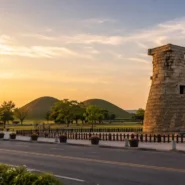
Cheomseongdae is a classic example of a site that deserves respect without needing exaggerated expectations. It is historically significant and free to visit, but it is a compact stone observatory that most people can appreciate in 10–20 minutes. The payoff comes from its location: it sits on a pleasant route through the Wolseong heritage area, especially when seasonal flowers are in bloom or when the site is illuminated after dark.
Continue toward Gyochon Traditional Village and Woljeonggyo Bridge. The village is pleasant but can feel quiet or staged if you arrive expecting a huge living neighborhood. The bridge is different: it is one of the strongest evening photo stops in Gyeongju, and the exterior reflection is often more memorable than simply walking through the structure. Gyeongju’s tourism office lists Woljeonggyo as free and open into the evening.
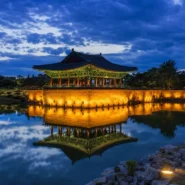
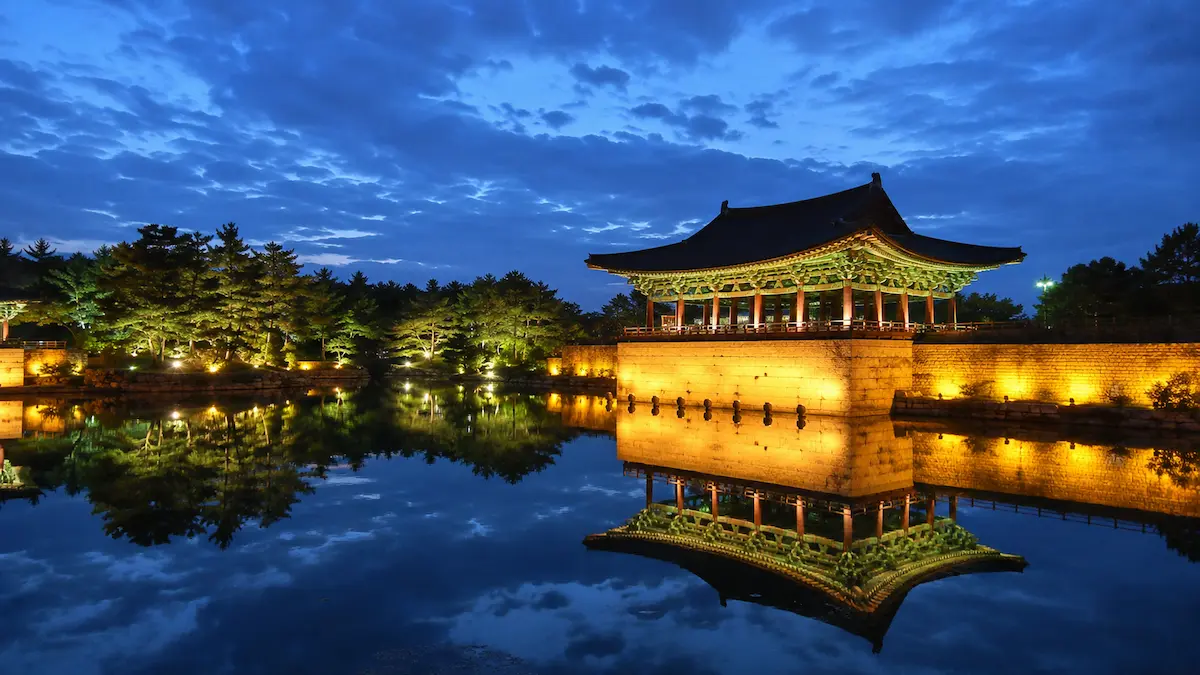
Finish at Donggung Palace and Wolji Pond after sunset. This is one of the few attractions where the “go at night” advice is not marketing fluff. The illuminated pavilions reflecting on the pond create a completely different experience from a daytime visit. If you are short on energy, prioritize Donggung and Wolji over returning to every earlier site after dark.
Where the Gyeongju National Museum fits: history-focused travelers should make room for it, especially because the artifacts give meaning to the tombs and palace sites. It is also an excellent bad-weather or midday-heat option. The mistake is trying to squeeze a serious museum visit into a 30-minute gap; if you enjoy museums, give it real time.
✅ What Other Travelers Say
Recent traveler discussions repeatedly praise central Gyeongju for being much easier to explore on foot than the city’s overall map suggests. Several visitors also say staying overnight made the experience noticeably better because they could enjoy the illuminated heritage sites without watching the clock for a return trip. Recent trip reports especially favor the downtown night sequence of Cheomseongdae, Donggung and Wolji, and Woljeonggyo.
⚠️ The Catch (Things to Keep in Mind)
Hwangnidan-gil can be crowded and trend-driven, especially on weekends. Cheomseongdae is a short stop, not a half-day attraction. Gyochon may feel less compelling if you have already spent substantial time in larger hanok villages elsewhere in Korea. The downtown core is also deceptively large on foot: wear proper shoes, because “everything is close” can still turn into 15,000–20,000 steps by the end of the day.
📍 Bulguksa & Seokguram: Best for UNESCO Heritage, Worst for an Overpacked Schedule
Tags: UNESCO heritage · Buddhist art · Temple architecture · Half-day trip · Higher transport friction
Video note: this was the highest-view clearly Bulguksa-focused result found in our August 2026 search. YouTube view counts and embedding permissions can change after publication.
Bulguksa Temple is the eastern Gyeongju sight I would recommend most confidently to a first-time visitor. It is not just famous because it appears on every tourism brochure: the stone terraces, bridges, pagodas and layered temple courtyards make the site visually rewarding even if you are not a specialist in Korean Buddhist history. Current VISITKOREA information lists Bulguksa admission as free, though operating hours can vary by season and should be rechecked before an early or late visit.
The practical issue is distance. Gyeongju’s official tourism site says the No. 10 “Golden Line” bus connects the terminal and downtown tourist zone with Bomun and Bulguksa, taking roughly 40–50 minutes from the terminal to Bulguksa without sightseeing stops. That is manageable, but it means Bulguksa is not a quick detour from Hwangnidan-gil.
Seokguram Grotto is approximately 3 km from Bulguksa by hiking trail and about 9 km by road according to VISITKOREA. That gap is the reason many unrealistic one-day itineraries fall apart. The grotto is culturally exceptional, but the on-site experience is intentionally controlled to protect the monument. The main Buddha is seen behind a protective glass screen. For visitors who know the history, that does not diminish its importance; for travelers expecting a vast cave complex, the brief viewing experience can feel underwhelming relative to the transport time.
Should you hike between Bulguksa and Seokguram? Only if the walk itself appeals to you and weather conditions are comfortable. The forested route can be a lovely change from buses and streets, but it should not be treated as a casual connector on a hot, humid summer afternoon, in rain, or with rolling luggage. If you are on a tight schedule, use transport rather than turning a heritage visit into an unplanned hike.
The smart first-time choice: visit Bulguksa early, then decide whether Seokguram matches your interests. If Buddhist art, UNESCO heritage or architectural history matters to you, go. If your priority is atmospheric streets, food, photography and night views, returning downtown earlier may produce a more satisfying day.
✅ What Other Travelers Say
Travelers who care about Korean history often describe Bulguksa and Seokguram as essential because they add a different layer to Gyeongju beyond tombs and night views. At the same time, recent visitor discussions show a clear split: some say Seokguram is absolutely worth the effort, while others feel it is less visually dramatic than expected and would skip it on a very short first trip. That disagreement is useful—it means Seokguram should be chosen based on your interests, not because a generic “top 10” list says you must go.
⚠️ The Catch (Things to Keep in Mind)
The temple area can consume half a day once waiting, walking and the Seokguram connection are included. Do not schedule Bulguksa, Seokguram, Bomun, Daereungwon, Hwangnidan-gil, the museum and two night sights in a single relaxed day unless you are using a private vehicle or organized tour and are comfortable moving quickly. Also recheck opening hours shortly before travel; heritage-site schedules can change seasonally.
📍 Bomun Lake: Best for Resorts, Families and Cherry Blossoms — Not Essential for Everyone
Tags: Lakeside hotels · Families · Gyeongju World · Cherry blossoms · Resort atmosphere · Less walkable from downtown
Video note: this was the most-viewed relevant Bomun-focused result found in our August 2026 search. YouTube view counts and embedding permissions can change after publication.
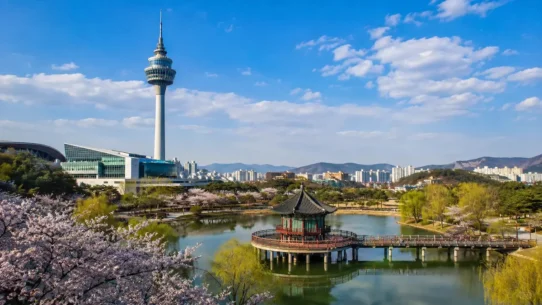
Bomun Tourist Complex is about 10 km east of central Gyeongju according to VISITKOREA. It is built around Bomun Lake and contains large hotels, family facilities, walking paths and attractions such as Gyeongju World. The setting is especially popular during cherry blossom season, when the lakeside becomes one of the city’s signature spring landscapes.
The common planning mistake is assuming Bomun is simply another neighborhood next to downtown. It is not. If you stay here, you gain resort facilities and a calmer lakeside environment but lose the convenience of walking out of your hotel to Daereungwon, Hwangnidan-gil or the central evening food scene. For a couple on a first history-focused visit, I would normally stay downtown and visit Bomun only if there is a specific reason. For a family spending time at Gyeongju World, or travelers who value a full-service hotel more than evening street life, Bomun can be the better base.
2026 transport note: Gyeongju City announced that autonomous shuttle buses in the Bomun Tourist Complex resumed from June 25, 2026, with service planned through February 20, 2027, operating Tuesday to Sunday on loops linking HICO, major hotels, Gyeongju World, Donggungwon and other Bomun stops. Treat this as a dated convenience rather than a permanent promise and recheck before relying on it.
Is Bomun worth squeezing into a one-night Gyeongju trip? Usually not unless you are staying there, visiting Gyeongju World, or traveling during peak blossom season. The lake is pleasant rather than unmissable. If adding Bomun means missing Donggung and Wolji after dark or cutting Bulguksa to a rushed photo stop, the trade is poor for most first-timers.
✅ What Other Travelers Say
Hotel guests consistently like the Bomun area for lake views, walking paths and the convenience of having resort facilities nearby. Families appreciate being close to Gyeongju World and larger hotels. The praise is real, but it reflects a different style of Gyeongju trip from the one chosen by backpackers, short-stay couples or history-focused travelers.
⚠️ The Catch (Things to Keep in Mind)
Bomun is not the place to stay if your dream evening is walking from your hotel to Hwangnidan-gil, Daereungwon and late-night heritage views. You will depend more on buses or taxis. During cherry blossom season, the same roads and lakeside areas that make Bomun appealing can also become significantly busier.
A Realistic 1-Night, 2-Day Gyeongju Itinerary
Day 1: Build the day around the historic core and night views. Arrive in the late morning if possible, leave luggage at your accommodation, and have lunch around Hwangnidan-gil. Spend early afternoon at Daereungwon and Cheonmachong, then continue through Cheomseongdae and the Wolseong area. Move toward Gyochon and Woljeonggyo in the late afternoon. Around sunset, photograph Woljeonggyo, then walk or take a short taxi toward Donggung Palace and Wolji Pond for the illuminated view. Have dinner after the night sights rather than interrupting the best light for a long restaurant queue.
Day 2: Start with Bulguksa before the crowds build. Give the temple roughly 60–90 minutes if you enjoy architecture. After that, make a conscious choice. Add Seokguram if it matters to you, or skip it and return downtown for the National Museum, a slower lunch and anything you missed on Day 1. If you are staying at Bomun, this is the day to integrate the lake or Gyeongju World.
If you only have one day from Busan: accept that you are choosing efficiency over depth. A self-guided trip works well if you focus on either the downtown historic core or Bulguksa plus selected downtown sights. If your wish list includes Bulguksa, Seokguram, Daereungwon and the famous night views before returning to Busan, an organized day tour becomes much more rational because it removes the biggest source of wasted time: transport coordination.
How to Spend Less Without Making the Trip Worse
- Pay for location, not unnecessary luxury. A modest downtown hotel can save repeated taxi rides and give you a much easier evening than a slightly cheaper room far from the historic core.
- Use buses for long, simple legs and taxis for awkward gaps. Trying to use buses for every single journey can be false economy when your sightseeing day is short.
- Do not assume a hanok stay is automatically better. Traditional-style accommodation can be atmospheric, but check whether the room uses floor bedding, whether the bathroom is private and how far it is from the main walking route. A beautiful room that gives you a poor night’s sleep is not a travel upgrade.
- Remember where money actually disappears: trendy cafés, desserts, souvenir shopping and repeated taxi rides can cost more than many heritage admissions. Gyeongju’s historical sightseeing itself can be relatively budget-friendly.
- Book peak weekends early. During cherry blossom season and popular autumn weekends, waiting until the last minute can force you into a worse location or a resort area you did not actually want.
What I Would Skip on a Short First Trip
Skip a dedicated Bomun visit if you have only one night and no interest in Gyeongju World or resort facilities. See the core heritage first.
Skip Seokguram if UNESCO status alone is the only reason you are considering it and your day is already overloaded. Bulguksa provides a fuller on-site experience for the average first-time visitor.
Skip long Hwangnidan-gil queues. The atmosphere matters more than a specific viral café. Eat somewhere good with a short wait and use the saved hour for the tombs or sunset.
Do not skip the night completely. If your schedule forces you to leave before Gyeongju’s illuminated heritage comes alive, you are missing one of the city’s strongest experiences. This is the main reason I prefer one overnight stay to a rushed day trip.
Key FAQs
Is one day enough for Gyeongju from Busan for first-time visitors?
Yes, but only if you keep the route disciplined. One day is enough for a strong sample of Gyeongju, not for every famous sight. Focus on Bulguksa plus selected downtown highlights, or spend the whole day in the historic core and stay for the night views. If you want Bulguksa, Seokguram, Daereungwon, Hwangnidan-gil and illuminated Donggung/Wolji in one day, a guided tour is usually more efficient than managing every connection yourself.
Where should first-time visitors stay in Gyeongju without a car?
The downtown historic core around Hwangnidan-gil, Daereungwon and the bus terminal area is the most practical choice. You can walk to food, tombs, cafés and several major heritage sights, then use one bus or taxi for Bulguksa. Bomun Lake is better for resort travelers and families, but it creates more transport dependence for classic sightseeing.
Is Seokguram Grotto worth visiting with Bulguksa Temple?
It is worth it if you are interested in Buddhist art, UNESCO heritage and Silla history. It is less compelling for travelers who mainly want dramatic architecture, street atmosphere or photography, because the visit is brief and the main Buddha is viewed through protective glass. On a rushed first trip, Bulguksa is the easier recommendation; on a history-focused two-day trip, visiting both makes much more sense.
Final Verdict and Your Next Step
For most first-time visitors, the winning Gyeongju plan is not “see everything.” It is stay central, separate downtown from the temple zone, and protect your evening for the illuminated heritage sites. That single strategy reduces backtracking, unnecessary taxi costs and the feeling that you spent more time in transit than actually experiencing the city.
If you are a casual first-time visitor: book one night downtown, walk the historic core on Day 1, enjoy Donggung and Wolji after dark, then visit Bulguksa on Day 2. Skip Bomun unless you have spare time.
If you love history and museums: stay two nights. Add Seokguram, the National Museum and possibly Namsan or Yangdong Village rather than compressing them into a single exhausting day.
If you are traveling with children: consider Bomun if Gyeongju World and resort facilities matter, but budget for more taxis or bus rides into the old city.
If you are day-tripping from Busan: either cut your wish list aggressively or pay for an organized tour. The tour premium can be worthwhile when it buys back the hours you would otherwise spend coordinating buses between distant zones.
Accommodation in the best locations can tighten quickly on spring blossom weekends, autumn foliage weekends and Korean holiday periods. Once your dates are fixed, compare your preferred downtown or Bomun stay and reserve a cancellable option rather than waiting for a “perfect” last-minute deal.
Check Gyeongju accommodation:
Compare Gyeongju hotels on Agoda
Compare Gyeongju hotels on Booking.com
Book a time-saving Gyeongju tour:
Check the Gyeongju UNESCO day tour on Klook
Check a customizable Gyeongju private taxi tour on KKday