
💡 Key Takeaways
- For the best overall balance, aim for October or mid-May. You get comfortable walking weather, less weather disruption than summer, and a better chance of enjoying Daegu’s parks, markets and mountain viewpoints without planning your day around air-conditioning.
- Cherry blossom season is beautiful but fragile. Late March to early April can be excellent, yet bloom dates can shift by a week or more. If blossoms are your main reason for visiting, keep your itinerary flexible and expect busier weekends around E-World and popular blossom walks.
- Late June through August is the main danger zone for comfort. Korea’s southern-region rainy season normally falls from late June into late July, then Daegu’s hottest and muggiest weather peaks in July and August. Summer can still be worth it for the Chimac Festival, but it is a poor choice for travelers who want long outdoor sightseeing days.
Choosing the best time to visit Daegu is less straightforward than picking “spring” or “autumn.” Daegu is an inland city where seasonal differences really change the trip. Cherry blossoms can turn an ordinary riverside walk into one of the prettiest days of your Korea itinerary, but the bloom window is short and popular photo spots become much busier. Summer is lively, especially around the Daegu Chimac Festival, yet heat, humidity and sudden downpours can cut your walking stamina in half. The monsoon season does not mean nonstop rain every day, but it does mean less predictable plans. Winter is usually easier on the budget and crowds, though the city looks barer, mornings are cold and daylight is shorter. Add Korean public holidays, festival weekends and even Japan’s Golden Week travel demand on some regional routes, and the “best” month depends on what you value most.
This guide is built around the decision travelers actually need to make: weather versus crowds versus price versus experiences. If you want the shortest answer, October is my first choice for most first-time visitors. Mid-May is the strongest spring alternative. Early April is the emotional choice for cherry blossoms. January and February are the value choice if you tolerate cold. Late July and August are the months I would avoid for a walking-heavy itinerary unless a specific summer event is the reason you are going.
The 1-Min Cheat Sheet
- March to April — Best for cherry blossoms and spring atmosphere: March starts cool, while April becomes pleasantly mild. Plan for roughly 13°C daytime highs in March and around 19°C in April, with chilly evenings. The payoff is blossom season, but timing is never guaranteed and weekends can feel much busier at famous flower spots. Verdict: worth it for blossoms; not the safest choice for bargain hunters or travelers who hate uncertainty.
- May to June — Best spring-to-summer balance: May is one of Daegu’s easiest months for sightseeing, with typical daytime highs around 24°C. Early June is warmer but still workable. The risk rises sharply in late June as Korea’s southern rainy season normally begins. Verdict: mid-May to early June is one of the smartest windows of the year.
- July to August — Best for summer festivals, worst for walking comfort: Typical highs approach 29–30°C, nights stay warm and muggy, and July is the wettest part of the year. Heatwaves can push conditions well beyond the monthly average. Verdict: go for Chimac or nightlife, not for an outdoor marathon itinerary.
- September to November — Best overall period: September can still feel summery at first, but October is the sweet spot: cooler, drier and excellent for Apsan, Palgongsan and long market-and-neighborhood days. November is quieter and crisp but increasingly cold and less colorful late in the month. Verdict: October wins for the best all-round trip.
- December to February — Best for lower crowds and value: Expect dry, cold weather, with January around 5°C by day and below freezing at night on average. Snow in central Daegu is not something you should build a trip around. Verdict: good for food, cafés, museums and budget-conscious travelers; weaker for scenery and long outdoor days.
Top Survival Tips
- Do not book cherry blossom travel around one forecast date. Blooming is weather-sensitive. A warm spell can accelerate it; a cold snap can delay it. Recent traveler discussions repeatedly warn that blossom forecasts are useful for planning a window, not a single “perfect” day. If flowers matter, give Daegu at least two or three nights and keep one morning flexible.
- Treat late June and July as “weather-flex” season. Korea Meteorological Administration climate normals place the southern-region changma, or rainy season, at roughly June 23 to July 24, averaging about 31 days in duration with around 17 rain days. That does not mean 31 days of continuous rain. It means your odds of heavy showers, cloudy skies and last-minute plan changes are materially higher.
- Do not underestimate Daegu’s summer heat just because the monthly average looks manageable. Historical climate averages put July and August highs near 29–30°C, but heatwaves go higher. Recent KMA analysis also shows heatwaves starting earlier in southeastern inland areas, including Daegu. For summer trips, schedule Apsan, Palgongsan and outdoor markets early in the morning or after sunset.
- October is better than September if heat is your main concern. Early September can still carry summer humidity. October is usually the cleaner break: typical daytime highs fall to around 21°C, evenings are cool and walking becomes much easier.
- Watch Korean holiday dates before buying intercity train tickets. Seollal and Chuseok are not minor long weekends; they trigger major domestic travel. In 2026, Seollal ran February 16–18 and Chuseok holidays fell September 24–26. Holiday dates change yearly, so re-check before booking KTX/SRT or express buses.
- Japan’s Golden Week is not a Korean public holiday. This is a common planning mistake. It does not shut Daegu down. However, late-April/early-May Japanese holidays can increase outbound demand from Japan, so travelers flying from Fukuoka, Osaka or Tokyo should compare fares early. In 2026, Japan’s main Golden Week holidays ran from April 29 and May 3–6.
- Spring air quality deserves a quick check. Korea can experience yellow-dust events in spring, and Daegu has been included in official yellow-dust observations. This is not a reason to cancel an April trip, but it is a reason to check AirKorea before a full hiking day, especially if visibility matters for Apsan or Palgongsan.
- Book around festivals only if the festival is part of your plan. Daegu’s big events can create localized crowding around Duryu Park, Dongseong-ro, EXCO or major performance venues. If you do not care about the event, staying one subway stop away can improve both room availability and sleep.
The Full Experience
🌸 March to April: Best for Cherry Blossoms, but Not for Bargain Hunters
Best for: cherry blossoms, photography, spring walks, E-World, riverside paths | Watch out for: bloom uncertainty, weekend crowds, chilly evenings, occasional yellow dust
March is the transition month. Daegu is waking up from winter, but it is not reliably warm yet. Typical highs are around 13°C and lows around 4°C, so the “spring outfit” you wear at 2 p.m. may feel very optimistic after dinner. April is much easier, with average highs near 19°C and lows around 9°C. If you enjoy walking, café-hopping and outdoor photos, April feels dramatically more comfortable than summer.
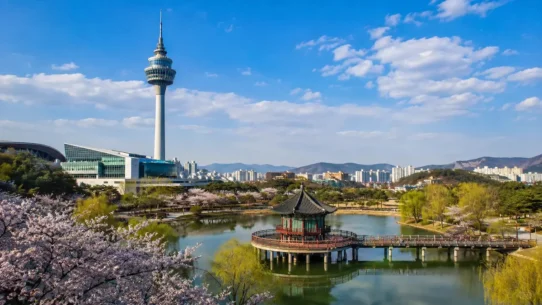
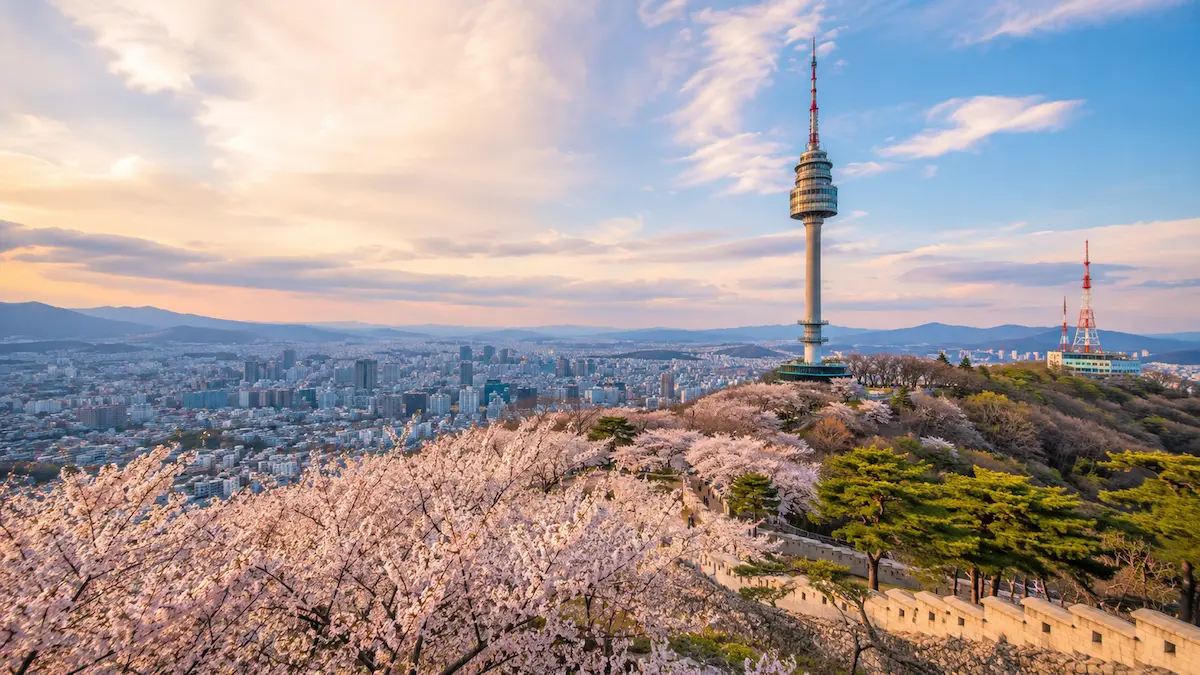
The main reason travelers target this period is obvious: cherry blossoms. In recent years, Daegu blossoms have generally appeared from late March into early April, but exact timing shifts from year to year. For 2026, community reports showed Daegu blossoms developing around the turn from March into April, while mountain-area forecasts ran later. That difference matters. A city riverside path, a lower-elevation park and a mountain road do not necessarily peak on the same date.
Popular spring options include E-World and the 83 Tower area, Jijeo-dong’s long cherry blossom tunnel near the Geumho River, and blossom routes around the wider Palgongsan area. The mistake is trying to visit the most famous spot at 2 p.m. on a Saturday. If your goal is photography rather than atmosphere, go early on a weekday. If your goal is simply “see blossoms somewhere,” keep two or three options saved and choose based on what is actually blooming after you arrive.
Cost reality: Daegu does not usually reach Seoul-level cherry blossom pricing, but attractive hotels in convenient areas can tighten up around peak weekends and festival dates. The bigger price risk may be your flight into Korea rather than the hotel itself. This is particularly true around late April and early May if you are coming from Japan during Golden Week.
✅ What Other Travelers Say
Recent Korea travel discussions agree on one important point: blossom forecasts are not a promise. Travelers who happened to arrive during peak bloom describe the season as one of the most memorable times to be in Korea, but experienced visitors repeatedly recommend arriving early at famous spots and building flexibility into the itinerary. Daegu-specific spring posts also show that different neighborhoods can be at visibly different stages of bloom within the same week.
⚠️ The Catch (Things to Keep in Mind)
If blossoms are your only reason for visiting Daegu, you are effectively betting on weather. One cold snap or several warm days can move the visual peak. Spring can also bring yellow dust or fine-dust episodes, which can flatten skyline views even when the temperature is lovely. And once petals begin falling, the “perfect” look can disappear quickly after rain or wind. My call: choose early April if blossoms are a priority, but choose mid-May if you want a safer all-round trip.
🌿 May to June: Best Weather-to-Crowd Balance Before the Monsoon Turns Up
Best for: first-time visitors, walking, festivals, markets, Apsan evenings, city exploration | Watch out for: late-June rain, early heatwaves, holiday weekends
If I had to recommend one spring window to a traveler who does not care about cherry blossoms, I would choose mid-May. Typical daytime highs are around 24°C with cooler nights near 14°C. That is warm enough for terraces, parks and evening walks without forcing you to reorganize the day around heat. It is also a good month for mixing Daegu’s urban side with Apsan or Palgongsan.
May is also active. Daegu regularly stacks cultural events into spring. In 2026, the city’s spring Fantasia Daegu Festa program ran May 8–17 and included the Daegu Yangnyeongsi Herbal Medicine Festival, Dongseong-ro Festival, busking events and the Rose Garden program at Igok Rose Park. Exact lineups change every year, so treat the calendar as a reason to check dates rather than as a fixed annual schedule.
Early June remains a strong choice. Typical highs rise to around 27°C and nights approach 19°C, so the city starts to feel summery. The downside is that modern heatwaves can arrive earlier than many older guidebooks suggest. Korea Meteorological Administration analysis published in 2026 noted that heatwave onset in parts of Gyeongsang, including Daegu, has shifted earlier over recent decades. In practical terms, an early-June hiking day can still be hot even if the monthly average looks comfortable.
The real dividing line is late June. For southern Korea, the 1991–2020 rainy-season normal starts around June 23. Daegu is included in the KMA’s southern-region grouping. You can absolutely have good days during changma, but hotel-booking confidence and itinerary confidence are not the same thing: if your plan depends on clear mountain views, sunset observation decks and long walking tours, the weather risk becomes harder to ignore.
✅ What Other Travelers Say
Travelers who visit Korea in April and May often praise the long walking days: sunny afternoons, manageable temperatures and evenings that cool down. That matches the practical advantage of Daegu in May—you can stack several outdoor neighborhoods into one day without feeling punished by the weather. By contrast, summer-focused discussions regularly warn that comfort deteriorates quickly once heat and humidity settle in.
⚠️ The Catch (Things to Keep in Mind)
May is not “secret low season.” Children’s Day, Buddha’s Birthday and city festivals can create busy pockets, and late-April/early-May regional airfares may be affected by Japanese Golden Week demand even though Golden Week is not a Korean holiday. June is also two different months disguised as one: early June can be excellent; late June can be muggy, stormy and changeable. My call: May 10 to early June is one of Daegu’s highest-value windows.
🔥 July to August: Best for Chimac and Nightlife, Worst for a Walking-Heavy Trip
Best for: Daegu Chimac Festival, night markets, indoor attractions, summer nightlife | Watch out for: heat, humidity, heavy rain, thunderstorms, typhoon-related disruption
July and August are the months where Daegu’s reputation for heat stops being a joke and starts affecting itinerary quality. Historical averages put July and August daytime highs around 29–30°C, with warm nights near 23°C. Those are averages, not ceilings. Heatwaves can push daytime conditions much higher, and humidity makes the apparent temperature more tiring than the number suggests.
July also carries the highest rain risk. Historical climate summaries show it as Daegu’s wettest month, and KMA’s southern-region changma normal continues into late July. This does not mean your vacation will be washed out. Korea’s rainy season often comes in blocks: humid cloudy stretches, bursts of heavy rain, then a workable gap. The planning problem is that you do not know which version you will get far in advance.
So why go? Daegu Chimac Festival. Daegu’s signature chicken-and-beer festival is one of the city’s defining summer experiences. In 2026 it ran July 1–5 around Duryu Park, with evening programming, performances and water-themed areas. If that festival is on your list, the summer weather becomes part of the event rather than a reason to avoid the city. The correct strategy is to stay close to a subway line, rest indoors during the hottest part of the afternoon and treat 6 p.m. onward as your prime sightseeing time.
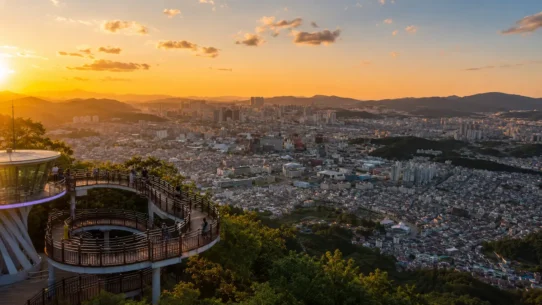
Indoor-friendly options matter more in summer: Shinsegae Daegu, museums, cafés, spas, aquariums, department-store food halls and evening-focused attractions can keep the trip enjoyable. For Apsan Observatory, I would aim for a late-afternoon ascent timed to sunset rather than a midday hike. For Seomun Market, split the experience between indoor/covered sections and the night market when operating.
✅ What Other Travelers Say
Traveler sentiment around Korean summer is remarkably consistent: visitors who like heat tolerate it; visitors who want to walk 20,000 steps a day often regret choosing peak summer. Community discussions frequently describe humidity as the bigger issue than the headline temperature. The positive side is that summer events feel energetic, nights are lively and air-conditioned indoor infrastructure makes it possible to build a completely different style of itinerary.
⚠️ The Catch (Things to Keep in Mind)
Do not build a July itinerary with four outdoor attractions back-to-back. You will either rush them, skip them or spend more on taxis and cafés than expected. Rain can also be intense enough to make “just bring an umbrella” bad advice; waterproof shoes or quick-drying footwear matter more than a tiny travel umbrella during a downpour. Typhoons can affect the Korean Peninsula from summer into autumn, so keep transport plans flexible. My call: visit in July for Chimac; otherwise choose another season. August is the month I would most strongly avoid for a first-time, walking-focused Daegu trip.
🍁 September to November: Best Overall, with October as the Sweet Spot
Best for: hiking, foliage, Apsan views, Palgongsan, food walks, photography, first visits | Watch out for: early-September heat, Chuseok transport pressure, late-November chill
This is the period I recommend most often, but the three months are not equal. September begins warm, with typical highs around 26°C and nights near 18°C. After a hot summer, the first half of September can still feel more like “less intense summer” than true autumn. If you are heat-sensitive, do not assume September 1 automatically gives you crisp weather.
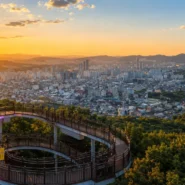
October is Daegu’s best all-round month. Typical daytime highs are around 21°C, nights cool to roughly 11°C and rainfall is much lower than midsummer. That combination matters because Daegu is a city where the best days often involve several hours outside: Kim Gwang-seok Street, Seomun Market, old downtown alleys, Apsan, Suseongmot and perhaps a half-day around Palgongsan.
October also lines up well with cultural programming. Daegu’s festival calendar is traditionally busy in autumn, and the Daegu International Opera Festival anchors the city’s performing-arts season. For 2026, major productions at Daegu Opera House began from October 9. Palgongsan’s autumn color is another reason to visit, although peak foliage timing depends on temperature and elevation.
November is still a good value month, particularly early November. Typical highs fall to around 13°C and evenings become genuinely cold. Foliage fades as the month progresses, but crowds generally soften and clear, dry days can be excellent for city photography. If you are not chasing fall color, late November can be a clever compromise between autumn atmosphere and winter pricing.
✅ What Other Travelers Say
Korea travel communities repeatedly rate autumn as the easiest season for outdoor sightseeing. The reasons are practical rather than romantic: less humidity, fewer weather-driven itinerary changes and better walking comfort. Daegu’s mountain access makes that advantage even stronger than it is in a purely urban destination.
⚠️ The Catch (Things to Keep in Mind)
Chuseok can completely change the transport picture. In 2026, the holiday period fell September 24–26, and millions of Koreans traditionally travel to visit family around Chuseok. If your Daegu leg sits next to the holiday, book long-distance rail or bus tickets as soon as your booking window opens. Also, do not assume every October day is “fall foliage peak”—mountain color follows weather, not the tourism calendar. My call: target roughly October 10–31 for the strongest mix of weather, scenery and trip reliability.
❄️ December to February: Best for Lower Crowds and Prices, Not for Classic Scenery
Best for: budget travel, cafés, markets, museums, food-focused trips, quieter sightseeing | Watch out for: sub-zero mornings, short daylight, bare landscapes, Seollal transport pressure
Winter is underrated if your priorities are food, city neighborhoods and lower crowd levels. It is also easy to misunderstand. Daegu is colder than many first-time visitors from subtropical climates expect, but it is not a reliable snow destination. January averages around 5°C in the daytime and roughly -3°C at night; February is only slightly milder. The air is often drier than summer and clear winter light can be great for viewpoints, but you will not want to stand on an exposed observation deck indefinitely.
The biggest advantage is pace. Winter lets you explore Seomun Market, Dongseong-ro, cafés, museums and food streets without competing with blossom crowds or summer festival traffic. Accommodation can also be easier to find outside major holidays and special events. If you are flexible with dates, compare weekday stays in January and late February.
The downside is visual. Parks and mountains can look brown rather than dramatic, snow is inconsistent in central Daegu, and daylight hours are shorter. Apsan can still be worth it on a crisp clear day, but winter is not when I would build a first Daegu trip around hiking. This is the season for a warm breakfast, a market lunch, a museum or café in the afternoon and a good Korean barbecue dinner after dark.
Holiday timing matters. Seollal is one of Korea’s most important travel periods, when long-distance trains, buses and roads face heavy domestic demand. In 2026, the official Seollal holiday ran February 16–18. Many attractions remain open during holiday periods, but individual restaurants and small businesses may change hours, so check Naver Map or the venue’s official channel before making a special trip.
✅ What Other Travelers Say
Winter travelers often report two contrasting impressions: the cold is real, but the lighter crowds make sightseeing calmer. Some visitors even prefer winter to summer because cold can be solved with layers, while high humidity is harder to escape outdoors. Daegu also benefits from being a large city with plenty of indoor backup options.
⚠️ The Catch (Things to Keep in Mind)
If your mental image of Korea in winter is continuous snow, do not book Daegu for that reason. Snowfall is not dependable enough to anchor the trip. Mountain trails can also be colder and icier than downtown conditions suggest. And while winter can be cheaper, Seollal is a major exception: transport sells quickly and some local businesses adjust opening hours. My call: January is good for value if you pack properly; avoid Seollal travel days unless the holiday experience itself interests you.
Key FAQs
What is the best month to visit Daegu for good weather and fewer crowds?
October is the best single month for most travelers. Daytime temperatures are usually comfortable for walking, summer humidity has eased, rainfall is lower than in July and you can combine city sightseeing with Apsan or Palgongsan. If October does not work, mid-May is my second choice. Travelers who dislike any lingering heat should favor mid-to-late October rather than September.
When is cherry blossom season in Daegu, and is it worth visiting?
Daegu’s cherry blossoms usually fall in the late-March to early-April travel window, but the exact peak changes every year and can vary by elevation. It is worth visiting if blossoms are a major priority and you can tolerate crowds plus timing uncertainty. Book a flexible window rather than one “forecast” date, visit popular locations early on weekdays and avoid paying a large premium for a non-refundable stay unless you would enjoy Daegu even if peak bloom shifts.
Is Daegu worth visiting during Korea’s rainy season in June and July?
Yes, but only if your itinerary is flexible. The southern-region rainy-season normal runs from roughly late June to late July, and July is Daegu’s wettest month. Rain is not necessarily all-day, every-day drizzle; the bigger issue is the possibility of heavy downpours and cloudy periods that disrupt mountain views and long outdoor walks. Early June is much safer. If you must travel in July, plan one indoor alternative for every major outdoor day.
Final Verdict and Your Next Step
If this is your first visit and you want the least stressful version of Daegu, book October. It gives you the best balance of walking weather, low summer-rain risk, autumn scenery and a strong events calendar. Mid-May to early June is the best alternative for spring warmth without gambling your entire trip on cherry blossom timing. Early April is the right choice if blossoms are the point of the trip. January to February can be excellent value if you are comfortable with cold and do not need lush scenery.
The periods I would treat with the most caution are late June through July for rain uncertainty and late July through August for heat and humidity. They are not “bad” months if Chimac or another summer event is your priority, but they are objectively harder months for a traveler who wants to walk all day. Also avoid locking yourself into intercity travel during Seollal or Chuseok without checking the calendar first.
Once you know your month, book the part of the trip with the least flexibility first: a well-located hotel for blossom weekends, autumn weekends or major festivals. Then add attractions after you see the short-range weather forecast. Daegu is compact enough that a good base near Dongseong-ro, Banwoldang or Dongdaegu Station can save more time than chasing a slightly cheaper room far from the subway.
Check accommodation before your preferred dates tighten up:
Check Daegu hotel rates on Agoda
Compare Daegu stays on Booking.com
Book Daegu attractions and local experiences:
Browse Daegu tickets and activities on Klook
Browse Daegu tours and tickets on KKday
Booking tip: for cherry blossom weekends, October foliage weekends and festival dates, reserve a refundable room early rather than waiting for the “perfect” forecast. You can refine the itinerary later; recovering a good hotel location after rooms sell out is much harder.