
💡 Key Takeaways
- Stay around Dongseong-ro or Banwoldang for the easiest first trip. You will be close to food, shopping, the historic center, two metro lines, and late-night options without repeatedly crossing the city.
- Do not treat every famous Daegu attraction as a must-see. Apsan is excellent for views, but Palgongsan needs much more transport time; E-World is fun for families and theme-park fans, but it is not automatically a priority for a short cultural city break.
- Timing matters more than distance. Seomun Night Market does not operate every night, summer heat can make midday sightseeing miserable, and mountain cable-car closing times can ruin a sunset plan if you arrive too late.
A first-time Daegu travel guide needs to solve a slightly different problem from a Seoul or Busan guide. Daegu is not difficult to visit, but its attractions are spread between a very walkable downtown core and several outlying areas that look deceptively close on a map. The most common mistake is trying to collect every “top attraction” in one day, only to spend too much time transferring between buses, walking uphill, or arriving at a market after the best stalls are already winding down.
The good news is that Daegu rewards selective planning. Its downtown is compact, the metro is simple, food is generally good value, and the city feels noticeably less tourist-saturated than Korea’s biggest destinations. What Daegu does not offer is a single blockbuster landmark that justifies racing across town all day. The city is best when you combine one strong neighborhood, one food experience, and one sunset or evening destination—and leave enough breathing room to enjoy them.
The 1-Min Cheat Sheet
- Best length for a first visit: Two nights is the sweet spot. One full day works for downtown plus Apsan or Suseongmot; three days lets you add Palgongsan without rushing.
- Best area to stay: Dongseong-ro, Jungangno, or Banwoldang for first-timers. Dongdaegu Station is better only if your priority is a late arrival, early KTX, or quick stopover.
- Arriving by KTX: Dongdaegu Station is Daegu’s main rail hub and connects directly to the metro. KTX from Seoul to Dongdaegu takes roughly 1 hour 40 minutes on many services.
- Arriving by air: Daegu International Airport does not have a metro station inside the terminal. The nearest practical rail connection is Ayanggyo Station, reached by bus or taxi; city buses also connect the airport with central transport hubs.
- Local transport: Daegu has three metro lines. A transportation-card adult metro fare is currently listed at KRW 1,500, while a one-time ticket is KRW 1,700. T-money is accepted.
- Best first-time highlights: Dongseong-ro and the Modern Culture Alley area, Seomun Market, Apsan Observatory, and Suseongmot after sunset.
- What to skip if you have only one day: Palgongsan. It is worthwhile, but it consumes too much transport time for a short stay.
- Biggest timing trap: Seomun Night Market is generally a Friday-to-Sunday experience, not a nightly event. Shop and vendor hours can also differ from the published market hours.
- Best season: Spring and autumn are easiest for walking. Daegu is famously hot in summer, with average daytime highs above 30°C, so plan indoor breaks and avoid stacking mountain walks at midday.
- Navigation tip: Keep Naver Map or KakaoMap installed as a backup for Korean place names, bus stops, and walking routes. Save Korean addresses before leaving Wi-Fi.
Top Survival Tips
- Choose your hotel for the evening, not for the arrival station. Staying beside Dongdaegu Station looks convenient on paper, but most first-time sightseeing energy is around Jung-gu. If you are staying two nights or more, moving one suitcase trip into the center can save repeated metro rides later.
- Do not drag luggage from the airport through a bus-to-metro transfer just to save a small amount. The airport sits close to the urban area, but it is not directly attached to the metro. If you have a large suitcase, two people, children, or a late arrival, a taxi to your hotel can be a rational time-saving expense rather than a luxury.
- Tap out correctly on buses when using a transport card. Daegu’s transfer system depends on proper card use, and tapping off is important when you want transfer benefits. For tourists, a T-money card is usually simpler than repeatedly buying single tickets.
- Never build your entire evening around a night market without checking the day. Seomun Night Market is currently listed for Friday and Saturday evenings until 23:30 and Sunday until 22:30, with no night market Monday through Thursday. Individual vendors may close earlier.
- Do not schedule Apsan and Palgongsan back-to-back unless hiking is the point of your trip. Apsan is close enough to downtown for an easy half-day or sunset outing. Palgongsan is farther out and works better as a dedicated half-day or full-day nature trip.
- Protect your afternoon in July and August. Daegu’s basin geography contributes to very hot summers. Use museums, cafés, department stores, markets, or a long lunch for the hottest hours, then move outdoor sightseeing toward morning and evening.
- Do not overrate “Instagram streets.” Kim Gwang-seok Road is pleasant if you already like Korean music, murals, cafés, or Bangcheon Market, but it is relatively small. Treat it as a 30- to 60-minute add-on, not the centerpiece of a full day.
- Use E-World only if it matches your travel style. Families, couples who enjoy night illuminations, and amusement-park fans can easily spend four to six hours there. Travelers prioritizing traditional culture, food, or a short first visit should usually put downtown, Seomun Market, and Apsan ahead of it.
- Carry a little cash even though cards are widely used. Traditional markets officially accept cards in many places, but small stalls, older vendors, lockers, and occasional small purchases are less stressful when you have some Korean won available.
- Leave 20 to 30 minutes of buffer before a mountain cable-car last descent. Operating times vary by season and weather. Sunset is beautiful; being stranded with a long downhill walk is not.
The Full Experience
📍 Dongseong-ro & Jung-gu: Best for First-Time Energy, Food and Easy Walking
Best for: First night, food, shopping, nightlife, cafés, historic alleys | Time needed: 4–7 hours | Transport difficulty: Easy
If you visit only one part of central Daegu, make it Jung-gu. Dongseong-ro is the city’s main commercial district, but the reason it works so well for first-timers is not shopping alone. Within a relatively compact area you can move between lively pedestrian streets, small restaurants, cafés, traditional medicine history, churches, modern-era architecture, and bars without constantly checking bus schedules.
A sensible walking sequence starts around Jungangno or Banwoldang, cuts through Dongseong-ro, then moves toward the Modern Culture Alley area. Add Gyesan Catholic Church, Cheongna Hill, and the Yangnyeongsi traditional medicine district if you enjoy history. If you still have energy, continue toward Bangcheon Market and Kim Gwang-seok Repainting Road, or save that short stop for another day.
This is also the best area to recover from travel fatigue. You can arrive without a rigid attraction checklist, eat when you are hungry, find air-conditioning quickly, and stay out late without worrying that your last bus to a distant sightseeing zone is about to disappear.
✅ What Other Travelers Say: Recent travelers commonly describe downtown Daegu as easy to wander, full of bars, restaurants and shops, and more “local city” than tourist zone. One repeated positive theme is that the streets feel extensive and maze-like in a fun way rather than being organized around one obvious attraction. Local discussions also emphasize that Daegu’s strength is everyday food and café culture rather than monumental sightseeing.
⚠️ The Catch (Things to Keep in Mind): If you expect a Korean equivalent of Shibuya, Myeongdong, or a historic old town, Dongseong-ro can initially feel ordinary. Its value comes from atmosphere and convenience, not a single dramatic sight. Kim Gwang-seok Road is also easy to over-budget time for; unless you are a fan of the singer or mural streets, an hour is usually enough.
Editor’s call: This is where a first-timer should spend the first evening. Do not arrive, drop your bag at Dongdaegu, then immediately take a long cross-city route to a mountain. Start here, understand the city rhythm, eat well, and save the big view for the next day.
📍 Seomun Market: Best for Local Food, Traditional-Market Energy and Low-Cost Grazing
Best for: Street food, local specialties, budget eating, market photography | Time needed: 2–4 hours | Transport difficulty: Easy
Seomun Market is one of Daegu’s most useful attractions because it is not just something to look at. You can eat, shop, sit down, browse textiles and household goods, and get a feel for a city that still uses its traditional markets as working commercial spaces. Daegu-style flat dumplings (napjak mandu) are the obvious first-timer snack, but noodles, hotteok, fried foods and simple market meals are often more satisfying than trying to force a checklist of famous dishes.
The biggest planning decision is whether you want the day market or the night market. Daytime gives you the fuller traditional-market experience and more open shops. The night market is more about prepared food and atmosphere, but it runs on a limited weekly schedule. For a weekend visit, one smart approach is to arrive before sunset, explore the daytime market, eat a first round early, and then stay for the night-market transition.
The market is served by Seomun Market Station on Metro Line 3. This makes it easy to pair with downtown or Suseongmot without wasting time on complicated transfers.
✅ What Other Travelers Say: Food is the most consistent praise. Travelers who arrive while the market is active often describe it as one of the best places in Daegu to snack and browse without paying tourist-zone prices. Recent visitor discussions also show a very real timing lesson: people who arrived late expecting a packed night market sometimes found stalls already closing.
⚠️ The Catch (Things to Keep in Mind): Published hours are not a guarantee that every vendor will be operating until the final minute. The night market is currently scheduled Friday to Sunday, and Sunday can feel quieter later in the evening. If Seomun is important to you, do not make 21:30 your planned arrival time.
Editor’s call: Go hungry and go earlier than you think you need to. Seomun is better as a flexible eating session than a one-hour photo stop.
📍 Apsan: Best for the Classic Daegu Skyline Without Losing a Whole Day
Best for: Sunset, city views, light hiking, couples, first-time panoramas | Time needed: 3–5 hours | Transport difficulty: Moderate
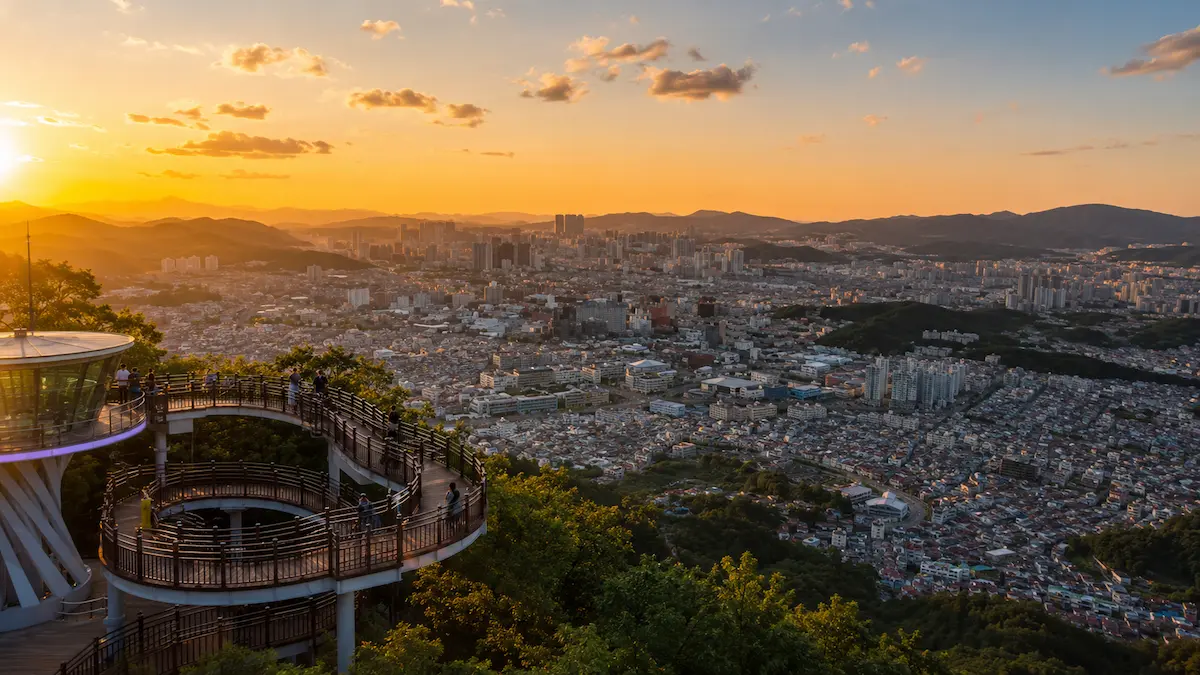
Apsan is the mountain experience I would recommend to most first-time visitors because it gives you the visual payoff without requiring a full expedition. The observatory overlooks Daegu’s broad urban basin, and the contrast between forested slopes and dense city lights is especially strong around sunset.
There are two basic strategies. Hikers can walk up from the Anjiranggol side; official tourism information describes a route of roughly 2.5 km and about one hour to the observatory. Non-hikers can use the cable car from the Keungol side, which drastically reduces the effort, although you should still expect uphill walking before and after the ride.
The cable car’s operating hours and last descent vary by season, so check the official site on the day of your visit rather than relying on an old blog. Current tourism information lists adult round-trip pricing at KRW 14,000, but prices can change.
✅ What Other Travelers Say: Apsan receives unusually consistent praise for the view. Traveler discussions often call the cable car worthwhile, especially for people who want the panorama without a serious climb. Hikers also like the variety of trails and temples.
⚠️ The Catch (Things to Keep in Mind): “Easy with the cable car” does not mean completely effortless. The approach includes slopes and walking, and the full hike can feel steep to non-hikers. In summer, the combination of heat, humidity and uphill pavement can be unpleasant. Also, do not assume a late sunset means the cable car will still be running late enough for your return.
Editor’s call: If you have only one sunset in Daegu, choose Apsan over 83 Tower. It feels more connected to the landscape and is a stronger sense-of-place experience.
📍 Suseongmot Lake: Best for an Easy Evening, Couples and a No-Stress Night Walk
Best for: Evening strolls, dinner, couples, families, low-effort recovery | Time needed: 2–3 hours | Transport difficulty: Easy
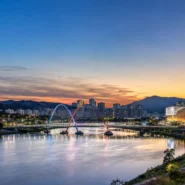
Suseongmot is not the place I would send you at 10:00 in the morning with a packed sightseeing schedule. It becomes much more compelling in the late afternoon and evening, when locals walk the lake, cafés fill up, lights reflect on the water, and the area functions like a relaxed outdoor living room.
The lake loop is a little over two kilometers, and Daegu tourism information estimates around 40 minutes for a relaxed circuit. You can make it longer with dinner, a café, paddle boats, or the seasonal music fountain. Suseongmot Station on Line 3 makes the area straightforward to reach without a car.
For travelers who have spent the day walking historic alleys or climbing Apsan, this is an excellent second-evening choice because you do not have to “achieve” anything. You can simply walk, sit, eat and leave when you are ready.
✅ What Other Travelers Say: The repeated theme is “peaceful at night.” Recent traveler posts praise the wide walking path, reflections, buskers, benches and easy access to restaurants. People who stay in Suseong also mention that it is a comfortable area for eating and unwinding.
⚠️ The Catch (Things to Keep in Mind): This is atmosphere, not spectacle. If you have one day in Daegu and are choosing between Suseongmot and a more distinctive experience like Seomun Market or Apsan, the lake is easier to cut. Fountain operation also varies by season, weather and schedule, so do not travel across town solely for a show without checking.
Editor’s call: Come after 18:00, not at midday. Pair the lake with dinner rather than treating it as a stand-alone sightseeing mission.
📍 Palgongsan & Donghwasa: Best for Nature, Temples and Travelers With a Full Extra Day
Best for: Hiking, autumn foliage, Buddhist culture, repeat Korea visitors | Time needed: 5–8 hours | Transport difficulty: Moderate to high
Palgongsan is the place that makes Daegu feel bigger than its downtown grid. The national park lies roughly 20 km northeast of central Daegu and rises to Birobong Peak at about 1,192 meters. You can hike, ride the Palgongsan Cable Car, visit Donghwasa Temple, or build a full nature-and-culture day around the mountain.
The cable car itself is quick—official tourism information lists the ride at about seven minutes one way—but getting to the mountain is the real cost. Depending on where you start and which bus you catch, allow roughly 40 to 60 minutes each way from the city, plus waiting time. That makes Palgongsan a poor “quick stop” but a very good dedicated excursion.
Travelers who dislike long hikes can still enjoy the cable-car area and temple district. More serious hikers can continue toward higher peaks, but the mountain should be treated as a proper outdoor day, with water, footwear and a weather check.
✅ What Other Travelers Say: Travelers regularly recommend Palgongsan for hiking and Donghwasa for a quieter cultural experience. Recent hiking posts praise the scenery, especially in autumn, and local residents often suggest it to visitors who want something beyond central Daegu.
⚠️ The Catch (Things to Keep in Mind): The transport time is easy to underestimate. If your Daegu stay is only one night, Palgongsan can consume the part of the day when you could have experienced several more accessible city highlights. Bus frequency also matters more here than in central Daegu.
Editor’s call: Add Palgongsan on day three, not day one. If you love hiking or temples, it may become your favorite part of Daegu; if you are mainly here for a short city break, skip it without guilt.
What Is Actually Overrated in Daegu?
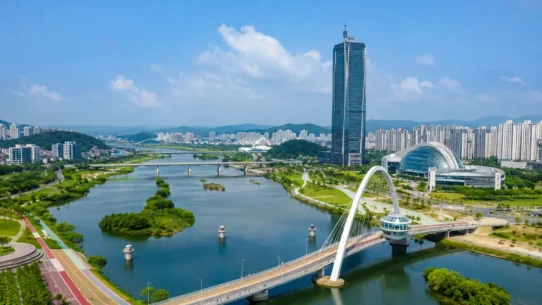
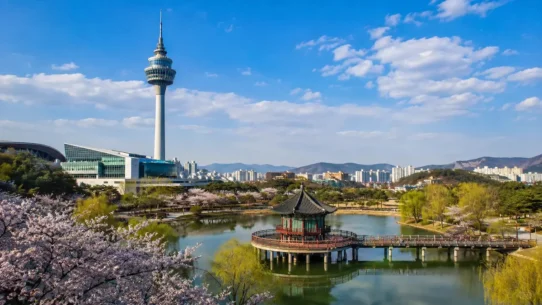
E-World is not bad—it is just easy to prioritize for the wrong reason. The park has real rides, 83 Tower, seasonal lights and good family appeal. However, if you have already visited a major Korean theme park and have only one or two days in Daegu, it is difficult to justify spending four to six prime hours there unless amusement parks are genuinely one of your interests.
Kim Gwang-seok Road is better as part of a route than as a destination. The murals and music references are pleasant, but the street is not large. Combine it with Bangcheon Market, downtown cafés, Suseongmot or a larger Jung-gu walking day.
Do not chase every observatory. If you visit Apsan at sunset, you do not also need to spend substantial time and money collecting another skyline view from 83 Tower unless you particularly enjoy towers or night photography.
Do not make Palgongsan a compulsory box to tick. It is one of Daegu’s best outdoor experiences, but only when you have enough time to enjoy it. A rushed two-hour visit after multiple bus transfers misses the point.
Smart Daegu Itineraries That Do Not Waste Your Day
One Day in Daegu: The Efficient First-Timer Route
- 09:30–12:30: Dongseong-ro, Yangnyeongsi area, Gyesan Cathedral and Modern Culture Alley.
- 12:30–14:30: Lunch and browsing at Seomun Market.
- 14:30–16:30: Café/rest period, especially in summer. If you prefer culture, use this time for a downtown museum rather than another outdoor transfer.
- 16:30–20:00: Head to Apsan for the cable car or hike and sunset.
- 20:00 onward: Dinner around Apsan, Anjirang, or return to Dongseong-ro.
Weekend alternative: If the Seomun Night Market is your priority, swap Apsan and Seomun: do Apsan earlier, then reach Seomun before the evening food stalls get busy.
Two Days in Daegu: The Best Balance
Day 1: Downtown Jung-gu, Modern Culture Alley, Seomun Market, and Dongseong-ro at night. Keep the day mostly walkable and easy after arrival.
Day 2: Slow morning, Apsan in the afternoon, then Suseongmot for dinner and an evening walk. This gives you city, market, mountain and local night-life atmosphere without a long rural transfer.
Three Days in Daegu: Add the Mountain Properly
Use the two-day plan above, then dedicate Day 3 to Palgongsan and Donghwasa. If you do not hike, return to central Daegu for a relaxed final dinner. If you are a theme-park family, replace Palgongsan with E-World and 83 Tower instead.
Where to Stay in Daegu Without Making Transport Harder
Dongseong-ro / Jungangno: Best overall for first-time visitors who want restaurants, nightlife and easy access to the historic center. You can walk to many central sights and use Line 1 for Dongdaegu Station.
Banwoldang: Best transport compromise. Lines 1 and 2 meet here, and you remain close to Dongseong-ro. This is particularly useful if you plan to move in several directions over two or three days.
Dongdaegu Station: Best for one-night stopovers, early trains, late arrivals or travelers with heavy luggage. The station complex has food and shopping, but you will commute into central sightseeing areas more often.
Suseongmot: Best for couples and travelers who prioritize a quieter evening environment over maximum sightseeing efficiency. Pleasant, but not my first recommendation for a first visit with a packed itinerary.
Daegu Transport: The Parts That Actually Matter
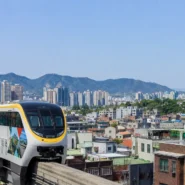
Daegu’s metro is simpler than Seoul’s and covers most first-time city attractions well. Lines 1 and 2 intersect at Banwoldang; Line 3 connects Seomun Market and Suseongmot, among other areas. The key limitation is that mountain areas and the airport require buses, taxis, walking, or combinations of these.
For current fares, Daegu’s official English information lists KRW 1,500 for an adult metro ride using a transportation card and KRW 1,700 for a one-time ticket. Regular city buses are also listed at KRW 1,500 with a transportation card. Fares and transfer policies can change, so treat those numbers as planning figures rather than something to budget down to the last coin.
If you are arriving at Daegu International Airport, remember the airport is about 1.8 km from Ayanggyo Station rather than connected directly to it. The official airport guidance recommends transferring between Ayanggyo and the terminal by bus or taxi. Korea Tourism Organization information also notes that a city bus to Dongdaegu Station takes around 20 minutes under normal conditions.
If you arrive by rail, Dongdaegu Station is the easiest major gateway. It handles KTX and SRT services and is linked to the metro and an intercity/express bus hub, which makes Daegu a practical stop between Seoul, Busan and nearby regional destinations.
Budget Reality: Where to Save and Where Not to
- Save on local transport: Use the metro and buses for central sightseeing. Daegu is compact enough that taxis should be strategic rather than automatic.
- Spend on a taxi when luggage is involved: Airport-to-hotel or awkward late-night transfers are where a taxi can save enough time and physical effort to be worth the difference.
- Save on food by eating where locals already eat: Traditional markets, noodle shops, dumpling stalls, kimbap shops and older neighborhood restaurants can give you a much better sense of Daegu than stacking trendy cafés and Western brunch spots.
- Spend selectively on views: Pay for either the Apsan cable car or a tower experience based on your priorities; you do not need every paid viewpoint.
- Do not pre-book every meal or attraction: Daegu works well with some spontaneity. Pre-book the things that can sell out or have meaningful online discounts—theme-park tickets, tours, special experiences—and leave ordinary city wandering flexible.
Key FAQs
How many days do first-time visitors need in Daegu?
Two nights is ideal for most first-time visitors. It is enough for downtown Jung-gu, Seomun Market, Apsan and Suseongmot without rushing. One day works if you stay central and choose only one major outer-area attraction. Three days is better if Palgongsan, hiking, temples or E-World are important to you.
Is Daegu worth visiting if I am already going to Seoul and Busan?
Yes—if you want a lower-pressure Korean city with strong food, cafés, markets and mountain access. No—if your trip is extremely short and you are mainly chasing Korea’s most famous headline attractions. Daegu’s appeal is that it feels lived-in and local, not that it has a single “must-see before you die” landmark.
What is the best area to stay in Daegu for tourists without a car?
Dongseong-ro, Jungangno and Banwoldang are the strongest choices. They minimize transfers, keep you close to food and nightlife, and connect easily to Dongdaegu Station. Banwoldang is especially useful because Metro Lines 1 and 2 meet there.
Final Verdict and Your Next Step
The most important rule for a first Daegu trip is simple: plan by travel time, not by how close attractions look on a map. Keep your first day compact, give Apsan its own sunset window, visit Seomun when the market is actually alive, and only add Palgongsan when you have enough time to enjoy the mountain rather than commute to it.
If you are staying one night: book around Dongseong-ro or Banwoldang, focus on downtown plus either Seomun or Apsan, and skip Palgongsan.
If you are staying two nights: choose a central hotel, add both Apsan and Suseongmot, and use the second evening for a slower local experience instead of another attraction marathon.
If you are staying three nights or love hiking: reserve the third day for Palgongsan and Donghwasa. This is where the city trip becomes a regional nature-and-culture break.
If you are traveling with children or love rides: E-World makes sense, especially when seasonal illuminations are running. In that case, buy tickets in advance when the online discount is meaningful and let the park replace—not add to—another half-day attraction.
If you are on a tighter budget: central Daegu is friendly to low-cost travel. Use the metro, eat at markets and local restaurants, choose one paid viewpoint, and avoid unnecessary cross-city taxi rides.
Daegu is easy to enjoy when your accommodation is well placed. Before finalizing the itinerary, compare central hotels around Dongseong-ro, Jungangno and Banwoldang rather than choosing solely by star rating. Check live prices on Agoda’s Daegu hotel page and Booking.com’s Daegu hotel page. Weekend dates, festivals and Korean holiday periods can tighten availability, so once your dates are fixed, booking a cancellable room early is usually the safer move.
For paid attractions, compare advance prices before paying at the gate. Theme-park visitors can check the verified Daegu E-World ticket on Klook. Travelers who want a low-effort overview without arranging every bus connection can also check the Daegu City Tour Bus on KKday; note that the current product information says only carry-on luggage is allowed, so it should not be treated as an airport-transfer solution for large suitcases.
Your next step: book the hotel first, then lock in only the time-sensitive pieces—your Seomun night-market day, Apsan sunset window, and any paid attraction you genuinely want. Everything else in Daegu becomes much easier once those three decisions are settled.
Planning Notes and Official Checks
Transport, attraction and operating information in this guide was cross-checked against Daegu Metropolitan City, Daegu Tourism, Daegu International Airport, and Korea Tourism Organization sources available in 2026. Hours, fares, cable-car operations, fountain schedules and market vendors can change because of season, weather, maintenance or holidays, so verify time-sensitive details again on the day you visit.