
💡 Key Takeaways
- Do not treat Daejeon as one compact sightseeing district. The city’s headline sights are split between the old downtown, the science/Expo zone, Yuseong, the southwest forests and the northeast lake-and-mountain area.
- The most overrated “hack” is using public buses for every outer-city stop. Buses are cheap, but a taxi for the final leg to Jangtaesan, Gyejoksan or Daecheongho can save a disproportionate amount of waiting, transferring and uphill walking.
- Sungsimdang is worth seeing, but not worth sacrificing half a day for. Go early, avoid peak weekend/seasonal-product queues when possible, and use another branch if your goal is bread rather than the “I went to the main store” badge.
- Most of this itinerary does not need a skip-the-line ticket. Hanbat Arboretum, Hanbit Tower, Yuseong Foot Spa, Jangtaesan and the main outdoor nature stops are free; the reservations that matter are selected National Science Museum experiences and intercity rail seats.
- Five days is generous for Daejeon. That is a strength if you use the time to avoid rush hours, long walking days and unnecessary hotel changes instead of trying to manufacture a packed checklist.
If you are searching for a Daejeon 5-day itinerary for your first visit, the biggest mistake is assuming the city works like central Seoul or Kyoto, where famous sights can be chained together all day on foot. Daejeon is easier than Seoul in many ways, but its best-known experiences are geographically scattered. A bakery queue in the old downtown, a science museum in Yuseong-gu, a forest in the southwest and a red-clay trail in the northeast do not belong in one “efficient” sightseeing loop. This guide reorganizes the classic first-timer wish list into five realistic area-based days, with clear cut points when your legs, weather or patience say enough.
One important expectation check: Daejeon is not a monument-every-300-meters city. If your ideal trip is nonstop palaces, famous temples and late-night tourist streets, five days may feel slow. If you like science museums, local food, urban parks, hot-spring culture, low-key neighborhoods and easy access to nature, the extra time makes the trip much more comfortable. The aim here is not “see the maximum.” It is lose the minimum time to bad routing.
Fact-check note: Operational details in this guide were checked against current official or Korea Tourism Organization pages available in August 2026. Seasonal hours, maintenance closures, exhibitions and transport schedules can still change, so recheck the linked official pages shortly before travel.
The 1-Min Cheat Sheet
- Sungsimdang & Daejeon Old Downtown — Best for: food-first visitors, first-day orientation and travelers arriving by KTX. Stay: 2.5–4 hours for the whole old-downtown loop; 30–60 minutes for the bakery itself if the queue is sane. Ticket/transport: no admission ticket; walk from Daejeon Station or take Line 1 one stop to Jungangno when carrying bags. Main store published hours: 08:00–22:00.
- National Science Museum — Best for: families, rainy days and genuinely curious adults. Stay: 2.5–4 hours. Ticket/transport: core halls are free; selected halls/experiences are paid and require advance reservation/ticket issuance. Closed Mondays and on specified major holidays. Use bus or a short taxi from the nearest convenient Line 1 station rather than forcing a long walk.
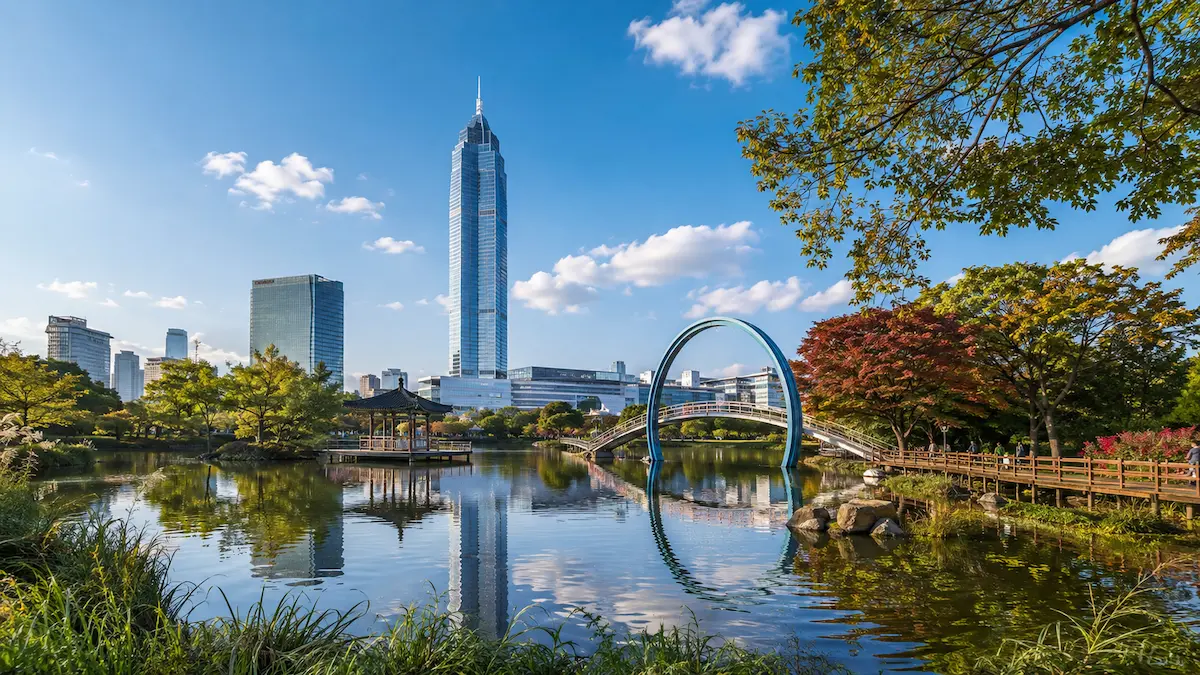
- Daejeon Expo Science Park & Hanbit Tower — Best for: Expo ’93 nostalgia, skyline photos and an easy bridge walk. Stay: 60–90 minutes by day, longer if staying for evening lights. Ticket/transport: park grounds and Hanbit Tower are currently listed as free; walk from the National Science Museum area.
- Hanbat Arboretum — Best for: low-cost nature, couples, photographers and anyone needing a decompression hour. Stay: 1.5–2.5 hours. Ticket/transport: free. East Garden/Tropical Garden close Mondays; West Garden closes Tuesdays, with holiday exceptions. Walk across the Expo Bridge from the Expo side to avoid a pointless vehicle detour.
- Yuseong Foot Spa — Best for: tired feet, seniors and a low-effort evening. Stay: 30–60 minutes. Ticket/transport: free; easy from Yuseong Spa Station on Line 1. Published hours are 07:00–22:00 in summer and 07:00–21:00 in winter.
- Jangtaesan Recreational Forest — Best for: forest scenery, autumn foliage and travelers who want a nature day without a full mountain climb. Stay: 2.5–4 hours. Ticket/transport: free and open year-round; public transport is possible, but a taxi or car is much more time-efficient for a five-day trip.
- Gyejoksan Red Clay Trail — Best for: active travelers and a distinctly Daejeon outdoor experience. Stay: 2.5–4 hours for a sensible partial route; much longer if attempting the full 14.5 km trail. Ticket/transport: no admission fee is listed; use a taxi to the Jangdong trail area when time matters. Do not assume “red-clay trail” means a short flat park stroll.
- Daecheongho Lake — Best for: scenic drives, quiet lake views and a relaxed final afternoon. Stay: 2–4 hours depending on viewpoint/walk. Ticket/transport: the lake itself is not a ticketed attraction; target a specific lakefront area rather than typing only “Daecheongho” into navigation. A taxi/car is strongly preferable to multiple bus transfers for first-timers.
The Most Practical 5-Day Itinerary
Day 1: Daejeon Station, Jungang Market, Sungsimdang & Old Downtown
- Suggested start: 10:00, or about 60–90 minutes after your KTX arrival. If you arrive earlier, even better: leave your luggage first and go to the bakery before the lunch crowd builds.
- Order: Daejeon Station → Daejeon Jungang Market → lunch in the market/old downtown → Sungsimdang Main Store → Euneungjeongi/Jungangno streets → optional Soje-dong cafés or an early evening old-downtown wander.
- Daejeon Station to Jungang Market: walk if you have already dropped your luggage; otherwise use a station locker if available or go to your hotel first. Dragging a large suitcase through a traditional market is exactly the kind of “only 15 minutes on the map” decision that feels much worse in real life.
- Jungang Market: allow 60–90 minutes. Eat lunch here or around Jungangno before joining any bakery queue. Going to Sungsimdang hungry is a reliable way to overbuy pastries and then still need a proper meal.
- Sungsimdang: budget 30–60 minutes, but set a personal queue limit. The main store is an icon, not a compulsory endurance event. If the line is clearly eating into your afternoon, buy a smaller selection, use another branch later, or return near opening another day.
- Old downtown streets: 60–90 minutes at an easy pace. This is your low-stakes orientation day, not the day to chase every photo spot in Dong-gu and Jung-gu.
- Cut if tired: Soje-dong or any viewpoint that requires an extra uphill transfer. Your first day should protect your legs for Days 4 and 5.
- Rain plan: keep Jungang Market, Sungsimdang and café time; drop exposed viewpoints. This area works better in rain than the forest/lake days, so do not waste a clear-weather day swapping in indoor stops unnecessarily.
- Best evening area: Jungangno/Euneungjeongi if you want to stay local; Dunsan if that is where your hotel is.
- Why this beats the typical influencer route: many short itineraries rush from Sungsimdang straight to Expo Park, then back east for dinner. That creates an unnecessary cross-city zigzag. Day 1 stays entirely around your arrival gateway and lets you handle luggage once.
Day 2: National Science Museum → Expo Science Park → Hanbat Arboretum
- Suggested start: arrive at the National Science Museum around 09:20 for the 09:30 opening. If this day is Monday, swap it with Day 3, 4 or 5.
- Order: National Science Museum → lunch around the DCC/Shinsegae Art & Science area → Expo Science Park/Hanbit Tower → Expo Bridge → Hanbat Arboretum → Dunsan or Expo night view.
- National Science Museum: 2.5–3.5 hours for most adults; families can easily use more. Prioritize the free permanent halls first, then add a reserved paid experience only if it genuinely interests you. Trying to “complete” every hall is how a science morning becomes a six-hour slog.
- Transport to Expo Science Park: walk. The museum and Expo zone are effectively neighbors across the same science district. Calling a taxi here usually saves little once pickup time is included.
- Lunch/rest: use the Daejeon Convention Center/Shinsegae side, where you have better indoor seating, toilets and predictable food options than trying to improvise inside a park.
- Expo Science Park & Hanbit Tower: 60–90 minutes. The tower is a city symbol, but the daytime park can feel quieter and less “theme-park-like” than first-time visitors expect. Treat it as an Expo-history/urban-landmark stop, not a full amusement park.
- Expo Bridge to Hanbat Arboretum: walk across the bridge. This is one of the few places in Daejeon where the sightseeing route itself is the efficient route.
- Hanbat Arboretum: 90 minutes is enough for a selective visit; 2–3 hours if gardens are a major interest. Check which garden is closed that day: East/Tropical Garden normally Monday, West Garden Tuesday.
- Cut if tired: shorten the arboretum to one garden rather than skipping the bridge and taking a vehicle around the river.
- Rain plan: extend the National Science Museum and use the nearby Daejeon Museum of Art or indoor Shinsegae Art & Science complex; save the arboretum for a dry day if rain is heavy.
- Best evening area: Expo Bridge/Hanbit Tower for lights, then Dunsan for dinner. Do not automatically return to Daejeon Station unless your hotel is there.
- Why this beats the typical influencer route: these three headline attractions form one of Daejeon’s cleanest geographic clusters. Splitting them across separate days wastes transport; adding Yuseong downtown in the middle wastes your feet.
Day 3: Yuseong Hot-Spring District + Optional Sutonggol Valley
- Suggested start: 09:00–09:30. This is intentionally a medium-effort day between the museum cluster and the two more nature-heavy days.
- Order: Yuseong Spa Station → Yuseong Foot Spa → brunch/coffee in Bongmyeong-dong → optional Sutonggol Valley short walk → return to Yuseong for dinner.
- Yuseong Foot Spa: 30–45 minutes is usually enough. It is a public outdoor foot-bath experience, not a full Japanese-style onsen complex. That distinction matters: come for a relaxing local ritual, not for a luxury spa day.
- Bongmyeong-dong/Yuseong: allow 1.5–2 hours for a slow meal and neighborhood break. This is where you deliberately stop “collecting attractions.”
- Optional Sutonggol Valley: take a taxi for the final leg rather than building the day around several bus transfers. The valley is in the Daejeon side of Gyeryongsan National Park and is open year-round. Allow 2–3 hours for a moderate out-and-back or valley walk; you do not need to summit anything to justify the trip.
- Lunch/rest: eat in Yuseong before heading to Sutonggol unless you have checked a specific restaurant near the trail. A packed snack and water are more useful than trusting a sparse trailhead meal plan.
- Cut if tired: Sutonggol. The foot spa plus a relaxed Yuseong day is completely valid, especially with children, seniors or sore legs.
- Rain plan: replace Sutonggol with Daejeon Municipal Museum or another indoor Yuseong-area museum, then keep the foot spa only if conditions are comfortable.
- Best evening area: Bongmyeong-dong/Yuseong. Staying here for dinner avoids riding east just to ride west again the next morning.
- Why this beats the typical influencer route: Yuseong often gets tacked onto the science day as a quick photo stop, then visitors cross town again for a mountain. Giving it its own lower-intensity day lets you use the spa for what it is actually good at: recovery.
Day 4: Jangtaesan Recreational Forest + Optional Ppuri Park
- Suggested start: leave your hotel around 08:00–08:30, earlier during peak autumn foliage weekends.
- Order: hotel → Jangtaesan Recreational Forest → lunch/rest → optional Ppuri Park → Dunsan evening.
- Best transport: taxi or rental car for the outbound leg. Public transport can work, but this is where “saving a few won” often costs a large chunk of your best daylight hours. If two or more people are traveling together, the time-per-person value of a taxi becomes much easier to justify.
- Jangtaesan: allow 2.5–4 hours. Focus on the metasequoia/bald-cypress forest atmosphere, main walking routes and viewpoints that match your fitness. You do not need to turn a recreational forest visit into a heroic hike.
- Lunch/rest: either bring a simple lunch or plan to eat after leaving the forest. Food choice is easier once you are back toward the urban edge than when everyone decides to eat at the same peak-time spot near the forest.
- Optional Ppuri Park: 60–90 minutes if you still have energy and are using a taxi/car. It is geographically more sensible than bouncing to Expo, Yuseong or Gyejoksan from Jangtaesan.
- Cut if tired: Ppuri Park first. Jangtaesan is the reason for the southwest day.
- Rain plan: in light rain, forest scenery can be atmospheric but paths and steps may be slippery. In heavy rain, cancel the nature day rather than forcing it; use the Daejeon Natural Heritage Center, Daejeon Museum of Art or another indoor cluster and move Jangtaesan to a dry day.
- Best evening area: Dunsan or your hotel neighborhood. This is not the night to add another mountain viewpoint after several hours on forest paths.
- Why this beats the typical influencer route: pairing Jangtaesan with Gyejoksan because “both are nature” looks logical on a list and terrible on a map. They sit on different sides of the city. Keep southwest with southwest.
Day 5: Gyejoksan Red Clay Trail → Daecheongho Lake
- Suggested start: 08:00–08:30, especially from May to September. You want the trail before midday heat and before your legs realize it is Day 5.
- Order: hotel → Jangdong/Gyejoksan trail area → partial red-clay trail → lunch around Daedeok/Songchon side → taxi to the Daecheongho lakefront/dam area → sunset or late-afternoon lake view → Daejeon Station if departing.
- Gyejoksan: do not automatically attempt the full 14.5 km course. For a sightseeing itinerary, 2.5–3.5 hours on a partial route gives you the red-clay experience without sacrificing the entire final day. Wear footwear you can clean easily and bring a small towel or spare socks.
- Transport to the trailhead: a taxi is the efficiency choice. Bus service exists, but visitor reports repeatedly mention that the final approach and waiting can make the trip feel much longer than the map suggests.
- Gyejoksan to Daecheongho: taxi/car. Do not return to central Daejeon first. You are already on the northeast side of the city; use that geographic advantage.
- Daecheongho: choose a specific target such as the Daecheong Dam/lakefront area. “Daecheongho Lake” covers a huge area, so generic navigation can send first-timers to an inconvenient shoreline point with no useful facilities.
- Lunch/rest: eat before the lake transfer or choose a pre-checked lakeside café/restaurant. The lake is ideal for a long sit after the trail, not for hunting randomly for food while tired.
- Cut if tired: shorten Gyejoksan, not the lake. A final quiet lake stop is a better end to the trip than finishing with an overlong hike and sore feet on the KTX.
- Rain plan: skip the red-clay trail in sustained rain. Use the Geological Museum or another indoor science/culture stop, and only visit Daecheongho if visibility and road conditions are worthwhile.
- Best evening area: Daejeon Station/Soje-dong if departing; otherwise return directly to your hotel and pack.
- Why this beats the typical influencer route: the northeast pairing prevents the classic mistake of riding back to Daejeon Station between a mountain and the lake. It also puts the hardest walking first and the recovery scenery second.
Tourist Traps to Avoid & Itinerary Hacks
- Trap: treating “free” as “quick.” Hanbat Arboretum, Expo Park and the National Science Museum’s main halls can all be free, but they are physically large. Free admission does not make them sensible 30-minute filler stops.
- Trap: joining the longest Sungsimdang line because it must be the “real” experience. The main store is historically important and fun, but your trip does not become less authentic if you use another branch when the queue is excessive. Queue tolerance should be lower on a five-day trip because you have many chances to return.
- Hack: put Sungsimdang on Day 1 and keep a backup slot. If the queue is bad, leave. Try again early on Day 2 or use the DCC-area branch while you are already in the Expo district rather than crossing town solely for bread.
- Trap: booking a “skip-the-line” product for a free attraction. Daejeon is not a city where every headline sight has a paid fast-track system. Be suspicious of generic ticket pages that package transport or a tour and make it sound as though the park itself requires a special ticket.
- Trap: planning the National Science Museum on Monday. The museum is normally closed Mondays, and some holiday patterns create additional closure days. The arboretum also has different closure days for East/Tropical versus West Garden. This is the one calendar detail that can break an otherwise perfect science day.
- Hack: reserve only the museum experiences that actually require it. The Science Alive Discovery Center, KkumAty Hall and Planetarium are listed as paid experiences requiring advance reservation/ticket issuance; the core halls are free. Do not waste your first hour queuing for something you never intended to see.
- Trap: assuming Expo Science Park is still a full-scale 1993-style theme park. Come for Hanbit Tower, Expo history, the urban river setting and evening atmosphere. If you expect a huge ride-filled attraction, the daytime experience can feel underwhelming.
- Hack: walk the Expo Bridge once, not the riverside twice. Museum → Expo → bridge → arboretum creates a natural one-way flow. Reversing direction to fetch lunch or a taxi creates unnecessary steps.
- Trap: doing the whole 14.5 km Gyejoksan red-clay trail because the internet says it is “easy.” Easy terrain and short distance are not the same thing. A partial trail is the smarter sightseeing choice unless hiking is the main purpose of your trip.
- Trap: relying on a tight bus connection to Jangtaesan or Gyejoksan. Outer-city buses are useful, but a missed connection or long headway can erase the savings. If the next bus is inconvenient, take a taxi for the final leg instead of defending the sunk cost of your transit plan.
- Hack: split taxi fares. With two to four travelers, a short or medium taxi hop can be cheaper in time-per-person terms than an hour of extra transfers, especially after a hike.
- Trap: typing only “Daecheongho Lake” into a map app. It is a very large reservoir zone. Pick a specific lakefront park, dam viewpoint, walking-course access point or restaurant before leaving Gyejoksan.
- Trap: changing hotels to “follow the route.” For a five-day stay, one well-located base usually beats packing twice. Hotel changes save less time than travelers imagine once check-out, luggage storage and check-in are counted.
- Hack: use Naver Map or KakaoMap for Korean public transport. International map apps can be less useful for detailed Korean walking entrances, bus stops and local routing. Save the Korean names of outer-city destinations before leaving the hotel.
Save Your Legs! The Most Efficient Route
The entire five-day route is built around five geographic zones: old downtown/Daejeon Station on Day 1, the science–Expo–arboretum corridor on Day 2, Yuseong on Day 3, the southwest Jangtaesan zone on Day 4, and the northeast Gyejoksan–Daecheongho zone on Day 5. The important idea is not that every transfer is short; it is that you make each long cross-city move only once.
Walk where the urban fabric actually supports it. Daejeon Station, Jungang Market, Sungsimdang and Jungangno are a sensible walking cluster once your luggage is gone. The National Science Museum, Expo Science Park, Expo Bridge and Hanbat Arboretum also form a rare sightseeing chain where walking is both pleasant and efficient. Everywhere else, do not turn “I can technically walk this” into a virtue. A 1.5 km road walk with little sightseeing value is still wasted energy.
Use Line 1 for the spine, not for every destination. Daejeon’s subway Line 1 is excellent for Daejeon Station, Jungangno, Dunsan/government-complex access and Yuseong Spa. The mistake is expecting the subway to deliver you to forest and lake trailheads. For Jangtaesan, Gyejoksan and Daecheongho, use rail/subway/bus for the easy central portion if it aligns well, then switch to a taxi when the last-mile route becomes slow or transfer-heavy.
When is a short taxi actually smarter? Use one when it removes an awkward last-mile transfer, when two or more people can split the fare, after a long hike, when rain makes a 15-minute walk unpleasant, or when the next bus would cost 25–40 minutes of waiting. Do not use taxis for the museum-to-Expo transfer or the Expo-to-arboretum bridge crossing; those are cases where walking is the better route.
Which transport is most vulnerable at busy times? Buses on central roads can slow in traffic, while outer-route buses may be less frequent than first-time visitors expect. Taxis also face road congestion, so the answer is not “taxi everywhere.” The best pattern is subway for predictable cross-city movement, walking for compact clusters, and taxis for low-frequency final legs. Around weekend foliage and cherry-blossom peaks, expect the access roads to Jangtaesan and popular lake areas to be slower and parking to be more competitive.
Do not return to Daejeon Station every afternoon. The station is your intercity gateway, not the center of every sightseeing day. If you are in Expo/Dunsan, eat there. If you are in Yuseong, stay there for dinner. If you finish Gyejoksan, continue northeast to Daecheongho instead of going downtown first.
Best area to stay: for this exact itinerary, I would choose one base around Dunsan/Government Complex or Yuseong Spa. Dunsan is more balanced for both east and west taxi rides and puts you close to the science/arboretum cluster; Yuseong is calmer and excellent if hot springs, science and western nature are priorities. Stay around Daejeon Station/Jungangno instead if you have very early/late KTX trains, heavy luggage or several intercity day trips. Avoid changing hotels just to shave a few minutes from one nature day.
Large luggage strategy: if you arrive before hotel check-in and plan to explore the old downtown immediately, use a Daejeon Station locker if an appropriately sized locker is available, or leave bags with your hotel before sightseeing. Lockers are ideal for a few hours; a large suitcase is not. Luggage-delivery services in Korea are provider- and route-dependent, so only use forwarding when you have confirmed that both pickup and receiving hotel are covered. Do not assume Japan-style same-day forwarding exists automatically for your exact Daejeon hotel.
Ticket Tips & Skip-the-Line Hacks
The most useful ticket advice for Daejeon is surprisingly simple: do not buy tickets that you do not need. Many of the core sights in this five-day itinerary are free. Hanbat Arboretum is listed as free. Hanbit Tower is currently listed as free. Jangtaesan Recreational Forest is free. Yuseong Foot Spa is free. Gyejoksan and the Daecheongho outdoor areas do not require a standard attraction ticket. Sungsimdang is a bakery, not an admission attraction. There is no legitimate universal “Daejeon skip-the-line pass” that magically solves queues at all of these places.
National Science Museum: general admission to the main free halls is free, but the museum explicitly lists the Science Alive Discovery Center, KkumAty Hall and Planetarium as paid areas requiring advance reservation and ticket issuance. Some free halls may also use reservations. Check the museum’s official reservation page before your visit if one of these is a priority. This is a real case where advance planning can save disappointment.
Sungsimdang: there is no tourist fast pass. Queue avoidance is about timing and branch choice, not an electronic ticket. The main store’s published hours are 08:00–22:00. Early weekday visits are the safest general strategy, while weekends and famous seasonal products can create much heavier demand. If your goal is simply to taste signature bread, another branch can be the smarter choice.
KTX/KORAIL: this is the booking that matters most for many first-time visitors. If you are coming from Seoul or continuing to Busan, book your intercity seat ahead for busy Fridays, Sundays, holidays and peak travel dates. A KORAIL Pass can be useful if Daejeon is one stop on a multi-city rail trip, but it is not automatically cheaper for a simple Seoul–Daejeon round trip. Compare the pass against individual fares before buying.
Affiliate disclosure: The Klook and KKday links below are affiliate links. The price you see should not be increased because of the referral, but this site may earn a commission if you book through them.
Klook rail booking: the Klook KORAIL Pass page is live and sells the foreign-traveler rail pass, while Klook’s Korea Rail booking hub also supports individual rail searches. Use these only if the price/terms beat booking directly for your trip.
Check individual Korea rail tickets on Klook
KKday rail booking: KKday also has a live KORAIL Pass product page with an e-voucher/QR-code workflow. Again, buy it because the rail math works for your itinerary, not because this Daejeon guide tells you every traveler needs a pass.
What I would prebook: KTX/KORAIL seats when traveling on busy dates, and any National Science Museum paid/reservation experience you truly want. What I would not prebook: free parks, the public foot spa, the arboretum or a generic “skip-the-line” package with no clear benefit. QR codes are useful only where an actual e-ticket system exists.
Tried & Tested: My Honest Review
📍 Stop 1: Sungsimdang & Daejeon Old Downtown
Tags: Iconic bakery · Old downtown · Market food · Queue risk · Easy from KTX
My take: Sungsimdang deserves its status in a first-time Daejeon itinerary because it is woven into the city’s modern identity, but it is also the easiest stop to let social-media hype distort your day. The right way to do it is to combine the bakery with Jungang Market and the old downtown, not travel across Daejeon solely to stand in a line.
✅ What Other Travelers Say: Visitor reports commonly praise the sheer variety and value, and some note that even a long-looking line can move efficiently because of multiple checkout points. The old downtown also makes the stop more worthwhile than a bakery-only dash.
⚠️ The Catch (Things to Keep in Mind): Seasonal cakes and famous limited products can create a very different queue from an ordinary bread purchase. The cake boutique and bread-focused stores can also confuse first-timers. Decide what you actually want before joining the longest line you see.
Best for: first-timers, food travelers and anyone arriving through Daejeon Station. Skip or shorten if: you dislike queues and are not particularly interested in bakeries.
Official check: VISITKOREA – Sungsimdang
📍 Stop 2: National Science Museum
Tags: Science · Family-friendly · Rain-proof · Free core halls · Reservation experiences
My take: this is one of the strongest reasons to give Daejeon more than a day trip. The mistake is not visiting; the mistake is arriving without priorities and spending your energy trying to complete every building. Pick two or three core halls, then add a reserved experience if it is genuinely worth your time.
✅ What Other Travelers Say: Families consistently value the hands-on nature and breadth of the museum, while science-minded adults can spend much longer than expected. It also works extremely well as a bad-weather anchor.
⚠️ The Catch (Things to Keep in Mind): the campus is large, selected experiences cost extra and require reservation/ticket issuance, and Monday closure can break a rigid itinerary. Check the official visitor information shortly before travel.
Best for: families, science fans, rainy days. Skip or shorten if: you have zero interest in museums; do not force three hours simply because it is free.
Official check: National Science Museum – Visitor Information
📍 Stop 3: Daejeon Expo Science Park & Hanbit Tower
Tags: Expo ’93 · Landmark · Free observatory · Night lights · Best as part of a cluster
My take: Hanbit Tower is more satisfying when you understand what it represents than when you expect a modern theme park. I would never cross the city only for a quick daytime photo, but I would absolutely include it between the Science Museum and Hanbat Arboretum, then linger if the evening lights fit your schedule.
✅ What Other Travelers Say: visitors often enjoy the tower, Expo-era nostalgia, river setting and night atmosphere. The open space is especially pleasant when paired with Expo Bridge.
⚠️ The Catch (Things to Keep in Mind): “Science Park” can sound more attraction-packed than the current experience. Some travelers expecting rides or a dense theme park may find the daytime grounds quiet. Treat it as a landmark/history stop.
Best for: architecture, Expo history, photography, evening strolls. Skip or shorten if: you only have a few hours in Daejeon and are not visiting the neighboring science/arboretum zone.
Official check: VISITKOREA – Hanbit Tower
📍 Stop 4: Hanbat Arboretum
Tags: Free garden · Urban nature · Low-pressure · Seasonal · Different closure days
My take: this is the best “reset” stop in the city, but only if you resist the temptation to walk every path. A selective 90-minute garden visit after the Expo district is better than exhausting yourself in a park that is much larger than it looks online.
✅ What Other Travelers Say: travelers like the space, calm atmosphere and variety of planting, and it is particularly attractive in bloom and foliage seasons. The Expo Bridge approach adds a scenic arrival.
⚠️ The Catch (Things to Keep in Mind): plant-focused attractions are seasonal. On a hot, wet or winter-gray day, the experience can be less dramatic than promotional photos suggest. Also remember the East/Tropical and West gardens have different weekly closing days.
Best for: couples, photographers, budget travelers, slow travel. Skip or shorten if: weather is poor or you already have two major forest days planned and need recovery.
Official check: VISITKOREA – Hanbat Arboretum
📍 Stop 5: Yuseong Foot Spa
Tags: Free hot spring · Recovery stop · Seniors · Line 1 access · Short visit
My take: this is a good example of a modest attraction that becomes excellent when placed at the right point in the itinerary. After two days of markets, museums and gardens, 30–45 minutes with your feet in hot water makes sense. Crossing the city just for a five-minute photo does not.
✅ What Other Travelers Say: visitors appreciate that it is free, easy and genuinely relaxing, especially after walking. It is accessible enough to work for mixed-age groups.
⚠️ The Catch (Things to Keep in Mind): it is a public outdoor foot spa, not a private bathhouse or luxury onsen. If you want a full-body hot-spring experience, book a hotel/spa facility separately and verify its bathing rules and hours.
Best for: tired travelers, seniors, couples, low-budget recovery. Skip or shorten if: you are expecting a full spa complex.
Official check: VISITKOREA – Yuseong Foot Spa
📍 Stop 6: Jangtaesan Recreational Forest
Tags: Metasequoia forest · Autumn favorite · Free · Taxi-efficient · Nature day
My take: Jangtaesan is one of the places where Daejeon rewards travelers who stop optimizing only for ticket price. The forest is free; your scarce resource is time. Spending money on a direct taxi can be the better-value decision if it gives you another hour in the forest instead of another hour transferring.
✅ What Other Travelers Say: the tall-tree scenery and autumn colors are the big draw, and the recreational-forest format feels accessible compared with a strenuous mountain climb.
⚠️ The Catch (Things to Keep in Mind): peak foliage weekends can mean heavier road traffic and more people at the most photogenic sections. Wet leaves, boardwalks and steps also deserve caution after rain.
Best for: nature lovers, photographers, autumn trips. Skip or shorten if: you have only two days in Daejeon or the weather is genuinely bad.
Official check: VISITKOREA – Jangtaesan Recreational Forest
📍 Stop 7: Gyejoksan Red Clay Trail
Tags: Barefoot trail · Active · 14.5 km full route · Awkward last mile · Unique local experience
My take: this is the outdoor stop I would keep over a generic city viewpoint because it feels specific to Daejeon. But I strongly disagree with itineraries that treat the entire 14.5 km course as an automatic half-day add-on. Try the clay, enjoy the forest, and turn back when the time budget says so.
✅ What Other Travelers Say: visitor reviews praise the shaded forest atmosphere and unusual barefoot red-clay experience. Some travelers specifically recommend a taxi to reduce the complicated approach.
⚠️ The Catch (Things to Keep in Mind): the full trail is long, and transport to/from the trailhead can take more patience than central Daejeon sightseeing. Barefoot walking is optional; use the parallel regular surface if your feet are not comfortable.
Best for: active travelers, repeat Korea visitors, nature fans. Skip or shorten if: you have knee/foot issues, bad weather or no interest in hiking.
Official check: VISITKOREA – Gyejoksan Red Clay Trail
📍 Stop 8: Daecheongho Lake
Tags: Lake scenery · Road trip feel · Quiet finale · Large area · Best with taxi/car
My take: Daecheongho is beautiful in the way large lakes are beautiful: the experience depends heavily on where you actually go. This is not a single gate-and-ticket attraction. Pick a specific lakefront or dam-area destination, then build a short walk and meal around it.
✅ What Other Travelers Say: people value the calm scenery, driving routes, seasonal blossoms and lakeside walks. It is especially satisfying after a more active morning.
⚠️ The Catch (Things to Keep in Mind): without a specific pin, first-timers can spend too much time getting to an arbitrary part of the reservoir. Public transport is less flexible here than in central Daejeon, so this is one of the strongest cases for a taxi, driver or rental car.
Best for: couples, photographers, slow travel, road trips. Skip or shorten if: visibility is poor, you are relying on a tight final-day bus schedule, or your KTX departure leaves no buffer.
Official check: VISITKOREA – Daecheongho Lake
Key FAQs
Is 5 days in Daejeon too long for first-time visitors?
Five days is longer than most travelers need for only the central sights, but it works well if you want Jangtaesan, Gyejoksan, Daecheongho and a slower Yuseong day without exhausting back-to-back transfers. If you dislike nature walks or museums, reduce the trip to three days rather than filling time with weak attractions.
Where should I stay in Daejeon for a 5-day itinerary without a car?
Dunsan/Government Complex is the best all-round compromise for this route because it sits between the old downtown, Yuseong and the outer east/west day trips. Yuseong Spa is excellent if you prioritize the science district and a quieter evening. Daejeon Station is best for heavy luggage, late arrivals and frequent KTX use, but it adds more cross-city travel on Days 2–5.
Do I need to rent a car for Jangtaesan, Gyejoksan and Daecheongho?
No, but I would budget for strategic taxis. Public transport can reach or approach these areas, yet the final legs and waiting times can make a five-day vacation feel like a transit challenge. A car is most useful for Day 4 and Day 5, while subway/walking is better in the old downtown, Yuseong and Expo districts.
Final Verdict and Your Next Step
The best Daejeon 5-day itinerary is not the one with the most pins. It is the one that understands the city’s shape. Keep your first day near Daejeon Station, give the science/Expo/arboretum corridor one complete day, use Yuseong as a recovery zone, keep Jangtaesan in the southwest and finish with Gyejoksan plus Daecheongho in the northeast. That simple grouping removes the majority of avoidable backtracking.
Before departure, book the things that can actually cost you time if they sell out: your KTX seat and any National Science Museum reserved experience you care about. Do not pay extra merely because a reseller uses the words “fast track” or “skip the line” around a free park. For multi-city Korea trips, compare a KORAIL Pass against individual rail tickets and lock in seats once your dates are firm.
Check KORAIL Pass prices on Klook
Check individual Korea rail tickets on Klook
Check KORAIL Pass prices on KKday
Last practical reminder: save the Korean names of Jangtaesan (장태산자연휴양림), Gyejoksan Red Clay Trail (계족산 황톳길) and Daecheongho (대청호) in Naver Map or KakaoMap before leaving Wi-Fi. And if a route makes you return to Daejeon Station in the middle of the day for no reason, there is probably a better route.