
💡 Key Takeaways
- Stay around Wat Mahathat and the eastern historical island when sightseeing and everyday food matter more than a river-view room.
- The railway station is across the Pa Sak River from the historical island. A close map pin does not remove the need to plan the crossing.
- South-riverfront and western-old-town stays reward slower trips, but check dinner, transport and the exact room outlook before booking.
The best areas to stay in Ayutthaya depend on which inconvenience you want to remove: a train transfer, repeated journeys between temples, or the search for a relaxed dinner after a hot day outside. These priorities point to different places. A riverfront room can be lovely without being the most convenient temple base, while a guesthouse near the station can simplify arrival but leave the historical island on the other side of the water.
This comparison uses five practical planning zones: the Wat Mahathat temple core, Chao Phrom and the eastern island, the southern riverfront, the western old town, and the railway-station side. They are not official neighborhood boundaries. Their purpose is to help you compare entrances, dinner routes and river crossings, rather than treat every listing with an Ayutthaya address as equally central.
The 1-Min Cheat Sheet
- Wat Mahathat and the temple core: best for a short sightseeing stay; many small guesthouses and modest room budgets, with exposed daytime walks to consider.
- Chao Phrom and the eastern island: best for food, everyday services and balancing arrival with sightseeing; practical budget accommodation, with streets and ferry access to check.
- Southern U-Thong riverfront: best for couples and a room-centered stay; boutique properties and river views, with more selective room pricing and transport trade-offs.
- Western old town: best for a slower stay around quieter lanes and the western monuments; smaller character properties, with a thinner immediate dinner choice depending on the address.
- Railway station and Kamang east bank: best for rail arrivals or onward trains; budget riverside rooms and larger hotels, while the historical island still requires a crossing.
Top Survival Tips
- Draw the river into the decision. UNESCO describes the historic city’s island setting. The water is part of the practical layout, not just the view. Ask whether your normal route uses a passenger ferry or a road bridge.
- Keep the ferry conditional. Verify the current landing, operating hours and fare locally before depending on it. A road transfer is the fallback for late arrivals, unsuitable boarding conditions or a suspended crossing; do not build a tight train connection around an assumed service.
- Choose the first two temples, not every temple. There is no one entrance that makes all Ayutthaya sights a short stroll. Map your first morning and likely afternoon break, then decide which journeys you are happy to make by bicycle or vehicle.
- Inspect the last stretch with luggage. Small properties may have narrow lanes, steps or wooden rooms. Ask about ground-floor accommodation and help with cases rather than infer accessibility from a broad facilities icon.
- Price the full stay in baht. Compare breakfast, room category, daily transfers and any extra-bed charges. A quieter room that suits your plan can be better value than a nominally cheaper address that creates several journeys.
- Save the actual Bangkok station. Check the chosen train on the current SRT timetable. “Bangkok to Ayutthaya” alone does not establish whether your service uses Krung Thep Aphiwat or another departure point.
The Full Experience
🏛️ Wat Mahathat and the Temple Core: Best for First Visits Focused on the Ruins
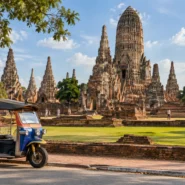
Start around Wat Mahathat, Wat Ratchaburana and the nearby Naresuan–Chakrapad streets if the ruins are the reason for the stay. This gives you a practical base for an early start, a return to the room in the hottest part of the day, and another outing without first arranging a cross-town transfer.
The useful accommodation here is often a small guesthouse rather than a large hotel. Baan Kong’s property listing, for example, places its bungalows close to Wat Ratchaburana and Wat Mahathat. Compare the actual entrance with the temples you want; a listing’s historical-park label can refer to a much broader area.
✅ What Other Travelers Say
A displayed guest comment on Baan Kong’s Booking.com page praises the location, comfortable room and privacy. It is a property-specific example of the benefit of staying near the temple core, not a guarantee that every central lane has the same atmosphere.
⚠️ The Catch (Things to Keep in Mind)
Close to a temple is not the same as walking the whole city comfortably. Routes between the larger groups of monuments are exposed, and crossings still matter. Plan a vehicle or bicycle where appropriate rather than turn a hotel location into an ambitious all-day walking schedule.
Choose this area when getting to the first sights and returning for a break matter most. Confirm room access, air-conditioning and breakfast arrangements; those ordinary details can be more useful than another decorative hotel feature.
🍜 Chao Phrom and the Eastern Island: Best for Food and Everyday Convenience
The eastern part of the historical island around Chao Phrom, Bang Ian Road and nearby lanes is a good compromise if you want food and services close to hand without sleeping on the station bank. You can combine a simple town routine with sightseeing farther into the island, rather than make the hotel itself the main attraction.
Keep the exact street in view. A quieter lane off a useful road is a different proposition from a room directly exposed to market traffic. Also distinguish this area from the station neighborhood across the Pa Sak. If you arrive by train, decide whether to use an operating passenger ferry or a road transfer after checking the practical conditions.
✅ What Other Travelers Say
On Baan Bussara’s guest page, Kamolthip values nearby street food and a convenience store, while Marine praises a comfortable room and helpful owner. Those comments capture the appeal of an ordinary, usable base rather than an elaborate resort setup.
⚠️ The Catch (Things to Keep in Mind)
A market location does not guarantee silence or an easy suitcase route from every landing. Check the room’s position and the final approach. Small guesthouses can also have narrower check-in windows than a large station-side hotel, so send your arrival time in advance.
This is a strong choice for a short stay where dinner, snacks and a flexible sightseeing plan all matter. Compare it with the temple-core area according to the exact hotel, not a universal claim that one street is always better.
🌅 Southern U-Thong Riverfront: Best for Couples Who Want the Room and View to Matter
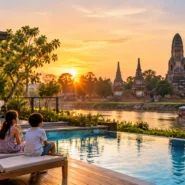
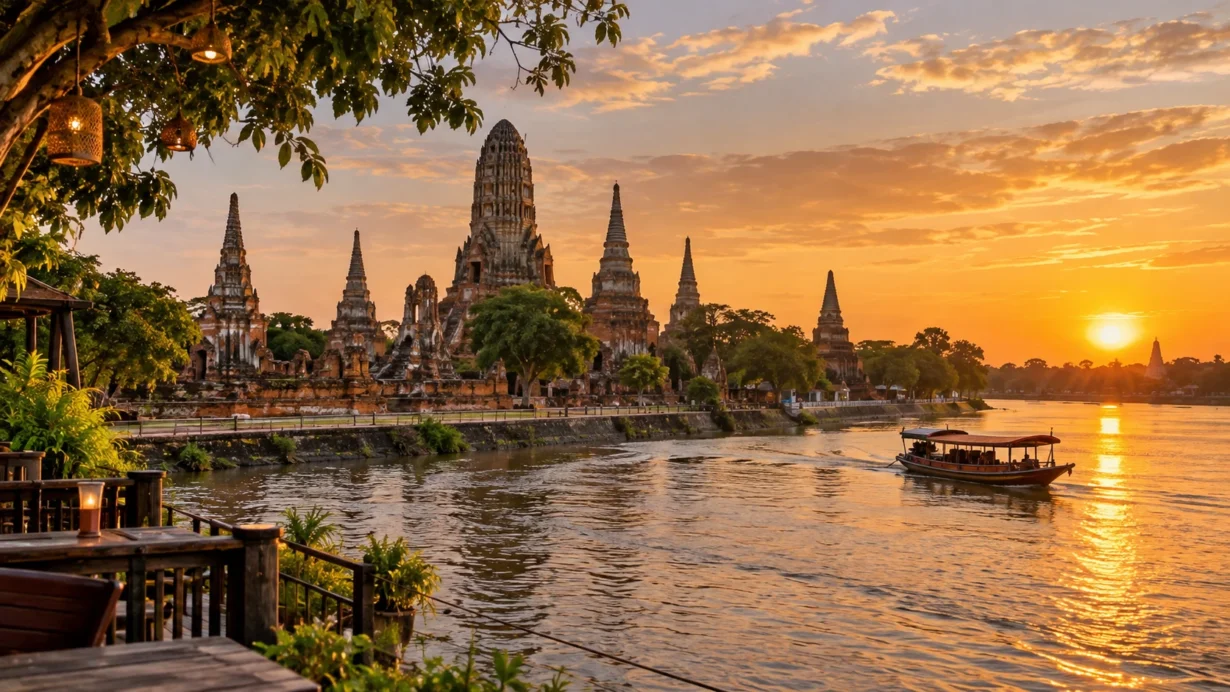
The southern side of the island offers a different reason to stay overnight: a river-facing breakfast, a comfortable room and time to enjoy the setting between outings. U-Thong Road loops around the island, so “on U-Thong” is not precise enough by itself. Check the southern riverfront address and which bank your chosen view actually faces.
Properties such as iuDia distinguish courtyard-facing rooms from Chao Phraya River views. Decide whether a view is worth the premium before choosing a category. The embedded iuDia video illustrates one riverside property’s setting; it is not a continuous tour of the entire southern neighborhood.
✅ What Other Travelers Say
On the same Booking.com page, Stuart praises the temple across the river and nearby places to eat. William also values the view, but says he used taxis or tuk-tuks for outings. These two accounts explain the trade-off particularly well: the outlook can be the reward for accepting more transport.
⚠️ The Catch (Things to Keep in Mind)
A temple directly opposite is not necessarily reached by walking straight across the water. Check the route to the actual entrance, and do not assume a public ferry at every riverfront hotel. Ask about restaurant hours, room access and any river-edge or pool precautions relevant to your group.
Choose the south riverfront when hotel time is part of the itinerary. If the room is only a place to shower between tightly packed temple visits, a more functional central guesthouse may use the budget better.
🌿 Western Old Town: Best for a Slower Stay Around the Western Monuments
For this comparison, the western old town means the island-side area around Wat Lokayasutharam and toward Chedi Si Suriyothai. It does not mean every resort advertised anywhere west of Ayutthaya. This tighter focus keeps the historical city relevant while allowing a different atmosphere from the eastern market streets.
It can be an appealing choice if you enjoy a leafy property and do not need to step out into the busiest food area each night. Baan Tye Wang’s listing provides a concrete example, with canal-facing balconies and a garden setting. The video shows Wat Lokayasutharam as a local landmark; assess the route from your particular hotel separately.
✅ What Other Travelers Say
On that booking page, Alexander praises the quiet canal setting and owners, while Louann describes the property as well placed for cycling to historical sites. These are reasons to investigate a slower western base, not evidence that every attraction or dinner spot is immediately outside.
⚠️ The Catch (Things to Keep in Mind)
Check outside dining and how you will return after dark. A canal-side room can also have a more open relationship with insects and weather than a sealed city-hotel room. Confirm the actual bathroom style, screens and air-conditioning if those details affect your comfort.
Choose this area for its pace and particular property, then plan a sensible daily route. If you want spontaneous market visits several times a day, compare how often you would be traveling back toward the eastern island.
🚉 Railway Station and Kamang East Bank: Best for Rail Arrivals and Onward Trains
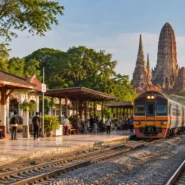
Ayutthaya’s railway station is a real working station on the east side of the Pa Sak, separate from the historical island. Choose this side when a late arrival, early departure or onward train is an important part of the trip. It can remove the least pleasant luggage movement without making every subsequent outing effortless.
Accommodation ranges from small riverside guesthouses near the station approach to larger hotels and garden properties farther east. Some are much better suited to a short arrival walk than others. Compare the same-bank street route, and ask a farther property to arrange a vehicle instead of relying on a straight-line distance.
✅ What Other Travelers Say
On Baan Are Gong’s guest page, Luke describes using a room before an overnight train, while Melinda values the proximity to the ferry and station-side food. These are practical examples of a rail-led reason to stay on this bank.
⚠️ The Catch (Things to Keep in Mind)
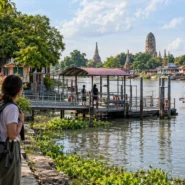
The ferry seen in a video is a service to verify, not a 24-hour guarantee. Include boarding steps and bags in the decision, and keep a road-bridge transfer as the fallback. A room close to the station also needs a noise and category check; some inexpensive homestay rooms use fans or shared bathrooms.
For one train arrival followed by several temple days, staying on the island with one arranged transfer can still be the better overall choice. Optimize the whole stay rather than the first few minutes alone.
Key FAQs
What is the best area to stay in Ayutthaya for a first visit without a car?
Start with the temple core or eastern historical island, near the food and sights you will use most. Plan vehicles for more distant monuments rather than assume a central address makes the entire city comfortably walkable.
Is Ayutthaya railway station on the historical island?
No. It is across the Pa Sak River on the east bank. Check the currently operating ferry or arrange a road transfer. Keep the hotel bank and exact entrance explicit when comparing a map distance.
Is a riverside hotel worth the extra cost in Ayutthaya?
It can be when the view, breakfast and hotel downtime are part of the trip. Confirm the room’s outlook and the route to your temples. A river-view room and a convenient sightseeing base are separate benefits.
Final Verdict and Your Next Step
Choose the temple core for sightseeing efficiency, the eastern island for everyday convenience, the southern riverfront for a view-led stay, the western old town for a slower pace, or the station bank for a deliberate rail connection. The best base removes the journeys you least want to repeat.
Compare your dates on Booking.com’s Ayutthaya accommodation page, then inspect the entrance, room category and river-crossing plan. Reserve early for fixed dates and small properties, with cancellation terms that suit the rest of your itinerary. A precise location decision is more useful than a broad promise of being central.