



💡 Key Takeaways
- Buy for the route you will use. The standard Mi1–Mi3 ticket costs €2.20 for 90 minutes; the daily ticket is €7.60 for 24 hours; the €15.50 three-day ticket ends after three consecutive service days, not 72 hours.
- Contactless has boundaries. One paying passenger per card/device, the same identity throughout the journey. ATM applies the daily fare when appropriate, but does not automatically buy a three-day pass and does not extend its contactless payment to S-line trains.
- Use the right network for the last mile. M3 links Centrale with Duomo, M4 links Linate with San Babila, and Cadorna/Garibaldi have different connections. The Malpensa airport train and commercial airport coaches need their own tickets.
This Milan transportation guide is for choosing the next useful journey, not collecting passes. Most sightseeing days combine short walks with a few metro or tram rides. The right ticket depends on how many separate fare periods you need, whether your route uses a railway service and how comfortably you can reach the actual street exit.
Research and euro fares checked 21 October 2026. Ticket amounts below are per paying traveler; taxi fixed fares are per vehicle. Routes, lifts and temporary diversions need a fresh check for your travel date.
The 1-Min Cheat Sheet
- Metro: use M3 for Centrale–Duomo, M1 for Cadorna–Duomo, M2 for useful cross-city links and M4 for Linate. Choose the destination displayed on the train, not just the colour.
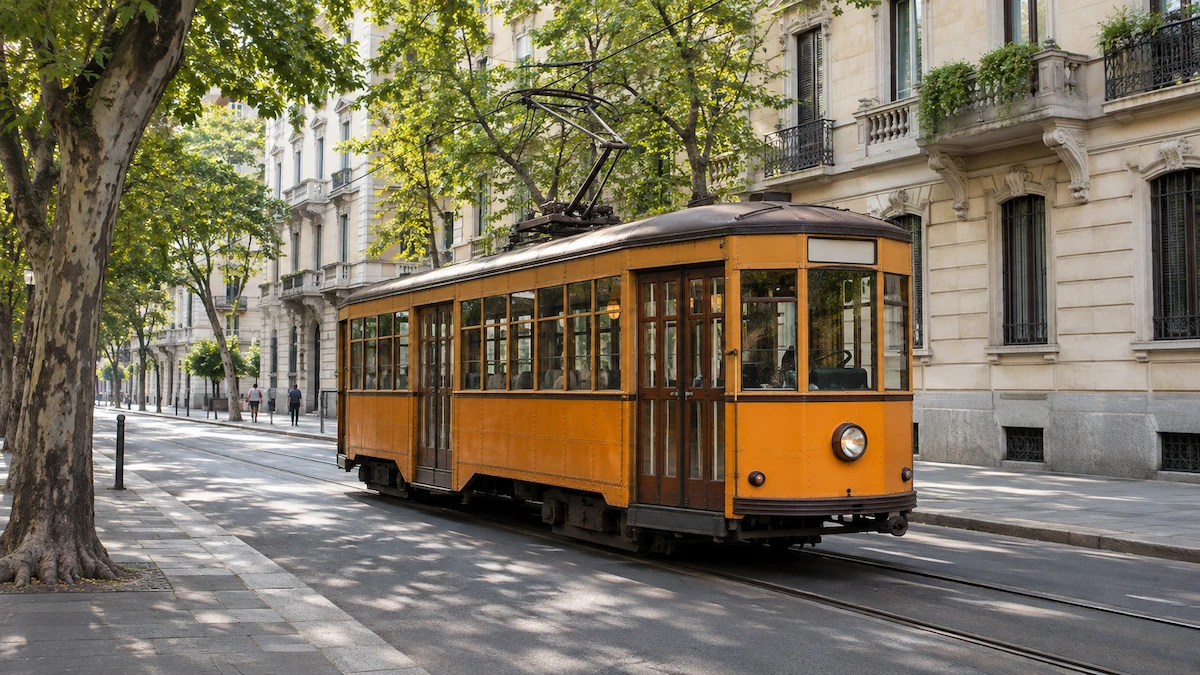
- Trams and buses: useful when the stop leaves a shorter street approach. They share the applicable ATM ticket system, but a historic tram is not automatically easy with a pushchair or case.
- Railway services: S lines can be useful for a matching station pair inside your ticket’s zones. ATM contactless tapping does not pay for these trains. Malpensa airport journeys require the separate airport fare.
- Licensed taxis: meter for ordinary city trips; prescribed fares only on named airport routes. Confirm whole-party capacity and the final usable drop-off.
Top Survival Tips
- Count 90-minute fare periods, not boardings. Transfers within a valid period can use the same suitable ticket. Four independent periods are different from four vehicles used on one continuous connection.
- Keep one payment identity. A plastic bank card, its phone wallet and its watch wallet are not interchangeable for tapping. Each paying passenger needs their own identity; tap in and out on the metro even if barriers stand open. ATM’s individual-use rule is explicit.
- Check fare zones rather than municipal labels alone. Mi1–Mi3 tickets cover M1, M3, M4 and M5 from terminus to terminus, including M1’s SestoFS and RhoFieramilano ends. M2’s eastern branch needs a higher fare beyond Cascina Burrona. A city-only monthly subscription is a different product from the visitor Mi1–Mi3 ticket.
- Make the exit part of the route. Check live lift/stairlift status at both ends and the hotel entrance. The shortest staircase route and the usable lift route can emerge on different streets; a station with lifts does not guarantee every exit is step-free.
- Validate the product you bought. An ATM app ticket must be validated before boarding; use its QR at the metro gates. Keep a rechargeable ticket and validate it as instructed at each journey. A purchased but unvalidated ticket is not a usable backup.
- Save an after-hours route. Metro replacement buses are separate surface routes. M4 has NM4 every night; Centrale–Duomo has NM3. Use the current planner for the right stop and day, and keep money for a licensed taxi if the final walk is impractical.
Tickets and Passes: Do the Small Calculation First
The current visitor ticket page gives €2.20/90 minutes, €7.60/24 hours, €15.50/three consecutive service days and €19.50 for a ten-ticket carnet. A carnet is not a group ticket: it cannot carry multiple travelers at the same time. Within the appropriate zones these tickets cover the specified ATM and Trenord railway services; a contactless bank-card journey has the narrower ATM-only scope.
- Light day: two independent 90-minute periods cost 2×€2.20=€4.40; three cost €6.60. Both are below the €7.60 daily ticket. If your outbound and return journeys fit one valid period, even two tickets would overcount.
- Busy day: four separate periods cost €8.80, so the daily ticket saves €1.20. ATM contactless applies the corresponding daily fare within 24 hours from the first journey when used correctly on its network; no manual pass purchase is required for that daily cap.
- Three light sightseeing days: two separate periods per day make 6×€2.20=€13.20, €2.30 below the three-day ticket. Three periods per day make 9×€2.20=€19.80, so €15.50 saves €4.30, provided all travel lies within its validity and scope.
- Three heavily used days: three daily tickets total 3×€7.60=€22.80. A suitable €15.50 three-day ticket saves €7.30. Contactless does not automatically convert three daily caps into that product, nor offer weekly or monthly capping.
Watch the expiry: the three-day product finishes at the end of service on its third consecutive day, defined by ATM as 03:45 the following morning. It is not a rolling 72-hour pass. ATM’s service-day boundary also means use shortly after midnight can still belong to the previous service day. Read the validity shown for the actual ticket rather than counting three hotel nights. For contactless, follow the full tap rules: metro tap out is always required; ordinary urban surface travel generally needs a boarding tap, with tap-out requirements on specified routes and journeys outside the urban area.
The Full Experience
🚇 Metro: Best for Fast Links Between the Main Districts
Line and destination first • Urban fares • Lifts need checking
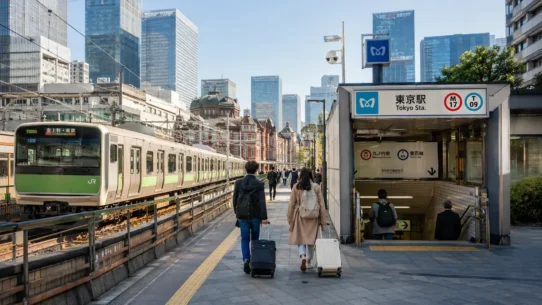
For a first sightseeing day, learn the station pairs you actually need. Centrale–Duomo is M3 towards San Donato. Cadorna–Duomo is M1 towards Sesto 1° Maggio FS. Porta Garibaldi has M2/M5, not a direct M3 platform. M2 serves Porta Genova for a Navigli approach; which exit and canal-side walk suits you depends on the destination. Use ATM’s current map and the live planner to avoid a needless change through Centrale.
M4 connects Linate and San Babila, where M1 is available. Its signed interchanges at San Babila, Sant’Ambrogio and Sforza-Policlinico require exiting one gate line and entering the other using the same valid ticket or device. The Sforza-Policlinico/Missori interchange includes a walking connection; follow the accessible route if needed. Do not count it as an effortless cross-platform change.
M4 stations have lifts and escalators, and the older lines have station-specific provisions. Use the live status rather than a blanket claim that Milan is step-free. Pick a quieter journey when possible if carrying cases, keep bags beside you without blocking the passage and check the hotel’s reception steps before deciding public transport solves the entire arrival.
✅ What Other Travelers Say Strolling Around’s 20 July 2023 guide covers ticket machines, contactless and the ATM app, with a section about the then-new M4 city-centre link. Treat it as dated orientation: the current full M4 route and current ticket conditions come from ATM, not the video’s 2023 network.
⚠️ The Catch (Things to Keep in Mind) An uninterrupted train ride can still involve a long station approach. Do not swap your card for a phone wallet at exit or assume an open gate removes the tap-out requirement. If a payment reader fails, use another enabled reader; an unrecorded exit can trigger a maximum charge.
🚋 Trams and Buses: Best When the Surface Stop Fits the Destination
Same suitable urban fare • Less underground walking • Traffic and boarding vary
A tram or bus can be the sensible choice when it avoids a deep station and leaves a shorter hotel walk. Use a route shown for the actual date, including its direction and boarding stop. The standard valid Mi1–Mi3 ticket also covers suitable surface connections; changing vehicle does not itself create a second chargeable period. With contactless, tap the reader when boarding and follow ATM’s route-specific tap-out rules.
For sightseeing, separate the pleasure of riding an older tram from the need for accessible transport. Vehicle steps, the stop’s kerb, a wheelchair ramp, space for a pushchair and traffic conditions all matter. The planner and ATM app provide current route and stop information; ask ATM for the required accessible journey if a step cannot be managed. Do not assume a tram-number recommendation in an older film proves today’s route, vehicle or accessible boarding.
Night replacement buses make some corridors usable after metro trains stop, but follow their own street stops and diversions. From Linate, NM4 is a real overnight option, not a 24-hour M4 train. From a late Centrale arrival, search NM3 using the actual time and hotel address, including the final street walk. A taxi remains useful if that transfer is too awkward.
✅ What Other Travelers Say Strolling Around’s 18 August 2023 comparison explicitly separates M3, old tram 1 and bike sharing in its chapter list. Its useful lesson is that surface and underground approaches feel different; it does not prove current tram 1 stops or a guaranteed accessible vehicle.
⚠️ The Catch (Things to Keep in Mind) Surface travel trades station passages for traffic, street crossings and variable boarding. Keep ordinary metro luggage within the published baggage rules when combining modes; luggage with a side over 90 cm is generally excluded from the metro, with named exceptions. A city ticket is not permission to block a doorway or carry an unsuitable load.
🚆 Railway Services: Best for Matching Stations and the Separate MXP Link
Check zones and operator • Buy before boarding • Airport fare is separate
The S-line network can help when both useful stations and the ticket zones fit the journey. Suitable Mi1–Mi3 tickets are valid on the specified Trenord rail services within scope. That does not make every regional destination, an intercity train or an airport journey part of a city ticket. Check the origin and destination in the official transport guidance and operator journey search before boarding.
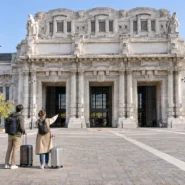
Payment is the easy mistake: ATM contactless is not accepted on S lines or other operators’ railway trains. If you tapped into the metro and then transfer to a train, tap out of ATM and obtain the correct railway-valid ticket before the train journey. For a planned mixed metro/rail itinerary, choosing an appropriate integrated ticket beforehand can avoid paying for separate tickets unnecessarily. Do not confuse a railway operator’s own contactless product with ATM’s cap.
For Malpensa: the airport train has a distinct €15 adult single to Milan, with different destinations at Centrale and Cadorna; the Centrale route serves Porta Garibaldi. Buy the route that suits the hotel. The current Malpensa Express ticket product states selected-day validity until the end of service for the digital single. Check the terms printed for your issued product, terminal, departure and disruption notices. A three-day ATM pass still leaves this airport fare to pay.
✅ What Other Travelers Say Strolling Around’s 16 November 2024 Malpensa Express guide concerns the airport train and ticket purchase. It is useful for that separate rail product, not a guide to every S-line ticket or proof of current platform assignments.
⚠️ The Catch (Things to Keep in Mind) The word “train” hides different ticket rules. Do not board on an ATM bank-card tap, an expired ticket or the wrong airport destination and expect an explanation to replace the fare. The airport ride also ends at a station: a final metro ticket, taxi or walk may still be needed.
🚕 Licensed Taxis: Best for a Difficult Arrival or One Useful Direct Ride
Metered city trips • Whole-vehicle comparison • Confirm the usable drop-off
Use the municipal taxi information and service channels or an official signed rank. Ordinary city rides use the meter unless a prescribed fixed route applies; do not invent a standard Centrale–Duomo fare. For a group, compare the real whole-car cost with everyone’s public-transport tickets, but first confirm seats, bags and any wheelchair or child-seat requirements.
For airport planning, the regional prescribed route list includes Malpensa–any street in Milan €114 and Bergamo Orio al Serio–any street in Milan €128. These values were introduced 1 July 2024 and are confirmed by the linked 2026 resolution. Under the fixed-fare conditions, qualifying direct journeys include tolls and night/holiday charges. Intermediate stops, a requested route change and the specified extended pickup wait can alter the application. Linate–central Milan is not a listed city-wide flat-fare route.
A car is particularly useful when it removes a demanding final walk, not merely because the map shows few kilometres. Ask the hotel for a legal usable drop-off and any remaining pedestrian section. Obtain a receipt; a private NCC booking or ride-hailing product must be assessed under its own quoted conditions, rather than assumed to follow the licensed rank-taxi tariff.
✅ What Other Travelers Say Strolling Around’s 7 February 2024 taxi guide links Milan taxi stands and explains obtaining a ride. Its date is before the July 2024 change, so its film is orientation only; the regional current tariff page determines the figures used here.
⚠️ The Catch (Things to Keep in Mind) Traffic and rank queues can erase an apparent speed advantage. “To the hotel” may still mean a nearby vehicle-accessible street. Never assume an airport fixed fare covers an address in another municipality or guarantees a suitable vehicle immediately.
Walking and a Hotel’s Real Last Mile
Walking between nearby sights needs no transport ticket and can make a lightly used pass unnecessary. Arrival with luggage is a different decision. Hotel Berna gives its reception as Via Napo Torriani 18 and explains the walk from Centrale; Rosa Grand gives Piazza Fontana 3. These real addresses demonstrate why the same station or “centre” label does not choose the best mode. Ask for the actual entrance, lift access, luggage storage terms and a legal car drop-off. A free street walk does not imply free bag storage or early room access.
Key FAQs
Is the Milan three-day ticket worth it for sightseeing?
Count separate 90-minute fare periods within its three consecutive service days. Six periods cost €13.20, below €15.50; nine cost €19.80, above it. A rolling 24-hour daily ticket and three-day ticket expire differently, and the airport train/coach exclusions remain.
Can I use the same Milan ticket for the metro and suburban trains?
An appropriate integrated Mi1–Mi3 ticket can cover the specified Trenord railway services within its zones. An ATM contactless bank-card tap cannot: it pays ATM services only. Check the ticket product, operator, station pair and zones before changing to a train.
Does the €2.20 Milan ticket cover Linate, Rho Fiera and Sesto?
It covers the M4 Linate journey and M1 from terminus to terminus, including RhoFieramilano and Sesto 1° Maggio FS; ATM also confirms Mi1–Mi3 validity at RhoFiera railway station. Do not generalise this to every train to a station elsewhere in Rho or to a city-only monthly subscription. Malpensa Airport remains a separate airport fare.
Final Verdict and Your Next Step
Start with walking plus a few correctly chosen metro or surface journeys. Buy a daily or three-day product only when your actual travel makes it worthwhile; choose an integrated ticket before a mixed rail journey, and keep the airport fare separate. Open ATM’s genuine planner, the official ticket guidance and current lift status before your first arrival. If using MXP, book through the actual Malpensa Express search with the correct terminal and Milan destination. Check the issued conditions before paying; a route link does not confirm live availability or a disruption-free trip.