
💡 Key Takeaways
- Do not copy the classic Bangkok day-tour zigzag. Split Ayutthaya into the historic-island core, the southeast temples, the west bank and Bang Pa-In to stop crossing the same bridges repeatedly.
- The current foreign-visitor price for the principal Fine Arts Department ruins is 80 THB each; the official seven-site combination ticket is 300 THB. The old 50/220 THB advice still ranking online is outdated.
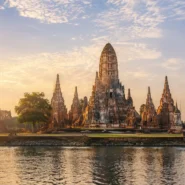
- Wat Mahathat is best at opening, while Wat Chaiwatthanaram is quieter in the morning—not at its heavily promoted sunset hour.
- Take a taxi, app car or pre-agreed tuk-tuk for cross-river sectors. Cycling is sensible only for short island loops in cool, dry hours.
- Most temple gates have no genuine online fast pass. Pre-book transport, a guide or a reserved train when useful; buy ruin, museum and palace admission at the official counter.
An Ayutthaya 5-Day Itinerary can be wonderfully unhurried—or five days of heat, repeated bridge crossings and increasingly similar brick ruins. The standard first-timer circuit usually runs Bangkok → Bang Pa-In → Wat Yai Chai Mongkhon → Wat Mahathat → Wat Phra Si Sanphet → Wat Chaiwatthanaram at sunset → Bangkok. It is popular because it photographs well, but it also puts guests into the same mid-morning and sunset bottlenecks, leaves almost no time for the museum and often means sitting in a vehicle while the best light disappears.
A necessary reality check: there is no evidence-backed, universally accepted “classic five-day Ayutthaya circuit.” Most commercial first-time itineraries are one-day excursions from Bangkok. Pretending otherwise would be tourism-marketing fiction. This guide takes the stops that recur on those classic tours, adds the museum and living temples that give the ruins context, and rebuilds the whole list into a practical five-day stay. Fast travelers can compress it into three days; anyone sensitive to heat, stairs or temple fatigue will appreciate the breathing room.
Accuracy and safety note—checked 23 August 2026: The Fine Arts Department lists normal historical-park service hours as 08:00–18:00, but conservation closures and event-night extensions can change individual access. On 16 August 2026, a large tree fell at Wat Phra Si Sanphet and injured four Spanish visitors; authorities were inspecting the area afterward. I could not find a subsequent official closure or all-clear notice by the verification date. Check the official Ayutthaya Historical Park updates on the day, obey barriers, and do not shelter under damaged-looking trees during or after a storm. That is proportionate caution, not a reason to panic.
The 1-Min Cheat Sheet
- Wat Mahathat: Best for first-time icons and early photographers. Allow 45–60 minutes. Foreign admission is 80 THB or use the 300 THB seven-site pass; buy at the official booth. Walk from Wat Ratchaburana.
- Wat Ratchaburana: Best for architecture lovers who can manage steep, narrow stairs. Allow 40–60 minutes. Admission is 80 THB or included in the combination ticket; crypt or stair access may close for safety or conservation. It is a few minutes on foot from Wat Mahathat.
- Chao Sam Phraya National Museum: Best for anyone who wants the ruins to mean more than “old bricks.” Allow 75–90 minutes. Foreign admission is 200 THB at the museum; it is normally open Tuesday–Sunday, 09:00–16:00, and closed Monday. Use a short tuk-tuk or taxi from the central ruins.
- Wat Phra Si Sanphet + Wihan Phra Mongkhon Bophit: Best for royal history and Ayutthaya’s three signature chedis. Allow 60–75 minutes together. The ruin is 80 THB or on the combination ticket; the active wihan is normally free. Walk between the two, but take a short ride from Mahathat in hot weather.
- Wat Yai Chai Mongkhon: Best for a living monastery, elevated views and rows of robed Buddha images. Allow 50–70 minutes. TAT lists 20 THB admission, paid on site. It is southeast of the island, so use a tuk-tuk, taxi or app car.
- Wat Phanan Choeng: Best for living faith and the monumental seated Buddha, not silent ruin photography. Allow 45–60 minutes. TAT lists 20 THB admission at the gate. Combine it with Wat Yai by road rather than returning to the island between them.
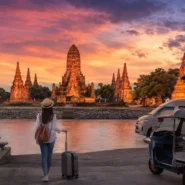
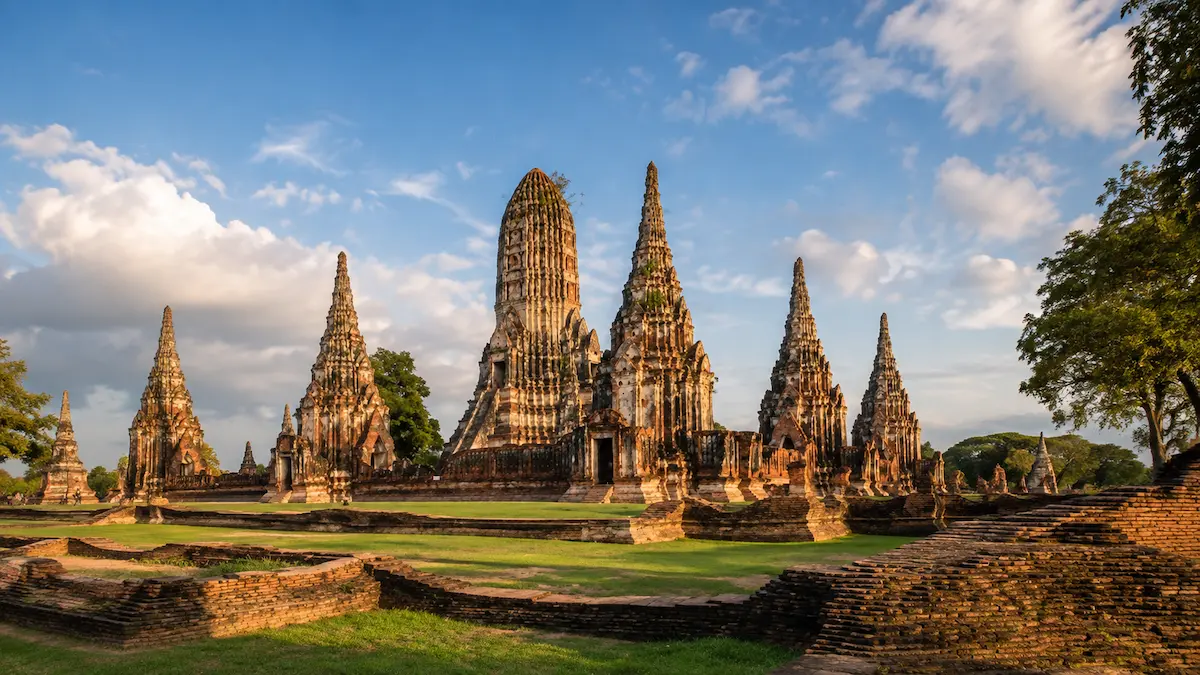
- Wat Chaiwatthanaram: Best for Khmer-influenced symmetry and wide photographs. Allow 60–75 minutes. Admission is 80 THB or on the combination ticket. It sits on the west bank; go by road in the morning if crowd avoidance matters more than sunset color.
- Bang Pa-In Royal Palace: Best for gardens and a surprising mix of Thai, Chinese and European architecture. Allow 90–120 minutes. Foreign admission is 100 THB at the gate; dress rules apply. It is roughly 20 km south of central Ayutthaya, so use the train plus a local ride or a car timed with your Bangkok transfer.
Prices above are the foreign-visitor rates found in official or first-party tourism sources on the verification date. Thai rates differ. Carry small cash even when a counter sometimes accepts another method; a working card terminal is not a safe itinerary assumption.
The Most Practical 5-Day Itinerary
Day 1: Arrive, Lose the Luggage and Learn the Story First
- Suggested start: Aim to reach your Ayutthaya hotel by 12:30–13:00. If your train arrives earlier, still drop your bags before sightseeing. With a large suitcase, take a road vehicle over the bridge; the small station-side river crossing is charming but awkward with bulky luggage.
- Order: Hotel check-in or bag drop → lunch around Chao Phrom Market/Naresuan Road → Chao Sam Phraya National Museum → a gentle loop at Bueng Phra Ram or the exterior of Wat Phra Ram → hotel rest.
- Time at each stop: Lunch 45–60 minutes; museum 75–90 minutes; park orientation 30–45 minutes. Reach the museum no later than about 14:15 so you are not racing its 16:00 closing time.
- Best transport: Taxi/app car or pre-agreed tuk-tuk from the station to the hotel; then a short ride to the museum. Walk only the shaded pieces of the park. There is no prize for turning arrival day into a luggage-weighted hike.
- Lunch and rest: Eat near Naresuan Road or Chao Phrom, where prices and choice are usually broader than at a single monument gate. Put the main rest at your hotel from roughly 16:30 to 18:00.
- Cut first if tired: Skip the park orientation. The museum is the higher-value first-day stop because it explains the gold, relics and craftsmanship removed from the ruins you will see later.
- Rain plan: The museum is already the strongest wet-weather choice. If Day 1 is Monday, when it is normally closed, switch the museum to Day 4 after lunch and use this afternoon for check-in, a long meal and weatherproof errands instead of forcing slippery ruins.
- Evening area: Stay around Naresuan Road, Chao Phrom or a nearby riverfront restaurant. Do not cross town merely because a social-media list labels one market “must visit”; market trading days and stall levels vary.
- Why this beats the influencer version: The usual plan sends new arrivals straight to Wat Mahathat with bags or before rooms are ready. This version removes the luggage, uses the hottest hours indoors and gives tomorrow’s ruins a story.
Day 2: Southeast Ayutthaya—Living Temples Without Repeated Bridge Crossings
- Suggested start: Leave the hotel at 07:30 and reach Wat Yai Chai Mongkhon for its 08:00 opening period. On weekends or major Buddhist/Thai-Chinese festival days, leaving 15 minutes earlier is worthwhile.
- Order: Wat Yai Chai Mongkhon → Wat Phanan Choeng → optional Japanese Village or a riverside coffee stop → lunch in the southeast/riverside area → hotel siesta → optional late-afternoon river cruise.
- Time at each stop: Wat Yai 50–70 minutes; transfer 15–25 minutes depending on traffic; Wat Phanan Choeng 45–60 minutes; optional Japanese Village 45 minutes; lunch 60 minutes. Finish exposed touring before noon.
- Best transport: Hire one tuk-tuk for the defined morning circuit or use a car. Before boarding, agree in writing on the total price, stops, waiting time and whether the quote is per vehicle or per person. Cycling across the larger approach roads and bridges is not the leg-saving choice.
- Lunch and rest: Eat near Wat Phanan Choeng or the river rather than returning to the old-city center for lunch. Rest at the hotel from about 13:00 to 15:45.
- Cut first if tired: Drop the Japanese Village. It adds context about Ayutthaya’s international trading community, but the two temples are the day’s essential contrast.
- Rain plan: Spend longer inside Wat Phanan Choeng’s main hall only if worship access remains open, avoid Wat Yai’s wet chedi steps, and use the middle of the day at the museum if you missed it. In heavy rain, cancel the exposed optional stop rather than gambling on slick stone.
- Evening area: A hotel-arranged small-boat circuit can be pleasant around 16:00–18:00, but verify the exact stops, life jackets, weather policy and finish time. Otherwise, choose the Pom Phet river area for an easy evening.
- Why this beats the influencer version: Many lists pair Wat Yai with an island ruin, then send travelers back across the river for Wat Phanan Choeng. Keeping both southeast temples together removes two unnecessary crossings and lets one driver wait.
Day 3: The Historic-Island Core Before the Bangkok Tour Buses Settle In
- Suggested start: Be at Wat Mahathat just before 08:00. There is no official live crowd feed; the early recommendation is a planning heuristic based on common Bangkok tour departure patterns, not a guaranteed empty-site promise.
- Order: Wat Mahathat → walk to Wat Ratchaburana → short ride to Wat Phra Ram if energy allows → Wat Phra Si Sanphet → walk to Wihan Phra Mongkhon Bophit → lunch.
- Time at each stop: Wat Mahathat 45–60 minutes; Wat Ratchaburana 40–60 minutes; Wat Phra Ram 25–35 minutes; Wat Phra Si Sanphet plus the wihan 60–75 minutes. Aim to sit down for lunch by 12:30.
- Best transport: Walk the genuinely close Mahathat–Ratchaburana pair. Take a short tuk-tuk/taxi to the western royal complex when it is hot; the map makes the crossing look friendlier than unshaded reality. A bicycle works here only in dry weather and for confident riders.
- Lunch and rest: The stalls near Wihan Phra Mongkhon Bophit are convenient but tourist-oriented. If selection looks weak, use a short ride back toward Naresuan Road. Keep 13:30–16:00 unscheduled for shower, pool, nap or laundry.
- Cut first if tired: Wat Phra Ram. It is worthwhile with the combination pass, but after Mahathat and Ratchaburana it contributes less than the royal chedis of Wat Phra Si Sanphet.
- Rain plan: Visit only the active wihan and museum, then move these exposed ruins to Day 4 morning. Never descend the narrow Wat Ratchaburana stairway when access is restricted or the surface feels wet.
- Evening area: Keep dinner in the historic-island/Naresuan Road zone. If an official illuminated-ruins event is running, confirm that night’s opening on the park’s own page; do not assume lights mean paid interiors stay open.
- Why this beats the influencer version: It protects the two most photographed central sites for the first hour, walks only the tight pair, then makes one westward move. The common photo-checklist route repeatedly returns to the same roundabouts.
Day 4: West Bank First—Do Not Pay the Sunset Crowd Tax
- Suggested start: Reach Wat Chaiwatthanaram at 08:00. If sunset is non-negotiable, arrive around 15:45 and accept more people; crowd-free and classic sunset are competing goals, not a promise any honest guide can combine.
- Order: Wat Chaiwatthanaram → Wat Lokayasutharam’s reclining Buddha → nearby Wat Worachettharam if interested → early lunch on the west side → long rest → optional museum catch-up or quiet riverside evening.
- Time at each stop: Wat Chaiwatthanaram 60–75 minutes; Wat Lokayasutharam 20–30 minutes; Wat Worachettharam 25–35 minutes; lunch 60 minutes.
- Best transport: Keep one tuk-tuk or car for the west-bank loop. The monuments are not arranged along one comfortable pedestrian promenade, and a short vehicle hop is often cheaper than losing an hour to heat recovery.
- Lunch and rest: Stay west for lunch instead of crossing back immediately. Return to the hotel by about 13:00. If Day 1 was Monday or wet, use 14:15–15:45 for the Chao Sam Phraya Museum instead.
- Cut first if tired: Wat Worachettharam. Wat Lokayasutharam is a fast, free look; Wat Chaiwatthanaram is the sector’s architectural anchor.
- Rain plan: Use the museum catch-up if open. If rain is heavy and the museum is closed, move Wat Chaiwatthanaram to Day 5 at opening and skip Bang Pa-In only if your onward timing still works. A wet exposed ruin is not improved by stubbornness.
- Evening area: Choose the Chao Phraya riverfront or your hotel’s neighborhood. A boat view of Wat Chaiwatthanaram’s exterior can provide warm light without joining the costume-rental and gate crowd, but only with a reputable operator and safe weather.
- Why this beats the influencer version: Social feeds train everyone to arrive at the same ruin just before sunset. Morning gives you the geometry, cooler stone and easier transport. The route also prevents a west-bank out-and-back on two different days.
Day 5: Bang Pa-In as a Southbound Exit, Not a 40-Kilometer Round Trip
- Suggested start: Check out at 07:00–07:15 and reach Bang Pa-In near 08:00. Ask the hotel to confirm your vehicle the previous evening.
- Order: Ayutthaya hotel → Bang Pa-In Royal Palace → optional Wat Niwet Thammaprawat if its river crossing is operating → lunch in Bang Pa-In or continue south → Bangkok, Don Mueang or your next transport hub.
- Time at each stop: Palace 90–120 minutes; optional temple 45–60 minutes; lunch 45–60 minutes. Do not promise an airport arrival until your driver has allowed for traffic and check-in time.
- Best transport: With large bags, use a private car and keep valuables with you rather than visible in the luggage area. Budget travelers with light bags can use an SRT train to Bang Pa-In and another onward train, but should check the official timetable because service frequency and train type vary.
- Lunch and rest: Eat outside the palace after the visit or continue to Bangkok. Do not burn time waiting for a particular “viral” café when you have a flight or reserved train later.
- Cut first if tired: Wat Niwet Thammaprawat. If gardens and mixed 19th-century architecture are not your thing, skip Bang Pa-In entirely and make Day 5 a direct, low-stress transfer.
- Rain plan: The palace is primarily an outdoor garden experience. In a thunderstorm, go directly to your next city; changing the day is smarter than paying to hide under walkways. Royal functions can also affect access, so verify before departure.
- Evening area: Your Bangkok neighborhood or next destination—not another Ayutthaya cross-town journey.
- Why this beats the influencer version: Bang Pa-In lies south, toward Bangkok. Visiting it on the final transfer converts an out-and-back excursion into a one-way stop and prevents a second luggage move through Ayutthaya Station.
Tourist Traps to Avoid & Itinerary Hacks
- The “see everything by bicycle” trap: The island core can be pleasant before 10:00 or after 16:00, but Wat Yai, Wat Phanan Choeng, Wat Chaiwatthanaram and Bang Pa-In involve bridges, faster roads or long exposure. Rent a bike for a defined island loop, not as a moral commitment for all five days.
- The undefined tuk-tuk quote: A friendly conversation is not a fare contract. Show the exact stops on a map, write the total price, duration, waiting arrangement and “per vehicle” wording in your phone, and pay at the end. If the terms keep changing before departure, take another vehicle.
- The station-ferry-with-a-suitcase mistake: The little crossing near the station can save a road detour for pedestrians, but narrow boarding and uneven access are poor partners for a 23 kg case. Use a road transfer to your hotel; enjoy the ferry later with a day bag.
- Old 50/220 THB ticket articles: The Fine Arts Department’s 2026 notice states 80 THB for a foreign single ticket and 300 THB for the seven-site combination ticket covering Wat Mahathat, Wat Ratchaburana, Wat Phra Ram, Wat Phra Si Sanphet/Ancient Palace, Wat Chaiwatthanaram, Wat Maheyong and Wat Kudi Dao. Five included stops would cost 400 THB separately, so this itinerary makes the pass worthwhile.
- Fake “skip-the-line temple ticket” language: A reseller may sell a tour that includes admission or a guide who handles the counter. That is not the same as a dedicated priority lane. For the principal ruins, buy at the official booth and keep the combination ticket safe.
- Sunset tunnel vision: Wat Chaiwatthanaram is beautiful late in the day precisely because everyone knows it. Visit at opening for space, then get an evening river view. If you choose sunset, call it a photography trade-off—not a crowd-avoidance hack.
- Midday temple stacking: Ayutthaya’s issue is not just distance; it is cumulative heat and uneven brick. Three serious outdoor sites before lunch are more productive than six sites followed by a lost afternoon.
- Ayothaya Floating Market as “historic Ayutthaya”: It is a purpose-built commercial attraction, not a surviving part of the UNESCO city. Go only if you actively want shops and staged entertainment. It is not a substitute for Chao Phrom Market or the archaeological park.
- Elephant rides as an automatic stop: This route deliberately excludes riding and close-contact elephant entertainment. World Animal Protection’s 2026 Thailand-wide research reports persistent welfare problems across captive-elephant tourism. That is not an allegation about one named Ayutthaya operator; it is a sound reason to choose observation-led, no-touch experiences elsewhere rather than treating a ride as compulsory.
- Assuming every “night market” runs nightly: Ayutthaya’s event markets, illuminated ruins and seasonal programs change. Ask your accommodation or check the organizer’s page on the same day before paying for a cross-town ride.
- Blindly booking the cheapest river cruise: Ask for the boat type, maximum group size, temple stops, stair access, life jackets, rain cancellation and whether entrance fees are included. A vague “sunset cruise” can mean a quick transport loop, not a guided heritage experience.
- Turning five days into twenty-five temples: Temple fatigue is real. Once the chedis blur together, the museum, a market breakfast and a long lunch add more understanding than another unexplained ruin.
Save Your Legs! The Most Efficient Route
The route works because each day belongs to a geographic sector. Day 1 handles arrival and the museum inside the old-city area. Day 2 stays southeast of the island for Wat Yai Chai Mongkhon and Wat Phanan Choeng. Day 3 crosses the historic-island core in one direction. Day 4 remains on the west bank. Day 5 continues south through Bang Pa-In toward Bangkok. That shape matters more than squeezing in one extra temple.
The sensible walking chains are short: Wat Mahathat to Wat Ratchaburana; Wat Phra Si Sanphet to Wihan Phra Mongkhon Bophit; and the immediate paths within each complex. Use a bicycle only for a cool-hour island circuit. Use a tuk-tuk, taxi or app car for the southeast and west-bank sectors, and a car or train for Bang Pa-In. Ayutthaya has no metro, JR-style urban network or private railway web: SRT is useful for reaching/leaving the province, not for hopping between the principal ruins.
A five- or ten-minute road ride is often worth paying for when the alternative is a 1.5 km unshaded walk followed by a temple with steep steps. Tuk-tuks and road vehicles slow around school, commuter and event traffic; small shared boats and station approaches can also become awkward with luggage. The new SRT Bangkok Connex service began running to Ayutthaya in August 2026, but it uses unreserved seating and station sales rather than a bookable QR-code seat. Its promotional fare and timetable are time-limited, so check the official SRT timetable instead of copying a blog’s departure time.
Do not return to Ayutthaya Station every morning. Stay on the island or immediately beside it, ideally within easy reach of Naresuan Road, Chao Phrom and the Mahathat/Ratchaburana area. The station side is convenient for one night or an early train, but it creates a daily river/bridge crossing if most of your time is in the historic core. One hotel for all four nights also eliminates the hidden cost of repeated checkout, bag storage and early-room uncertainty.
For luggage, your hotel’s pre-check-in and post-checkout storage is the most dependable first choice. Travelers reported staffed storage or lockers at Ayutthaya Station in 2025, but SRT does not publish dependable hours or capacity, so do not stake a tight onward connection on it. Reserve station storage for a day trip after confirming in person. For a through journey, a door-to-door car or a nationwide hotel-to-hotel luggage service can be rational when two people have large cases; confirm Ayutthaya coverage, pickup cutoff, insurance and prohibited items before paying. Never leave passports, medicine, electronics or same-day travel documents in forwarded baggage.
Ticket Tips & Skip-the-Line Hacks
Principal historical ruins: Wat Mahathat, Wat Ratchaburana, Wat Phra Ram, Wat Phra Si Sanphet/Ancient Palace, Wat Chaiwatthanaram, Wat Maheyong and Wat Kudi Dao use official on-site ticketing. The current foreign rate is 80 THB each or 300 THB for the seven-site combination ticket. There is no verified standalone electronic ticket or priority lane for this circuit. Buy the combination ticket at your first included monument, check its validity terms printed on the ticket and keep it dry.
Active temples and free stops: TAT currently lists 20 THB for both Wat Yai Chai Mongkhon and Wat Phanan Choeng, paid on arrival. Wihan Phra Mongkhon Bophit and the outdoor reclining Buddha at Wat Lokayasutharam are normally free, although donations are appropriate at active religious sites. “Free” never means dress and behavior rules disappear.
Museum and palace: Chao Sam Phraya National Museum charges foreign visitors 200 THB at the counter and is normally open Tuesday–Sunday, 09:00–16:00. Bang Pa-In charges foreign visitors 100 THB at the gate, normally 08:00–16:00. Neither needs an advance reseller ticket for an ordinary visit. The palace can adjust access for official use, and individual museum galleries may change photography rules.
What can genuinely be booked online: Reserved SRT rapid/express seats can be bought through the official SRT D-Ticket site when that train type is offered, but SRT’s own terms state that ordinary, commuter, local and special-fare services cannot be reserved online. The August 2026 Bangkok Connex train is an unreserved, station-purchase service. Follow the ticket’s print/display instructions; do not assume every SRT product scans from a phone.
Private transfers, local car charters, licensed guides, small-group tours and some cultural experiences do issue advance e-vouchers. Book them when they remove a real failure point: airport timing, several large bags, a wheelchair, a family needing child seats, or a peak-holiday guide. For Thai-costume rental and boat trips, confirm the shop/operator, inclusions, return deadline, deposit, weather policy and exact meeting point. Ordinary weekdays rarely justify prepaying an inflexible package.
The only two affiliate bookings I would place in front of this itinerary: a one-way Bangkok–Ayutthaya transfer for travelers with luggage, or a local Ayutthaya charter for the southeast/west-bank sectors. Both pages were opened and checked on 23 August 2026. Product terms, bag limits and cancellation rules can still change before your date.
Check Klook private transfer
Check KKday local charter
Tried & Tested: My Honest Review
“Honest” here means the videos are for visual orientation, not evidence for prices, history or access. For each stop, I selected the most-viewed neutral, dedicated video I could verify through YouTube’s view-sorted results on 23 August 2026, excluding news clips, obvious sensational “curse” headlines and one high-ranking video whose title advertised the obsolete 50 THB fee. Every chosen watch page and embed endpoint returned successfully and reported playback allowed in embeds on the check date. Rankings and availability can change.
📍 Stop 1: Wat Mahathat
Iconic first visitOpening-time priorityVery little shade
My honest take: This is the mandatory first-timer image, but the Buddha head occupies only a small corner of a larger monastic complex. Arrive at opening, photograph respectfully from a position lower than the head, then keep walking; the surrounding prangs explain far more than the quick selfie.
✅ What Other Travelers Say: Traveler reviews repeatedly praise the tree-root Buddha and the scale of the ruins. They also make clear that the famous photo point draws concentrated attention even when the rest of the grounds feels manageable.
⚠️ The Catch (Things to Keep in Mind): It is exposed, uneven and easy to oversell as a mystical secret—it is neither hidden nor empty. Do not touch the roots or Buddha head, climb unapproved masonry or block worshippers. The 80 THB ticket is on site.
📍 Stop 2: Wat Ratchaburana
Best central architectureSteep crypt stairsOften calmer than Mahathat
My honest take: Architecturally, I would rank it above Mahathat. The central prang has presence, and seeing the museum’s recovered objects later closes the loop. Use the video for visual preview only; third-party interpretation is not the historical source for this article.
✅ What Other Travelers Say: Traveler reviews often call the climb and crypt the distinctive experience and appreciate that the site can feel quieter despite sitting beside Mahathat.
⚠️ The Catch (Things to Keep in Mind): The internal stairs are narrow, steep and uncomfortable for knee, balance or claustrophobia concerns. Access can be restricted. Skipping the descent does not make the entrance fee a waste—the exterior is the main architectural payoff.
📍 Stop 3: Chao Sam Phraya National Museum
Best historical contextAir-conditioned resetClosed Monday
My honest take: This is the stop most rushed tours get wrong. The gold objects recovered from Wat Ratchaburana and Wat Mahathat restore color, craftsmanship and political power to ruins that otherwise become a sequence of brick silhouettes.
✅ What Other Travelers Say: Traveler reviews repeatedly praise the gold galleries and the way the collection changes how people understand the temples. Some older reviews criticize limited English interpretation in parts of the original museum, while the newer gold exhibition is generally seen as the highlight.
⚠️ The Catch (Things to Keep in Mind): It is not a Monday option and not a rushed 20-minute cooling stop. Budget 200 THB and at least 75 minutes. Follow current gallery photography signs rather than assuming one rule covers the whole site.
📍 Stop 4: Wat Phra Si Sanphet and Wihan Phra Mongkhon Bophit
Royal AyutthayaSignature three chedisCurrent safety check advised
My honest take: The three aligned chedis are Ayutthaya’s cleanest royal image, but context matters: pair the exposed palace-era ruin with the active, roofed wihan next door. Together they are stronger than either stop alone.
✅ What Other Travelers Say: Traveler reviews consistently admire the scale and symmetry, while heat is the most repeated practical complaint. Many complete the core view in 30–45 minutes rather than the two hours some listicles prescribe.
⚠️ The Catch (Things to Keep in Mind): The ruin is largely exposed and the visual climax is immediate, so temple-fatigued travelers may find the visit shorter than expected. After the 16 August 2026 falling-tree incident, check current access, keep out of taped areas and follow staff directions.
📍 Stop 5: Wat Yai Chai Mongkhon
Living monasteryElevated viewpointSoutheast sector
My honest take: This earns its place because it is not just another abandoned complex. Monastic life, Buddha rows, a reclining image and the large chedi create several layers, but it should be first on the southeast day—not squeezed between island stops.
✅ What Other Travelers Say: Traveler reviews praise the atmosphere, robed Buddha images and view from the chedi. Heat and tour-group clustering recur more than doubts about the site itself.
⚠️ The Catch (Things to Keep in Mind): The chedi climb is optional and can be crowded. Active worship takes priority over posing. TAT lists a 20 THB gate fee; no advance fast pass is necessary.
📍 Stop 6: Wat Phanan Choeng
Giant seated BuddhaThai-Chinese devotionWeekend crowd risk
My honest take: Come for a functioning sacred space, not a clean architectural photograph. The scale of Luang Pho To becomes meaningful through the worship activity around it; that same activity makes the hall less predictable.
✅ What Other Travelers Say: Traveler reviews emphasize the immediate impact of the enormous Buddha and the strong local atmosphere. Weekend visitors also report dense worship crowds and repeated shoe removal around temple buildings.
⚠️ The Catch (Things to Keep in Mind): Cloth-offering ceremonies or services may interrupt a tourist’s preferred view. Do not push forward for a photo. Dress modestly, carry socks if hot floors bother you and pay the current 20 THB admission on site.
📍 Stop 7: Wat Chaiwatthanaram
Most photogenic symmetryWest-bank transferSunset crowd magnet
My honest take: It is probably the most visually satisfying single ruin in Ayutthaya. That does not make sunset the best time for everyone. Morning visitors get the spatial order without spending half the visit avoiding costume-photo queues.
✅ What Other Travelers Say: In traveler reviews, it is frequently named a favorite, especially for late light and the wide central composition. Costume rentals and riverside views are popular additions.
⚠️ The Catch (Things to Keep in Mind): It is outside the island, exposed and busiest when the light is most flattering. Admission is 80 THB or included in the combination ticket. Do not assume normal night entry; special lighting programs are date-specific.
📍 Stop 8: Bang Pa-In Royal Palace
Garden architectureStrict dress codeBest on transfer day
My honest take: This is a palate cleanser after four days of brick ruins: lawns, water and 19th-century international architecture. It is worthwhile for design and royal-history travelers, but not essential for someone who came only for medieval Ayutthaya.
✅ What Other Travelers Say: Traveler reviews like the manicured grounds, mixed architectural styles and availability of golf carts. The pleasant walking environment is a common positive.
⚠️ The Catch (Things to Keep in Mind): The palace is around 20 km south of the old city and mostly outdoors. Foreign admission is 100 THB; golf carts cost extra. Cover shoulders and knees, expect individual buildings to have restrictions, and never schedule it as a casual one-hour return trip from central Ayutthaya.
Key FAQs
Is five days in Ayutthaya too long for first-time visitors?
For a fast temple checklist, yes: two full days can cover the famous ruins. Five days makes sense for travelers who want the museum, Bang Pa-In, living temples, long midday rests and no dawn-to-dusk touring. If you dislike ruins or have only cool-season daylight, use this route as a three-day plan by combining Days 1 and 4 and dropping optional stops.
Where should I stay in Ayutthaya without a car to reduce transport time?
Choose the historic island or its immediate edge near Naresuan Road, Chao Phrom and the Mahathat/Ratchaburana zone. That puts breakfast, dinner and the central ruins within a practical radius. The railway-station side is best for a brief stop or early departure, but less efficient for four nights of historic-core sightseeing.
Do I need to book Ayutthaya temple tickets online in advance?
No. The principal Fine Arts Department ruins use on-site tickets, and the 300 THB seven-site pass is the useful money saver. Advance-book only products that genuinely reserve something: a rapid/express train seat, licensed guide, private transfer, local charter, boat departure, costume session or seasonal event. A tour labeled “skip the line” does not prove that a temple has a priority lane.
Final Verdict and Your Next Step
The best Ayutthaya five-day trip is not the one with the most pins. It is the one that sees Wat Mahathat before the day-trip wave, treats the museum as essential context, keeps the southeast and west-bank stops on separate loops, and uses Bang Pa-In as a southbound transfer stop. Keep one hotel, protect the middle of the day and delete a ruin before you delete lunch or rest.
Your next step is simple: choose a historic-island base, place the museum on a non-Monday, and decide whether your bags or mobility justify a pre-booked vehicle. Buy the 300 THB ruin pass at the first official counter; there is no legitimate reason to hunt for a QR-code temple fast pass. If transport is the failure point, reserve the genuine e-voucher now and recheck the current SRT/park notices 24 hours before travel.
Reserve Klook transfer
Reserve KKday Ayutthaya charter
Verification Sources
- Fine Arts Department: Ayutthaya Historical Park map and normal service hours
- Fine Arts Department: 2026 single and seven-site combination ticket rates
- Fine Arts Department Virtual Museum: Chao Sam Phraya admission and hours
- Tourism Authority of Thailand: Wat Yai Chai Mongkhon visitor information
- Tourism Authority of Thailand: Wat Phanan Choeng visitor information
- Tourism Authority of Thailand: Bang Pa-In Palace
- Tourism Authority of Thailand: royal-palace dress guidance
- State Railway of Thailand: official D-Ticket terms and booking
- The Nation: 16 August 2026 Wat Phra Si Sanphet falling-tree report
- World Animal Protection: 2026 Thailand captive-elephant tourism research
- UNESCO World Heritage Centre: Historic City of Ayutthaya
Opening hours, prices, rail services, temporary closures and event programs can change after publication. Official same-day information outranks this article and every embedded third-party video.