


💡 Key Takeaways
- Do not treat Nara as one oversized deer park. The old merchant quarter, eastern temple zone and Horyuji area work far better as three separate geographical days.
- Visit Todaiji early, before the late-morning day-trip wave arrives from Kyoto and Osaka. The difference between 7:30 a.m. and 10:30 a.m. is enormous.
- Use Kintetsu-Nara Station for central Nara and Nara Park, but use JR Nara Station for the short train ride to Horyuji. Choosing the wrong station quietly adds walking and transfers.
- Most major Nara temples do not offer a genuine skip-the-line ticket. Buy transport or guided experiences online when useful, but expect to purchase many temple admissions on site.
- Never drag a large suitcase through Nara Park, Isuien Garden or Horyuji. Store it at a station, leave it with your hotel or forward it to your next accommodation.
A good 3-day Nara itinerary should feel calm, not like a checklist written by someone who has never measured the distance between the pins on a map. First-time visitors often make the same mistakes: they arrive too late, spend half the day around the first group of deer, underestimate how large Nara Park is, then try to squeeze Horyuji or the western temples into the same afternoon. The result is predictable—missed closing times, rushed meals, unnecessary bus changes and sore legs.
This itinerary fixes that by giving each day one clear direction. Day 1 stays around the compact historic center and Naramachi. Day 2 tackles the large eastern park and temple zone with an early start. Day 3 uses JR for a focused trip to Horyuji and Ikaruga. It deliberately leaves out several famous sites rather than pretending every UNESCO temple belongs in one marathon route. Prices, opening information and booking pages were checked on August 5, 2026, but you should always reconfirm official details before departure.
The 1-Min Cheat Sheet
- Naramachi and Gangoji Temple
Best for: food lovers, craft shoppers, architecture fans and travelers who want a softer first day.
Recommended time: 3 to 4 hours.
Admission: Naramachi streets are free; Gangoji is generally ¥500 for adults, with a higher fee during some special exhibitions.
Nearest transport: about 15 minutes on foot from Kintetsu-Nara Station or about 20 minutes from JR Nara Station; local buses also serve the area.
Reservation: not required for general sightseeing.
Best time: start around 9:00 a.m. for Gangoji, then eat lunch before noon.
Biggest catch: many independent shops and small museums keep irregular hours and may close around 4:30 or 5:00 p.m. Saving Naramachi until after a full park day often means arriving when the interesting places are shutting. - Isuien Garden
Best for: garden lovers, photographers, couples and anyone needing a quiet break from deer-and-temple crowds.
Recommended time: 60 to 90 minutes.
Admission: ¥1,200 for adults, including the Neiraku Museum collection when exhibitions are available.
Nearest transport: about 15 minutes on foot from Kintetsu-Nara Station; Oshiagecho is a useful nearby bus stop.
Reservation: not normally required.
Best time: at the 9:30 a.m. opening or in the early afternoon outside peak foliage periods.
Biggest catch: it is normally closed on Tuesdays, has seasonal maintenance closures, may close during severe weather and has round stepping stones that are not wheelchair-friendly. - Todaiji Temple and Nigatsudo Hall
Best for: every first-time visitor, Buddhist art fans and travelers who want Nara’s most powerful landmark rather than only deer photos.
Recommended time: 2 to 3 hours.
Admission: the Great Buddha Hall is ¥800 for adults; Nigatsudo is free. A Great Buddha Hall and museum joint ticket is available on site.
Nearest transport: Daibutsuden Kasugataisha-mae or Oshiagecho bus stops; otherwise walk from Kintetsu-Nara Station.
Reservation: not required for normal individual admission; large groups and some guided services follow separate rules.
Best time: 7:30 to 9:00 a.m. from April to October, or shortly after the 8:00 a.m. winter opening.
Biggest catch: the approach becomes congested with tour groups and deer-feeding visitors from late morning. Nigatsudo also requires extra uphill walking and stairs. - Kasuga Taisha Shrine
Best for: shrine lovers, forest walks, lantern photography and travelers who value atmosphere over a quick landmark photo.
Recommended time: 90 minutes to 2 hours.
Admission: general worship areas are free; special admission to the inner cloister is generally ¥700.
Nearest transport: Kasuga Taisha Honden bus stop, followed by a short walk; the city loop also stops farther down the approach.
Reservation: not required for ordinary visits, but shrine ceremonies can change access without much notice.
Best time: early morning for the approach, or around 3:00 p.m. after many day-trippers begin leaving.
Biggest catch: it is farther from Todaiji than many maps make it look. The forest approach includes gravel, stone, roots and a gradual rise that feels much longer at the end of a packed day. - Horyuji, Chuguji and the Ikaruga Area
Best for: serious history fans, architecture lovers and travelers who want to see Nara beyond the deer-park circuit.
Recommended time: 4 to 6 hours.
Admission: Horyuji is ¥2,000 for adults; Chuguji is ¥600; optional Hokiji is a separate paid admission.
Nearest transport: JR Horyuji Station, then a short bus ride or roughly 15 to 20 minutes on foot.
Reservation: not required for standard temple admission.
Best time: arrive for Horyuji’s 8:00 a.m. opening, especially in warm weather.
Biggest catch: the temple is not beside the station, buses are less frequent than central Nara services and the combined admissions are noticeably more expensive than many travelers expect.
Tourist Traps to Avoid & Itinerary Hacks
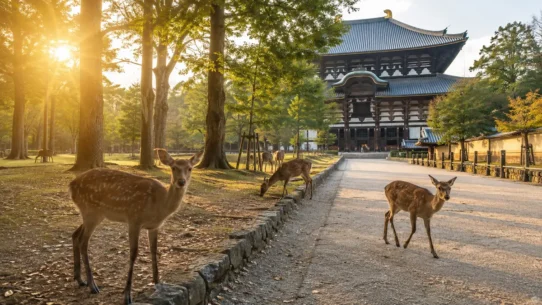
- Trap: arriving at 10:30 a.m. and expecting a peaceful Nara Park. By then, trains from Kyoto and Osaka have delivered much of the day-trip crowd. The hack is to stay overnight and visit Todaiji near opening time, when the Great Buddha Hall feels monumental rather than processed.
- Trap: spending your first hour feeding deer near Noborioji and the busiest cracker stalls. This is where animals and tourists cluster. Keep food hidden until you are ready, feed one cracker at a time, show empty hands when finished and never tease the deer. They are wild animals, not a petting-zoo attraction.
- Trap: assuming JR Nara and Kintetsu-Nara are interchangeable. Kintetsu-Nara is much closer to Kofukuji and Nara Park. JR Nara is more useful for Horyuji, Osaka-bound JR services and hotels with larger station facilities. Choose by the day’s route, not by habit.
- Trap: combining Todaiji, Kasuga Taisha, Naramachi, Horyuji and Yakushiji in one day. It may fit into a map screenshot, but not into realistic opening hours. Horyuji sits on a different rail corridor, while Yakushiji and Toshodaiji require their own Nishinokyo routing. Pick one outer area, not all of them.
- Trap: walking every segment because “Nara is compact.” Central Naramachi is compact. Nara Park is not. A short bus or taxi to the far end of the park can save 30 to 45 minutes of low-value pavement and preserve energy for the shrine paths and temple stairs.
- Trap: believing an online voucher automatically means skip-the-line access. In Nara, many products are transport passes, reserved train seats or guided tours. They may save ticket-machine time, but they generally do not bypass temple security, worship queues or crowded entrances.
- Trap: putting Naramachi at 5:00 p.m. after an exhausting temple day. The streets remain atmospheric, but many small shops, museums and heritage houses will already be closed. Give the district its own half-day and eat lunch early.
- Trap: carrying open snacks, paper maps or plastic bags around deer. Deer may grab items they mistake for food. Secure loose belongings, do not feed human food and take all rubbish away because bins are limited or absent in the park.
- Hack: use a taxi strategically, not constantly. A taxi from your hotel or station to Todaiji at opening time, or from Isuien toward Kasuga Taisha, can remove an awkward backtrack without turning the trip into an expensive private-car itinerary.
- Hack: treat optional sights as real options. Mt. Wakakusa, extra museums and Hokiji are worthwhile, but they should be the first cuts when rain, heat or fatigue changes the day. A good itinerary survives bad conditions without becoming a failure.
The Perfect 3-Day Itinerary at a Glance
The sequence below is more efficient than the common “top-ten sights” approach because it separates three different transport patterns: central walking, park-and-temple walking, and a JR excursion. You are not crossing Nara City twice every day, and you are not gambling a major temple on a late-afternoon arrival.
Day 1: Kofukuji, Naramachi and Nara’s Historic Center
- Suggested start: 8:45 a.m. at Kintetsu-Nara Station. Travelers staying near JR Nara should take a short bus or walk along Sanjo-dori without carrying luggage.
- Main order: Kofukuji grounds and National Treasure Hall at 9:00 a.m. → Sarusawa Pond → Gangoji Temple → Naramachi lanes → Naramachi Koshi-no-Ie or a small craft stop → Mochiidono or Higashimuki shopping arcade for an easy finish.
- Transport between stops: almost entirely on foot. The route gradually moves south and west without repeatedly returning to the stations.
- Walking and difficulty: roughly 5 to 7 kilometers, mostly flat and easy. Expect uneven old lanes and occasional stone surfaces, but this is the gentlest day.
- Lunch strategy: sit down between 11:15 a.m. and noon. Naramachi’s popular cafes and small restaurants often have limited seating, and waiting until 1:00 p.m. can waste the best shopping hours.
- Easiest optional stop to cut: Naramachi Koshi-no-Ie or a small local museum. Keep Gangoji and the neighborhood walk.
- Rain or low-energy alternative: spend more time in the Kofukuji National Treasure Hall, the covered shopping arcades and a machiya cafe. Nara National Museum can replace outdoor wandering, but check its exhibition calendar and closing day first.
Why this works: many itineraries use Naramachi as leftovers after Nara Park. That is backwards. Starting here lets you enjoy its human-scale streets while shops are open, and it gives your legs a manageable first day before the park’s longer distances.
Day 2: Todaiji, Isuien and Kasuga Taisha
- Suggested start: 7:15 a.m. in warm months, aiming to enter Todaiji’s Great Buddha Hall at 7:30 a.m. In winter, adjust to the 8:00 a.m. opening.
- Main order: Todaiji Great Buddha Hall → Nigatsudo and the elevated view → descend toward Isuien for its 9:30 a.m. opening → early lunch near Oshiagecho or Yumekaze Hiroba → bus or taxi toward Kasuga Taisha → inner cloister if open → Tobihino or Ukimido only if energy remains.
- Transport between stops: walk inside the Todaiji area, then use a bus or short taxi for the least rewarding cross-park segment. Finish on foot through Kasuga’s approach, with a bus back to Kintetsu-Nara or JR Nara.
- Walking and difficulty: approximately 7 to 9 kilometers if you include every optional section. Difficulty is moderate because of Nigatsudo stairs, long gravel approaches and cumulative distance.
- Lunch strategy: eat around 11:15 a.m. or book a restaurant that genuinely accepts reservations. The lunch rush near Todaiji can be surprisingly inefficient, especially on weekends and during school-trip seasons.
- Easiest optional stop to cut: Mt. Wakakusa, Ukimido or the Kasugataisha museum. Do not cut Todaiji simply because the deer distracted you.
- Rain or low-energy alternative: skip Nigatsudo’s exposed stairs and the long forest walk. Use buses or taxis between Todaiji, the Nara National Museum and Kasuga Taisha. In heavy rain, replace Isuien with the museum because Isuien’s stepping stones can be awkward and the garden may close in severe weather.
Why this works: the small amount of apparent backtracking between Todaiji and Isuien is deliberate. It buys you an uncrowded Great Buddha Hall and puts you at Isuien close to opening time. After lunch, a bus or taxi removes the tiring central crossing and leaves your energy for Kasuga’s lantern-lined approach.
Day 3: Horyuji, Chuguji and Rural Ikaruga
- Suggested start: leave JR Nara around 7:25 a.m. and aim to reach Horyuji at or shortly after 8:00 a.m. Check the current JR timetable and the connecting local bus before breakfast.
- Main order: JR Nara → JR Horyuji → bus or walk to Horyuji → Western Precinct, Great Treasure Gallery and Eastern Precinct → Chuguji → lunch outside the complex → optional bicycle, bus or taxi to Hokiji → return to JR Horyuji and Nara.
- Transport between stops: JR is the cleanest choice from Nara City. Use the local bus if it aligns with your train; otherwise the station-to-temple walk is straightforward. A rental bicycle is useful for Hokiji and the rural lanes in good weather.
- Walking and difficulty: around 5 to 8 kilometers depending on whether you walk from the station and add Hokiji. The terrain is generally easier than Day 2, but Horyuji itself is large and museum time adds standing fatigue.
- Lunch strategy: do not postpone lunch until returning to Nara City. Eat near Horyuji around noon, and check opening days because small local restaurants may close irregularly or sell out.
- Easiest optional stop to cut: Hokiji. Horyuji and Chuguji already make a complete and meaningful day.
- Rain or low-energy alternative: use the bus or a taxi from JR Horyuji Station, focus on Horyuji’s main precincts and treasure gallery, add Chuguji only if conditions are comfortable, then return early. Do not cycle rural roads in heavy rain.
Why this works: Horyuji opens early and deserves more than a rushed late-afternoon stop. Giving Ikaruga its own day prevents the classic mistake of trying to pair Horyuji with Todaiji or Kasuga Taisha, then discovering that the transfer consumed the hour you thought you had saved.
Save Your Legs! The Most Efficient Route
The route works because each day follows a different urban shape. Day 1 is a compact loop through the historical center. Kofukuji, Sarusawa Pond, Gangoji and Naramachi are close enough to connect on foot without spending money on transport. Day 2 is a large park crossing with real elevation and rougher surfaces, so it uses an early start plus one strategic bus or taxi segment. Day 3 begins from the correct railway hub—JR Nara—rather than forcing a Kintetsu-to-JR transfer after breakfast.
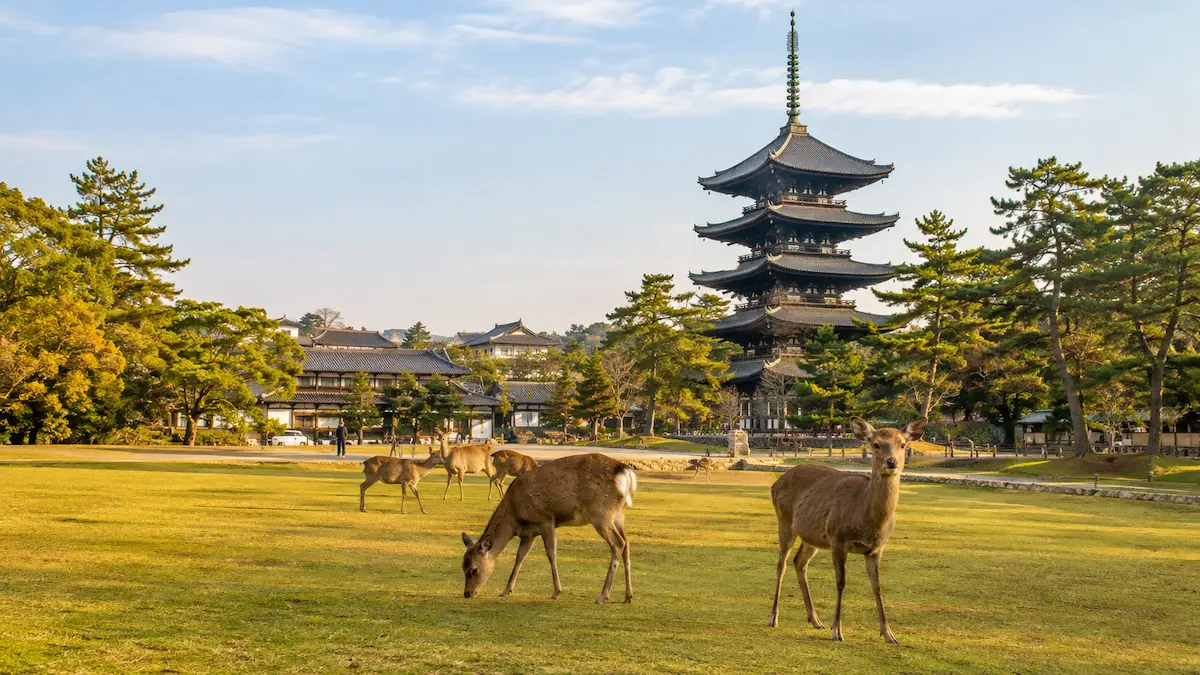
The sights that belong together: Kofukuji and Naramachi make sense on one day because they share the central street network and early-closing shops. Todaiji, Nigatsudo, Isuien and Kasuga Taisha belong in the eastern zone, although you should use transport for one cross-park segment if your legs are not strong. Horyuji and Chuguji are naturally paired because Chuguji sits beside Horyuji’s eastern precinct. Hokiji is a logical optional extension by bicycle, taxi or bus.
The combinations that look close but are not efficient: Horyuji and Yakushiji are both west or southwest of central Nara, but they are not on one simple sightseeing line. Horyuji is easiest by JR, while Yakushiji and Toshodaiji are tied to the Nishinokyo area and Kintetsu or bus routing. Doing all three can work for a specialist temple day with an early start and carefully checked connections, but it is not the best default for a first visit. Likewise, Naramachi is physically near Nara Park, yet placing it after Todaiji, Nigatsudo and Kasuga Taisha usually means tired travelers arriving after small venues have closed.
Train, bus, taxi or walking? Walk in central Nara, where the streets themselves are part of the experience. Use buses for station-to-park access, Kasuga Taisha and tired returns. Use JR for Horyuji. Use a taxi when it removes a long, low-interest crossing or protects an opening-time plan; a single well-timed taxi is often better value than losing an hour and then paying for an extra night or missed reservation. A rental bicycle is useful in Ikaruga in dry weather, but it is unnecessary in crowded central Nara.
Where the route gets difficult: Nigatsudo involves slopes and stairs. Kasuga Taisha’s approach includes gravel, stone paving, roots and a gradual incline. Isuien has rounded stepping stones and explicitly warns that the garden is not wheelchair-accessible. Naramachi is mostly flat but has narrow lanes and uneven surfaces. Horyuji is spacious, so the challenge is distance and standing rather than steep climbing. Large suitcases and heavy strollers are especially awkward at Isuien, Nigatsudo and the forest approach to Kasuga Taisha.
Where to stay: the area around Kintetsu-Nara Station is the best all-round base for first-time visitors. It is closest to Nara Park, Kofukuji, restaurants and covered arcades, but rooms can be busier and more expensive on peak weekends. The JR Nara Station area is excellent for travelers arriving from Osaka on JR, visiting Horyuji or prioritizing elevators, larger station facilities and straightforward luggage handling; the trade-off is a longer walk or bus ride to Nara Park. Naramachi offers more atmosphere, small inns and a quieter evening, but it is less convenient for early trains and some streets become very quiet after dinner. Staying beside the park is memorable, yet you may pay more and still need a bus or taxi for JR departures.
Luggage strategy: leave bags with your hotel before check-in or after check-out whenever possible. Both JR Nara and Kintetsu-Nara have luggage facilities or coin lockers, but large lockers can fill on weekends and holidays. Travelers moving between Kyoto and Osaka should consider forwarding the main suitcase to the next hotel and carrying only an overnight bag in Nara. Japanese hotel-to-hotel delivery often requires sending luggage in advance, so ask the front desk about cutoff times rather than assuming same-day arrival. Do not take a full-size suitcase to Horyuji “just for a few hours”; the station walk, buses and temple gravel make that false economy painfully obvious.
Ticket Tips & Skip-the-Line Hacks
Start with the honest answer: most headline attractions in this itinerary do not need advance tickets. Todaiji, Kofukuji, Gangoji, Isuien, Kasuga Taisha, Horyuji and Chuguji generally accept individual visitors on site. Several locations still rely heavily on cash, and an online tour voucher does not replace the temple’s own admission fee unless the product description explicitly says it does.
What is worth booking early? Reserve limited-express train seats if you want a specific Kintetsu service from Kyoto or Osaka, especially a sightseeing train or a popular weekend departure. Guided tours, private guides, special cultural experiences and seasonal events may also have limited capacity. Buying these online can provide an e-voucher or QR Code and saves you from explaining the booking at a station counter, but check whether you still need a base-fare ticket or IC card.
What is normally fine to buy on site? Standard temple admission. Todaiji’s Great Buddha Hall ticket, the joint museum ticket, Kasuga Taisha’s paid inner-cloister admission, Gangoji, Isuien and Horyuji admissions are usually straightforward at the entrance. Carry enough yen because card acceptance and payment methods vary. Arriving early is a more reliable “skip-the-line hack” than buying a third-party product.
There is no universal fast lane for Todaiji, Kasuga Taisha or Horyuji. Even when a guided product is sold online, you may still encounter the same gate, bag checks, crowded approach and worship flow as everyone else. Be suspicious of marketing that uses “skip the line” loosely without identifying a separate entrance.
Before travel, reconfirm the latest opening time, final admission, closure day, ceremony schedule and reservation rules on the official websites. Todaiji changes seasonal opening hours; Isuien normally closes Tuesdays and has maintenance periods; Kasuga Taisha may restrict special worship for ceremonies; Horyuji closes earlier in winter.
Useful online booking options: Travelers using multiple Kintetsu journeys can compare the Kintetsu Rail Pass on Klook. Travelers coming directly from Kyoto can check the Kyoto-to-Nara Kintetsu train product on Klook. For travelers who want interpretation rather than just admission, compare the Todaiji two-hour guided tour on KKday. These pages were live when checked, but inclusions, voucher formats, eligibility and prices can change.
My buying rule: book digital transport or a genuinely useful guide before departure, save the confirmation offline and screenshot any QR Code. Buy ordinary temple admission at the gate. This is safer than prepaying for a vague “Nara ticket” that does not actually cover the places in your itinerary.
Tried & Tested: My Honest Review
This is not brochure-style praise. The reviews below focus on what matters when the route meets real opening hours, crowds, weather and tired legs.
📍 Stop 1: Kofukuji, Gangoji and Naramachi
Heritage Core · Easy Walking · Best Food-and-Culture Day · Early Closing Risk
Kofukuji gives you an immediate sense of Nara’s scale without demanding a long approach from Kintetsu-Nara Station. The National Treasure Hall is the strongest reason to pay for an interior visit; the free grounds alone can feel incomplete when restoration work or barriers affect the pagoda views. From Sarusawa Pond, the transition into Gangoji and Naramachi is one of the best changes of pace in the city: monumental religious history gives way to merchant houses, cafes and small workshops.
✅ What Other Travelers Say: Visitors often value Naramachi precisely because it feels less processed than the deer-park corridor. Gangoji’s compact scale and old roof tiles reward travelers who enjoy detail rather than spectacle, while the district’s cafes make it easier to slow down.
⚠️ The Catch (Things to Keep in Mind): Naramachi is not one preserved street with a dramatic entrance. Its appeal is scattered, and some venues keep limited or irregular hours. Travelers expecting a Kyoto-style entertainment district may find the evenings too quiet. Start early enough to enter Gangoji and at least one heritage house before closing.
My verdict: Day 1 works because it does not ask Naramachi to be a consolation prize. Give it daylight, an unhurried lunch and enough time to notice the small details.
📍 Stop 2: Todaiji Temple and Nigatsudo Hall
Essential First Visit · High Crowd Risk · Early Start Pays Off · Stairs at Nigatsudo
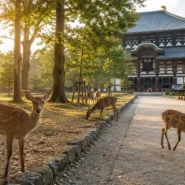
Todaiji is the one Nara landmark that deserves its reputation. The Great Buddha Hall is not merely a quick interior photo stop; the scale of the building, the bronze Buddha and the surrounding temple precinct need time. Nigatsudo adds what the main hall lacks: height, air, a city view and a quieter sense of the wider complex.
✅ What Other Travelers Say: Even travelers who feel temple fatigue elsewhere in Japan often find the Great Buddha more impressive in person than in photographs. Nigatsudo is frequently remembered as a quieter highlight because tour groups are less likely to climb beyond the main hall.
⚠️ The Catch (Things to Keep in Mind): The south approach can become a bottleneck of deer, cracker buyers, school groups and tour umbrellas. The famous pillar opening inside the hall may have its own queue. Nigatsudo adds uphill walking and stairs, so do it before your legs are spent. During fawn season, do not approach or touch mother deer and young fawns.
My verdict: arrive at opening, see the Great Buddha before the crowd thickens, then spend the extra energy on Nigatsudo. The early alarm is worth more than any supposed fast-track ticket.
📍 Stop 3: Isuien Garden
Quiet Reset · Beautiful Borrowed Scenery · Limited Accessibility · Tuesday Closure
Isuien is the pressure-release valve in this itinerary. After stone gates, crowds and enormous temple spaces, the garden gives you controlled views, water, tea-house architecture and borrowed scenery that includes the Nara hills. It is especially valuable for travelers who think Nara is only deer and giant religious monuments.
✅ What Other Travelers Say: The most common praise is tranquility. Visitors often appreciate how close the garden is to Todaiji while feeling much more secluded. Photographers like the layered landscape and seasonal reflections.
⚠️ The Catch (Things to Keep in Mind): ¥1,200 can feel expensive to travelers who rush through in 30 minutes. The stepping-stone route is not wheelchair-accessible, and wet weather can make footing less comfortable. The garden closes Tuesdays, has maintenance closures and may close in extreme weather. The museum display can also vary.
My verdict: worth the fee when you give it at least an hour. Skip it only if you dislike gardens, the weather is severe or accessibility is a concern.
📍 Stop 4: Kasuga Taisha and the Lantern-Lined Approach
Forest Atmosphere · Sacred Lanterns · Long Approach · Ceremony Closures Possible
Kasuga Taisha is not best judged as a single red building. The approach through the sacred landscape, the stone lanterns, the shift in light under the trees and the relationship with Nara’s deer create the experience. Paying for the inner cloister adds closer views of hanging lanterns and the main sanctuary area, but the free approach remains worthwhile.
✅ What Other Travelers Say: Visitors who arrive early or late in the day often describe Kasuga Taisha as more atmospheric than the busier temple zone. The lantern corridors and forest setting create a stronger sense of place than a quick checklist visit suggests.
⚠️ The Catch (Things to Keep in Mind): The walk is longer than it looks, especially from Todaiji after lunch. Special worship can close or change because of ceremonies, and the museum and botanical garden have separate hours and fees. Gravel, stone and roots are tiring for strollers, wheelchairs and anyone with balance concerns.
My verdict: use a bus or taxi to protect your energy, then walk the meaningful final approach. Do not spend your strength on a long roadside transfer and arrive too tired to enjoy the forest.
📍 Stop 5: Horyuji, Chuguji and Ikaruga
World-Class Architecture · Serious History Day · Higher Admission Cost · Best by JR
Horyuji is where a three-day stay proves its value. Day-trippers rarely give the complex enough time, yet the Western Precinct, treasure gallery, Eastern Precinct and nearby Chuguji together form one of the deepest historical experiences in the region. The architecture is not simply “old-looking”; the complex rewards anyone willing to slow down and understand the buildings, sculpture and early Buddhist connections.
✅ What Other Travelers Say: History and architecture enthusiasts consistently value Horyuji’s depth, spaciousness and lower crowd pressure compared with central Nara. Chuguji’s seated bodhisattva is often described as a quiet emotional highlight.
⚠️ The Catch (Things to Keep in Mind): Horyuji’s ¥2,000 adult admission is a surprise for travelers accustomed to cheaper temple tickets, and Chuguji costs extra. The station is not beside the gate, local buses require timetable awareness and the complex involves substantial standing. Casual visitors who are mainly interested in deer may not value the full day.
My verdict: this is the right Day 3 for travelers who want a genuinely deeper Nara trip. Start early, use JR, eat locally and cut Hokiji before you rush the main complex.
Key FAQs
Is three days in Nara too much for a first-time visitor?
No—provided you want more than a deer-park photo stop. Three days allow one relaxed historic-center day, one major Nara Park day and one outer-area excursion to Horyuji. Travelers focused only on Todaiji and deer can see the essentials in one day, but they should not pretend that this covers Naramachi or the deeper temple landscape.
What is the best area to stay for a 3-day Nara itinerary without a car?
Kintetsu-Nara Station is the best all-round choice for most first-time visitors because it is closer to Nara Park, Kofukuji, restaurants and shopping arcades. JR Nara is better for Horyuji, JR arrivals and easier luggage handling. Naramachi is best for atmosphere, but less convenient for early trains.
Can I visit Todaiji, Kasuga Taisha, Naramachi and Horyuji in one day?
Technically, a fast traveler using taxis could touch all four. Practically, it is a poor first-time itinerary. You would visit Todaiji during peak crowds, rush Kasuga’s long approach, reach Naramachi as shops close and gamble Horyuji against an early temple closing time. Split central Nara, the eastern park and Ikaruga into separate days.
Final Verdict and Your Next Step
The perfect three-day Nara trip is not the itinerary with the highest number of temple names. It is the one that gets you into Todaiji before the crowd, gives Naramachi daylight rather than leftovers, uses the correct station for Horyuji and leaves enough energy to appreciate Kasuga Taisha’s forest instead of simply surviving the walk.
Book only the parts that genuinely benefit from advance planning: reserved trains, a useful regional pass, a specialist guide or a limited-capacity experience. Save your confirmations and QR Codes offline, then carry cash for ordinary temple admissions. Recheck official hours, closure days and ceremony restrictions shortly before travel because seasonal schedules can change.
Plan the paid parts now: compare the Kintetsu Rail Pass on Klook, check the Kyoto-to-Nara Kintetsu train option on Klook, or reserve a Todaiji guided visit through KKday. Read the inclusions carefully—especially admission, base fare, reserved-seat supplements, cancellation rules and voucher redemption—before paying.
Final advice: stay two nights, travel with a daypack, begin Day 2 earlier than feels necessary and keep one optional sight on every day. That is how Nara becomes a memorable ancient capital rather than a crowded half-day detour between Kyoto and Osaka.
Official Information Checked for This Itinerary
- Todaiji official opening hours and admission
- Kasuga Taisha official visitor information
- Isuien Garden official access, closure and accessibility notes
- Horyuji official opening hours, admission and access
- Chuguji official hours and admission
- Nara Kotsu official bus-pass information
- Official Nara travel guide transport overview