
💡 Key Takeaways
- For most first-time visitors, Hwangnidan-gil and Hwangnam-dong are the best overall base. You can walk to a large share of Gyeongju’s headline historic sights, stay out for the evening illuminations, and avoid turning every meal or coffee stop into a bus journey.
- If you have a rolling suitcase or arrive by intercity/express bus, the Bus Terminal and Noseo-dong area is the smart-value alternative. It is less atmospheric than a hanok lane, but the combination of easier luggage handling, practical hotels and a short walk toward Hwangnidan-gil often wins on convenience.
- Do not book beside Gyeongju Station just because “near the station” sounds convenient. The KTX/SRT station is outside the historic center. Unless you have a very late arrival, very early train or a car, staying there can add unnecessary transfers to every sightseeing day.
Choosing among the best areas to stay in Gyeongju is more important than it first appears. The city looks compact when you see the famous royal tombs, Cheomseongdae and Woljeonggyo Bridge on a map, but Gyeongju’s accommodation is spread between the walkable historic center, the bus terminals, a resort district around Bomun Lake, the KTX/SRT station outside downtown and temple-oriented stays near Bulguksa. There is no local subway network to rescue a badly chosen hotel location. Pick the wrong base and you may spend a short two-night trip waiting for buses, paying for repeated taxis or dragging luggage farther than expected. Pick the right one and Gyeongju becomes one of Korea’s easiest cities to enjoy slowly, especially after the day-trippers leave.
This guide compares five areas that make sense for real travelers rather than simply listing every district with hotels. The ranking is based on sightseeing geography, arrival logistics, evening convenience, likely transport friction and the trade-offs repeatedly mentioned by recent visitors. The goal is simple: choose the area that fits how you will actually travel, not the area with the prettiest hotel photos.
The 1-Min Cheat Sheet
- Hwangnidan-gil & Hwangnam-dong — Best overall for first-time visitors: Choose this if your priority is walking to the historic core, cafés, restaurants, hanok atmosphere and evening sights. It is the easiest area for a short 1–2 night stay without a car. The compromise is weekend crowds, some street noise and potentially less suitcase-friendly hanok accommodation.
- Gyeongju Bus Terminal & Noseo-dong — Best for budget, luggage and bus arrivals: A practical base near the express/intercity terminals, with straightforward hotels and easy access toward Hwangnidan-gil. It lacks the romantic doorstep atmosphere of a hanok street, but it often gives you more room for your money and less friction on arrival and departure.
- Seongdong Market & Jungang-ro — Best for local food and a more everyday downtown feel: Good for travelers who prefer markets, local restaurants and a less tourist-saturated evening environment. It is still workable for central sightseeing, but it is not as instantly convenient as sleeping beside Hwangnidan-gil. Do not confuse the former downtown rail-station area with the current KTX/SRT Gyeongju Station.
- Bomun Lake Resort — Best for families, couples, resort facilities and drivers: Choose Bomun for larger hotels, lake walks, pools, family facilities and easier access to resort attractions such as Gyeongju World. The price you pay is distance from the historic walking core and more reliance on buses, taxis or a car.
- Bulguksa & Tohamsan Foothills — Best for temple-first itineraries and slow mornings: A niche but rewarding choice for travelers whose trip revolves around Bulguksa, Seokguram, photography or a quiet stay. It is not the best all-purpose base if most of your meals, cafés and evening sightseeing are downtown.
Top Survival Tips
- Check the map pin, not just the words “Gyeongju Station.” The current Gyeongju Station serves KTX, SRT and regular trains from a location outside the historic center. Older travel material may still call it Singyeongju Station. For most visitors, the station is an arrival point rather than the best sightseeing neighborhood. A hotel that is genuinely walkable to Hwangnidan-gil is usually more useful than one that is walkable to the high-speed rail platforms.
- With a large suitcase, paying for one strategic taxi can save more energy than chasing the cheapest transfer. This is especially true after a KTX arrival. Gyeongju’s buses are useful, but travelers used to Seoul or Busan often underestimate the difference in frequency and the awkwardness of boarding with bulky luggage. Save the buses for sightseeing once your bags are at the hotel.
- Hwangnidan-gil is convenient, but do not automatically book a room directly on the busiest strip. A property one or two quiet lanes away can preserve almost all the walking convenience while reducing late-evening foot traffic and café noise. This matters on weekends, public holidays, cherry-blossom season and autumn foliage weekends.
- Traditional-looking does not always mean comfortable for your travel style. Before booking a hanok stay, confirm whether you are getting a Western bed or floor bedding, whether the room has a private bathroom, how sound insulation is described, and whether stairs or courtyard stones will be annoying with luggage. The aesthetic is part of the appeal, but the wrong room type can become tiring after a full day of walking.
- Use Bus 10/11 as a corridor, not as if it were a metro line. Gyeongju’s official tourism information highlights the tourist bus corridor linking the bus-terminal area, central sights, Bomun and Bulguksa. It is genuinely useful, but road traffic and waiting time still matter. Check live bus information on the day rather than building a minute-by-minute itinerary around a published interval.
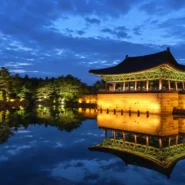
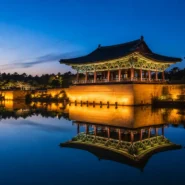
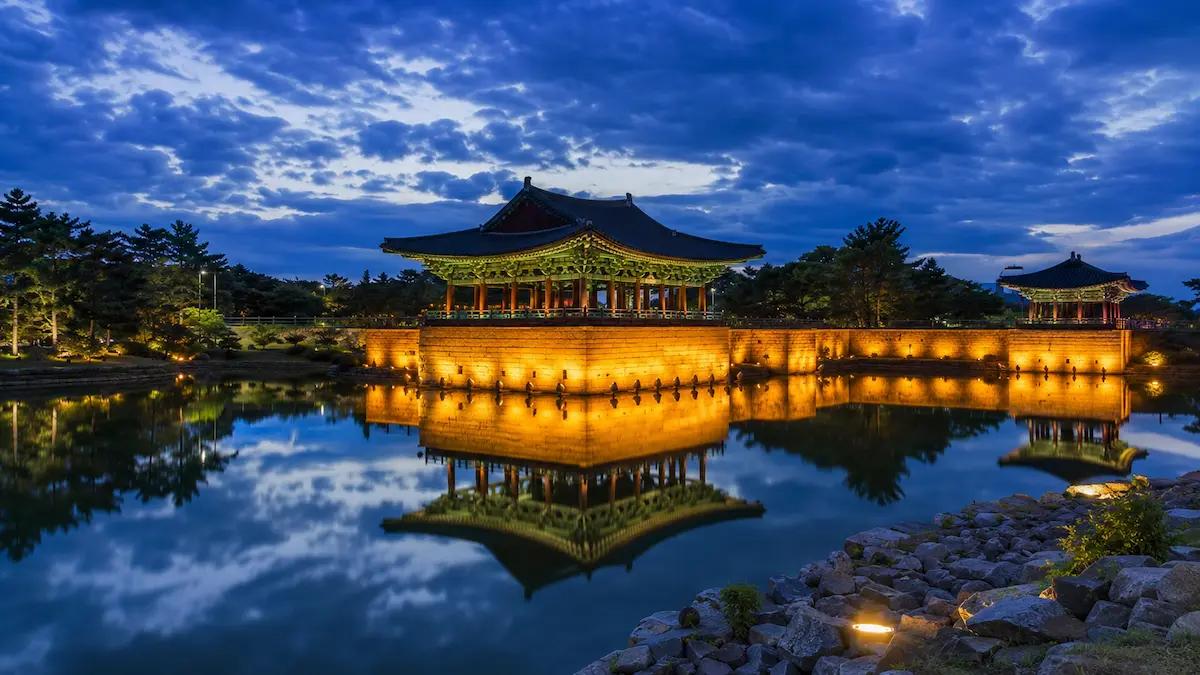
- If your trip is only one night, prioritize evening walkability over a “nicer” hotel farther away. Gyeongju’s atmosphere improves after sunset around the tombs, Cheomseongdae, Donggung and Wolji, and Woljeonggyo. Staying central lets you enjoy dinner and the illuminated sights without calculating a final bus or taxi every night.
- If you are driving, the ranking changes. Bomun becomes much more attractive because the resort district’s distance from downtown is no longer a major penalty. Conversely, a very central hanok may be less appealing if parking is limited, the access lane is narrow or you dislike maneuvering through busy pedestrian streets.
- Book earlier than usual for spring blossoms and autumn weekends. The best-located small hanok stays have fewer rooms than large city hotels, so the combination of location, private bathroom, proper bed and strong reviews can disappear before the cheapest rooms do. If your dates are fixed, secure a cancellable option rather than waiting for a last-minute bargain.
The Full Experience
🏯 Hwangnidan-gil & Hwangnam-dong: Best for First-Time Visitors and Walking
Tags: Best overall · Historic core · Hanok stays · Cafés · Night walks · Car-free friendly
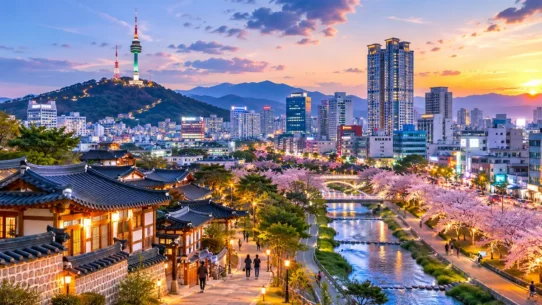
If this is your first trip and you are wondering where to stay in Gyeongju without a car, start here. Hwangnidan-gil runs through the neighborhood immediately west of the Daereungwon royal-tomb area, placing you beside one of the city’s liveliest dining and café zones while keeping major historic sights within a realistic walking radius. Official Gyeongju tourism information places the Daereungwon/Hwangnidan side only a short walk from the intercity and express bus terminals, and the historic center itself is compact enough that several headline sights connect naturally on foot.
The practical advantage is not simply that “attractions are nearby.” It is that your whole day can flow without repeated transport decisions. You can leave after breakfast, walk through Daereungwon, continue toward Cheomseongdae and the surrounding historic landscape, return to your room for a rest, then go back out for dinner and an illuminated evening walk. On a two-night trip, that ability to reset at the hotel is worth far more than shaving a small amount off the room rate in a distant district.
Hwangnam-dong also gives you the widest choice of stays that actually feel like Gyeongju. There are restored hanok guesthouses, low-rise boutique properties and modern rooms hidden behind traditional façades. If atmosphere matters, this is the district most likely to deliver it from the moment you step outside. Couples and first-time Korea visitors often love the contrast between ancient tomb mounds, tiled roofs, modern coffee shops and evening lights.
Best micro-location: I would prioritize the quieter lanes between Hwangnidan-gil and the Daereungwon side rather than insisting on a door directly on the busiest shopping street. You still get the same food and sightseeing access, but you reduce noise and crowds. If you have heavy bags, also check the exact walking route from the main road; a charming pin that looks “close” can involve uneven paving or a narrow lane that taxis cannot enter easily.
✅ What Other Travelers Say
Recent travelers consistently like this area for being able to walk to restaurants, cafés and the central historic sights, and many specifically choose it for the hanok experience. The recurring caution is equally useful: some traditional stays sit farther inside pedestrian lanes than the map makes obvious, and the nearest convenient bus stop may not be directly outside. Travelers with large luggage often find a taxi from the KTX/SRT station the least stressful first transfer.
⚠️ The Catch (Things to Keep in Mind)
Hwangnidan-gil is now one of Gyeongju’s most popular visitor zones, which means weekend queues, busy cafés and higher prices for photogenic stays. A recent 2026 visitor report also noted that popular dinner spots can develop long weekend waits. The area is therefore not the automatic winner for travelers who hate crowds, need a large business-style room, want guaranteed elevator access or are driving and require easy parking. Also remember that a hanok label says more about style than sleep quality: check the bed, bathroom, heating/air-conditioning and noise reviews individually.
Verdict: For most first-time visitors spending one to three nights in Gyeongju, this is the area I would book first. Choose a quiet side street, not necessarily the main strip itself, and you get the best balance of sightseeing time, evening freedom and atmosphere.
🧳 Gyeongju Bus Terminal & Noseo-dong: Best for Easy Arrivals, Budget and Luggage
Tags: Best value · Bus arrivals · Easy luggage · Practical hotels · Short walk to Hwangnidan-gil
The bus-terminal side is the area many travelers overlook because it does not look as romantic in hotel photos. That can be a mistake. If you arrive by express or intercity bus, have a large suitcase, want a standard bed and private bathroom, or care more about smooth logistics than courtyard aesthetics, the blocks around the terminals and Noseo-dong are one of Gyeongju’s most rational bases.
The biggest advantage is the location relative to both transport and the historic center. The terminal zone sits close enough to Hwangnidan-gil that you can walk into the more atmospheric streets without sleeping in the middle of the busiest tourist flow. You also start close to bus services used for trips toward Bomun and Bulguksa. For travelers coming from Busan, Seoul or other Korean cities by coach, this can turn arrival day into “get off, roll bag to hotel, start exploring” instead of “get off, transfer again, find a tiny lane, then start exploring.”
Room value can also be better. This area has more conventional hotels, motels and guesthouses, so you are more likely to find elevators, larger rooms, laundry facilities or a straightforward reception desk at a modest price. That matters for longer Korea itineraries, when the novelty of carrying a 20-kilogram suitcase through a pretty stone courtyard has already worn off.
Best micro-location: Aim for the east or southeast side of the terminal area if you want the easiest walk toward Hwangnidan-gil and Daereungwon. There is little reason to go far west simply to save a small amount unless the hotel itself is significantly better. In Gyeongju, ten extra minutes each way becomes noticeable when you already spend the day on your feet.
✅ What Other Travelers Say
Travelers who stay here often praise the unglamorous things that make a trip easier: being only a few minutes from the bus terminal, having a spacious conventional room, using laundry facilities and still being able to walk to Hwangnidan-gil and central sights. Recent guest discussions specifically mention terminal-side hotels and guesthouses as convenient, clean and good value, especially for people relying on buses for Bulguksa or onward travel.
⚠️ The Catch (Things to Keep in Mind)
The immediate terminal environment is functional rather than beautiful. Some properties are older, and the streets around transport hubs may feel less charming after dark than Hwangnam-dong. You also need to read property reviews carefully because the same area contains polished budget hotels and more basic motel-style accommodation. If your dream is to wake up to tiled roofs and step straight into a hanok lane, spend a little more and move east toward Hwangnidan-gil.
Verdict: This is the best “smart compromise” in Gyeongju. It is especially strong for solo travelers, budget-conscious couples, bus arrivals and anyone who values an elevator and easy suitcase movement more than sleeping inside the postcard.
🍜 Seongdong Market & Jungang-ro: Best for Local Food and a More Everyday Downtown
Tags: Local food · Traditional market · Practical downtown · Quieter evenings · Good for repeat visitors
Seongdong Market and the traditional downtown streets around Jungang-ro are worth considering if you want convenience without living in Gyeongju’s most tourism-heavy lane. Seongdong Market is the city’s major permanent traditional market, and the surrounding blocks give you an everyday mix of food stalls, inexpensive restaurants, shops and local services. It feels more like a working Korean city and less like a curated weekend destination.
This district suits repeat visitors, food-focused travelers and people who prefer to spend their accommodation budget on room quality rather than a fashionable address. You remain within the broader central urban area, so taxis are inexpensive compared with crossing from a resort district, and local buses are easier to access than from a secluded hanok. It can also be a sensible choice if your itinerary includes the national museum or eastern parts of the center as well as Hwangnidan-gil.
There is, however, an important map trap here. The former downtown rail-station area still appears in old blog posts, old photos and sometimes stale accommodation descriptions. The high-speed rail station now called Gyeongju Station is outside central Gyeongju, so do not assume that “near the old station” means you are near your KTX platform. Always inspect the actual pin before booking.
Best micro-location: Stay on the side of the downtown grid that keeps you within a comfortable walk or short bus ride of the Daereungwon/Hwangnidan historic core. If a bargain hotel pushes you too far north or east, the savings can disappear into taxi fares and extra walking.
✅ What Other Travelers Say
Visitors who seek out Seongdong Market tend to appreciate its low-key food options and the feeling of being somewhere locals genuinely use. The market is especially useful for travelers who are tired of paying café-district prices for every meal. Walking-tour videos and recent travel reports also show the central market area as a practical link between older downtown streets and Gyeongju’s tourist core rather than an isolated attraction.
⚠️ The Catch (Things to Keep in Mind)
This is not the area I would choose for a first visit if the price difference is small. Hwangnidan-gil has a clearer “step outside and start sightseeing” advantage, especially at night. Some streets here quiet down earlier, and hotel stock can be more functional than memorable. The district makes the most sense when you specifically value local food, find a much better room, or dislike the tourist crowds around Hwangnam-dong.
Verdict: A good second-choice central base and a strong pick for food-first travelers, but not the universal winner. Treat it as “practical downtown,” not “next to the current train station.”
🌊 Bomun Lake Resort: Best for Families, Couples, Resort Comfort and Drivers
Tags: Resort hotels · Families · Lake views · Gyeongju World · Pools · Best with a car
Bomun is a completely different Gyeongju experience. Instead of narrow historic streets and small hanok stays, you get a purpose-built tourism district around Bomun Lake with large hotels, resorts, leisure facilities and family attractions. If your idea of a good stay includes a pool, lake view, spacious lobby, on-site breakfast and room for children to decompress, Bomun can be better than the historic center even though it is less convenient for walking to the royal-tomb district.
Official Gyeongju tourism information describes Bomun as a large resort complex and places it roughly a 15–20 minute drive from downtown under normal conditions. The tourist bus corridor also connects the terminal/central side with Bomun and onward to Bulguksa, so staying without a car is possible. The key question is not “Can I use public transport?” but “Do I want to organize my days around it?” If you are a family carrying a stroller, returning for naps or visiting Gyeongju World, the resort facilities can outweigh the extra transfers. If you are a solo traveler who wants to wander out for dinner and night photography, downtown is usually easier.
Bomun also works well for road trips. Parking is generally less stressful than in the narrow historic-center lanes, and the location gives drivers straightforward access toward Bulguksa, Seokguram and other outlying sights while keeping downtown within taxi or driving range. Couples may also enjoy the quieter nighttime lake environment after busy sightseeing days.
Best micro-location: Do not treat “Bomun” as one small block. The resort complex is spread out. Check walking distance to the exact facilities you care about—lake path, Gyeongju World, convention center, restaurants or a bus stop—rather than assuming every Bomun hotel is equally convenient.
✅ What Other Travelers Say
Travelers who like Bomun often mention the peaceful evening atmosphere and the pleasure of walking around the lake after dark. Families and drivers value the larger resort facilities and easier access to leisure attractions. That positive feedback is genuine, but so is the opposite reaction: some recent visitors describe Bomun as very quiet outside peak periods and feel the district can become a resort bubble compared with the energetic historic center.
⚠️ The Catch (Things to Keep in Mind)
The main drawback is repeated transport. You cannot casually walk from your hotel to Hwangnidan-gil, Daereungwon or Woljeonggyo. Even when the bus route works well, you are still planning around a ride. Dining is also more spread out, and prices inside large resorts can be higher than in central neighborhoods. On quiet weekdays or off-season dates, the district may feel too subdued for travelers who enjoy busy streets and late dinners.
Verdict: Bomun is not “too far” if you chose it for the right reasons. It is excellent for families, resort lovers and drivers, but it is a poor default recommendation for a first-time, car-free traveler whose priority is historic sightseeing.
🛕 Bulguksa & Tohamsan Foothills: Best for Temple Mornings, Photography and Slow Travel
Tags: Bulguksa · Seokguram access · Quiet stays · Early starts · Nature · Best for niche itineraries
Staying near Bulguksa is a specialist choice, not a general recommendation—and that is exactly why it deserves a place in this comparison. Bulguksa and Seokguram are among Gyeongju’s most important UNESCO-listed heritage sites, but they sit well away from the compact downtown sightseeing cluster. If these temples are the main reason for your trip, sleeping nearby can turn an otherwise transport-heavy morning into a relaxed early start.
This is particularly attractive for photographers, heritage-focused travelers and anyone who dislikes arriving at a major temple at the same time as tour groups. You can start earlier, linger longer and build a slower day around Tohamsan rather than treating Bulguksa as a half-day excursion from downtown. Travelers with a car also gain flexibility for combining temple visits with eastern or coastal sights.
The area’s accommodation tends to be quieter and more spread out, with pensions, guesthouses and small hotels rather than a dense city-center hotel scene. That can feel restorative after Seoul or Busan. It can also feel inconvenient if you suddenly want a broad choice of dinner, cocktails, shopping or late-night cafés.
Best micro-location: If you are car-free, prioritize a stay with a straightforward route to the main Bulguksa entrance and a useful bus stop. A rural-looking property may be peaceful but could add an awkward uphill or roadside walk. Drivers have far more freedom to choose scenic pensions farther out.
✅ What Other Travelers Say
Visitors repeatedly describe Bulguksa and Seokguram as highlights rather than optional filler, and recent travelers often recommend arriving early to enjoy them with fewer crowds. Reports also reinforce the transport trade-off: bus service makes the temples reachable, but waiting can be longer than travelers expect if they are used to major-city transit. Staying nearby removes that pressure for the first part of the day.
⚠️ The Catch (Things to Keep in Mind)
You are sacrificing spontaneity in central Gyeongju. Hwangnidan-gil dinners, Daereungwon night walks and other downtown sights require a ride rather than a stroll home. Restaurant and convenience-store choice is thinner, and the area can become very quiet at night. If Bulguksa is only one stop on a two-day city itinerary, it is usually better to stay downtown and visit by bus, taxi, tour or car.
Verdict: Stay here only when you can explain exactly why you want to. For a temple-first trip, early photography or a slow countryside feel, it can be brilliant. For a standard first visit, Hwangnidan-gil or the terminal side saves more total time.
So, Which Gyeongju Area Fits Your Trip?
If you have 1–2 nights and no car: choose Hwangnidan-gil/Hwangnam-dong. Your time is too valuable to spend commuting from a resort just to save a little on the room.
If you arrive by bus with large luggage or want the best value: choose the Bus Terminal/Noseo-dong side, preferably toward Hwangnidan-gil. You keep central access without paying purely for atmosphere.
If you dislike tourist streets and care about local food: look around Seongdong Market/Jungang-ro, but compare the exact walking route to the historic core before paying.
If you are traveling with children, driving or want a full-service hotel: choose Bomun Lake, especially if Gyeongju World, pools and resort downtime matter as much as ancient sites.
If Bulguksa and Seokguram are the core of your trip: consider staying near Bulguksa for one night, particularly with a car. Otherwise, treat it as a day excursion from downtown.
Key FAQs
What is the best area to stay in Gyeongju for first-time visitors without a car?
Hwangnidan-gil and Hwangnam-dong are the best overall choice for most first-time, car-free visitors. The area puts restaurants, cafés and the compact historic core within walking distance and lets you enjoy the illuminated sights without planning a ride home. If accommodation there is too expensive, the bus-terminal/Noseo-dong side is the next-best value because it remains close to the center while simplifying arrivals and luggage.
Is it better to stay near Gyeongju Station or the Gyeongju bus terminal?
For sightseeing, the bus-terminal area is usually much better. The current Gyeongju Station used by KTX and SRT is outside the historic center, while the express/intercity bus terminals sit much closer to Hwangnidan-gil and Daereungwon. Stay near the rail station mainly for a very late arrival, very early train or a road-trip plan where you will immediately pick up a car. Otherwise, use the station as a transport gateway and sleep downtown.
Where should families stay in Gyeongju: Bomun Lake or Hwangnidan-gil?
Choose Bomun Lake if your family values larger resort rooms, pools, parking, lake walks and easy access to attractions such as Gyeongju World. Choose Hwangnidan-gil if your priority is historic sightseeing with minimal transport and you want restaurants on the doorstep. With toddlers, a stroller and a car, Bomun often feels easier; with older children and only one or two sightseeing days, central Hwangnam-dong usually saves more time.
Final Verdict and Your Next Step
There is no single perfect hotel district in Gyeongju, but there is a clear best area for most short first visits: Hwangnidan-gil/Hwangnam-dong. It minimizes the number of transport decisions you have to make, keeps evening sightseeing easy and gives you the strongest sense of place. If prices are high or you hate carrying luggage through small lanes, move a little west to the Bus Terminal/Noseo-dong area rather than jumping all the way out to Bomun.
Choose Bomun Lake deliberately for resort facilities, children or a car. Choose Bulguksa deliberately for temple-focused slow travel. Choose Seongdong Market/Jungang-ro when local food and practical downtown life matter more than being in the prettiest tourist lane. Most importantly, do not let the words “near Gyeongju Station” trick you into thinking you are automatically central.
If your dates fall on a spring blossom weekend, autumn foliage weekend or Korean holiday period, book a well-located cancellable room early. The rooms that disappear first are often not the absolute cheapest—they are the ones that combine a genuinely central pin, a private bathroom, a comfortable bed and consistently good reviews.
- Check Gyeongju hotels on Booking.com
- Compare Gyeongju stays on Agoda
- Browse Gyeongju tours and activities on Klook
- Browse Gyeongju day tours on KKday
Planning note: Transport patterns, bus timetables and hotel inventories can change. This guide was fact-checked against current Gyeongju tourism information, Korea Tourism Organization station information, accommodation booking pages and recent traveler reports. Recheck live transit times and the exact hotel map pin before you travel.