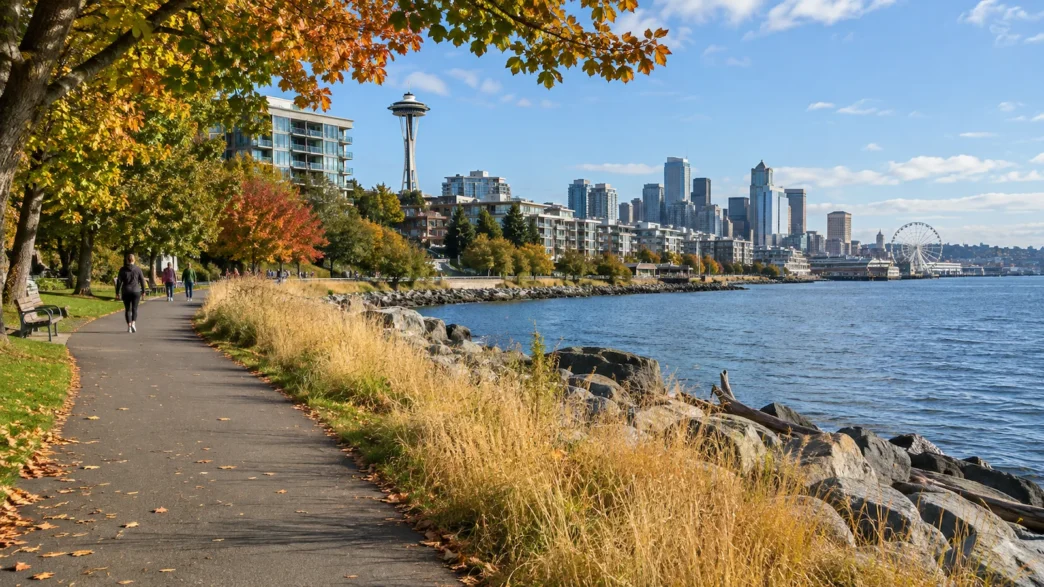
The best time to visit Seattle is usually July or August if you care most about dry walking days and outdoor plans. May, June and early September are worth comparing when you want a middle ground between weather and hotel prices. For a city trip built around food, museums and visiting friends, select better-value dates and leave one outdoor morning flexible.
💡 Key Takeaways
- Use the drier July–August window for waterfront outings, but check event and cruise weekends before booking.
- May–June or early September are good comparison dates if you can tolerate rain and want a less crowded morning.
- Book a refundable rate for blossoms or a specific holiday event. Weather and event calendars can change the day you came for.
The 1-Min Cheat Sheet
- March to April: Blossoms, spring color, and flexible indoor backups.
- May to June: More daylight, mixed weather, and a useful balance for a first visit.
- July to August: Seattle’s drier summer stretch and a busy event calendar.
- September to November: Early autumn walking, fall color, then a shift toward wetter days.
- December to February: Lights, shows and indoor visits, with less daylight for outdoor routes.
Top Survival Tips
- Separate an event date from good-value dates. If you are visiting for a game, festival or a sailing, choose the date first. If prices matter more, compare two non-event weeks rather than a nominal peak and off-peak month.
- Read weather normals as background. The NOAA Seattle airport normals describe past patterns. Check your actual forecast, wind and visibility shortly before a ferry or observation visit.
- Build one adjustable outdoor morning. Leave the rainiest afternoon for a museum or covered market. Do not buy a ticket at an hour when a clearer forecast would make you wish you could move it.
- Try an alternate check-in day. Price the Wednesday and Saturday combination with fee-inclusive totals if you can shift the itinerary. Compare rates around the same specific waterfront or downtown blocks.
- Match outerwear and backups to the actual activities. Wear a layer for the ferry deck even if streets feel warm. A hood and a warm indoor break help more than planning additional covered walks by distance.
Best Time to Visit Seattle by Season and Trip Type
🌸 March to April: Best for Cherry Blossoms With Flexible Dates
Spring blooms • Mixed weather • University District
Check the University of Washington blossom updates before picking a day to visit the Quad. Warm spells and rain can affect when blooms peak and how long they last. Book for a city visit you would enjoy even if the timing moves.
Start at the Quad on a weekday morning if the blossoms are your main reason for going. The University of Washington and U District are separate stations. Check your approach on the Link schedule and stop list. Keep a café, museum or bookshop nearby for a cold shower rather than setting a hard time to cross town.
For a waterfront afternoon, keep any ticket flexible and check the forecast on the day. Spring’s appeal is color and changing light, which are easier to enjoy when you are not waiting outside in an exposed queue.
✅ What Other Travelers Say: A city weekend with blossoms as an extra usually has more room to adapt than a trip planned around a single tree photograph.
⚠️ The Catch (Things to Keep in Mind): The busiest weekend can be crowded even if most other areas feel quiet. It is better to check bloom status than assume the same week works every year.
🌿 May to June: Best for Longer Light and a Mixed Itinerary
Shoulder season • Markets and museums • Event dates matter
May and June give an early evening walking plan more daylight than winter. Use the time for a casual waterfront loop or Seattle Center without filling the whole day. Cooler weather can still make a ferry deck chilly.
Events are a separate planning layer. The Northwest Folklife Festival organizer publishes its program and dates. Check graduation and cruise departures too. A day that looks mild in the forecast may still have an unusually expensive room or a wait for a dinner table.
For a first visit, choose a hotel that can support either an indoor or outdoor start. That is more useful than being near one sunny-day landmark. Check the market early, then leave room to move a museum earlier if showers develop.
✅ What Other Travelers Say: Longer days suit flexible sightseeing. You can take a proper lunch break and still see something outside afterward.
⚠️ The Catch (Things to Keep in Mind): The weather can turn within one afternoon. Avoid booking a long outdoor block with no option to pause or shelter.
☀️ July to August: Best for Drier Outdoor Days
Drier on average • Cruise season • Festivals and busy weekends
If you only get one chance at an outdoor Seattle trip, summer is the strongest weather choice. Use the longer light for a ferry or park. Schedule your most exposed walk earlier if the forecast calls for a hot afternoon.
The Seafair calendar is worth checking if you want air shows and lake events or prefer to avoid their traffic. Do not assume the stadiums, cruise berths and Lake Washington events are in the same area. Read the route to each venue.
Choose a timed activity early on days when a crowd could eat up lunch. Then keep the rest light. Buy important ferry or event tickets according to the operator, and keep a return margin instead of squeezing a boat ride into the final hour.
✅ What Other Travelers Say: Good light makes a city and water trip feel easier, particularly if you leave time to stay outdoors near dinner.
⚠️ The Catch (Things to Keep in Mind): Summer weather includes occasional hot days and poor air quality. Check forecasts and put an indoor option nearby. Hotel inventory can tighten around major events.
🍂 September to November: Best for Early Fall Walks and Later Museums
Earlier outdoor days • Fall foliage • Wetter late fall
September can give a pleasant market or ferry day with a warm layer. In October, consider a shorter stop at Volunteer Park combined with coffee nearby. By November, an indoor block is often easier to work around than a whole afternoon outside.
Treat fall color as a possible extra. Check trees and rain on your day rather than planning the trip around one spot. When the ground is slick, a bus closer to the garden or museum can be more useful than a longer walk from rail.
Compare event prices across downtown. Local football, a concert and a convention may affect different neighborhoods. Shift a hotel date before resigning yourself to a higher rate.
✅ What Other Travelers Say: A first visit around early fall can balance comfortable walking and interesting indoor stops as long as you avoid a rate spike.
⚠️ The Catch (Things to Keep in Mind): By late fall the light fades earlier, so save outdoor looks for the middle of the day. Pack a reliable wet-weather layer.
✨ December to February: Best for Indoor Time and Holiday Evenings
Short daylight • Flights and service can vary • Check holiday events
Separate the ticketed Seattle Christmas Market from public Seattle Center seasonal programming. Check which event you want and compare its admission, times and dates. Different parts of the campus have different access rules.
When the sun goes down early, use the best daylight for one park or waterfront walk. Save museums, shopping and meals for later. A room you can reach by Link or a short direct ride makes the gap between daytime and evening plans simpler.
January and February can be worth pricing for a city break. Check large sports, museum and convention dates first rather than expecting a blanket discount. If winter weather disrupts transit, save a direct option and use operator notices before your airport transfer.
✅ What Other Travelers Say: A winter trip can be good value when your main activities have no particular weather dependency.
⚠️ The Catch (Things to Keep in Mind): Forecasts and local service are important. Allow more time if a rare snow or ice event affects hills, trains or streets.
Key FAQs
What is the driest time to visit Seattle? July and August are usually among the driest months in the airport climate normals. Check the short-term forecast, especially if a ferry or skyline view matters.
When should I visit for cherry blossoms in Seattle? Plan for spring and use the UW bloom updates close to travel. Bloom times vary. Make the Quad one part of a flexible trip.
When are Seattle hotel rooms least expensive? Some winter and early spring weekdays can offer value, but it depends on the calendar and hotel type. Compare fee-inclusive dates around major events before choosing a season.
Final Verdict and Your Next Step
Pick July or August if weather is your priority. If price or crowds matter more, compare May, June, and early September. Save your important event date first and one outdoor plan you can move as the forecast changes.
Compare rooms and cancellation terms in the Seattle hotel listings and use the Travel Stay Guide travel tips articles for the next part of your trip.