
💡 Key Takeaways
- Do not plan Kyoto as one giant checklist. Group the city into downtown, Higashiyama, southern Kyoto, Arashiyama, and north/central Kyoto so you are not crossing town repeatedly.
- The best “skip-the-line” strategy at Kyoto’s temples is usually an early start, not an expensive pass. Most major temples do not offer a true fast-track lane.
- Use JR or private railways for long cross-city moves, the subway for central Kyoto, and buses only for the last mile. A short taxi can be a smart purchase when it removes two transfers or an uphill walk.
- Never drag a large suitcase onto a sightseeing bus. Leave it at your hotel, use a staffed luggage counter or locker, or send it ahead with a delivery service.
- Five days is enough for Kyoto’s classics, but only if you accept that Fushimi Inari’s summit, every Arashiyama attraction, and the entire Philosopher’s Path are optional rather than mandatory.
A good Kyoto 5-day itinerary is not the one with the longest attraction list. It is the one that keeps you out of the worst crowds, avoids unnecessary transfers, protects your legs, and still leaves enough attention for the places you travelled so far to see. The most common first-timer plan looks sensible on a map: Kiyomizu-dera, Fushimi Inari, Arashiyama, Kinkaku-ji, Nishiki Market, Gion, and a few famous temples. The trouble begins when those places are arranged by popularity instead of geography. Travellers end up returning to Kyoto Station between every outing, waiting for packed buses, carrying shopping bags uphill, or reaching a photogenic lane at exactly the same time as everyone else.
This route keeps the classic first-visit highlights but removes the usual inefficiencies. It is built around five compact zones, realistic stopping times, early starts where they genuinely matter, and deliberate “cut points” for tired days. It also tells you where the famous version is oversold. Arashiyama’s bamboo path is short, Kinkaku-ji is more of a viewing loop than a half-day cultural experience, and climbing all the way to the top of Fushimi Inari is not automatically a better visit.
Fact-checked on August 2, 2026. Temple fees, seasonal opening hours, event dates, train timetables, and platform inventory can change, so recheck official pages before travel.
The 1-Min Cheat Sheet
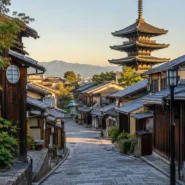
- Kiyomizu-dera and Higashiyama: Best for first-time visitors, traditional streets, and early-morning photography. Allow 2.5 to 3.5 hours including Sannenzaka and Ninenzaka. Kiyomizu-dera uses an on-site admission ticket; no genuine fast-track lane. A pre-dawn or early taxi is often more efficient than a bus for two or more travellers.
- Fushimi Inari Taisha: Best for shrine architecture, forest walking, and travellers willing to start before breakfast. Allow 90 to 120 minutes to reach the Yotsutsuji viewpoint and return; allow roughly 2.5 to 3 hours for the full summit circuit. Entry is free. JR Nara Line or Keihan Railway is far more reliable than a sightseeing bus.
- Tofuku-ji: Best for Zen architecture and autumn foliage. Allow 60 to 90 minutes. Admission is sold on site, and fees vary by area and autumn season. It pairs naturally with Fushimi Inari by JR or a direct walk, but it is easier to cut outside foliage season.
- Sanjusangen-do: Best for history lovers and rainy days. Allow 45 to 60 minutes. Admission is paid on site; advance booking is normally unnecessary. Reach it by Keihan Railway, a short bus ride, or taxi, but do not expect photography inside the main hall.
- Arashiyama: Best for scenery, gardens, riverside walking, and families who can start early. Allow 4 to 6 hours, not because the bamboo path is long, but because the district is spread out. JR is best from Kyoto Station; Hankyu is convenient from downtown; the Sagano Romantic Train should be reserved when it is a priority.
- Kinkaku-ji and Ryoan-ji: Best for iconic architecture and a compact introduction to northwest Kyoto. Allow 45 to 60 minutes at each, plus transfer time. Both sell admission on site. Use a bus or short taxi between them; do not combine them with Arashiyama merely because both are “west.”
- Kyoto Imperial Palace: Best for open space, court history, and a lower-cost day. Allow 60 to 90 minutes. General entry is free and normally does not require advance registration, but security screening applies and large baggage is not allowed inside.
- Ginkaku-ji and the Philosopher’s Path: Best for quieter garden design, reflective walking, and spring scenery. Allow 45 to 60 minutes at Ginkaku-ji and 30 to 90 minutes for as much of the path as your legs can handle. Ginkaku-ji admission is on site; the public path is free.
The Most Practical 5-Day Itinerary
Day 1: Kyoto Station, Nishiki Market, and Downtown Without the Arrival-Day Mistake
- Recommended start: 12:30 p.m. to 1:30 p.m., assuming you arrive around midday. Arriving later is not a reason to race to Fushimi Inari with your suitcase.
- Route: Drop luggage at your hotel or a staffed counter near Kyoto Station → brief Kyoto Station orientation or Skyway → subway to Shijo or Karasuma Oike → Nishiki Market → Teramachi and Shinkyogoku arcades → Kamo River → Pontocho or Kawaramachi for dinner.
- Suggested time at each stop: Kyoto Station 30 to 45 minutes; Nishiki Market 60 to 75 minutes; shopping arcades 45 to 60 minutes; Kamo River 20 to 30 minutes.
- Best transport: Use the Karasuma Subway Line from Kyoto Station to Shijo. Walk east through Nishiki and the arcades. This is faster and more predictable than sitting on a bus along congested central streets.
- Lunch or rest: If you are hungry, eat a proper seated meal near Kyoto Station before moving. Nishiki is better treated as a tasting stop than as a complete lunch plan. Many stalls have limited space, and market etiquette asks visitors not to walk while eating.
- What to cut: Skip the Kyoto Station Skyway if jet lag, heat, or rain has already drained you. Do not add Kyoto Tower unless the view is personally important.
- Rain alternative: Spend more time in Kyoto Station, Porta underground mall, Nishiki’s covered lane, Teramachi, and Shinkyogoku. The route remains workable with minimal exposure.
- Evening area: Kawaramachi, Pontocho, or Kiyamachi. Stay downtown after dinner instead of returning to Kyoto Station just to leave again.
- Why this beats a common influencer itinerary: Many online plans send new arrivals directly to Fushimi Inari or Kiyomizu-dera. That creates luggage problems, poor light, peak crowds, and unnecessary urgency. Day 1 should orient you, feed you, and put you near your hotel—not exhaust you before the real sightseeing begins.
Day 2: Kiyomizu-dera, Sannenzaka, Ninenzaka, Yasaka Shrine, and Gion
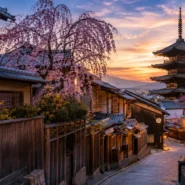
- Recommended start: Leave your hotel around 5:45 to 6:15 a.m. and aim to reach Kiyomizu-dera shortly after its 6:00 a.m. opening. The famous lanes are dramatically calmer before tour groups and shop-opening traffic arrive.
- Route: Kiyomizu-dera → descend through Sannenzaka and Ninenzaka → optional Kodai-ji → Maruyama Park → Yasaka Shrine → early lunch in Gion → Kennin-ji, a reserved tea ceremony, or a slower Gion walk → Shirakawa or Pontocho after dusk.
- Suggested time at each stop: Kiyomizu-dera 75 to 90 minutes; Sannenzaka and Ninenzaka 60 minutes; Kodai-ji 40 to 50 minutes; Maruyama Park and Yasaka Shrine 30 to 45 minutes; Kennin-ji or a tea experience 60 to 90 minutes.
- Best transport: A short taxi to the Kiyomizu approach is worth considering at this hour, especially for two to four people, travellers with knee issues, or anyone staying downtown. Public buses are cheaper but do not remove the uphill walk from the main stops. Once at Kiyomizu-dera, walk downhill all the way to Gion.
- Lunch or rest: Eat around 11:15 to 11:45 a.m. in Gion, Yasaka, or along Shijo before the lunch queue peaks. Do not rely on one viral restaurant with no reservation; the district has many alternatives within a ten-minute walk.
- What to cut: Remove Kodai-ji first if you are tired. Remove Kennin-ji if you booked a tea ceremony or kimono session. The core day is Kiyomizu-dera, the preserved slopes, Yasaka Shrine, and Gion.
- Rain alternative: Start at Kiyomizu-dera with a compact umbrella, then shorten the lanes and move to Kennin-ji, a tea ceremony, Kyoto Museum of Crafts and Design, or a café. Stone slopes can become slippery, so wear shoes with grip and skip cosmetic detours.
- Evening area: Gion-Shijo, Shirakawa, Pontocho, or Kiyamachi. Do not schedule another distant temple after sunset.
- Why this beats a common influencer itinerary: The standard mistake is approaching Higashiyama around 10:00 a.m., walking uphill through packed shopping lanes, then taking a bus across town to Kinkaku-ji. This route starts at the highest point, moves downhill, and keeps the entire day within one walkable district.
Day 3: Fushimi Inari, Tofuku-ji, and Sanjusangen-do
- Recommended start: Reach Fushimi Inari around 6:15 to 6:45 a.m. Earlier is useful in spring, autumn, weekends, and holiday periods; later than 8:00 a.m. means sharing the lower gates with far more groups.
- Route: Fushimi Inari lower shrine and torii route → Yotsutsuji viewpoint or optional summit → JR Nara Line to Tofukuji Station → Tofuku-ji → lunch near Shichijo or the Kyoto National Museum area → Sanjusangen-do → optional Kyoto National Museum → Kyoto Station or Umekoji for the evening.
- Suggested time at each stop: Fushimi Inari 90 to 120 minutes to Yotsutsuji and back, or 2.5 to 3 hours for the complete mountain loop; Tofuku-ji 60 to 90 minutes; lunch 60 minutes; Sanjusangen-do 45 to 60 minutes; museum 90 minutes if added.
- Best transport: Use JR from Kyoto Station to Inari if you are staying near the station, or Keihan Railway to Fushimi-Inari if you are staying near Gion or downtown east. From Inari, take JR one stop to Tofukuji or walk roughly 20 to 25 minutes if the weather is mild. Continue toward Shichijo by Keihan, local bus, or taxi.
- Lunch or rest: Eat near Shichijo, Tofukuji, or the Kyoto National Museum. The restaurant supply immediately around Fushimi Inari can feel crowded and tourist-oriented at midday; moving north gives you more breathing room.
- What to cut: Outside autumn foliage season, Tofuku-ji is the easiest cut. At Fushimi Inari, the summit is optional. The torii do not suddenly become more spectacular at the top, and the extra climb is a fitness decision rather than a sightseeing obligation.
- Rain alternative: Visit only Fushimi Inari’s lower shrine and first torii sections, then prioritise Sanjusangen-do and the Kyoto National Museum. On a heavy-rain day, move Sanjusangen-do first and return to Fushimi Inari only if conditions improve.
- Evening area: Kyoto Station, Umekoji, or your hotel neighbourhood. This is a good night for laundry, a sento, or an early dinner because Day 4 also starts early.
- Why this beats a common influencer itinerary: Fushimi Inari is often paired with Arashiyama because both are accessible by JR. That looks efficient on a rail map but sends you from southeast to far west, wasting the calmest hours at one of the two. This day stays in Kyoto’s southern and southeastern corridor.
Day 4: Arashiyama and Western Kyoto Without Trying to Do Everything
- Recommended start: Arrive at Saga-Arashiyama or Arashiyama around 7:00 to 7:30 a.m. The bamboo path is most enjoyable before the first large wave from Kyoto Station.
- Route: Bamboo Grove → Tenryu-ji garden and buildings → early lunch → Togetsukyo Bridge and riverside → choose one major extra: Monkey Park, Okochi Sanso, Saga-Toriimoto, a museum, or the Sagano Romantic Train.
- Suggested time at each stop: Bamboo Grove 30 to 45 minutes; Tenryu-ji 60 to 75 minutes; lunch 60 minutes; Togetsukyo and riverside 30 to 45 minutes; one optional attraction 60 to 120 minutes.
- Best transport: JR is fastest from Kyoto Station to Saga-Arashiyama. Hankyu is convenient from Kawaramachi or Karasuma and arrives south of the river. Randen is charming for local west-Kyoto links but is not the fastest way from central Kyoto. Walk within Arashiyama; buses become slow and crowded when the district is busy.
- Lunch or rest: Eat around 11:00 a.m., before the bridge-area restaurants fill. For a quieter break, move one or two streets away from the main road rather than queuing for the first river-view venue you see online.
- What to cut: Choose between Monkey Park and a longer northern walk. The monkey park includes a steep climb and is not a casual add-on for everyone. Skip the Romantic Train unless you have booked it and genuinely want the ride; it is not essential to understanding Arashiyama.
- Rain alternative: Keep Tenryu-ji, then add the Fukuda Art Museum or Saga Arashiyama Museum of Arts and Culture. Avoid the Romantic Train’s open-air Rich Car in bad weather; umbrellas are not allowed in that car, and rain can blow in.
- Evening area: Return to your hotel area by JR or Hankyu and eat nearby. Downtown guests may prefer Hankyu back to Karasuma or Kawaramachi; Kyoto Station guests will usually find JR simpler.
- Why this beats a common influencer itinerary: The oversold version crams the bamboo path, Tenryu-ji, Monkey Park, Romantic Train, Hozugawa boat ride, Kinkaku-ji, and a night illumination into one day. That requires perfect connections and turns a scenic district into a relay race. One meaningful extra is enough.
Day 5: Ryoan-ji, Kinkaku-ji, Kyoto Imperial Palace, Ginkaku-ji, and a Flexible Philosopher’s Path
- Recommended start: Reach Ryoan-ji at opening—8:00 a.m. from March through November or 8:30 a.m. from December through February—then continue to Kinkaku-ji shortly after 9:00 a.m.
- Route: Ryoan-ji → Kinkaku-ji → taxi or bus/subway combination to Kyoto Imperial Palace → lunch around Imadegawa, Demachiyanagi, or Marutamachi → Ginkaku-ji → walk only the section of the Philosopher’s Path that matches your remaining energy.
- Suggested time at each stop: Ryoan-ji 45 to 60 minutes; Kinkaku-ji 45 to 60 minutes; transfer 25 to 45 minutes; Kyoto Imperial Palace 60 to 90 minutes; lunch 60 minutes; Ginkaku-ji 45 to 60 minutes; Philosopher’s Path 30 to 90 minutes.
- Best transport: Use a short bus or taxi between Ryoan-ji and Kinkaku-ji. For Kinkaku-ji to the Imperial Palace, a taxi is often the best value for two to four travellers because it avoids multiple transfers and saves your legs for the afternoon. From the palace area to Ginkaku-ji, use a direct bus outside peak traffic or a taxi when buses are packed. Walk the Philosopher’s Path southbound only as far as you enjoy.
- Lunch or rest: Eat around the Imperial Palace, Imadegawa, or Demachiyanagi. Do not delay lunch until Ginkaku-ji’s narrow approach, where the obvious choices can be crowded.
- What to cut: Cut most of the Philosopher’s Path first. Cut Ginkaku-ji next if you have already seen many gardens and your departure schedule is tight. Keep Ryoan-ji and Kinkaku-ji together because they are the logical northwest pair.
- Rain alternative: Shorten the palace grounds, whose gravel can be tiring when wet, and substitute the Kyoto International Manga Museum, Kyoto Museum of Crafts and Design, or a longer café break. Ginkaku-ji remains attractive in light rain, but the path is not worth forcing in a downpour.
- Evening area: Demachiyanagi, Okazaki, Sanjo, or your departure-side hotel. For a final dinner, choose a neighbourhood you can reach without another cross-city bus.
- Why this beats a common influencer itinerary: Many itineraries attach Kinkaku-ji to Arashiyama, then place the Imperial Palace and Ginkaku-ji on separate days. That creates repeated west-to-east journeys. This day moves from northwest to central to northeast in one direction, with the longest transfer made before afternoon fatigue sets in.
Tourist Traps to Avoid & Itinerary Hacks
- The “all famous temples are close” trap: Kyoto’s postcard sights sit in several different corridors. Kiyomizu-dera and Kinkaku-ji are not a convenient pair. Fushimi Inari and Arashiyama are on opposite sides of the city. Group by geography, not by how often a sight appears on Instagram.
- The late-morning Kiyomizu start: Arriving around 10:00 or 11:00 a.m. puts you into the busiest overlap of day-trippers, school groups, rental-kimono visitors, and lunch traffic. Go near opening, start high, and walk downhill.
- The Fushimi Inari summit guilt trip: Reaching the summit is satisfying for hikers, but it is not required for a complete visit. Yotsutsuji gives you a natural turnaround point with a view and saves energy for the rest of the day.
- The bamboo-forest fantasy: The famous path is a short public walkway, not a remote wilderness. At midday it can feel like a pedestrian corridor. Go early, then spend your serious time at Tenryu-ji, Okochi Sanso, the river, or quieter northern lanes.
- The “bus everywhere” mistake: A bus looks direct, but traffic and boarding delays make it unreliable in central Higashiyama and around major seasonal events. Rail first, bus last-mile is the safer default.
- Buying a transit pass by habit: The Subway & Bus One-Day Pass can be useful on a bus-heavy day, but it does not automatically cover JR, Hankyu, Keihan, Randen, or every private route used in this itinerary. Add up your likely rides instead of assuming a pass must save money.
- Searching for temple fast passes that do not exist: Most classic temples sell simple on-site admission. Third-party “tickets” may be packaged tours or experiences rather than a skip-the-line product. The real advantage is arriving early, using the correct entrance, and avoiding peak dates.
- Queuing for one viral restaurant: A 60- to 90-minute lunch queue can destroy the routing advantage you built. Save one must-eat booking for dinner and keep daytime meals flexible.
- Wearing kimono on the hardest walking day: Rental kimono can be memorable in Gion and Higashiyama, but tight footwear, heat, rain, and stone slopes make long-distance sightseeing slower. Book an early fitting, keep the route compact, and avoid combining it with Fushimi Inari’s mountain climb.
- Dragging luggage through Kyoto: Large bags are awkward on crowded buses, some palace facilities restrict them, and lockers at major stations can fill. Use hotel storage, a staffed baggage counter, or same-day/next-day delivery.
- Assuming Nishiki Market is an all-day attraction: It is a compact food market with varying shop hours, not a theme park. Sixty to seventy-five minutes is enough for most first-time visitors.
- Overbooking seasonal illuminations: Night openings are atmospheric but can be extremely busy. Add one carefully chosen evening event, not a different illumination every night.
Save Your Legs! The Most Efficient Route
The logic of this Kyoto 5-day itinerary is simple: downtown on arrival day, Higashiyama on Day 2, southern Kyoto on Day 3, Arashiyama and western Kyoto on Day 4, then northwest-central-northeast Kyoto on Day 5. This matters because Kyoto is not a single compact old town. Its famous sights sit around the edges of a modern city, and the mountains, rivers, rail corridors, and traffic patterns punish random zigzagging.
Walk where Kyoto is naturally continuous. Kiyomizu-dera, Sannenzaka, Ninenzaka, Kodai-ji, Maruyama Park, Yasaka Shrine, and Gion form one downhill chain. Nishiki Market, Teramachi, Shinkyogoku, Kawaramachi, Kamo River, and Pontocho also link well on foot. In Arashiyama, the Bamboo Grove, Tenryu-ji, Togetsukyo, and the central riverfront belong to the same walking zone. Ginkaku-ji and the northern Philosopher’s Path can be combined, but the entire path to Nanzen-ji is optional after a full sightseeing day.
Use the subway and railways for the long jumps. The Karasuma Subway Line is the backbone between Kyoto Station, Shijo, Karasuma Oike, Marutamachi, and Imadegawa. The Tozai Line is useful across central-east Kyoto. JR is the easiest choice for Kyoto Station to Fushimi Inari, Tofukuji, and Saga-Arashiyama. Keihan Railway is excellent for travellers staying near Gion, Sanjo, or the east bank of the Kamo River, especially for Fushimi Inari, Tofukuji, and Shichijo. Hankyu works well between downtown and the southern side of Arashiyama. Randen is useful for local west-Kyoto links but is not always the fastest cross-city option.
Use buses as connectors, not as your default transport system. City buses are valuable when a temple has no nearby rail station, but they are most vulnerable to congestion and crowding. Kinkaku-ji, Ryoan-ji, and Ginkaku-ji often require a bus or taxi for the final segment. During cherry blossom season, autumn foliage, weekends, and commuter hours, a route that looks direct in a map app may take much longer than expected.
A short taxi is not a failure of budget travel. It can be the most rational purchase of the day when it removes two transfers, a long uphill approach, or 30 minutes of waiting. Good examples are an early ride to Kiyomizu-dera, Kinkaku-ji to Kyoto Imperial Palace, or Ginkaku-ji back to your hotel after a long final day. Split among two to four travellers, the time and energy saved can be more valuable than the fare. Avoid using taxis as a cure for severe traffic on already congested corridors; the advantage comes from simplifying awkward links, not from magically bypassing every jam.
Stop returning to Kyoto Station between every activity. Kyoto Station is a major transport hub, not the centre of every sightseeing district. Once you reach Higashiyama, downtown, or Arashiyama, stay in that zone until dinner. Returning to the station can add two unnecessary rides and another long walk through a huge building.
Choose accommodation for your actual route. Shijo-Karasuma and Karasuma Oike offer the best all-round balance: subway access, walkable dining, and easier connections to Hankyu. Kawaramachi and Gion-Shijo are better for evening atmosphere and Keihan access but can be busier and more expensive. Kyoto Station is practical for day trips, early shinkansen departures, and travellers with large bags, but it is not automatically the most efficient base for five days of central Kyoto sightseeing. Avoid changing hotels within Kyoto unless there is a compelling reason; the packing and luggage transfer usually cost more time than they save.
Keep large luggage off sightseeing transport. Use your hotel’s pre-check-in storage, a staffed counter at Kyoto Station, a coin locker when available, or a luggage delivery service. Lockers can fill at busy times, so do not build a tight schedule around finding one at the last minute. For same-day arrival, send or store the suitcase first and carry only a small day bag. This is especially important before buses, Higashiyama’s slopes, Arashiyama’s crowded lanes, and the Kyoto Imperial Palace, where large baggage is restricted.
Ticket Tips & Skip-the-Line Hacks
First, the honest truth: Kyoto does not have a universal skip-the-line system for temples. At most classic sights, the queue is caused by physical crowding at the gate, narrow paths, security checks, or tour-group timing—not by a complicated ticket counter. Buying an unofficial package does not create a private entrance. Your strongest tools are an early start, a geographically sensible route, and avoiding peak weekends and seasonal afternoons.
Usually bought on site: Kiyomizu-dera, Kinkaku-ji, Ryoan-ji, Ginkaku-ji, Tenryu-ji, Tofuku-ji, and Sanjusangen-do normally use straightforward on-site admission. Advance purchase is generally unnecessary for a normal independent visit. Fees and closing times can change seasonally; autumn periods at Tofuku-ji use special pricing and earlier final-entry times. Kiyomizu-dera’s special night openings do not normally require advance reservations, but they can still be crowded.
Free entry: Fushimi Inari Taisha, Yasaka Shrine, the Philosopher’s Path, Nishiki Market, and the general Kyoto Imperial Palace visitor route do not charge a standard entrance fee. The Imperial Palace normally allows walk-in visitors without advance registration, but security screening applies, closures occur on designated days, and large bags are not permitted. Do not confuse the Imperial Palace with other Imperial Household Agency properties such as Katsura Imperial Villa, Shugakuin Imperial Villa, or Kyoto Sento Imperial Palace, where advance applications or limited same-day places may apply.
Worth reserving in advance: The Sagano Romantic Train is the clearest example in this itinerary. Official online sales generally open one month before the travel date, and popular departures can sell out. Reserved tea ceremonies, small-group cultural workshops, early kimono fittings, seasonal dinners, and limited night events should also be booked when they are central to your plan. For kimono rental, the useful advantage is a guaranteed fitting time and clear return policy—not an attraction fast pass.
Electronic ticket and QR-code options: The Sagano Romantic Train offers official online ticketing, and selected third-party platforms sell confirmed inventory or packaged options. Many tea ceremonies and rental experiences issue mobile vouchers. Buy these online before departure when a missed time slot would damage your day. Do not buy an “e-ticket” merely because it sounds more convenient when the temple itself only sells inexpensive admission at the gate.
Verified booking links for itinerary-relevant experiences:
- Official Sagano Romantic Train website — best first stop for schedules, operating days, and direct booking.
- Check Sagano Romantic Train tickets on Klook — useful for comparing available dates or booking through a familiar mobile platform.
- Reserve a Kyoto kimono rental on Klook — schedule it on Day 2, not on the Fushimi Inari hiking day.
- Check a Gion kimono rental on KKday — compare location, hair styling, return time, and cancellation terms.
- Book a Kyoto tea ceremony on Klook — a useful rain-proof addition to the Higashiyama or downtown day.
- Book a machiya tea experience on KKday — suitable for travellers who prefer a seated cultural activity over another temple.
Transit pass reality check: Kyoto’s Subway & Bus One-Day Pass can be useful on a day with several subway and city-bus rides, but it does not cover the full mix of JR, Keihan, Hankyu, Randen, and special trains in this plan. An IC card is usually the least stressful choice for first-time visitors. The old Bus One-Day Pass was discontinued, so beware of outdated blog posts that still recommend it.
Affiliate disclosure: Some links above are affiliate links. The price should not increase because you use them, but this site may earn a commission. Inventory, cancellation rules, operating dates, and voucher requirements are controlled by the provider, so read the current product page before paying.
Tried & Tested: My Honest Review
📍 Stop 1: Kiyomizu-dera and the Higashiyama District
Feature tags: Iconic Kyoto, early-start essential, historic streets, uphill access, high crowd risk
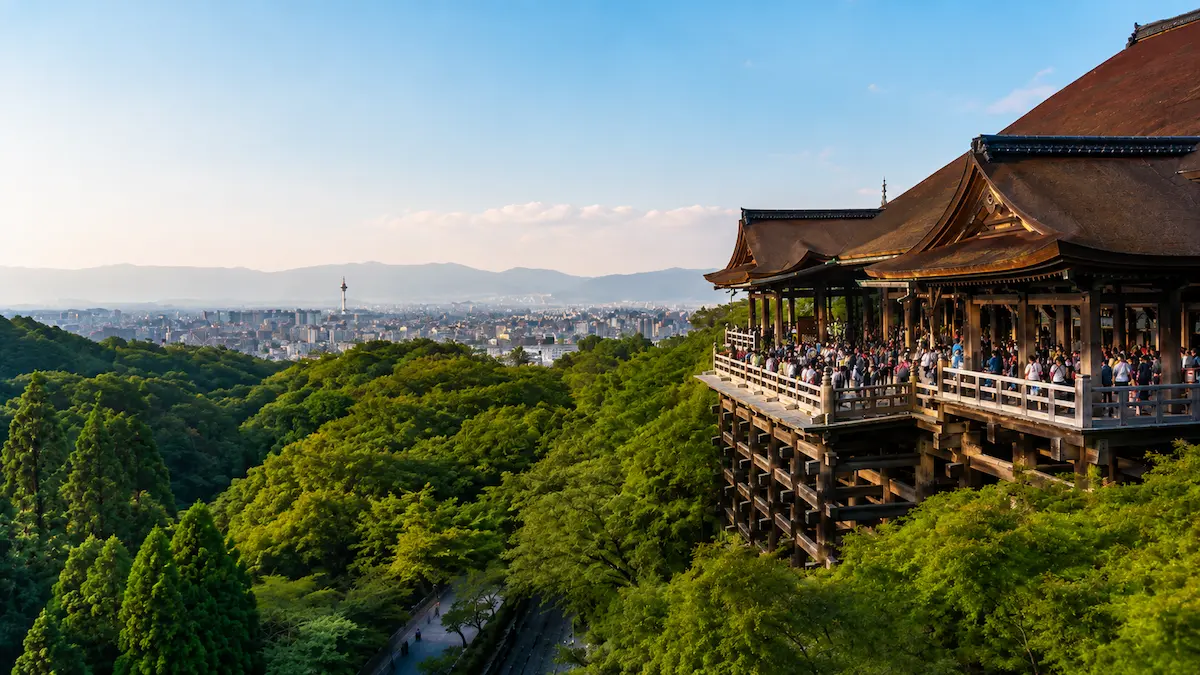
Kiyomizu-dera earns its place in a first-time itinerary because the temple terrace, wooded setting, and preserved approach create one of Kyoto’s most complete visual experiences. The problem is not the attraction; it is the timing. At midday, the approach can feel more like a slow-moving shopping queue than a historic walk. Arrive around opening, see the temple first, and descend through the lanes while shops gradually open.
✅ What Other Travelers Say
Visitors consistently value the panoramic setting, the scale of the wooden stage, and the atmosphere of Sannenzaka and Ninenzaka. Many also say the early morning feels like a different place from the midday version.
⚠️ The Catch (Things to Keep in Mind)
The nearest bus stops do not remove the hill. Stone slopes can be slippery in rain, rental-kimono footwear slows the route, and special night openings may be beautiful without being quiet. An advance ticket does not solve the narrow-path crowding.
📍 Stop 2: Fushimi Inari Taisha
Feature tags: Free entry, sunrise-friendly, shrine hike, flexible turnaround, easy rail access
Fushimi Inari is one of Kyoto’s best examples of an attraction that improves when you stop following a completion mindset. The lower torii are the most famous and the most crowded. Walk steadily past the first photo bottlenecks, enjoy the quieter forest sections, and turn around at Yotsutsuji if the heat, humidity, or your knees say enough.
✅ What Other Travelers Say
Travellers praise the atmosphere after the first crowded section, the fact that entry is free, and the freedom to choose a short or long visit. Early-morning visitors often report a calmer, more spiritual experience.
⚠️ The Catch (Things to Keep in Mind)
The mountain route includes many steps and can be humid. The summit itself is not a dramatic scenic climax, and the descent still takes time. In darkness or poor weather, stay on well-used paths and do not treat the mountain as an empty photo set.
📍 Stop 3: Tofuku-ji
Feature tags: Zen architecture, autumn foliage, seasonal pricing, easy Fushimi pairing, optional outside peak season
Tofuku-ji is an excellent geographic partner for Fushimi Inari, but it is not equally essential in every month. During autumn foliage, its bridges and valley become a major destination and crowds rise sharply. Outside that period, the Hojo garden and temple architecture offer a calmer visit, though first-timers with limited energy may prefer Sanjusangen-do.
✅ What Other Travelers Say
Garden-focused visitors appreciate the modern geometric Hojo gardens, large temple grounds, and strong seasonal colour. Many find it more spacious and contemplative outside the peak foliage weeks.
⚠️ The Catch (Things to Keep in Mind)
Different paid areas have different fees, autumn pricing changes, and last admission can be earlier than expected. Peak-season photography restrictions may apply on bridges. Check the official calendar rather than relying on an old screenshot from a blog.
📍 Stop 4: Sanjusangen-do
Feature tags: Indoor highlight, rainy-day winner, Buddhist sculpture, compact visit, no interior photography
Sanjusangen-do is less photogenic online than Kyoto’s outdoor icons, but it is one of the city’s most memorable interior experiences. The long hall and rows of statues reward slow looking, and the visit is compact enough to fit after Fushimi Inari or Tofuku-ji without turning into another half-day.
✅ What Other Travelers Say
History and art lovers often describe the statue hall as more powerful in person than in photographs. It is also praised as a reliable option in rain, heat, or cold.
⚠️ The Catch (Things to Keep in Mind)
Photography inside the hall is prohibited, so visitors expecting a large photo collection may feel constrained. The experience is contemplative rather than interactive, and the exterior alone does not explain why the site matters.
📍 Stop 5: Arashiyama, Tenryu-ji, and the Bamboo Grove
Feature tags: Scenic district, sunrise advantage, garden and river, spread-out sights, choose-one-extra rule
Arashiyama is worth a half-day because the district offers several different landscapes, not because the bamboo path alone is a world wonder. The smartest visit uses the grove as an early gateway, Tenryu-ji as the cultural anchor, and the river or one optional attraction as the relaxed finish.
✅ What Other Travelers Say
Visitors love the combination of bamboo, temple gardens, mountain scenery, and riverside views. Those who arrive early usually rate the district more highly than those who enter at midday.
⚠️ The Catch (Things to Keep in Mind)
The bamboo path is shorter and more urban than many edited photos suggest. Monkey Park involves a real climb, the district becomes congested, and the Romantic Train requires planning. Trying to complete every famous activity creates more transit stress than enjoyment.
📍 Stop 6: Kinkaku-ji and Ryoan-ji
Feature tags: Iconic pavilion, Zen rock garden, northwest cluster, short visits, limited rail access
Kinkaku-ji delivers the classic postcard view almost immediately. That is both its strength and its limitation: the visitor route is controlled, and most people complete it faster than expected. Ryoan-ji adds a more contemplative counterpoint, making the pair much more satisfying than Kinkaku-ji alone.
✅ What Other Travelers Say
Kinkaku-ji’s reflection and gold exterior are widely considered worth seeing once, while Ryoan-ji appeals to visitors who enjoy minimal design and slower observation. The short distance between them makes the pairing practical.
⚠️ The Catch (Things to Keep in Mind)
Kinkaku-ji can feel like a crowded photo loop rather than a deep temple visit. Ryoan-ji’s rock garden may disappoint travellers who expect spectacle. Neither sits on a major subway line, so bus timing or a short taxi matters.
📍 Stop 7: Kyoto Imperial Palace
Feature tags: Free entry, court history, wide grounds, security check, weather exposure
The Kyoto Imperial Palace is a useful reset after several dense temple districts. Its scale, gates, and court architecture explain a different side of Kyoto, and the free admission helps balance a trip full of paid gardens. It is best approached as a historical walk, not as a furnished European-style palace tour.
✅ What Other Travelers Say
Visitors appreciate the spacious grounds, free access, seasonal trees, and the chance to learn about imperial history. Free guided tours can add context when schedules align.
⚠️ The Catch (Things to Keep in Mind)
You generally view buildings from outside rather than entering furnished interiors. Gravel surfaces can tire ankles, the grounds are exposed in heat or rain, closures occur on designated days, and large baggage is not accepted inside.
📍 Stop 8: Ginkaku-ji and the Philosopher’s Path
Feature tags: Garden design, quieter atmosphere, spring favourite, flexible walk length, northeastern Kyoto
Ginkaku-ji is often misunderstood because visitors compare its un-gilded pavilion with Kinkaku-ji. Its real value is the garden composition, moss, sand, and elevated view. The Philosopher’s Path works best as a flexible continuation, not a compulsory march from end to end.
✅ What Other Travelers Say
Garden lovers often prefer Ginkaku-ji’s subtlety and layered landscape. The canal path is praised during cherry blossom season and on quiet mornings or late afternoons.
⚠️ The Catch (Things to Keep in Mind)
The approach and path can be busy in blossom season, summer shade is incomplete, and the full walk may feel repetitive after a long day. Travellers looking only for a dramatic building may find the higher admission fee less satisfying than expected.
Key FAQs
What is the best Kyoto 5-day itinerary for first-time visitors without a car?
Use one geographic zone per day: downtown, Higashiyama, southern Kyoto, Arashiyama, and north/central/northeast Kyoto. Travel by subway, JR, Keihan, or Hankyu for the long segments, then walk or use a short bus or taxi for the final connection. A car is usually more trouble than help because parking is limited and traffic can be slow around major sights.
Is five days in Kyoto too much for a first trip?
No. Five days is close to ideal for travellers who want the famous sights without turning every day into a sprint. It gives you room to start early, take a proper lunch, adapt to rain, and remove optional stops when tired. Three days can cover the icons, but five days makes the route more humane.
Where should first-time visitors stay in Kyoto to reduce travel time?
Shijo-Karasuma or Karasuma Oike provides the best transport balance for this plan. Kawaramachi or Gion-Shijo is excellent for evening dining and Keihan access. Kyoto Station is best for shinkansen travel, day trips, and luggage logistics, but it may add extra travel for repeated Higashiyama and downtown evenings. Stay in one hotel for all five nights unless your wider Japan itinerary makes a move unavoidable.
Final Verdict and Your Next Step
The smartest first trip to Kyoto is not about “completing” the city. It is about seeing the classics in the right order. Start Kiyomizu-dera and Fushimi Inari early, keep southern Kyoto and Arashiyama on separate days, pair Kinkaku-ji with Ryoan-ji rather than forcing it into the bamboo-forest day, and treat the Philosopher’s Path and Fushimi summit as adjustable extras. That one change in mindset will save more time than most transport hacks.
Before departure, reserve only the experiences that can actually sell out or operate by time slot. The official Sagano Romantic Train booking site should be your first check for the train. You can also check Sagano train availability on Klook, reserve a Kyoto tea ceremony on Klook, or compare a one-hour Kyoto tea ceremony on KKday. For ordinary temple admissions, save your money and arrive early instead.
Finally, check Kyoto’s official congestion forecast, attraction opening notices, and the weather the night before each day. Move the outdoor-heavy Higashiyama or Arashiyama day when rain is severe, and never be afraid to delete one stop. A Kyoto itinerary becomes memorable when you have enough energy to notice the city—not when you reach the largest possible number of pins.