


💡 Key Takeaways
- Do not combine Dazaifu and Itoshima on the same day. They sit in different directions and the transfers turn a holiday into a transport exercise.
- Keep Hakata Old Town, Kushida Shrine, Canal City, Nakasu, and a yatai dinner together. They form one mostly walkable central-city chain.
- Pair Ohori Park and Fukuoka Castle with the Momochi waterfront, teamLab Forest, and Fukuoka Tower—but use a short taxi or bus when your legs are tired.
- Book teamLab Forest in advance. An online ticket protects your preferred time, but it is not a magical skip-every-line pass.
- Stay in one hotel for all three nights. Hakata and Tenjin are both excellent bases; changing hotels in a compact city creates more hassle than benefit.
A good 3-day Fukuoka itinerary should feel easy. That is the city’s biggest advantage: the airport is close, the subway is simple, the food is excellent, and many central sights sit within a manageable radius. Yet first-time visitors often sabotage that advantage by copying an itinerary that treats Dazaifu, Itoshima, Hakata, Momochi, and every famous ramen shop as if they were neighboring blocks.
They are not. The most common failure is not missing a “must-see” attraction. It is spending too much of the trip changing trains, waiting for buses, crossing the city at peak hour, or arriving at a sunset spot after the light has gone. This route fixes that by giving each day one clear geographic direction: historic Hakata, southern Dazaifu, and western Fukuoka. It leaves breathing room for meals, bad weather, shopping, tired feet, and the reality that a popular food stall may already have a queue.
Editorial transparency: the “tried and tested” sections below reflect route stress-testing against geography, current official operating information, transport logic, and recurring traveler feedback. They are not presented as a fabricated claim of a personal paid visit.
The 1-Minute Cheat Sheet
- Hakata Old Town, Kushida Shrine and Canal City
Best for: first-time visitors, history lovers, casual photographers, food-focused travelers, and anyone arriving around midday.
Suggested time: 3.5 to 5 hours, excluding dinner.
Tickets: the streets, temples, Kushida Shrine, and Canal City are free to enter; individual museums, activities, or performances may charge separately.
Nearest transport: Gion Station, Kushida Shrine Station, Nakasu-Kawabata Station, or a walk from Hakata Station.
Reservation: not required for the main route.
Best time: begin around 9:00 a.m. for quieter temple lanes, or use this area as an arrival-day afternoon route.
Biggest catch: Canal City is much larger and more confusing than it looks on a map. Do not let shopping consume the entire afternoon unless that is your priority. - Dazaifu Tenmangu and Kyushu National Museum
Best for: culture lovers, families, architecture fans, shrine visitors, and travelers who want one meaningful half-day trip without leaving the Fukuoka region.
Suggested time: 5 to 7 hours including transport from central Fukuoka.
Tickets: Dazaifu Tenmangu is free. The Kyushu National Museum’s regular Cultural Exchange Exhibition is currently ¥700 for adults, while special exhibitions have separate prices.
Nearest transport: Nishitetsu Dazaifu Station; from Tenjin, take Nishitetsu trains and normally change at Nishitetsu Futsukaichi.
Reservation: not needed for the shrine or regular museum exhibition; special exhibitions may benefit from advance tickets.
Best time: arrive before 9:00 a.m. at the shrine, then enter the museum near its 9:30 a.m. opening or after an early lunch.
Biggest catch: the museum is normally closed on Mondays, or the following working day when Monday is a public holiday. Its standard last entry is 4:30 p.m. - Ohori Park and Fukuoka Castle Ruins
Best for: walkers, runners, families, photographers, history fans, and travelers who need a slower morning between busier sightseeing days.
Suggested time: 2.5 to 4 hours depending on whether you complete the lake loop and visit the Japanese Garden or art museum.
Tickets: the park and castle ruins are free; the Japanese Garden and Fukuoka Art Museum charge separately.
Nearest transport: Ohori Koen Station or Akasaka Station.
Reservation: not required for the outdoor areas.
Best time: early morning in warm months, or late morning in cooler seasons.
Biggest catch: the full lake circuit plus castle detours adds more steps than many visitors expect. Pick a half-loop if you still plan to visit Momochi that afternoon. - teamLab Forest Fukuoka
Best for: families, couples, digital-art fans, rainy-day travelers, and visitors who enjoy interactive rather than traditional museums.
Suggested time: 1.25 to 2 hours.
Tickets: official adult admission starts around ¥2,400, with prices able to vary during peak periods.
Nearest transport: Tojinmachi Station followed by roughly a 15-minute walk, or a bus/taxi to the PayPay Dome area.
Reservation: strongly recommended because door tickets can disappear when advance allocation sells out.
Best time: the first available session or mid-afternoon before the Fukuoka Tower sunset window.
Biggest catch: some athletic artworks restrict high heels, sandals, clogs, wheelchairs, or visitors with limited mobility; strollers cannot enter the exhibition area. - Fukuoka Tower and Momochi Seaside Park
Best for: sunset seekers, couples, families, skyline photographers, and anyone who wants an easy final-night landmark.
Suggested time: 1.5 to 2.5 hours including the beachfront.
Tickets: Fukuoka Tower currently charges ¥1,000 for adults, ¥500 for elementary and junior-high students, and ¥200 for children aged four and above.
Nearest transport: bus to Fukuoka Tower or a longer walk from Nishijin/Tojinmachi subway stations; a taxi is often the sensible choice from teamLab or Ohori Park.
Reservation: not essential on ordinary weekdays, but an e-ticket is useful for weekends, holidays, and sunset hours.
Best time: arrive 45 to 60 minutes before sunset to see daylight, golden hour, and night views.
Biggest catch: an online ticket may reduce ticket-counter friction, but it does not bypass elevator capacity or sunset crowds.
Tourist Traps to Avoid & Itinerary Hacks
- Trap: Dazaifu plus Itoshima in one day. Dazaifu lies south of central Fukuoka, while Itoshima lies west. The route looks achievable only when you ignore station transfers, infrequent rural connections, photo stops, lunch queues, and the fact that many Itoshima highlights are easier by car. Hack: keep Dazaifu as the cultural day and save Itoshima for a separate fourth day or a dedicated driving tour.
- Trap: buying a Dazaifu and Yanagawa pass, then assuming the day will be relaxed. The combination is legitimate and popular, but it is a long sightseeing day with another significant train journey and a timed river cruise. Hack: first-time visitors with only three days should go deeper in Dazaifu and return to Tenjin early enough for an enjoyable evening.
- Trap: taking the direct Hakata-to-Dazaifu bus at the wrong time. It is convenient from Hakata, but road traffic can erode the advantage. Hack: travelers staying near Tenjin should use Nishitetsu rail. From Hakata, use the direct bus only when the timetable suits and roads are likely to be calm; otherwise take the subway to Tenjin and switch to Nishitetsu.
- Trap: confusing Tenjin subway station with Nishitetsu Fukuoka (Tenjin) Station. They are connected through the broader Tenjin area but are not the same gate or platform. Hack: allow 10 to 15 minutes for the indoor walk and navigation, especially with children or luggage.
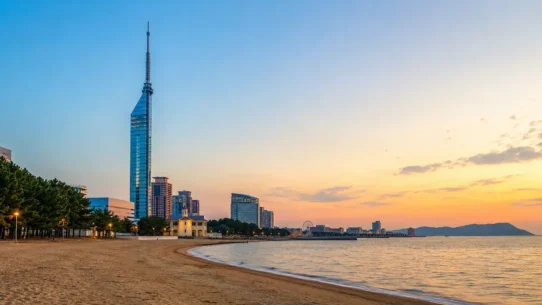
- Trap: putting Fukuoka Tower at midday. The observation deck is pleasant, but noon light can be flat and hazy. Hack: reserve the tower for late afternoon and sunset, then stay for the illuminated skyline.
- Trap: walking every meter between Ohori Park, PayPay Dome, teamLab, and the tower. The map makes western Fukuoka look compact, but the day can quietly exceed 10 kilometers. Hack: spend money on one strategic taxi or short bus ride. Saving 30 to 40 minutes and several thousand steps is often worth more than proving you can walk it.
- Trap: treating a yatai stall like a normal restaurant. Seats are tiny, queues can be long, weather affects operations, and menus or payment methods vary. Hack: choose a stall with visible pricing, order promptly, avoid occupying seats after finishing, and keep a nearby izakaya or ramen shop as Plan B.
- Trap: going to the most photographed Nakasu yatai row and assuming it is automatically the best value. The setting is atmospheric, but popularity can mean waiting, rushed service, or tourist-oriented pricing. Hack: compare stalls in Tenjin and Nagahama, check the official yatai information service, and judge by menu transparency rather than social-media fame.
- Trap: buying a subway day pass without counting rides. The official one-day subway pass is currently ¥640 for adults, but this itinerary has days when pay-as-you-go IC fares may cost less. Hack: buy the pass only on a day with enough subway journeys to beat the total individual fares.
- Trap: dragging luggage to Dazaifu. Dazaifu Tenmangu itself has no luggage storage, and station lockers are limited. Hack: leave bags at your hotel, use airport/hotel delivery, or store them at Hakata Station before beginning the excursion.
The Perfect 3-Day Fukuoka Itinerary at a Glance
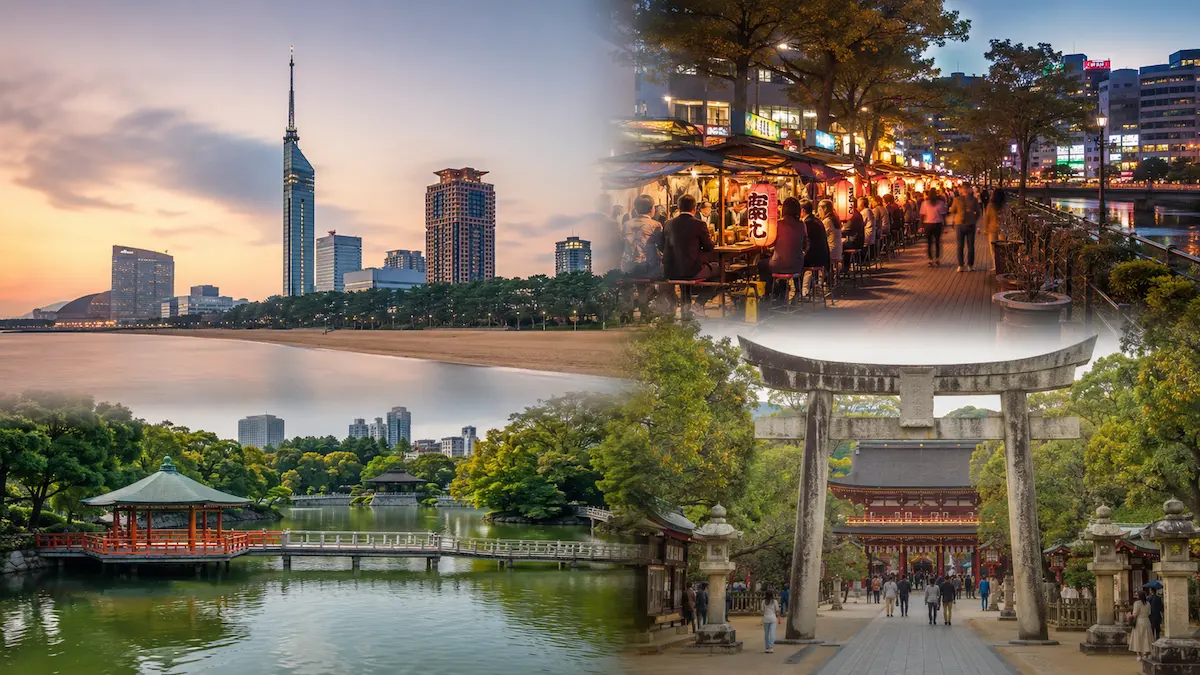
This order works because it follows three clean geographic arcs instead of bouncing across the city. Day 1 stays around Hakata and the river. Day 2 moves south to Dazaifu from the Tenjin rail hub. Day 3 travels west from Ohori Park to the Momochi waterfront and ends at sunset. Unlike many online lists, it does not make you cross central Fukuoka repeatedly just to tick boxes.
Day 1: Hakata Old Town, Kushida Shrine, Canal City and Yatai
- Suggested start: 9:00 a.m.; for an arrival day, start around 2:00 p.m. and trim one temple.
- Main order: Tochoji Temple → Shofukuji Temple lanes → Kushida Shrine → Kawabata Shopping Arcade → early lunch or snack → Canal City Hakata → Nakasu riverside → Tenjin or Nakasu yatai dinner.
- Transport between stops: walk the historic core; use Kushida Shrine Station or Nakasu-Kawabata Station if rain or fatigue sets in.
- Walking and effort: roughly 6 to 8 kilometers, mostly flat. The difficulty comes from standing, shopping detours, and hard pavement rather than hills.
- Lunch strategy: eat before noon or around 1:30 p.m. Do not build the entire day around one viral ramen shop with a 60-minute queue. A good bowl nearby beats losing a major sightseeing block.
- Easiest stop to cut: Canal City’s deeper shopping floors. Walk through the complex, see the central architecture, then leave if it is not your style.
- Rain or low-energy alternative: move between Hakata Station, Canal City, Kushida Shrine Station, and Kawabata arcade by subway and covered walkways. Replace temple lanes with shopping, cafés, or Hakata Machiya Folk Museum if open.
Why this sequence is better: the morning begins in the quieter historic lanes before tour groups and heat build. The route then flows southwest toward Kushida Shrine and Canal City rather than returning to Hakata Station. By evening, you are already beside Nakasu and Tenjin, where dinner options are concentrated.
Day 2: Dazaifu Tenmangu and the Kyushu National Museum
- Suggested start: leave central Fukuoka around 7:45 to 8:15 a.m. and aim to reach Dazaifu before the late-morning tour-bus wave.
- Main order: Dazaifu Station → shrine approach → Dazaifu Tenmangu → quiet rear garden/teahouse area → Kyushu National Museum → early lunch or afternoon tea → return to Tenjin → relaxed shopping and dinner.
- Transport between stops: Nishitetsu train from Fukuoka (Tenjin), normally changing at Nishitetsu Futsukaichi; walk within Dazaifu. From Hakata, the direct bus is convenient but more exposed to road delays.
- Walking and effort: roughly 5 to 7 kilometers. The shrine approach is easy, but the museum connection involves a covered moving walkway/escalator system and some inclines. Optional Tenkai Inari adds steps and a wooded uphill path.
- Lunch strategy: eat at about 11:15 a.m. before the approach street is at peak density, or use the museum restaurant/café if the queue is shorter. Treat umegae mochi as a snack, not a complete lunch.
- Easiest stop to cut: Tenkai Inari or a special exhibition inside the museum. The shrine and regular Cultural Exchange Exhibition already provide a satisfying visit.
- Rain or low-energy alternative: shorten the outdoor shrine loop, use the museum as the main event, and take a short taxi between Dazaifu Station and the museum entrance if mobility is limited.
Why this sequence is better: the shrine is at its most pleasant early, while the museum does not open until 9:30 a.m. This avoids wasting the first hour outside a closed museum. Returning to Tenjin rather than forcing in Yanagawa gives you a useful evening and protects the day from a single late connection.
Day 3: Ohori Park, Fukuoka Castle, teamLab Forest and Momochi Sunset
- Suggested start: 8:00 a.m. in summer; 9:00 a.m. in cooler months.
- Main order: Ohori Park → selected section of Fukuoka Castle/Maizuru Park → lunch around Ohori/Ropponmatsu → teamLab Forest at BOSS E・ZO FUKUOKA → Momochi Seaside Park → Fukuoka Tower before sunset.
- Transport between stops: subway to Ohori Koen Station; walk around the park and castle; then use a taxi, bus, or one-stop subway ride plus a 15-minute walk to the PayPay Dome area. Use a short bus or taxi from teamLab to the tower if time is tight.
- Walking and effort: 7 to 10 kilometers if you insist on walking everything; about 4 to 6 kilometers with one or two short rides. Castle viewpoints involve uneven ground, slopes, and stairs.
- Lunch strategy: eat before entering the Dome/Momochi zone, especially on baseball or concert days when nearby restaurants and roads can become much busier.
- Easiest stop to cut: the full Fukuoka Castle circuit or the beach walk after dark. Keep your timed teamLab entry and tower sunset slot intact.
- Rain or low-energy alternative: skip the full park loop, visit the Fukuoka Art Museum or Fukuoka City Museum, continue to teamLab, then finish inside Fukuoka Tower.
Why this sequence is better: you begin outdoors when the light and temperature are kinder, then move to the indoor teamLab experience in the afternoon. The route ends naturally at the western waterfront for sunset instead of sending you back across the city at the most valuable time of day.
Save Your Legs! The Most Efficient Route
What belongs together: Hakata Old Town, Kushida Shrine, Kawabata, Canal City, Nakasu, and Tenjin form a logical east-to-west chain. Ohori Park and Fukuoka Castle are immediate neighbors. teamLab Forest, PayPay Dome, Fukuoka City Museum, Momochi Seaside Park, and Fukuoka Tower all belong to the western half of the city. Dazaifu Tenmangu and the Kyushu National Museum are practically one attraction cluster, with the museum accessible from the shrine grounds.
What looks close but should not share the same tight time block: Dazaifu and Fukuoka Tower are both easy from central Fukuoka, but they sit in opposite directions and are best at different times of day. Dazaifu rewards an early start; the tower rewards sunset. It is technically possible to do both, but a delayed return or long lunch can ruin the evening. Dazaifu and Itoshima are an even worse pairing. Likewise, Uminonakamichi may appear to be “across the bay” from Momochi, but reaching it involves a separate rail or ferry plan and deserves its own day.
Which transport to prioritize: use the subway for airport access and straightforward city movements; use Nishitetsu rail for Dazaifu when starting from Tenjin; walk inside compact clusters; use buses for direct access to Momochi only when traffic is reasonable; and take a taxi for one strategic cross-neighborhood jump when heat, rain, children, or tired legs make the extra walking false economy. Fukuoka’s compactness does not mean every attraction is beside a subway exit.
Difficult surfaces and mobility warnings: Hakata’s central route is mostly flat but has long stretches of hard pavement. Fukuoka Castle has slopes, stairs, gravel, and uneven historic surfaces. The optional Tenkai Inari path behind Dazaifu Tenmangu climbs through a wooded area and is not ideal with a large suitcase or stroller. teamLab Forest includes active, unstable, or uneven spaces; high heels and sandals are restricted in several areas, and strollers must be left outside the exhibition. Momochi itself is flatter, but the long distance from the nearest subway station can become tiring.
Where to stay: Hakata Station is best for airport access, Shinkansen connections, JR day trips, and travelers arriving with large bags. Its disadvantages are the size of the station complex, a more businesslike atmosphere, and the need to travel to Tenjin for the easiest Dazaifu rail departure. Tenjin is best for dining, shopping, nightlife, and Nishitetsu access to Dazaifu; the catch is that “Tenjin Station” and “Nishitetsu Fukuoka (Tenjin) Station” are separate facilities within the same district. Gion or Nakasu-Kawabata is the balanced choice: walkable to the historic core, one or two subway stops from major hubs, and often quieter than the busiest Tenjin streets. Nakasu itself is convenient for nightlife but can be noisy, especially on weekends.
Do not change hotels: all three days work from any of these central bases. The time saved by moving closer to one attraction is usually lost at checkout, luggage storage, transport, and the next check-in.
Arrival and departure luggage strategy: leave bags with your hotel whenever possible. Fukuoka Airport has coin lockers, temporary storage, and counters at the International Terminal that can deliver luggage to participating hotels or other destinations, subject to cutoff times. Hakata Station also has coin lockers, but large lockers can fill quickly. Do not carry suitcases around Dazaifu: the shrine has no storage, while Dazaifu Station has only limited coin lockers. For a late flight, store luggage at the hotel, Hakata Station, or the airport and keep the final sightseeing block inside the city.
Ticket Tips & Skip-the-Line Hacks
Always recheck the latest official opening hours, closure dates, maintenance notices, special-event schedules, and reservation rules before departure. Fukuoka is not a city where every major sight requires advance booking, but the few timed attractions can dictate the shape of your day.
Book teamLab Forest first. The official site confirms that same-day door tickets can be unavailable when advance tickets sell out. Online tickets from selected sellers provide a mobile voucher or QR-based entry process, depending on the product. Wear secure shoes, arrive before your entry window, download the teamLab app if you want the full interactive experience, and do not assume a timed ticket eliminates every entrance wait.
Check teamLab Forest Fukuoka tickets on Klook
Check teamLab Forest Fukuoka tickets on KKday
Fukuoka Tower is simpler. On an ordinary weekday, buying at the counter is usually sufficient. An e-ticket is more useful at sunset, on weekends, during school holidays, or when the PayPay Dome hosts a game or concert. It may save the purchase step, but there is no genuine “skip the elevator” product. Everyone still depends on capacity and crowd control.
Check Fukuoka Tower e-tickets on Klook
Check Fukuoka Tower e-tickets on KKday
Kyushu National Museum depends on the exhibition. The regular Cultural Exchange Exhibition generally does not need a reservation, and on-site purchase is adequate on normal days. Major special exhibitions can create ticket-counter and gallery queues, so buy online when the museum recommends it. An advance ticket reduces purchase friction; it does not guarantee instant entry when the gallery itself is full.
No advance ticket is needed for Dazaifu Tenmangu, Kushida Shrine, Hakata Old Town, Ohori Park, Fukuoka Castle ruins, Momochi Seaside Park, Canal City’s public areas, or yatai streets. These places do not have a meaningful skip-the-line service. At shrines, the “line” is usually for prayer, amulets, goshuin, or seasonal events—not admission.
Transport-pass warning: an online subway-pass voucher may still require collection or exchange at a designated counter. Compare the product instructions with buying the official ¥640 one-day pass directly from a subway ticket machine. A pass saves money only when your actual ride count justifies it.
Check the Fukuoka City Subway one-day pass on Klook
Check the Fukuoka City Subway one-day pass on KKday
Tried & Tested: My Honest Review
📍 Stop 1: Hakata Old Town, Kushida Shrine and Canal City
Tags: Free sights · Local history · Mostly flat · Food nearby · Best on Day 1
The historic center is the right introduction to Fukuoka because it explains the city before the neon, malls, and ramen queues take over. Tochoji and Shofukuji give the morning a calm rhythm, Kushida Shrine adds the city’s festival identity, and Kawabata connects the old quarter to modern Nakasu without forcing a transport change.
Canal City is worth seeing, but it is not sacred ground. Its architecture, shops, restaurants, and seasonal shows can be entertaining; they can also swallow three hours without you noticing. Give it a time limit.
✅ What Other Travelers Say: visitors commonly like the contrast between quiet temple streets and the lively shopping and food areas only minutes away. Kushida Shrine’s festival displays and the photogenic lanes around Hakata Old Town receive consistent praise.
⚠️ The Catch (Things to Keep in Mind): many small temples are working religious sites rather than full-scale tourist attractions. Be quiet, follow photography signs, and do not expect English interpretation everywhere. Canal City’s internal layout can be disorienting, and restaurants become busiest at conventional lunch and dinner times.
📍 Stop 2: Dazaifu Tenmangu and Kyushu National Museum
Tags: Essential half-day trip · Shrine culture · Museum architecture · Early start recommended · Monday warning
Dazaifu earns its place because it adds historical depth without demanding a hotel change or a two-hour intercity train. The shrine approach is commercial, but the grounds become calmer behind the main worship area, especially around the old trees and teahouses. The Kyushu National Museum is not an awkward extra; it is the logical second half of the visit and gives context to Kyushu’s long relationship with the rest of Asia.
✅ What Other Travelers Say: travelers often praise the easy day-trip access, the lively approach street, umegae mochi, the shrine’s atmosphere, and the museum’s dramatic blue-glass architecture. Many consider the shrine-and-museum combination more rewarding than rushing onward to another city.
⚠️ The Catch (Things to Keep in Mind): crowds rise sharply around exam season, plum blossom season, weekends, and public holidays. The museum’s Monday closure catches many visitors. The shrine is free, but its museums and the national museum are separately ticketed. Dazaifu Tenmangu has no luggage storage; use the limited station lockers only as a backup.
📍 Stop 3: Ohori Park and Fukuoka Castle Ruins
Tags: Free outdoor stop · Low-cost morning · Cherry blossom favorite · Flexible length · Uneven castle paths
This is where the itinerary deliberately slows down. Ohori Park is not a checklist attraction; it is a recovery zone that lets you experience how livable central Fukuoka feels. The lake, islands, cafés, museum, and nearby castle ruins offer several versions of the morning depending on weather and energy.
Do not automatically walk the full lake circuit and every castle path. A partial loop, one viewpoint, and a coffee can be a better use of time when teamLab and sunset are still ahead.
✅ What Other Travelers Say: travelers frequently value the park’s calm atmosphere, easy subway access, running path, water views, and proximity to Maizuru Park. During cherry blossom season, the castle area becomes one of Fukuoka’s signature scenic zones.
⚠️ The Catch (Things to Keep in Mind): midday summer heat can be punishing, and there is less shade on exposed sections. Castle ruins mean foundations and viewpoints, not a fully reconstructed keep. Some routes include slopes, stairs, gravel, or uneven ground.
📍 Stop 4: teamLab Forest Fukuoka
Tags: Timed ticket · Rainy-day winner · Family friendly · Active footwear needed · No stroller inside
teamLab Forest is one of the itinerary’s few attractions that can genuinely sell out at a useful time, so it deserves advance planning. The strongest sections are interactive: visitors move, balance, capture digital creatures, and influence projected environments. That makes it more physical than a conventional gallery and more engaging for many children.
✅ What Other Travelers Say: reviews commonly highlight the immersive visuals, photo opportunities, interactive app, and family appeal. Visitors who arrive at quieter times often report a much better experience because they can engage with the works rather than simply follow a crowd.
⚠️ The Catch (Things to Keep in Mind): it is smaller than the largest teamLab venues in Tokyo, so travelers expecting an all-day museum may feel the price-to-time ratio is high. Entry times cannot always be changed or cancelled. Secure footwear matters, re-entry is not allowed, strollers stay outside, and peak periods can still involve waiting.
📍 Stop 5: Fukuoka Tower and Momochi Seaside Park
Tags: Best at sunset · Skyline views · Easy final stop · Weather dependent · Dome-event crowds
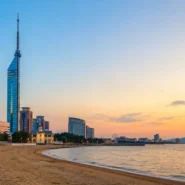
Fukuoka Tower is not the city’s deepest cultural experience, but it is an effective finale. The value comes from timing: daylight reveals Hakata Bay, sunset softens the coastline, and darkness turns the city into a grid of lights. Combine it with the beach rather than visiting the tower as an isolated daytime ticket.
✅ What Other Travelers Say: travelers repeatedly praise the broad bay-and-city panorama, romantic evening atmosphere, and easy pairing with Momochi Seaside Park. Families also appreciate that the experience is straightforward and weather-protected once inside.
⚠️ The Catch (Things to Keep in Mind): haze, rain, or low cloud can reduce the view. Sunset is the most crowded period. Online tickets do not remove elevator waits. PayPay Dome events can increase traffic, restaurant queues, taxi demand, and bus congestion across the entire Momochi area.
Video note: the direct YouTube URLs above were live and indexed when this article was researched in August 2026. Channel owners can later change availability or embedding permissions.
Key FAQs
Is three days enough for Fukuoka for a first-time visitor?
Yes. Three days are enough for Hakata’s historic center, Dazaifu, Ohori Park, Momochi, one paid attraction, and several good meals without rushing. It is not enough to add Itoshima, Uminonakamichi, Yanagawa, Kitakyushu, and Yufuin as well. Choose one major excursion—Dazaifu in this itinerary—and protect the city days.
Should I stay near Hakata Station or Tenjin for a 3-day Fukuoka itinerary?
Stay near Hakata Station when airport access, Shinkansen travel, large luggage, or JR day trips matter most. Stay in Tenjin when food, nightlife, shopping, and Nishitetsu access to Dazaifu matter more. Gion or Nakasu-Kawabata offers a useful compromise. Do not split a three-night stay between neighborhoods.
Do I need a JR Pass or Fukuoka transport pass for this itinerary?
A nationwide JR Pass is unnecessary for this city-focused route. Use an IC card for most journeys, Nishitetsu rail for Dazaifu, and compare your planned subway rides with the official ¥640 one-day subway pass. Remember that the subway pass does not cover Nishitetsu trains to Dazaifu.
Final Verdict and Your Next Step
The best first trip to Fukuoka is not the one with the most pins. It is the one where the pins form a sensible line. Day 1 teaches you the city through Hakata’s old streets and food culture. Day 2 gives you a focused cultural excursion to Dazaifu. Day 3 slows down at Ohori Park, then builds toward interactive art and a waterfront sunset. There is enough structure to prevent wasted time and enough flexibility to survive rain, queues, tired feet, or an unexpectedly excellent lunch.
Book only the attractions that can control your schedule. Secure your preferred teamLab Forest time first, then consider a Fukuoka Tower e-ticket for a busy sunset date. Buy ordinary shrine, park, and museum tickets only when needed, and never pay a premium for a “skip-the-line” promise that cannot bypass security, gallery capacity, or elevators.
Recommended advance-booking links:
Book teamLab Forest Fukuoka on Klook
Book teamLab Forest Fukuoka on KKday
Book Fukuoka Tower on Klook
Book Fukuoka Tower on KKday
Check the Fukuoka Subway Pass on Klook
Check the Fukuoka Subway Pass on KKday
Final reminder: verify official opening hours, museum closure dates, Dome event schedules, ticket conditions, and weather shortly before travel. Prices and operating rules can change, and no responsible itinerary should pretend otherwise.
Official planning sources:
Fukuoka City Official Tourist Guide,
Dazaifu Tenmangu,
Kyushu National Museum,
teamLab Forest Fukuoka,
Fukuoka Tower,
Fukuoka City Subway, and
Fukuoka Hands-Free Sightseeing Service.