
💡 Key Takeaways
- Do not treat Daejeon like a checklist city. The biggest planning mistake is mixing the old downtown, the Expo/Yuseong zone and an outer-city forest in one day. The map may look compact; the transfers are not.
- Keep Day 1 around Daejeon Station and Jungang-ro, Day 2 around the science/Expo/Yuseong corridor, and Day 3 for Jangtaesan. This removes most of the pointless backtracking.
- Most headline sights on this route are free. Do not pay for a vague “skip-the-line” product that adds no real value. The National Science Museum is generally free, with reservations or separate tickets required for selected halls and programs.
- Jangtaesan Recreational Forest is the transport trap. It is worth seeing, but public transport is much less forgiving than in central Daejeon. Start early and keep the afternoon loose.
- Sungsimdang is best treated as food, not a two-hour attraction. Go at an off-peak time, buy what you actually want, then continue through the old downtown instead of sacrificing half a day to a bakery queue.
A good 3-day Daejeon itinerary should feel noticeably easier than a Seoul itinerary. Yet first-time visitors often make Daejeon harder than it needs to be by bouncing between Daejeon Station, Yuseong, Expo Science Park and an outer forest on the same day. The city is spread out enough that a “20-minute detour” on a map can become a bus wait, a transfer, another walk and a lost meal window. This route is built around geographic clusters, realistic opening hours, predictable crowd patterns and the simple idea that you should still have energy left for dinner.
Planning note: opening hours, maintenance closures, temporary exhibitions, bus timetables and reservation rules can change. The practical details in this guide were checked against current official or major tourism sources on August 10, 2026. Always re-check the official attraction page shortly before your visit.
The 1-Min Cheat Sheet
- Daejeon Old Downtown: Jungang Market + Sungsimdang + Euneungjeongi
Best for: food-focused travelers, first-time visitors, short stays and anyone arriving by KTX.
Suggested time: 3-5 hours including lunch and bakery time.
Admission: free; pay only for food and shopping.
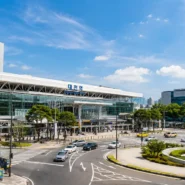
Nearest major transport: Daejeon Station or Jungang-ro Station on Daejeon Metro Line 1; the market stretches toward Daejeon Station.
Reservation: no.
Best time: late morning into mid-afternoon on a weekday, or early on weekends.
Biggest catch: Sungsimdang’s flagship can be crowded. The trap is joining a long line for one viral item when the neighborhood itself is more interesting than the queue. - National Science Museum + Expo Science Park
Best for: families, science fans, rainy-day travelers and anyone who wants to understand why Daejeon is Korea’s research city.
Suggested time: 3-4 hours for the museum plus 1-1.5 hours around Expo Park and Hanbit Tower.
Admission: general National Science Museum admission is free; selected halls such as Science Alive Discovery Center, KkumAty Hall and the Planetarium require separate reservations/tickets. Expo Park grounds are free; current VisitKorea information lists Hanbit Tower as free.
Nearest major transport: bus or taxi from Government Complex Daejeon / Yuseong area; the museum and Expo zone are close enough to connect in one outing.
Reservation: required for some museum halls/programs, not for general outdoor Expo Park wandering.
Best time: National Science Museum at opening, then Expo Park after lunch or toward late afternoon.
Biggest catch: Monday closures can wipe out the indoor science plan, and trying to add Jangtaesan on the same day creates a bad cross-city transfer. - Hanbat Arboretum
Best for: couples, photographers, families, slow travelers and anyone who needs a low-cost break from indoor attractions.
Suggested time: 1.5-2.5 hours; shorter if you choose only one garden.
Admission: free.
Nearest major transport: buses serve the arboretum area; Government Complex Daejeon Station is a useful metro anchor, followed by bus/taxi or a longer walk.
Reservation: not for ordinary garden entry; guided programs may have separate arrangements.
Best time: late afternoon, especially in warm weather, rather than midday heat.
Biggest catch: the East Garden/Tropical Garden and West Garden have different weekly closing days. Do not assume the whole arboretum follows one closure schedule. - Yuseong Hot Springs Foot Bath
Best for: tired walkers, couples, older travelers, budget travelers and anyone staying around Yuseong.
Suggested time: 30-60 minutes for the public foot bath; longer only if you book a private hotel/spa experience nearby.
Admission: the public foot bath is free; private hot-spring facilities charge separately.
Nearest major transport: Yuseong Spa Station area on Metro Line 1.
Reservation: not for the public foot bath.
Best time: early evening after the science/arboretum cluster, when your feet actually need it.
Biggest catch: this is a foot bath, not a full Japanese-style onsen complex. Do not arrive expecting a luxury spa for free. - Jangtaesan Recreational Forest
Best for: nature lovers, autumn foliage trips, photographers and travelers who prefer one strong outdoor experience over several minor city stops.
Suggested time: 3-5 hours in the forest, plus substantial transport time.
Admission: free; VisitKorea lists free parking as well.
Nearest major transport: no metro station at the forest. Public buses are possible but less frequent and may require a transfer; taxi/car is much easier.
Reservation: not for ordinary day access; accommodation and some facilities are separate.
Best time: morning, especially in autumn and on weekends.
Biggest catch: transport. Missing a low-frequency bus can damage the rest of your day, which is why this itinerary gives Jangtaesan its own day.
Tourist Traps to Avoid & Itinerary Hacks
- Trap #1: “Daejeon is small, so I can do everything in one day.” Daejeon’s metro core is manageable, but its signature nature sights are not all on the same axis. Old downtown, the Expo/Yuseong zone and Jangtaesan belong to three different planning buckets. Your enemy is not raw distance; it is transfer friction.
- Trap #2: Sungsimdang first thing after arriving with a suitcase. The bakery is close to the old center, but queueing with luggage is miserable and blocks narrow circulation space. Store your bag first, or use the Daejeon Station branch if your real goal is simply to buy bread before a train.
- Trap #3: National Science Museum on Monday. The museum lists Monday as a closed day, along with major holiday closures. Build Day 2 on a Tuesday-Sunday whenever possible. If your three days include Monday, swap the nature day or old-downtown day into that slot.
- Trap #4: Assuming Hanbat Arboretum has one universal weekly closing day. The East Garden and Tropical Garden close on Mondays, while the West Garden closes on Tuesdays under current tourism information. This split schedule is exactly the kind of small detail that wrecks a “perfect” online itinerary.
- Trap #5: Doing National Science Museum, Expo Park, Hanbat Arboretum, Yuseong and Jangtaesan in one heroic day. The first four can form a sensible urban corridor with selective trimming. Jangtaesan cannot. Give the forest its own day.
- Trap #6: Overpaying for transport passes. Daejeon itself does not demand a complicated tourist pass for this route. A standard Korean transit card is usually the practical choice for metro/bus rides. A KORAIL Pass can make sense only if Daejeon is part of a multi-city rail-heavy trip; for one simple round trip, compare individual KTX fares before buying.
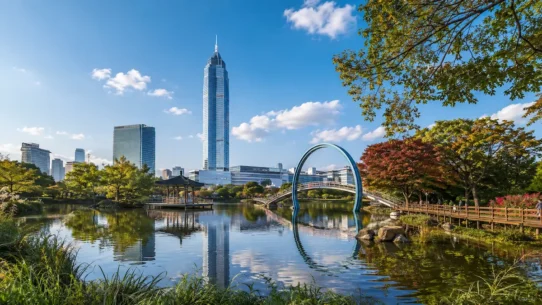
- Trap #7: Treating Expo Science Park like a preserved 1993 theme park. The site has changed substantially. Go for Hanbit Tower, Expo heritage, the river/bridge atmosphere and nearby modern attractions—not because you expect every old Expo pavilion and ride to remain intact.
- Hack: Use taxis selectively, not constantly. A short taxi is often worth it when it saves a bus transfer between the Expo/arboretum/Yuseong zone, or when four people are traveling together. Save your patience for Jangtaesan, where transport timing matters more.
The Perfect 3-Day Itinerary at a Glance
Day 1: Daejeon Station, Jungang Market and the Old Downtown
Why this geography works: Day 1 stays close to the rail gateway. That means you can arrive by KTX, drop your bags, eat properly and explore without immediately crossing the city. It also makes this the easiest day to shorten if your train arrives late.
- Suggested start: 10:00-10:30 if arriving that morning; earlier if you already slept in Daejeon.
- Main order: Daejeon Station → Jungang Market → old shopping lanes / Euneungjeongi Culture Street → Sungsimdang flagship area → optional Daeheung-dong cafés or an early evening return toward the station.
- Transport between stops: mostly walking. Use the metro only if your hotel is elsewhere. Jungang-ro Station is the useful old-downtown stop; Daejeon Station is the transport anchor.
- Walking / fitness: roughly 5-8 km depending on detours. Mostly flat urban walking, but markets can feel tiring because you are constantly stopping, weaving and standing.
- Lunch strategy: eat before the bakery queue. Jungang Market is the better place for a real meal—kalguksu, mandu, gukbap or market snacks—then use Sungsimdang as dessert/souvenir shopping. This prevents “bread for lunch because the line ate the schedule.”
- Easiest cut: Euneungjeongi or a café stop. Do not cut the market if local food is one of your reasons for visiting Daejeon.
- Rain / low-energy alternative: stay inside the covered market arcades longer, browse the old center at a slower pace and use Sungsimdang’s nearby café/brand spaces rather than adding an outdoor viewpoint.
Better than the usual internet route: many itineraries place the bakery at both the beginning and end of the trip, or send you from Daejeon Station straight to Yuseong before returning to the old town for dinner. That is unnecessary. Day 1 absorbs the station-area sights while your arrival day is naturally flexible.
Day 2: Science City Cluster — National Science Museum, Expo Park, Hanbat Arboretum and Yuseong
Why this geography works: these sights form the strongest urban cluster in Daejeon. You are moving within the north-central / Yuseong side of the city rather than repeatedly crossing back to Daejeon Station. The order also protects the indoor museum hours and pushes outdoor walking toward later in the day.
- Suggested start: 09:15-09:30 at the National Science Museum so you are ready for its 09:30 opening.
- Main order: National Science Museum → lunch in the Expo/Doryong area → Expo Science Park + Hanbit Tower / Expo Bridge → Hanbat Arboretum → Yuseong Hot Springs Foot Bath in the evening.
- Transport between stops: walk selectively inside each cluster, then use bus or short taxi hops where the pedestrian route is longer than it looks. Do not force a 20-30 minute roadside walk just because two pins appear adjacent on a map.
- Walking / fitness: about 7-11 km if you fully explore the museum, Expo grounds and arboretum. Easy terrain overall, but the cumulative distance is real. Families with young children should cut one garden or one museum hall.
- Lunch strategy: eat before the arboretum. The worst version of this day is leaving the museum hungry, wandering Expo Park, then entering a huge garden expecting endless food options. Use Doryong/Expo-area restaurants or a department-store/complex option before the long outdoor section.
- Easiest cut: either Hanbit Tower interior time or one half of Hanbat Arboretum. Do not cut the National Science Museum first if the weather is poor.
- Rain / low-energy alternative: spend longer in the National Science Museum, add a paid indoor attraction such as Daejeon Expo Aquarium if it fits your budget, then go directly to Yuseong for dinner and the foot bath if weather permits.
Better than the usual internet route: the key is to stop treating “science museum,” “Expo,” “arboretum” and “Yuseong” as unrelated attractions. They are the same side of the city. Keeping them together is the single biggest time-saving move in a three-day Daejeon plan.
Day 3: Jangtaesan Recreational Forest — One Proper Nature Day, Not a Rushed Detour
Why this geography works: Jangtaesan deserves a protected time block. It is southwest of the central tourist cluster and has no metro station at the gate. If you depend on buses, your timetable should be built around the outbound and return service rather than around a list of five additional attractions.
- Suggested start: leave central Daejeon around 07:30-08:30, earlier in peak autumn foliage season.
- Main order: central Daejeon → Jangtaesan entrance / Yongtaeul Reservoir area → metasequoia forest paths → elevated walkway / skyway area → optional longer trail if weather and legs are good → return to the city → relaxed dinner near your hotel or Daejeon Station.
- Transport between stops: taxi/car is the easiest. Public buses are possible, but service is less frequent and may require a transfer. Check Naver Map or KakaoMap on the day and verify the return bus before you start a long trail.
- Walking / fitness: 5-10 km depending on the trail. The gentle forest paths are manageable, but stair sections, elevated structures and hillier trails can add effort. Wet leaves and winter ice deserve respect.
- Lunch strategy: do not assume you can buy exactly what you want at the moment you get hungry. Carry water and a small snack. Have a proper early lunch near the forest if a suitable restaurant is open, or return to the city for a later lunch if you start early.
- Easiest cut: the longer hiking loop. Keep the metasequoia core and elevated walkway, then turn around before fatigue turns the return journey into a chore.
- Rain / low-energy alternative: swap Day 3 with Day 1 or Day 2 if possible. In steady rain, replace Jangtaesan with extra museum time, a café/bakery crawl, Daejeon Museum of Art or another indoor stop. The forest is not a must-at-all-costs checkbox.
Better than the usual internet route: a popular “maximalist” plan tries to pair Jangtaesan with O-World, Sungsimdang, a market and sometimes Yuseong. That can work on a private tour with a driver and fixed pickup times. It is a poor template for an independent first-time visitor using public transport.
Save Your Legs! The Most Efficient Route
The logic of this 3-day Daejeon itinerary is simple: walk when the street itself is part of the experience, use rail/metro as the backbone, use buses where they are direct, and pay for the occasional taxi when it removes a bad transfer. Day 1 is deliberately walk-heavy because Jungang Market, Euneungjeongi and Sungsimdang are close enough that moving slowly is part of the fun. Day 2 clusters the National Science Museum, Expo Park and Hanbat Arboretum because they occupy the same broad science/Expo zone, with Yuseong as the natural evening decompression stop. Day 3 isolates Jangtaesan because its access is fundamentally different.
What belongs together: National Science Museum + Expo Science Park + Hanbit Tower are an obvious combination. Hanbat Arboretum is close enough to keep on the same day if your legs are good. Yuseong Foot Spa works best at the end, not the beginning, because its value is highest after hours of walking.
What looks close but should not be forced: Daejeon Station and Jangtaesan both sit “south-ish” relative to some tourist maps, but that does not make the forest a quick station-area add-on. Likewise, O-World and Jangtaesan are sometimes sold together on organized tours because a vehicle makes that pairing possible; independent public-transport travelers should not assume the same efficiency.
Train, metro, bus, walk or taxi? Use KTX/SRT to reach Daejeon from other major Korean cities when it fits your route. Inside the city, Metro Line 1 is useful for Daejeon Station, Jungang-ro, Government Complex Daejeon and Yuseong Spa. Buses fill the gaps. Walking is best in the old downtown and inside large attraction grounds. Taxis are smartest for short “connector” legs on Day 2 and especially useful for Jangtaesan if your budget allows.
Where the walking gets annoying: old downtown is flat but crowded and stop-start. Hanbat Arboretum is large enough that “just walking across it” becomes a real distance. Jangtaesan has forest paths, slopes, stairs and elevated structures depending on the route you choose. Large suitcases are inappropriate at Jangtaesan and deeply inconvenient in crowded bakery/market lanes. Strollers can handle many paved or boardwalk areas, but not every forest trail or stair section.
Where to stay: Daejeon Station/Jungang-ro is best for first-time visitors arriving by KTX, food lovers and travelers with an early departure; the downside is that Day 2 requires traveling out toward Yuseong. Dunsan/Government Complex is the best geographic compromise for this itinerary, with easier access to the Expo/arboretum side and plenty of city services; the downside is less old-town atmosphere. Yuseong is best for hot-spring hotels, a calmer evening base and convenient Day 2 access; the downside is extra travel to Daejeon Station and the old downtown.
Luggage strategy: do not drag a full-size suitcase through Jungang Market, Hanbat Arboretum or Jangtaesan. Daejeon Station has luggage-storage/locker options, but locker availability and size can change and fill at peak times, so verify on arrival. If your hotel accepts pre-check-in storage, use it. For multi-city Korea trips, luggage forwarding products are more developed on major Seoul/Busan corridors than for every Daejeon hotel combination, so confirm the exact service area before booking rather than assuming nationwide same-day delivery.
Ticket Tips & Skip-the-Line Hacks
Daejeon is a city where the smartest ticket hack is often not buying a ticket you do not need. Before departure, check the latest official opening hours, holiday closures, maintenance notices and reservation rules for every attraction—especially the National Science Museum and Hanbat Arboretum, because their closed days can reshape the itinerary.
National Science Museum: general admission is free, but the museum currently states that selected paid venues—including Science Alive Discovery Center, KkumAty Hall and the Planetarium—require advance reservation and ticket issuance. Some free halls may also use reservations or timed tickets. If one of those programs matters to your family, reserve it first and build the morning around that slot. There is no honest reason to call ordinary museum entry a universal “skip-the-line” product.
Expo Science Park and Hanbit Tower: the park grounds are not a place where you need an expensive fast-track pass. Current VisitKorea information lists Hanbit Tower as free. Check the day’s operating status because facilities within the larger Expo zone can keep different hours.
Hanbat Arboretum and Yuseong Foot Spa: standard entry is free. No advance admission ticket is needed for a normal visit. That means any third-party product claiming to “save the ticket line” at these specific free attractions should be judged on what it actually adds—transport, guide, hotel pickup or another paid attraction—not on the illusion of a nonexistent admission bottleneck.
Jangtaesan Recreational Forest: normal day access is free. The real value of a paid tour is transportation certainty, not admission. This is one of the rare cases where buying a tour can genuinely save time because the forest’s public-transport access is the weak link.
Electronic tickets and QR codes: for paid products such as a KORAIL Pass, buy online before departure and keep the mobile voucher/QR code available offline. Klook’s current KORAIL Pass instructions specifically support saving the QR-coded seat ticket on your phone after seat reservation. For Klook/KKday day tours, use the mobile voucher or e-voucher exactly as the product page instructs; do not assume every product is a literal “scan at gate and walk in” ticket.
Verified booking links: these links were checked as live product pages when this article was prepared. Availability, operating dates and prices can change.
- Klook: Daejeon Jangtaesan Forest & Jungang Market Full-Day Tour — useful if you want transport handled rather than navigating infrequent buses.
- KKday: Jangtaesan Forest & Sungsimdang Bakery Day Tour — a seasonal-style option that packages the awkward forest transfer with Daejeon’s bakery stop.
- Klook: KORAIL Pass — consider only if your Korea trip includes enough long-distance rail travel to beat individual tickets.
No fake skip-the-line promise: this itinerary does not recommend paying extra for “priority” access at free public sights. Where queues happen—most famously at Sungsimdang—the solution is timing, branch choice and knowing what you actually want to buy.
Tried & Tested: My Honest Review
This is the practical verdict I would use when planning Daejeon for a first-time visitor: what deserves protected time, what is better as a quick stop, and where online hype can distort expectations. Traveler feedback is useful, but it is treated as a pattern—not as a guarantee that your queue, weather or experience will be identical.
📍 Stop 1: Daejeon Jungang Market + Sungsimdang Old Downtown
Tags: #Food #LocalMarket #Bakery #BestForFirstTimers #EasyFromKTX
The old downtown is the part of Daejeon that gives a first trip texture. Jungang Market runs close to Daejeon Station and contains multiple specialized market sections, while Sungsimdang’s flagship sits deeper into the Jungang-ro/Eunhaeng-dong shopping zone. The smart move is to connect them as one food-and-city walk rather than making separate pilgrimages.
✅ What Other Travelers Say: Sungsimdang remains one of Daejeon’s most consistently praised food stops; current Tripadvisor results show strong ratings and recent comments that the store can still deliver good service despite crowds. Market-focused travelers also like the old center because it feels more local than a purpose-built attraction.
⚠️ The Catch (Things to Keep in Mind): popularity can turn a bakery purchase into a queueing exercise. Go with a shortlist, avoid peak weekend periods if possible, and remember that Sungsimdang has multiple Daejeon branches. If you only want the classic fried soboro before a train, the station branch can be more rational than crossing town for the flagship.
Official/current check: Sungsimdang’s official site currently lists the flagship at 08:00-22:00 daily, year-round. Jungang Market shop hours vary by vendor.
📍 Stop 2: National Science Museum
Tags: #FamilyFriendly #RainyDay #ScienceCity #MostlyFree #ReservationNeededForSomeHalls
If you visit only one “science city” attraction, make it this one. It gives the Expo/Yuseong day an actual indoor anchor instead of turning the whole day into parks and photo stops. The official visitor information currently lists 09:30-17:30 opening, last admission at 17:00, and Monday closure plus major holiday closures.
✅ What Other Travelers Say: families tend to value the interactive, educational nature of the museum and the amount of content available for little or no admission cost. It is also one of the more reliable rainy-day choices in Daejeon.
⚠️ The Catch (Things to Keep in Mind): “free museum” does not mean every experience is walk-in. Some paid halls and programs require advance reservations/tickets, and the campus is large enough that trying to see everything becomes tiring. Pick two or three priority halls instead of treating the floor plan as a challenge.
Official/current check: general admission is free; Science Alive Discovery Center, KkumAty Hall and Planetarium are among the separately reserved/paid venues listed by the museum.
📍 Stop 3: Daejeon Expo Science Park + Hanbit Tower
Tags: #Expo93 #CityLandmark #EasyPhotoStop #GoodAtDusk #DoNotExpectAThemePark
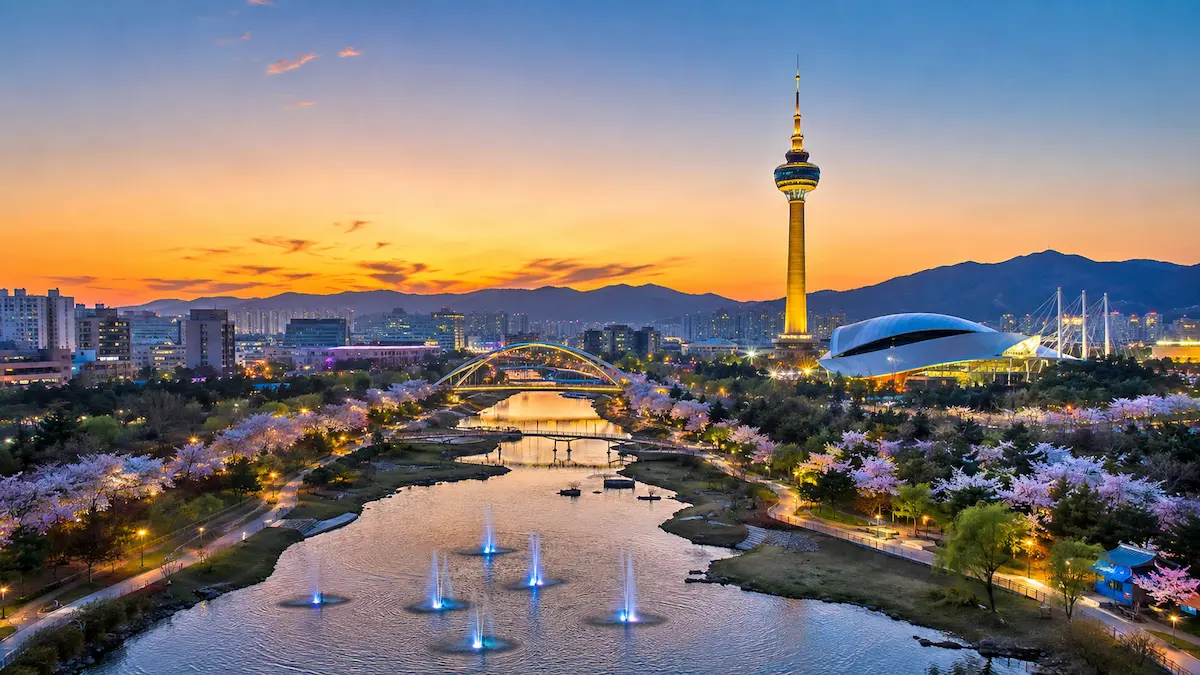
Expo Park is worth seeing because it explains a huge part of Daejeon’s modern identity, not because the 1993 Expo survives intact. Hanbit Tower remains the visual anchor, and the surrounding river/bridge zone becomes more atmospheric later in the day.
✅ What Other Travelers Say: recent traveler feedback tends to be more positive about the evening atmosphere, fountains, lights and the iconic tower than about the idea of an old-fashioned “Expo theme park.” A 2025 Tripadvisor review of the Expo Plaza specifically praised the colorful fountain show and tower backdrop.
⚠️ The Catch (Things to Keep in Mind): older reviews often complain that parts of the former Expo site felt dated or sparse. That criticism makes sense if you arrive expecting a preserved mega-attraction. Treat it as a heritage landmark and public-space stop paired with the museum and arboretum, and it works much better.
Official/current check: VisitKorea currently lists Hanbit Tower operating hours of 09:30-17:40 and a Monday closure pattern for the facility, with free admission shown on the current Hanbit Tower listing. Re-check for special events or temporary changes.
📍 Stop 4: Hanbat Arboretum
Tags: #Free #GreenSpace #Photography #SlowTravel #WatchTheClosingDay
Hanbat Arboretum is where a rushed itinerary either becomes pleasant or collapses. It is big, free and easy to underestimate. You do not need to conquer both gardens. Pick the section that is open, match it to the season and leave while you still enjoy walking.
✅ What Other Travelers Say: reviews repeatedly praise the calm urban greenery and the fact that it offers a substantial outdoor break without an entrance fee. Travelers who plan 60-120 minutes tend to enjoy it more than people who assume it is a quick ornamental garden.
⚠️ The Catch (Things to Keep in Mind): the East Garden/Tropical Garden and West Garden do not share the same weekly closure. Current tourism information lists Monday closure for the East/Tropical areas and Tuesday closure for the West Garden. Summer heat also makes a midday full-loop walk unnecessarily punishing.
Official/current check: admission is free. Seasonal opening hours apply, so verify the Daejeon Metropolitan City arboretum page before visiting.
📍 Stop 5: Yuseong Hot Springs Foot Bath
Tags: #Free #Wellness #LowEffort #EveningStop #LocalExperience
Yuseong is the rare attraction that becomes more useful the more tired you are. The public foot bath uses natural hot-spring water and is best treated as a 30-60 minute decompression stop after the science/arboretum day.
✅ What Other Travelers Say: traveler reviews often emphasize the simple pleasure of soaking tired feet for free and the local, everyday atmosphere. Recent Tripadvisor feedback describes it as therapeutic and especially satisfying after walking.
⚠️ The Catch (Things to Keep in Mind): manage expectations. The free public facility is a foot bath, not a full-body resort spa. Wash your feet before entering, follow local etiquette, and bring a small towel if you prefer not to air-dry.
Official/current check: VisitKorea currently lists the standard foot-bath experience around 07:00-22:00 and the medicinal-herb foot bath around 08:00-22:00, with variations possible by facility.
📍 Stop 6: Jangtaesan Recreational Forest
Tags: #Nature #AutumnFoliage #Metasequoia #HalfDayMinimum #TransportPlanningEssential
Jangtaesan is the stop I would protect from overplanning. The metasequoia forest, reservoirs, walking paths and elevated sections give Daejeon a completely different texture from the science-city image. It is also the one attraction where a cheap “I’ll just take a bus whenever” attitude can backfire.
✅ What Other Travelers Say: visitors consistently praise the forest atmosphere, autumn color and the ability to choose between gentle walking and longer trails. Tripadvisor feedback highlights both relaxing walks and the elevated/boardwalk-style experience.
⚠️ The Catch (Things to Keep in Mind): peak autumn weekends can be busy, and public transport is not metro-level frequent. Check the return journey before committing to a long route. In wet or icy conditions, skip ambitious trails. If your flight/train departure is time-critical, do not make Jangtaesan your final stop before leaving Korea.
Official/current check: VisitKorea lists free admission, free parking and year-round operation for the recreational forest, while individual facilities/accommodation follow their own hours and booking rules.
Key FAQs
What is the best 3-day Daejeon itinerary for first-time visitors without a car?
Spend Day 1 around Daejeon Station, Jungang Market and Sungsimdang; Day 2 around the National Science Museum, Expo Park, Hanbat Arboretum and Yuseong; Day 3 at Jangtaesan only if you are comfortable planning around buses or paying for a taxi/tour. This avoids the worst cross-city backtracking.
Is three days in Daejeon too much?
Not if you like food, science, parks and slower travel. Two days can cover the old downtown plus the Expo/Yuseong cluster, but the third day is what lets you add Jangtaesan without turning the trip into a race. If you dislike museums and nature, two days may be enough.
Do I need to book Daejeon attractions in advance?
Usually not for the free core sights. The important exception is the National Science Museum’s selected reserved/paid halls and programs. Book rail tickets or a KORAIL Pass when your intercity plan requires it, and consider a Jangtaesan day tour only when transport convenience is worth paying for.
Final Verdict and Your Next Step
The best Daejeon trip is not the one with the most pins. It is the one where each day moves in one direction: old downtown on Day 1, science/Expo/Yuseong on Day 2, and Jangtaesan on Day 3. That structure keeps your arrival day flexible, protects indoor opening hours, saves the foot bath for when it is useful and stops the forest from becoming a rushed two-hour detour.
Before you travel, re-check the National Science Museum reservation calendar, Hanbat Arboretum closing pattern, Jangtaesan weather and the latest train/bus timetable. If your trip falls on a Monday, reshuffle the museum day rather than discovering a locked door after crossing the city.
If you want the simplest transport solution for Jangtaesan, compare the two verified tour pages below. If Daejeon is one stop in a larger rail-heavy Korea itinerary, compare a KORAIL Pass against individual KTX fares before paying.
- Check Klook’s Daejeon Jangtaesan day-tour availability
- Check KKday’s Jangtaesan + Sungsimdang tour availability
- Check Klook KORAIL Pass options