💡 Key Takeaways
- Use Muni and walking for most city trips. T Third serves Chinatown and the Central Subway, N Judah works for Golden Gate Park and parts of the waterfront, and F Market & Wharves follows the waterfront and Market.
- Use BART for SFO and East Bay trips, and Caltrain for Peninsula trips. The payment rules and stations differ from Muni.
- Price cable cars as a separate experience, then choose a taxi for the steep or late leg that would otherwise take the most time.
This San Francisco transportation guide starts with Muni and short walks. BART earns its place for SFO or the East Bay. Caltrain is useful for the Peninsula. Treat the cable car as a ride you want to take, and use a taxi when it solves an awkward final hill or late transfer. The useful decision is matching the operator, payment and station exit to the exact address.
The 1-Min Cheat Sheet
- Walking. Best for the Embarcadero and compact restaurant or neighborhood loops. Check the elevation as well as the distance.
- Muni buses, Metro and F streetcar. Default for city travel. Use Muni for parks, Chinatown and the Wharf. Check the line name and direction before boarding.
- BART and Caltrain. Separate regional routes. BART serves downtown and SFO. Caltrain’s San Francisco terminus at 4th and King is useful for the Peninsula.
- Cable car. Best for the experience if the line, wait and ticket suit your day. Powell–Hyde and Powell–Mason head toward different parts of the Wharf.
- Taxi or ride app. Best with bags, hills, an inaccessible transfer or a late arrival. Allow time for busy event pickup and check the total.
Top Survival Tips
- Use the official fare for the date you travel. In November 2026 an adult regular Clipper ride is $2.85. Cash or a Muni Metro ticket machine is $3. The ordinary Muni Day Pass is $5.70 and excludes cable cars. SFMTA’s January 4, 2027 fare notice lists $3 for a regular adult fare, $6 for the ordinary day pass, and $12 for a cable car ride.
- Buy by number of separate rides. The regular Muni fare gives 120 minutes for ordinary bus and light-rail travel, including applicable transfers. Before buying a day pass ask how many paid trips you will make beyond the 120-minute periods.
- Pay in the right place. Muni buses and rail accept Clipper and supported adult contactless bank payment. Station readers and vehicle readers count the entrance or boarding. Muni Metro does not require you to tap out. BART and Caltrain pay-as-you-go passengers should validate on entry and exit with the same card or device.
- Use all the signs at Powell. The Market Street platforms and Union Square/Market Street T platforms connect through the concourse. Follow the line, direction and destination, then check the actual exit. Use Muni’s live elevator status when you need step-free access.
- Daily payment products are changing. SFMTA’s MuniMobile page says standalone app single-ride sales ended September 1, 2026. Check current pass availability when traveling into 2027, and carry one reliable payment method per rider where required.
The Full Experience: San Francisco Transportation Guide
🚶 Walking — Best for Flat Waterfront and Short Area Loops
Embarcadero · short dense blocks · check actual grades
Use the Embarcadero when several destinations lie on the same line and you want an easy afternoon. Pick one section rather than assuming you will enjoy the entire length with a case. Near Chinatown and Nob Hill, compare a route using a gently graded approach with the fastest map line.
Look for the ramp or wide crossing you would use in the rain. At night, keep the route simple and active. If a five-minute walk turns into a long climb or you need to carry multiple bags, identify the transit option while you still have energy.
Walking is also a useful way to shorten the queue problem. When a cable car line is long, take one short neighborhood walk, then decide whether another terminal or another day has the ride you want.
✅ What Other Travelers Say: Short, well-matched walks let you avoid unnecessary transfers and fit lunch into the real route.
⚠️ The Catch (Things to Keep in Mind): One city block can be steeper than the rest of a multi-block route. Judge the individual approach.
🚊 Muni — Best for Regular City Travel
Buses · Metro · F historic streetcar · flexible local routes
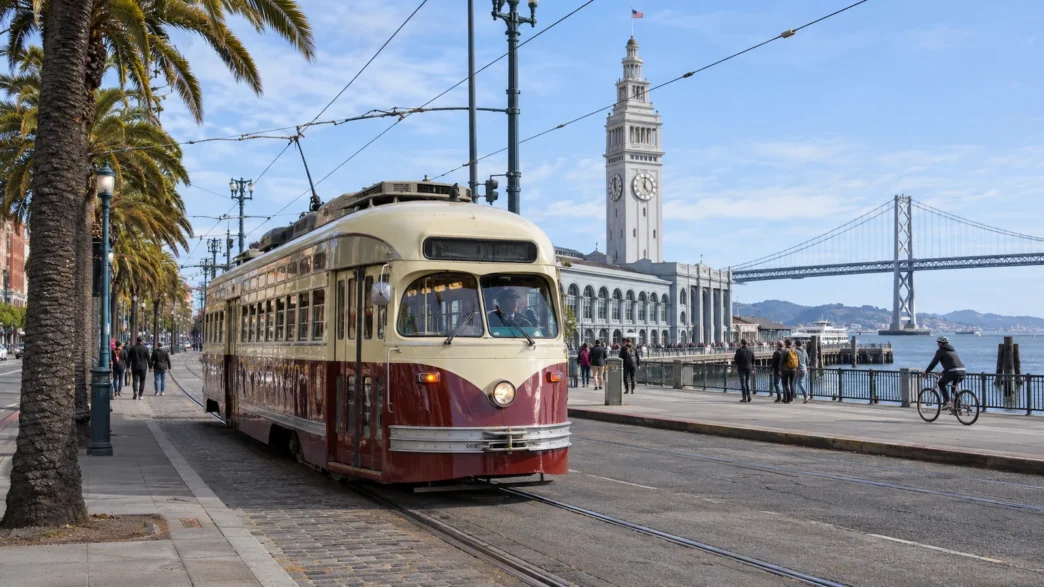
Use the T Third to connect Union Square/Market Street and Chinatown or head toward Yerba Buena/Moscone and Caltrain in the other direction. The N Judah can get you toward the Inner Sunset and park approaches. The F historic streetcar route works along Market and the waterfront for the Wharf. Check current alerts, station elevators and the stop nearest the actual museum entrance.
Pay once when your normal trip calls for it and keep the same device and proof of payment. Check the current rules if transferring between agencies. Most travelers will use a few repeat routes and can avoid tracking every line after saving them in a trip planner.
Allow a cushion on the street. In a surface queue or a park detour, one short ride that removes a difficult last hill may be more valuable than making multiple transfers. On some late or disrupted trips, a line can be run by bus. Check the mode in the live route.
✅ What Other Travelers Say: A saved route or stop name makes a longer ride feel simpler than a chain of tiny transfers.
⚠️ The Catch (Things to Keep in Mind): A line can be quick for one hotel door and inconvenient for another. Match exact station exits.
🚆 BART and Caltrain — Best for Regional Trips
SFO and East Bay by BART · 4th and King Caltrain · separate fares
Use BART fare and payment guidance for SFO and regional trips that touch Market Street or the East Bay. Plan from the actual station, and validate at both ends of the journey with the same supported payment. Adult riders can tap with bank cards or devices, while concession fares have specific eligibility and payment.
Use Caltrain payment and tap instructions for a trip down the Peninsula. The station near 4th and King is separate from the Market Street subway. Adult payments have a bank-card option, and pay-as-you-go riders who tap need to tap on and off. Check whether the destination train actually stops where you want to exit.
A Muni visitor product does not cover a regular airport or Peninsula rail trip. Price BART, Caltrain and any ferry individually. Tap instructions and transfer discounts depend on operator and fare type.
✅ What Other Travelers Say: Regional rail takes some of the uncertainty out of a long ride when used for the right corridor.
⚠️ The Catch (Things to Keep in Mind): Using a mismatched card at exit or skipping a tag-off can complicate the fare.
🚋 Cable Car — Best as a Planned Experience
Three routes · one-way ticket · some terminal lines
The official cable car route guide separates Powell–Hyde, Powell–Mason and the California line. Choose by street and arrival point before waiting. The California line can be a good choice if your goals are the hills and the ride itself rather than ending at the Wharf.
In November, compare the $9 single ride with the $15 one-day Visitor Passport if you plan multiple cable car rides or some other Muni use. SFMTA’s January 2027 notice lists a $12 single and an $18 Cable Car Plus option. Check the available products for the travel date, especially for a family.
At specified terminal ticketing hours, buy the fare before joining the ride. Review official station guidance and the line before leaving your hotel. When the queue will make you miss an onward booking, take regular Muni and try later.
✅ What Other Travelers Say: The ride makes a memorable short outing, particularly when a busy terminal is avoidable.
⚠️ The Catch (Things to Keep in Mind): A regular Muni single ride or ordinary day pass does not work as a cable car ticket.
🚕 Taxi or Ride App — Best for a Difficult Final Leg
Taxi fare or app quote · shared party · live pickup rules
Use a licensed taxi or ride app for a problem you can name. A deep station when the elevator is out, a hard hill with large cases, or a late hotel arrival are all situations where a one-step ride can put the rest of the day back on track.
Check SFMTA’s official taxi options and compare one per-vehicle quote with your whole party’s per-person fares. Check a legal pickup and actual hotel front door before requesting the ride. At the airport, use the current terminal-specific pickup instructions.
A car spends time in traffic like a surface bus. Use rail for long crossings when it goes directly to the right place, then pay for the last difficult block only when necessary.
✅ What Other Travelers Say: Many visitors get the most benefit from a few well-chosen rides rather than a car for every trip.
⚠️ The Catch (Things to Keep in Mind): Event pickup and vehicle size can change the price or time. Allow a backup route.
Key FAQs
Do you need Clipper as a first-time visitor to San Francisco? Adult contactless bank-card or device payment is available on Muni, BART and Caltrain, subject to their instructions. Clipper is useful for other services, passes or discounted rides. Keep one payment method per rider as required.
Does the Muni pass include the airport train? Muni’s ordinary day pass and cable-car visitor products do not cover ordinary BART airport travel. Price and pay the BART trip separately.
What’s the easiest way from Union Square to Fisherman’s Wharf? Choose a cable car when the route and queue work, or use ordinary Muni for a predictable connection. The precise best route depends on your Wharf destination. Allow time to walk from the stop.
Final Verdict and Your Next Step
Save the route to your hotel, an accessible or late-night alternative and the walk to your daily anchor. Use the official Muni fare page before buying a pass, and scan the Travel Stay Guide transport collection for airport and station access. Compare San Francisco hotels by the station exit you will use while your dates can still move.