
💡 Key Takeaways
- Siam is the safest all-round choice for most first-time visitors because it sits at the interchange of Bangkok’s two main BTS lines and keeps shopping, food and cross-city travel simple.
- Asok in Sukhumvit is better if you care more about restaurants, nightlife and having both BTS and MRT, but hotel location matters: one wrong soi can add noise, traffic or a surprisingly long walk.
- Riverside is the most atmospheric stay, not the most efficient one. Pick it for views, slower evenings and resort-style hotels; do not pick it if you expect to use BTS for every journey.
- Pratunam usually gives first-timers the strongest value-to-location ratio, especially if you arrive at Suvarnabhumi Airport, but sidewalks, traffic and station walks can be tiring with luggage.
- Khao San Road is not a universal “first-time Bangkok” recommendation. It works for backpackers and Old Town sightseeing, but the lack of direct BTS access becomes annoying if your trip also includes Siam, Sukhumvit or Chatuchak.
If you are trying to work out where to stay in Bangkok for your first visit, the hardest part is not finding a good hotel. Bangkok has thousands of them. The real problem is choosing a hotel in a district that does not quietly waste your holiday in traffic, long station walks, awkward transfers or taxi queues. Two hotels can both advertise themselves as “central Bangkok” while one puts you 200 metres from a BTS entrance and the other leaves you dragging a suitcase down a broken sidewalk for 15 minutes in tropical heat.
This guide looks at Bangkok the way I would actually plan a first trip: not by asking which neighbourhood has the prettiest marketing photos, but by checking rail lines, airport connections, late-night atmosphere, realistic walking distances, hotel price bands and what happens when you are tired, carrying shopping bags or arriving with luggage. The price ranges below are rough planning bands for a standard room per night and were cross-checked against current Bangkok listings in August 2026; actual rates can jump during weekends, holidays and major events.
The 1-Min Cheat Sheet: Which Bangkok Area Should You Pick?
- Siam — Best overall for first-time visitors: Stay here if you want the easiest BTS connections, major malls, lots of food and a central base that is hard to mess up. Typical planning range: THB 2,500-7,000+. Main downside: less neighbourhood character and higher prices near the station.
- Sukhumvit (Asok to Phrom Phong) — Best for transport plus nightlife: Excellent BTS/MRT access around Asok, huge restaurant choice and strong hotel selection. Typical range: THB 1,800-6,000+. Main downside: traffic, adult nightlife around Nana and noisy side streets if you choose badly.
- Silom & Sathorn — Best for a balanced city stay: Good rail access, strong dining, rooftop bars, Lumphini Park and a more businesslike feel by day. Typical range: THB 1,800-5,500+. Main downside: the district is spread out, so “Silom hotel” can mean very different walking distances.
- Bangkok Riverside — Best for scenery and a calmer first trip: Great for river views, temples, ICONSIAM and memorable hotels. Typical range: THB 3,000-10,000+ for the better-positioned riverfront properties. Main downside: boats and hotel shuttles can become another transfer layer.
- Pratunam & Ratchathewi — Best value for shopping and BKK airport access: Strong budget-to-midrange hotel supply, easy reach of Platinum Fashion Mall and Airport Rail Link at Ratchaprarop. Typical range: THB 1,200-3,500. Main downside: chaotic sidewalks, traffic and not every hotel is actually close to BTS.
- Old Town & Banglamphu — Best for temples and backpackers: Best if your priority is the Grand Palace, Wat Pho, river ferries and Khao San nightlife. Typical range: THB 700-3,500, with boutique stays higher. Main downside: no BTS at Khao San Road and more taxi/boat dependence.
- Chinatown (Yaowarat) — Best for food and atmosphere: Excellent street food, heritage streets and much better transport than many first-timers expect thanks to MRT Wat Mangkon. Typical range: THB 1,300-4,000. Main downside: crowded pavements, older buildings and fewer resort-style hotels.
Top Survival Tips Before You Book a Bangkok Hotel
- Measure the hotel-to-station walk yourself. “Near BTS” is one of the most abused phrases in Bangkok hotel descriptions. An 800-metre walk sounds harmless on a laptop; with a suitcase, 34°C heat, road crossings and uneven pavement, it can feel much longer. For a first trip, I would happily pay a little more to stay within roughly five minutes of a useful BTS or MRT station.
- Check the exact station, not just the neighbourhood. Siam, Asok, Sala Daeng and Saphan Taksin solve different problems. Siam is the BTS interchange, Asok links BTS with MRT Sukhumvit, Sala Daeng connects closely with MRT Silom, and Saphan Taksin is the key rail gateway to river boats. A hotel can be in a famous district yet still sit on the wrong side of a long road or far from the station you actually need.
- Do not confuse “good airport access” with “good sightseeing access.” Pratunam is convenient from Suvarnabhumi because Airport Rail Link stops at Ratchaprarop, but you may still walk or change transport for daily sightseeing. Asok works well via Airport Rail Link to Makkasan and MRT from Phetchaburi to Sukhumvit, while Siam is easy via Airport Rail Link to Phaya Thai and BTS. Your arrival transfer matters once; your daily transport matters every day.
- For Don Mueang Airport, rail access is possible but rarely door-to-door. The SRT Red Line serves Don Mueang and connects toward Krung Thep Aphiwat, where you can transfer into Bangkok’s MRT network. It is useful, but if you arrive late, have large luggage or travel as a family, a metered taxi or ride-hailing car can still be simpler.
- Choose one or two streets away from nightlife, not ten stations away from it. If you like Sukhumvit but want sleep, you do not need to abandon the whole district. Avoid hotels directly on the busiest bar streets around Nana and parts of Sukhumvit Soi 11. The same logic applies to Khao San Road: Rambuttri and the surrounding Banglamphu lanes can feel noticeably calmer than sleeping directly above the party strip.
- Riverfront hotels need a transport plan. Some are close to Saphan Taksin; others depend on a hotel boat, taxi or long walk. That is charming at sunset and inconvenient when you return late with shopping bags. Check the last practical shuttle option and the walk from the pier before paying for a river view.
- A cheaper hotel one BTS stop away can be a smarter deal than a “central” bargain. Bangkok rail journeys are quick compared with road traffic. Moving from Siam to Ratchathewi, from Asok toward Phrom Phong, or from Sala Daeng toward Chong Nonsi can reduce the room rate without making your days much harder. The exception is when the cheaper hotel sits far down a soi and adds a long walk twice a day.
- Look at the route from the station exit to the lobby. Station lifts and escalators are not equally convenient at every exit, and road crossings can be the real nuisance. If you are travelling with a stroller, elderly parents or large luggage, a hotel connected directly to a mall or station can be worth far more than an extra half-star rating.
The Full Experience: Best Areas to Stay in Bangkok for First-Time Visitors
📍 Siam: Best Overall for First-Time Visitors
Best for: First trips · Easy BTS transfers · Shopping · Families · Short stays · Minimal transport guesswork
If a friend told me they were visiting Bangkok for three or four nights, had never been before and did not have a very specific nightlife or temple-heavy plan, Siam would be my default recommendation. Siam BTS is the interchange between the Sukhumvit and Silom lines, which means you can move north toward Chatuchak, east toward Asok, west toward the old shopping core and south toward Silom and the river without repeatedly dropping down into road traffic.
The practical advantage is not just the map. Siam is packed with places to eat, cool down, use a clean restroom, grab a coffee or retreat from a sudden rainstorm. Siam Paragon, Siam Center, Siam Discovery, MBK and CentralWorld form a giant air-conditioned safety net around your hotel. That may sound unromantic, but on a first Bangkok trip it is incredibly useful.
Airport and luggage reality: From Suvarnabhumi Airport, Airport Rail Link to Phaya Thai followed by BTS to Siam is straightforward. You still need to manage one transfer, but it is predictable and avoids central Bangkok road traffic. From Don Mueang, expect more changes if you use rail, so a taxi can be attractive if two or more people are splitting the fare.
Night environment: Siam stays busy into the evening but is not primarily a late-night bar district. That makes it easier for families and light sleepers than Nana or Khao San Road. After the malls close, some stretches become much quieter, so choose your exact block if you like a lively late-night street scene.
Hotel price reality: Expect roughly THB 2,500-7,000+ for well-located hotels, with luxury properties climbing much higher. Cheaper rooms exist around National Stadium and Ratchathewi, and those can be better value while remaining one BTS stop away.
✅ What Other Travelers Say
Guest reviews for Pathumwan and Siam properties repeatedly praise the ability to walk to major malls and jump onto BTS without depending on taxis. That convenience is especially appreciated on hot or rainy days and by travellers who want to return to the hotel for a midday break.
⚠️ The Catch (Things to Keep in Mind)
Siam can make Bangkok feel more like a chain of malls than a neighbourhood. If you dream of waking up next to a wet market, old shophouses and street-side noodle stalls, this is not the most atmospheric base. It is also easy to overpay for a hotel simply because it is attached to a mall. Compare Ratchathewi and National Stadium before booking.
Stay here if: You want the easiest first-time base with minimal transport friction.
Skip it if: You want nightlife outside your door, riverside views or a more local residential feel.
📍 Sukhumvit (Asok to Phrom Phong): Best for BTS + MRT + Nightlife
Best for: Couples · Nightlife · Restaurants · Repeatable transport · Long stays · Travelers who hate being stuck in taxis
Sukhumvit is enormous, so “stay in Sukhumvit” is not useful advice unless someone tells you where. For a first visit, I would focus on Asok, Phrom Phong and the streets between them. Asok is the transport winner because BTS Asok and MRT Sukhumvit sit together, giving you two rail systems from one base. That is a major advantage for trips to Chatuchak, Chinatown, Silom and central shopping areas.
Asok also has Terminal 21, supermarkets, massage shops, casual food, international restaurants and a deep range of hotels. Phrom Phong is more polished and slightly calmer, with luxury malls and newer restaurants, but you give up the direct MRT interchange.
Airport and luggage reality: From Suvarnabhumi, Airport Rail Link to Makkasan followed by the connection to MRT Phetchaburi and one stop to Sukhumvit is efficient once you understand the layout. The transfer is not as seamless as changing trains on one platform, so travellers with very heavy luggage may still prefer a taxi outside peak traffic.
Night environment: This is where exact street choice matters most. Nana and parts of lower Sukhumvit have obvious adult nightlife, while Soi 11 stays loud late. Asok itself is busy but manageable. Phrom Phong feels more upscale and restaurant-led. Families do stay in Sukhumvit successfully, but I would not book them blindly into “Sukhumvit” without checking the map.
Hotel price reality: The choice is huge, from simple properties around THB 1,800-2,500 to polished four-star stays around THB 3,000-5,500 and luxury hotels far above that. This competition is one reason Sukhumvit can offer better room value than Siam.
✅ What Other Travelers Say
Travelers consistently value Asok for being able to use both BTS and MRT, and well-reviewed hotels around Terminal 21 often receive strong location scores. Guests also like the density of restaurants and massage options, which means you can have an easy evening without planning another cross-city trip.
⚠️ The Catch (Things to Keep in Mind)
Sukhumvit Road traffic can be punishing, and some hotels sit deep inside side streets where the last 700 metres becomes the most annoying part of every day. Free hotel tuk-tuks help, but they are not always frequent. Also check noise reviews carefully if your room faces a bar street, club or construction site.
Stay here if: You want nightlife, dining and the strongest combination of BTS and MRT.
Skip it if: You want temples and river life outside the door, or you dislike dense modern commercial districts.
📍 Silom & Sathorn: Best Balanced Base for Food, Transit and a More Grown-Up Feel
Best for: Couples · Food lovers · Rooftop bars · Business trips · LGBTQ+ travelers · Park access · Balanced sightseeing
Silom and Sathorn are often overshadowed by Siam and Sukhumvit in first-timer guides, but they are some of the smartest places to stay if you want Bangkok to feel like a city rather than a shopping district. Around Sala Daeng, you have BTS on the Silom Line and nearby MRT Silom, plus Lumphini Park, office-tower restaurants, street food, bars and easy access toward Saphan Taksin for the river.
Chong Nonsi is excellent for modern hotels and skyline views, while the Sathorn side becomes quieter and more residential as you move away from the main roads. This area works especially well for travellers who want one evening in a rooftop bar, another in Chinatown and a morning in Lumphini Park without changing hotels.
Airport and luggage reality: From Suvarnabhumi, you can travel via Airport Rail Link to Phaya Thai, switch to BTS and change at Siam for the Silom Line, or use Makkasan and MRT toward Silom depending on your exact hotel. Neither is completely transfer-free, but both are predictable.
Night environment: Silom changes character after office hours. Patpong and Thaniya are active nightlife zones, while many side streets around Sathorn become relatively quiet. That contrast is useful: you can stay close to nightlife without sleeping in it if you choose the right block.
Hotel price reality: Roughly THB 1,800-5,500+ covers a wide range of solid hotels, with luxury properties around Lumphini and Sathorn going much higher. Compared with Siam, it can be easier to find larger rooms for the same budget.
✅ What Other Travelers Say
Guests often praise the mix of rail access, restaurants and quieter nights away from the busiest entertainment streets. Hotels around Bang Rak and Sathorn also receive strong feedback for skyline views and easy access to both central Bangkok and the river.
⚠️ The Catch (Things to Keep in Mind)
“Silom/Sathorn” covers a large area. A hotel near Sala Daeng is a very different experience from one a kilometre deep into Sathorn. Some roads are unpleasant to cross on foot, and weekday rush hour can clog the district. Always check the walking route to BTS or MRT, not just the straight-line distance.
Stay here if: You want a central base with more evening variety than Siam and less tourist intensity than lower Sukhumvit.
Skip it if: Your trip is almost entirely shopping-focused or you want to walk to the Grand Palace.
📍 Bangkok Riverside: Best for Views, Temples and a Softer Landing
Best for: Luxury stays · Couples · Families · River views · Temple sightseeing · Travelers who value atmosphere over maximum speed
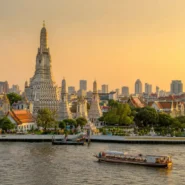
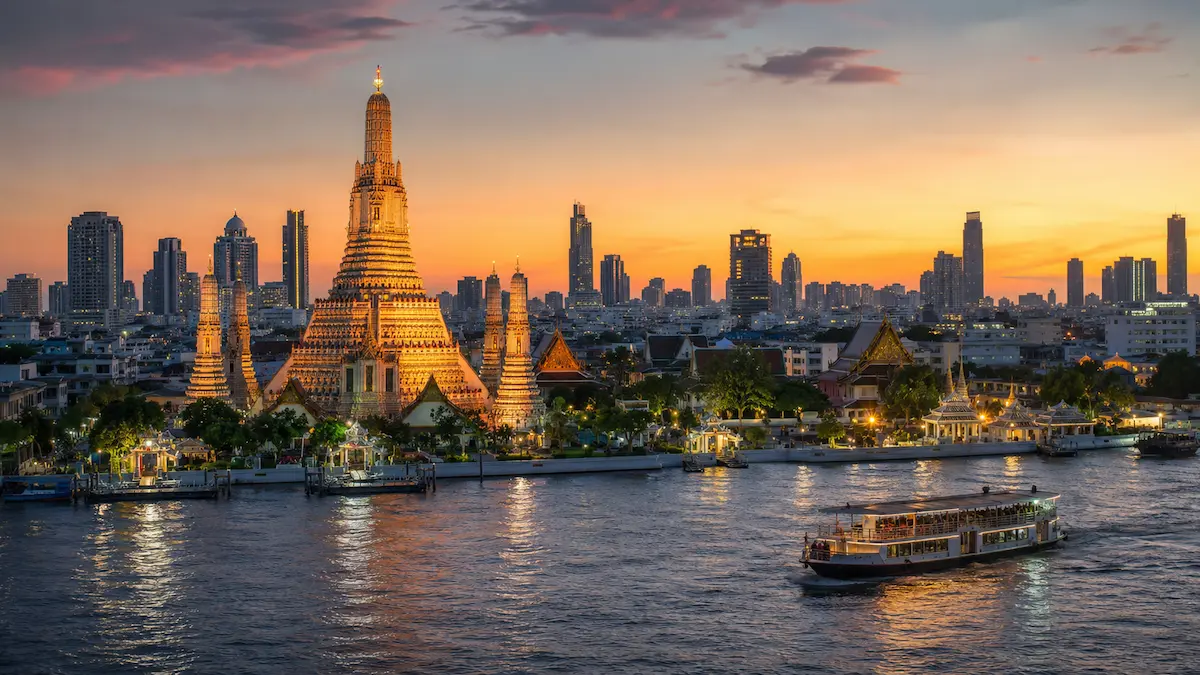
The Chao Phraya River is the Bangkok many first-time visitors imagine before they arrive: temple roofs, ferries, old warehouses, hotel terraces and boats cutting across the water at sunset. If you have the budget, Riverside can make the city feel far less overwhelming than staying beside a six-lane road.
The key is to be specific. Saphan Taksin and the Charoen Krung side of the river are the easiest riverfront zones for first-timers because BTS Saphan Taksin connects directly with Sathorn Pier. From there, river boats can take you toward ICONSIAM, Wat Arun, Wat Pho and the Grand Palace area.
Airport and luggage reality: From Suvarnabhumi, Airport Rail Link to Phaya Thai, BTS to Siam, then the Silom Line to Saphan Taksin is logical but involves transfers. If your hotel sits on the opposite bank or depends on a private boat shuttle, add another step. That is fine for a special stay; it is less fun after a red-eye flight with three suitcases.
Night environment: Generally more relaxed than Siam or Sukhumvit. Some riverside hotels are destinations in themselves, which is ideal if you like slow dinners and hotel bars. The trade-off is that late-night food and convenience stores may be less abundant immediately outside the lobby, depending on the property.
Hotel price reality: Budget riverside rooms exist, but the classic experience usually starts around THB 3,000-4,000, with premium river-view hotels commonly THB 6,000-10,000+. Be careful with listings that say “Riverside” but are several blocks inland.
✅ What Other Travelers Say
Travelers love the calm contrast with central Bangkok traffic, the views and the ability to combine boats with temple sightseeing. Reviews of true riverfront hotels frequently highlight breakfast terraces, sunset views and the feeling of returning to a resort after a busy day.
⚠️ The Catch (Things to Keep in Mind)
Riverside is not one compact neighbourhood. A beautiful hotel can be awkward for rail transport, and boat frequency matters. If your itinerary includes multiple nights out in Thonglor, Asok or Ari, you may resent the repeated taxi or rail-and-boat journeys. For a first trip, I prefer the Saphan Taksin side unless the hotel itself is the reason for the stay.
Stay here if: You want Bangkok to feel memorable from the moment you open the curtains.
Skip it if: Your priority is nightlife, shopping or making five cross-city trips every day.
📍 Pratunam & Ratchathewi: Best Value for Shopping and Suvarnabhumi Airport Access
Best for: Budget-conscious first-timers · Shopping · Short airport transfers · Families who want larger rooms for less
Pratunam is not beautiful in the conventional sense, but it is extremely practical for the right traveller. Platinum Fashion Mall, Pratunam Market, CentralWorld and the Ratchaprasong shopping zone are nearby, while Airport Rail Link at Ratchaprarop gives you a direct rail connection from Suvarnabhumi Airport.
For first-timers on a moderate budget, this can be a very good compromise: you pay less than prime Siam, stay close to major shopping and still have access to BTS at Ratchathewi or Chit Lom depending on the exact hotel. The best properties are the ones that reduce the awkward last-mile walk.
Airport and luggage reality: This is one of the easiest central areas from Suvarnabhumi if your hotel is genuinely close to Ratchaprarop station. The catch is the pavement. The district is busy, crowded and full of crossings, so a “10-minute walk” with luggage can feel chaotic.
Night environment: Busy rather than glamorous. Markets and food remain active into the evening, but this is not Bangkok’s strongest bar neighbourhood. Some smaller lanes quiet down quickly after shops close.
Hotel price reality: Strong value between roughly THB 1,200-3,500, with many midrange properties offering bigger rooms than you would get around Siam for the same money.
✅ What Other Travelers Say
Budget-minded travellers praise Pratunam for shopping access, plentiful food and the convenience of Airport Rail Link. Popular hotels in Ratchathewi also attract repeat guests who value location and room size over neighbourhood charm.
⚠️ The Catch (Things to Keep in Mind)
The area can be physically tiring. Pavements get congested, traffic is heavy and the nearest BTS may not be as near as the hotel description suggests. If you are travelling with a stroller, mobility issues or a lot of luggage, choose a hotel with a clearly mapped route from Ratchaprarop or Ratchathewi rather than chasing the lowest price.
Stay here if: You want value, shopping and a relatively painless BKK airport train.
Skip it if: You want refined nightlife, pretty streets or a calm hotel arrival.
📍 Old Town & Banglamphu: Best for Temples, History and Backpacker Energy
Best for: Backpackers · Temple-heavy itineraries · Budget stays · First-time visitors focused on historic Bangkok
Old Town gives you immediate access to the Bangkok that fills guidebook covers: the Grand Palace, Wat Pho, Wat Saket, old shophouses, canals and the river. Banglamphu, just north of the core monuments, adds Khao San Road and Rambuttri’s backpacker scene.
This area is excellent if your first two days are mainly temples, river ferries and historic sights. It is much less convenient if you also plan daily shopping in Siam, nightlife in Sukhumvit and a weekend trip to Chatuchak. That is the important distinction many generic first-timer guides miss.
Airport and luggage reality: Khao San Road has no BTS station. MRT has improved access to the Old Town through stations such as Sam Yot and Sanam Chai, but neither puts you directly on Khao San Road. Most travellers still use a taxi, bus or a combination of rail and a final road transfer.
Night environment: Khao San Road itself is loud, crowded and party-focused. Rambuttri is softer but still lively. Move a few streets into Banglamphu and you can find quiet boutique hotels, local restaurants and a much calmer night.
Hotel price reality: Dorm beds and simple private rooms can be very cheap, while comfortable boutique hotels generally fall around THB 1,500-3,500. River-adjacent boutique properties can go higher.
✅ What Other Travelers Say
Backpackers love the social scene, low prices and walkability to famous sights. Reviews of quieter Banglamphu hotels often mention how convenient it is to walk to restaurants, temples and the river while staying far enough from Khao San’s loudest bars.
⚠️ The Catch (Things to Keep in Mind)
The transport penalty is real. If your trip is mostly modern Bangkok, the savings on the hotel can disappear in time and taxi fares. Do not book directly on Khao San Road because a list told you it is “the backpacker area” unless you actually want to hear the party from your room.
Stay here if: Your priority is historic Bangkok, social travel and budget accommodation.
Skip it if: You want the easiest BTS-based itinerary or early nights.
📍 Chinatown (Yaowarat): Best for Food, Night Atmosphere and Character
Best for: Food lovers · Photographers · Couples · Boutique hotels · Repeat-worthy first trips · MRT users
Chinatown is the wildcard I would seriously consider for adventurous first-time visitors. Yaowarat Road explodes into life after dark with food stalls, neon signs, gold shops and crowds, while nearby Talat Noi and Song Wat add cafés, street art and old warehouse architecture. It feels unmistakably like Bangkok.
The area became much more practical after MRT Wat Mangkon opened. From there you can reach Hua Lamphong, Silom, Sukhumvit and other parts of the Blue Line without relying entirely on taxis. For temple days, Sam Yot and Sanam Chai are also nearby on the same line.
Airport and luggage reality: From Suvarnabhumi, Airport Rail Link to Makkasan followed by MRT from Phetchaburi toward Wat Mangkon is a logical rail route. The last walk can be rough if your hotel sits inside a narrow lane, so check the exact entrance and whether a taxi can reach the lobby.
Night environment: Yaowarat is extremely busy during food hours and then becomes much quieter later. Some lanes feel dark once stalls close, not necessarily dangerous, just very different from the bright main road. If you are sensitive to noise or smells, do not book directly above the busiest food strip.
Hotel price reality: Around THB 1,300-4,000 covers many hostels, guesthouses and boutique hotels, with a growing number of stylish properties in restored shophouses.
✅ What Other Travelers Say
Travelers praise Chinatown for food, photography and the sense that you can simply walk outside and find something happening. Well-located hotels near Wat Mangkon also score highly for transport convenience, a major improvement over older advice that treated Chinatown as taxi-only.
⚠️ The Catch (Things to Keep in Mind)
The sensory overload is real. Pavements are crowded, old buildings can have small rooms or limited lifts, and a hotel hidden in a photogenic alley can be awkward with large luggage. Families who want pools, big rooms and predictable sidewalks may be happier in Siam or Riverside.
Stay here if: Food and atmosphere matter more to you than malls and hotel facilities.
Skip it if: You want a resort-like stay, large family rooms or effortless taxi drop-offs.
Key FAQs About Where to Stay in Bangkok
What is the best area to stay in Bangkok for first-time visitors?
For most first-time visitors, Siam is the easiest all-round choice. It is the BTS interchange, has abundant food and shopping, and gives you simple access to Sukhumvit, Silom and the river. If nightlife and restaurant variety matter more than shopping, choose Asok in Sukhumvit instead because you get both BTS and MRT.
Is Sukhumvit or Siam better for a first trip to Bangkok?
Choose Siam if you want simpler sightseeing, shopping and family-friendly evenings. Choose Sukhumvit around Asok if you want nightlife, restaurants and the flexibility of both BTS and MRT. I would not choose lower Sukhumvit around Nana for a family unless you have checked the exact street and nighttime environment.
Where should I stay in Bangkok for easy airport access and sightseeing?
If you fly into Suvarnabhumi Airport (BKK), Pratunam/Ratchathewi is excellent for Airport Rail Link access, while Siam is better for overall sightseeing after a simple transfer at Phaya Thai. Asok is also practical via Makkasan and MRT. If you fly into Don Mueang (DMK), the SRT Red Line helps, but no major tourist district has the same near-direct airport convenience that Pratunam has from BKK.
Final Verdict and Your Next Step
If you are still undecided, use this rule: pick the area that removes the most repeated inconvenience from your trip. A river view is wonderful, but not if you plan to commute to Sukhumvit twice a day. A cheap Khao San hotel is not cheap if you spend hours in taxis. A bargain Sukhumvit room is not convenient if it sits 15 minutes down a side street.
- Best overall first stay: Siam.
- Best for nightlife and transport: Asok, Sukhumvit.
- Best balanced alternative: Silom/Sathorn.
- Best for a special or romantic trip: Riverside near Saphan Taksin.
- Best value: Pratunam/Ratchathewi.
- Best for temples and backpackers: Old Town/Banglamphu.
- Best for food and atmosphere: Chinatown near Wat Mangkon.
Bangkok has a huge hotel supply, but the best-located properties around BTS/MRT stations and the most popular riverfront hotels can sell out or rise sharply in price for weekends and peak travel periods. Once you know your area, book a flexible rate early and keep checking until your cancellation deadline. Location is one of the few Bangkok upgrades that saves you time every single day.
Compare Bangkok hotels:
Check Bangkok hotels on Agoda |
Check Bangkok hotels on Booking.com
Book Bangkok attractions and transfers:
Browse Bangkok activities on Klook |
Browse Bangkok activities on KKday