
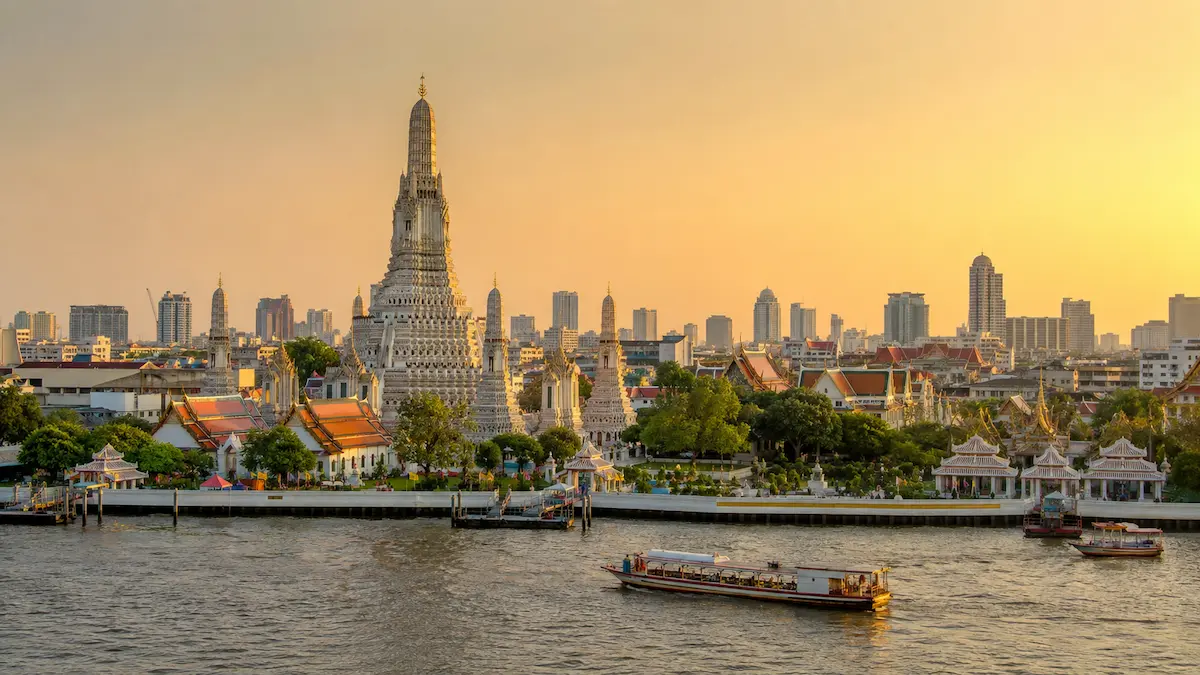
💡 Key Takeaways
- Keep the Grand Palace, Wat Pho and Wat Arun on the same day. They form Bangkok’s most logical temple cluster, and splitting them across different days creates needless river crossings and repeat transport.
- Do not add Chatuchak, a floating market or a distant rooftop to your temple day just because a viral itinerary says you can. Bangkok traffic and heat punish over-planning.
- Start the Grand Palace at opening time, then move south to Wat Pho and across the river to Wat Arun. This is much easier than arriving at the palace in the midday crowd.
- Use MRT, BTS and river boats for predictable journeys; use Grab or a metered taxi selectively when it genuinely saves a transfer. Tuk-tuks are a sightseeing experience, not an efficient transport strategy.
- For the Grand Palace, a real QR e-ticket can save the ticket-purchase queue, but it does not make security checks, dress-code checks or crowds disappear.
If you are planning your first 3-day Bangkok itinerary, the biggest danger is not running out of things to do. It is trying to do far too much. Bangkok looks deceptively easy on a map, but the combination of heat, traffic, river crossings, temple dress codes, uneven sidewalks and rush-hour bottlenecks can turn a perfectly reasonable-looking list into a miserable day of waiting. The route below is built around one rule: group places that actually belong together, then leave enough breathing room to enjoy them. You will still see the classic Bangkok highlights, but you will not spend half the trip trapped in traffic or sprinting from one photo stop to the next.
The 1-Min Cheat Sheet
- Grand Palace & Wat Phra Kaew
Best for: First-time visitors, Thai history, architecture and anyone who wants the one blockbuster sight that really does justify the hype.
Suggested time: 2–2.5 hours.
Ticket: 500 THB for foreign visitors according to the official Grand Palace website at the time of checking. The official complex hours are 08:30–16:30, with ticket sales ending at 15:30; royal ceremonies can affect access.
Nearest major transport: MRT Sanam Chai plus a walk or short taxi; alternatively use the Chao Phraya River to Tha Chang Pier.
Reservation: Not mandatory for standard admission, but an advance QR e-ticket is worth considering to avoid the ticket-buying queue.
Best time: Be at the entrance around opening time.
Biggest catch: Strict clothing rules, open courtyards with little shade, tour groups and security checks. “Skip-the-line” does not mean “skip every line.” - Wat Pho
Best for: Temple lovers, first-timers and travelers who want more atmosphere and breathing room than the Grand Palace usually offers.
Suggested time: 1–1.5 hours, longer if you book a massage separately.
Ticket: 300 THB according to Wat Pho’s official visitor information at the time of checking.
Nearest major transport: MRT Sanam Chai; it is also walkable from the Grand Palace.
Reservation: Standard sightseeing normally does not require advance booking.
Best time: Late morning after the Grand Palace, or later afternoon if visiting independently.
Biggest catch: The Reclining Buddha hall can bottleneck badly, so do not judge the entire complex by the first crowded room. - Wat Arun
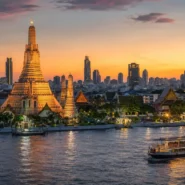
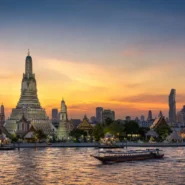
Best for: Photography, riverside scenery and travelers who want Bangkok’s most distinctive temple silhouette.
Suggested time: 1–1.5 hours.
Ticket: 200 THB for foreign visitors; Tourism Authority of Thailand currently lists 08:00–18:00 daily.
Nearest major transport: Cross-river ferry from the Tha Tien side is the simplest pairing with Wat Pho.
Reservation: Usually unnecessary for ordinary entry.
Best time: Mid-to-late afternoon for softer light, but enter well before closing rather than gambling on a last-minute arrival.
Biggest catch: Steep steps, exposed heat and a lot of photo traffic around the central prang. - Talat Noi, Song Wat & Yaowarat
Best for: Street photography, food, old shophouses, cafés and travelers who want Bangkok to feel like a real neighborhood rather than a checklist of monuments.
Suggested time: 5–7 hours including food stops and an air-conditioned break.
Ticket: Free to wander; individual temples, cafés or galleries may have their own charges.
Nearest major transport: MRT Hua Lamphong for Talat Noi or MRT Wat Mangkon for Chinatown.
Reservation: No reservation needed for the neighborhoods themselves.
Best time: Talat Noi in the morning or late afternoon; Yaowarat becomes far more interesting toward dinner time.
Biggest catch: Narrow lanes, broken or crowded sidewalks and relentless heat if you try to walk everything at noon. - Jim Thompson House & Siam
Best for: Culture, design, families, rainy days and anyone who needs a slower third day after the temples and Chinatown.
Suggested time: 1.5–2 hours for the house, then 3–5 hours for BACC, Siam and Ratchaprasong at your own pace.
Ticket: Jim Thompson House currently lists 250 THB for adults; BACC is free.
Nearest major transport: BTS National Stadium for Jim Thompson House and BACC; BTS Siam for the shopping district.
Reservation: The historic house is visited by guided tour; the official site does not state that ordinary visitors must pre-book.
Best time: Start at 10:00 when the museum opens, then move into the air-conditioned Siam district as the day gets hotter.
Biggest catch: The historic house has stairs and no elevator; BACC is closed on Mondays.
Tourist Traps to Avoid & Itinerary Hacks
- The “temple is closed today” scam: Ignore strangers who approach you near major attractions and claim the Grand Palace, Wat Arun or another sight is closed before offering a cheap tuk-tuk detour. This warning is echoed by attraction websites themselves. Check the attraction’s official site or schedule page, not a stranger on the pavement.
- Putting Chatuchak on temple day: Chatuchak is in north Bangkok and is primarily a weekend attraction. The Grand Palace cluster is in the old city. Combining them means sacrificing the best morning hours at one of them and crossing the city when you are already tired.
- Treating Damnoen Saduak or Maeklong as a quick Bangkok stop: These are out-of-city excursions. If you want one, give it a dedicated half or full day and accept that it replaces part of this itinerary rather than magically fitting before lunch.
- Arriving at the Grand Palace around noon: You get the worst combination of heat, glare and accumulated tour groups. The smarter move is to front-load the one attraction with the strictest schedule.
- Using taxis for every journey: A 4 km taxi ride can take longer than a 12 km rail journey when Bangkok traffic locks up. Use taxis and Grab for door-to-door convenience early in the morning, late at night, with children, or when a rail transfer is genuinely awkward—not by default.
- Assuming BTS reaches every famous sight: BTS is excellent for Siam, Sukhumvit, Silom and Saphan Taksin, but the old city is better served by MRT, boats and short walks. Forcing every trip through BTS creates unnecessary transfers.
- Buying “skip-the-line” products without reading what they skip: At the Grand Palace, a QR e-ticket can bypass the on-site ticket purchase step. It cannot remove security screening, dress-code checks, access restrictions or the crowds inside Wat Phra Kaew.
- Wearing your “temple outfit” only for the Grand Palace: Wat Pho and Wat Arun are religious sites too. Dress respectfully for the entire day so you do not waste time buying or renting cover-ups.
- Walking Chinatown at midday without a reset stop: Talat Noi and Song Wat are rewarding on foot, but Bangkok’s heat is real. Build in a café, River City-style gallery stop or long lunch rather than turning the neighborhood into an endurance test.
- Dragging a suitcase through old Bangkok: Temple entrances, ferry piers, narrow lanes and uneven sidewalks are a terrible match for large luggage. Leave bags at your hotel, a staffed storage counter or arrange airport-hotel delivery before sightseeing.
The Perfect 3-Day Bangkok Itinerary at a Glance
Day 1: Rattanakosin & the Chao Phraya Temple Loop
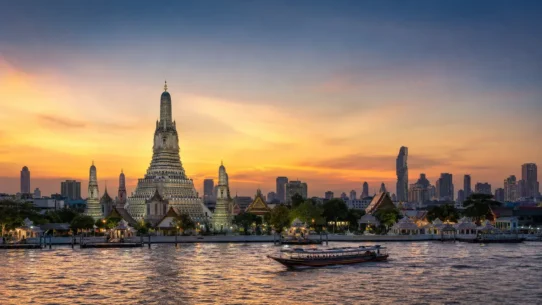
Why this grouping works: The Grand Palace, Wat Pho and Wat Arun are the rare Bangkok “top three” that genuinely belong in one day. The first two are neighbors; the third sits directly across the river. The mistake is not combining them—the mistake is combining them plus three more distant attractions.
- Suggested start: Leave your hotel around 07:30–07:45 and aim to be at the Grand Palace entrance before the 08:30 opening.
- Order: Grand Palace & Wat Phra Kaew → Wat Pho → lunch around Tha Tien/Sanam Chai → cross-river ferry → Wat Arun → cross back → relaxed riverside drink, massage or early dinner.
- Transport between stops: Walk from the Grand Palace to Wat Pho; use the short ferry crossing for Wat Arun. Do not call a taxi to go around the river unless mobility needs make the ferry impractical.
- Walking/effort: Roughly 7–9 km depending on your hotel connection and how thoroughly you explore. Moderate-to-high effort because of heat, standing and temple surfaces rather than distance alone.
- Lunch strategy: Do not queue for a viral restaurant at 12:30 while exhausted. Pick a nearby air-conditioned place around Tha Tien or Sanam Chai, hydrate properly and sit for at least 45 minutes.
- Easiest cut: If energy drops, shorten Wat Pho’s outer courtyards or skip the sunset wait. Do not rush the Grand Palace just to protect a rooftop reservation across town.
- Rain/low-energy alternative: Spend longer at Wat Pho, use a short taxi/Grab instead of extra walking, and finish early. Heavy rain is a good reason to abandon a sunset plan, not a reason to sprint through wet temple steps.
Day 2: Talat Noi, Song Wat & Chinatown Without Backtracking
Why this grouping works: These neighborhoods sit in a compact historic band near the river. A one-way walk from Talat Noi toward Song Wat and Yaowarat lets the day naturally shift from photography and cafés to food and evening energy. This is far more logical than visiting Chinatown for lunch, leaving, and returning again for the night market atmosphere.
- Suggested start: 09:00–09:30. Start earlier in hot season; start closer to 10:00 if you stayed out late on Day 1.
- Order: MRT Hua Lamphong → Talat Noi lanes & street art → riverside/café break → Song Wat Road → late lunch → Wat Mangkon area → Yaowarat Road from late afternoon into dinner.
- Transport between stops: Mostly walk. Use MRT only to reach the starting point and leave at the end from Wat Mangkon. This is one of the few Bangkok days when “just walk” is actually good advice.
- Walking/effort: Around 6–8 km, moderate effort. The challenge is narrow pavements and humidity, not hills.
- Lunch strategy: Eat before peak dinner queues. Song Wat is ideal for a sit-down lunch or café stop, then treat Yaowarat as your evening grazing zone rather than expecting one giant meal.
- Easiest cut: Skip a café or minor shrine, not the transition into Yaowarat. Chinatown is much more atmospheric after the day cools down.
- Rain/low-energy alternative: Shorten Talat Noi, spend more time in an indoor gallery/café, then take a short taxi to Wat Mangkon and focus on Chinatown food.
Day 3: Jim Thompson House, Siam & Ratchaprasong
Why this grouping works: After two outdoor-heavy days, your third day should not be another dawn-to-dark temple marathon. Jim Thompson House gives you a focused cultural visit, then BACC and Siam provide air-conditioning, food options, bathrooms and easy BTS access. Finish around Ratchaprasong or Lumpini only if your legs still want more.
- Suggested start: 10:00 at Jim Thompson House.
- Order: Jim Thompson House → BACC → Siam lunch → Siam/MBK/Siam Discovery as desired → walk or BTS toward Ratchaprasong/Erawan Shrine → optional Lumpini Park near sunset.
- Transport between stops: Walk between Jim Thompson House, BACC and Siam. Use BTS for the longer hop east or south rather than taking a road taxi through central shopping traffic.
- Walking/effort: Around 5–7 km, low-to-moderate effort with plenty of indoor breaks.
- Lunch strategy: Use Siam’s huge choice as a feature, not a distraction. Food courts are excellent for groups who cannot agree on one cuisine and for travelers watching the budget.
- Easiest cut: Lumpini Park. It is a pleasant finale, not a must-see. If you are tired, stay in Siam and enjoy a slower final evening.
- Rain/low-energy alternative: This day already works well in rain. If it is Monday, remember BACC is closed; simply extend Jim Thompson House and use Siam’s indoor attractions and malls instead.
Save Your Legs! The Most Efficient Route
The key to this 3-day Bangkok itinerary is that every day has a clear geographic direction. Day 1 stays in Rattanakosin and makes only one meaningful river crossing. Day 2 is a one-way neighborhood walk through Talat Noi, Song Wat and Chinatown. Day 3 stays on the BTS-friendly central spine around National Stadium and Siam. That structure removes the classic Bangkok mistake of zigzagging between the old city, Chatuchak, Sukhumvit and the river in the same day.
What belongs together: Grand Palace + Wat Pho + Wat Arun is the obvious trio. Talat Noi + Song Wat + Yaowarat is another natural cluster. Jim Thompson House + BACC + Siam is a third. Keep those groups intact and your trip becomes much easier.
What looks close but should not be crammed into the same time block: Chinatown and the Grand Palace are not wildly far apart, but adding a full Yaowarat food crawl after a 7–9 km temple day is where many first-time itineraries become unpleasant. Chatuchak looks simple because it is on rail, but it is north of the center and deserves its own weekend block. Damnoen Saduak and Maeklong are not Bangkok city-center attractions at all and should never be treated like an extra neighborhood stop.
Train, boat, bus, taxi or walking? Use MRT for Sanam Chai, Wat Mangkon and Hua Lamphong; use BTS for National Stadium, Siam, Sala Daeng and Saphan Taksin; use the river for crossings that would otherwise require a long road detour. Walking is excellent inside Rattanakosin clusters and Chinatown’s lanes, but not for crossing whole districts. Public buses can be cheap and useful, but they are not the best first-timer tool when you have only three days and do not yet understand Bangkok’s traffic patterns. Taxis and Grab are most valuable early morning, late evening, in heavy rain, with children, or when they remove an awkward final transfer.
Where the ground gets annoying: Wat Arun has steep steps and hard surfaces around the prang. The Jim Thompson House requires several stairways and has no elevator inside the historic house. Talat Noi has narrow lanes and inconsistent pavement. Ferry piers can involve ramps, gaps and steps. The Grand Palace is mostly straightforward underfoot but involves a lot of standing and exposed walking. Large strollers and wheeled luggage make all of this harder than it needs to be.
Best areas to stay for this route: For the most balanced first-time base, I would look around Silom/Sala Daeng/Si Lom MRT. You get BTS and MRT access, plenty of food, and relatively easy connections to both the old city and Siam. Siam/Chit Lom is even easier for shopping and Day 3, but the old city requires more effort and prices are often higher. Saphan Taksin/Riverside is brilliant if you love boats and river views, but check exactly how far your hotel is from the BTS or pier—“riverside” can hide a surprisingly long shuttle ride. Old Town/Khao San puts temples close, but weak rail access makes the rest of the trip more taxi-dependent. I would not choose it purely for convenience on a three-day first visit.
Arrival and departure day luggage: The cheapest option is usually to ask your hotel to hold bags before check-in or after checkout. If that is not possible, use a staffed luggage-storage service or arrange airport-hotel delivery. AIRPORTELs currently advertises luggage storage plus delivery between Bangkok hotels, malls, Suvarnabhumi Airport and Don Mueang Airport. Whatever service you choose, confirm the current cutoff time, insurance terms and pickup location directly before paying. Do not drag a large suitcase onto the Wat Arun ferry or through Talat Noi just to save one storage fee.
Ticket Tips & Skip-the-Line Hacks
Bangkok is a city where “book everything” is almost as bad as “book nothing.” Some places benefit from advance tickets; others are simple walk-ins. Always check the latest official opening hours, closure dates, religious events and reservation rules before you travel because royal ceremonies, maintenance and public holidays can change access.
Grand Palace: This is the attraction where I would genuinely consider buying ahead. The official Grand Palace site currently lists foreign admission at 500 THB, daily opening from 08:30 to 16:30 and ticket sales from 08:30 to 15:30. A third-party QR e-ticket can remove the need to stand in the ticket-purchase queue. Klook’s current product page states that a separate Grand Palace QR code is sent before the visit and scanned at the entrance; KKday’s current product page also states that a QR code is used on site. That is useful, but it is not magic. You can still face security checks, dress-code enforcement, timed-entry conditions on the reseller product and dense crowds inside.
Check the verified Klook Grand Palace QR e-ticket
Check the verified KKday Grand Palace QR e-ticket
Wat Pho: The official site currently lists a 300 THB admission fee. Standard on-site purchase is normally sufficient for independent travelers, and there is no compelling reason to pay a large premium for a “skip-the-line” label just for Wat Pho. If you want a guided temple day, buy it because you value the guide and logistics, not because you expect a private entrance.
Wat Arun: Tourism Authority of Thailand currently lists 200 THB admission and 08:00–18:00 daily. For ordinary independent entry, buying on site is generally straightforward. Again, there is no meaningful VIP lane that makes the temple steps, crowds or ferry disappear.
Jim Thompson House: The official visitor information currently lists 250 THB adult admission and 10:00–17:00 opening, with the last guided tour at 17:00. You cannot enter the main house without a guide. Standard visitors can normally arrive and join the next available museum tour; if the official site introduces timed booking later, follow that rule rather than an old blog post.
BACC, Talat Noi and Chinatown: BACC currently offers free admission and opens Tuesday to Sunday, 10:00–20:00, closing Mondays. Talat Noi, Song Wat and Yaowarat are neighborhoods, so there is no central admission ticket to pre-book.
My booking rule: Buy the Grand Palace e-ticket before departure if you value a smoother start, especially in peak season. For Wat Pho and Wat Arun, cash/on-site entry is usually enough. A bundled guided temple tour can make sense if you want historical context and someone else handling the route, but choose it for the guide—not for a fake promise that Bangkok’s crowds will vanish.
Check the verified Klook Grand Palace, Wat Pho & Wat Arun tour
Affiliate disclosure: The Klook and KKday links above contain the requested affiliate tracking parameters. Prices, time slots, cancellation terms and inclusions can change, so verify the final product page before checkout.
Tried & Tested: My Honest Review
📍 Stop 1: Grand Palace & Wat Phra Kaew
✨ Features: Bangkok icon · Royal architecture · Emerald Buddha · High crowd risk · Strict dress code
My take: If this is your first Bangkok trip, the Grand Palace is still worth doing—once, properly, and early. The detail is extraordinary, but this is also the stop most likely to expose every weakness in a bad itinerary: wrong clothes, late arrival, heat, crowds and a tour group schedule you cannot control. Give it two good hours rather than treating it as a 45-minute photo stop.
✅ What Other Travelers Say: Recent Klook feedback repeatedly praises the architecture and convenience of having tickets arranged, while also mentioning heavy crowds and intense heat. That combination matches the practical reality: it is spectacular, but comfort depends heavily on timing.
⚠️ The Catch (Things to Keep in Mind): Re-entry is not allowed on the common e-ticket products, dress rules are strict, security is separate from ticketing, and official schedules can change for royal events. The safest strategy is to arrive early and not book a tight, non-refundable activity immediately afterward.
📍 Stop 2: Wat Pho
✨ Features: Reclining Buddha · Temple courtyards · Traditional massage heritage · Easier pace than the palace
My take: Wat Pho is the place many first-time visitors accidentally rush because the Reclining Buddha is so famous. That is a mistake. The wider complex is calmer and more rewarding than the narrow flow around the giant statue, and it works perfectly as your second stop because it is next to the Grand Palace rather than across the city.
✅ What Other Travelers Say: Traveler feedback consistently highlights the Reclining Buddha and the scale of the temple complex. Guided-tour reviews also tend to value the historical explanation, which makes sense because a lot of the detail is easy to miss if you only follow the crowd through the main hall.
⚠️ The Catch (Things to Keep in Mind): The Reclining Buddha hall can feel cramped, temple fatigue is real after the Grand Palace, and adding a massage can significantly extend the visit. If you want a massage, treat it as a planned break rather than an impulsive 15-minute add-on.
📍 Stop 3: Wat Arun
✨ Features: Chao Phraya views · Porcelain-covered prang · Best exterior photos · Steep steps
My take: Wat Arun earns its place because the river crossing creates a genuine change of scene. The temple is compact enough that you do not need hours, but the central prang is far more impressive up close than it looks from a taxi window. Late afternoon is beautiful; just do not confuse “best light” with “arrive five minutes before closing.”
✅ What Other Travelers Say: Reviews repeatedly focus on the photogenic architecture, riverside setting and the fun of pairing it with Wat Pho by ferry. Many travelers also mention the heat and the amount of photo-taking around the main prang.
⚠️ The Catch (Things to Keep in Mind): The steps are steep, the stone surfaces are unforgiving, and traditional-costume photo sessions can create congestion. Travelers with knee problems, strollers or limited mobility should enjoy the temple from ground level rather than feeling pressured to climb.
📍 Stop 4: Talat Noi, Song Wat & Yaowarat
✨ Features: Street art · Chinese-Thai heritage · Old shophouses · Cafés · Bangkok street food · Free to explore
My take: This is the day that stops your Bangkok trip from feeling like a temple-and-mall package tour. Talat Noi rewards slow wandering, Song Wat is ideal for the midday transition, and Yaowarat makes sense as the evening finale. The magic disappears if you speed-run the murals, photograph one vintage car and leave after 40 minutes.
✅ What Other Travelers Say: Travelers commonly praise Talat Noi for colorful street art, old architecture and a quieter neighborhood feel. Chinatown feedback is more mixed on comfort—people love the food and atmosphere but regularly mention heat, crowds and sensory overload.
⚠️ The Catch (Things to Keep in Mind): Sidewalk quality is inconsistent, motorcycles squeeze through narrow lanes, some famous food stalls open only on certain days, and the best-known queues can be longer than the meal deserves. Treat food recommendations as flexible options, not appointments you must build the day around.
📍 Stop 5: Jim Thompson House & Siam
✨ Features: Traditional Thai architecture · Art collection · Guided visit · BTS-friendly · Excellent rainy-day pairing
My take: Jim Thompson House is one of the smartest Day 3 choices because it is culturally specific without demanding another huge amount of walking. The contrast between the teak house and the shopping district outside is very Bangkok. It also gives you something meaningful to do before Siam’s malls fully take over the afternoon.
✅ What Other Travelers Say: Recent traveler reviews often describe the house as an interesting, atmospheric break from Bangkok’s temples and emphasize the value of the guided explanation. Its central location and gardens are frequently praised.
⚠️ The Catch (Things to Keep in Mind): The main house is guided-only, bags over the museum’s stated size limit must be left in lockers, and the historic building has several stairways with no elevator. BACC next door is closed Mondays, so adjust Day 3 if your schedule lands there.
Key FAQs
Is 3 days enough in Bangkok for first-time visitors?
Yes—three full days are enough for a strong first trip if you keep the route focused. You can comfortably cover the Grand Palace/Wat Pho/Wat Arun cluster, Chinatown/Talat Noi and central Bangkok around Jim Thompson House and Siam. Three days is not enough if you also try to add Ayutthaya, floating markets, Safari World, Chatuchak, every rooftop bar and multiple night markets.
Can you visit the Grand Palace, Wat Pho and Wat Arun in one day?
Yes, and they are actually one of Bangkok’s most efficient same-day combinations. Start with the Grand Palace at 08:30, walk to Wat Pho, take a proper lunch break, then cross the river to Wat Arun. The problem starts when travelers add distant areas like Chatuchak or Sukhumvit to the same day.
What is the best area to stay in Bangkok for a 3-day itinerary without wasting time?
For this route, the Silom/Sala Daeng/Si Lom MRT area is the best all-round compromise because it combines BTS and MRT access and gives you manageable links to the old city, Chinatown and Siam. Siam is better for shopping-focused travelers; Riverside is better for river scenery; Old Town is better only if temples are your overwhelming priority.
Final Verdict and Your Next Step
The perfect first Bangkok trip is not the one with the most pins on Google Maps. It is the one where you still have enough energy at 18:00 to enjoy dinner. This three-day route works because each day has one geographic story: royal Bangkok and the river, old Chinese Bangkok and street food, then central Bangkok’s culture and modern city life. You avoid the worst cross-city backtracking, you use rail and boats where they are strongest, and you leave enough slack for Bangkok to surprise you.
Your one genuinely time-sensitive booking is the Grand Palace. If your dates are fixed, I would buy an e-ticket before departure, save the ticket-counter step, and still arrive early. For everything else, keep the plan flexible unless you are booking a guided experience you specifically want.
Book the verified Klook Grand Palace QR e-ticket
Book the verified KKday Grand Palace QR e-ticket
Compare the verified Klook Grand Palace, Wat Pho & Wat Arun guided tour
Before you go: Recheck official opening hours and closure notices 24–48 hours before your temple day, screenshot your QR ticket, carry a modest temple outfit, keep some Thai baht for small fares and entry counters, and never rearrange your route because a stranger near a temple tells you the attraction is closed.
Fact-Check Sources Used for This Itinerary
- The Grand Palace — official practical information
- The Grand Palace — official schedules and closure notices
- Wat Pho — official visit information
- Tourism Authority of Thailand — Wat Arun visitor information
- Jim Thompson House Museum — official visitor information
- Bangkok Art and Culture Centre — official opening hours and admission
- AIRPORTELs — Bangkok luggage delivery information